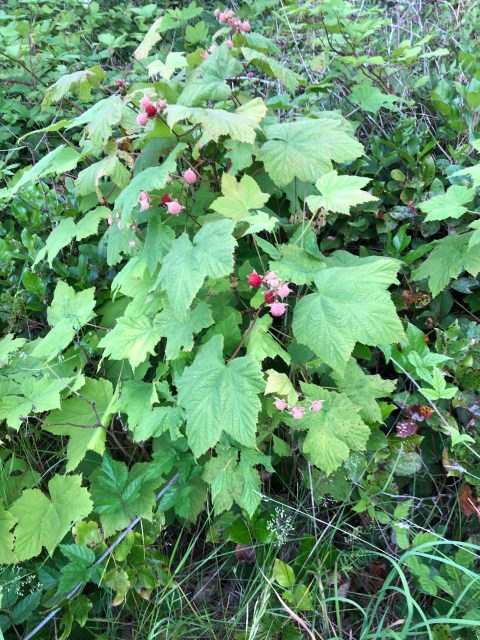
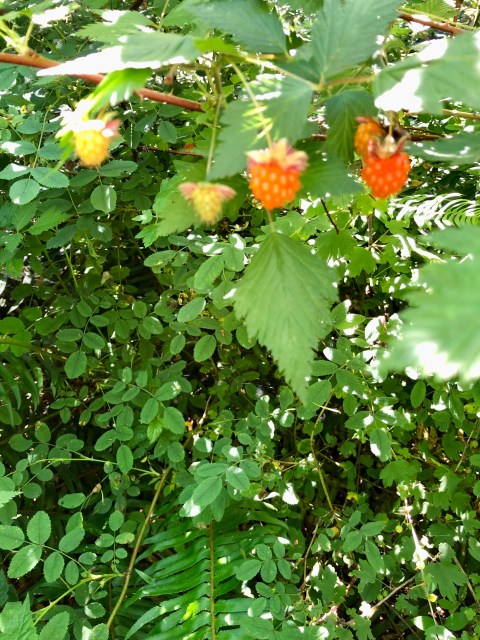
July is the time of wild berries here in the Pacific Northwest. The Rubus clan, best known for raspberry and blackberry also include many other members with edible fruits. Two woody shrubs that are fruiting now are Thimbleberry, Rubus parviflorus, and Salmonberry, R. spectabilis. These two edible berries were staples of native peoples. Around here, harvesting thimbleberries is a summertime pleasure. Children love to place the thimble-like fruit on their fingertips.
On the Quimper Peninsula I have only seen these two Rubus species growing on moist sites, but in some regions wild thimbleberry may occur on drier sites. In Jefferson County the water table is close to the surface in low-lying areas creating wetlands. These plants are also commonly found along stream sides, and can withstand being flooded for short periods of time, thus making these shrubs useful in the rain garden. They can also be part of restoration landscapes. The deer browse the buds and stunt newly planted shrubs. Fencing, caging or spraying deer repellent for a few years is necessary for them to get established. The local deer population has suffered from loss of habitat and loss of predators.
Salmonberry, Rubus spectabilis
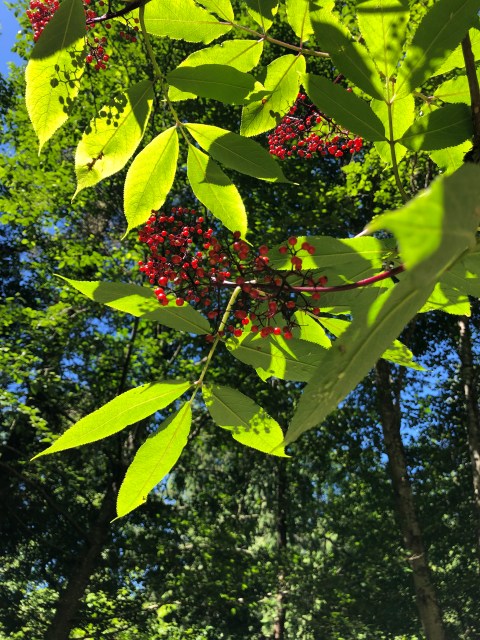
Another coastal native that’s fruiting now is red elderberry, Sambucus racemosa. The white flower cluster of has a pyramidal shape This berry can be edible if cooked, but I have never tasted it. Raw berries can cause nausea. All other parts of the plant are toxic. This plant grows easily in all soils and sun or shade.
Red Elderberry, Sambucus racemosa
(Blue elderberry, Sambucus nigra caerulea has white flower clusters that are flat. It is an edible, medicinal and ornamental plant.)
Other iconic berries will fruit soon including salal and huckleberry, stay tuned!
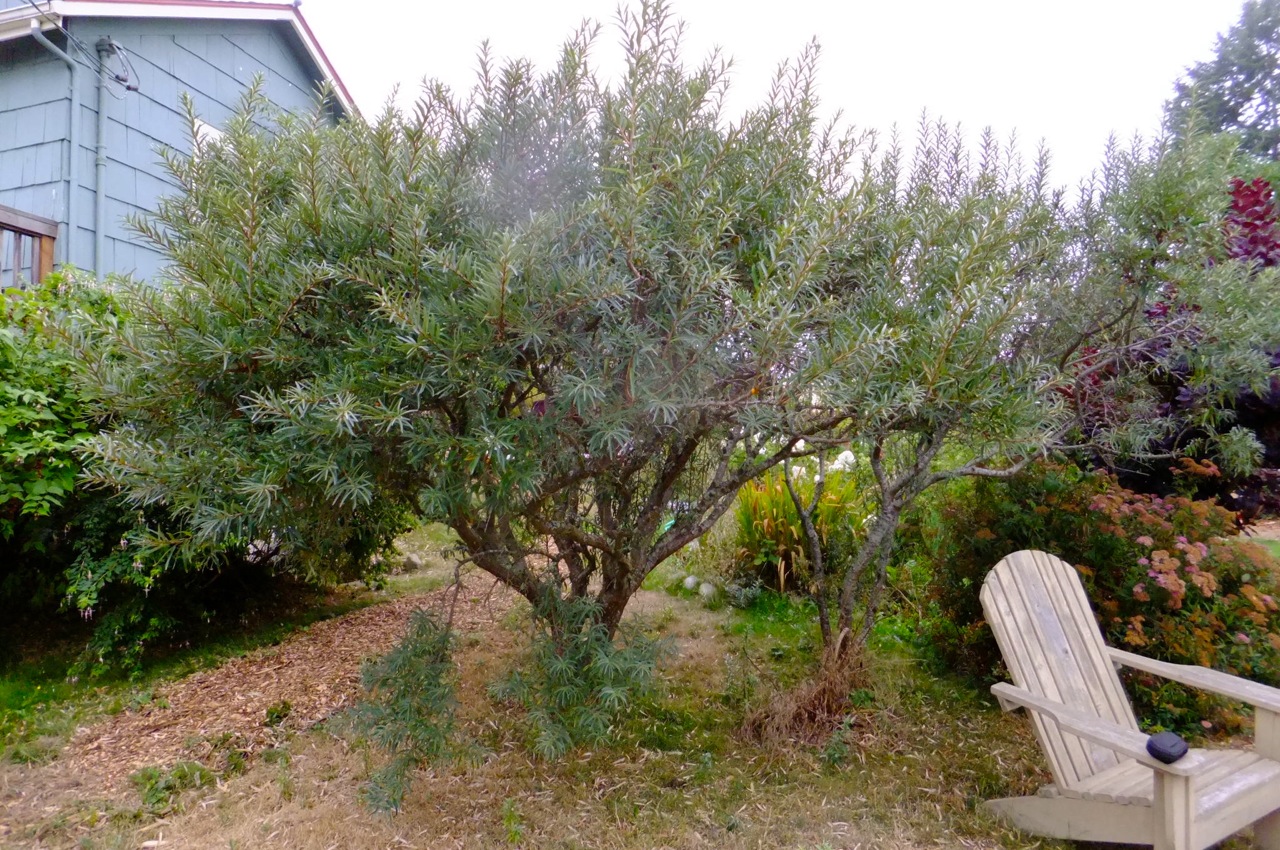
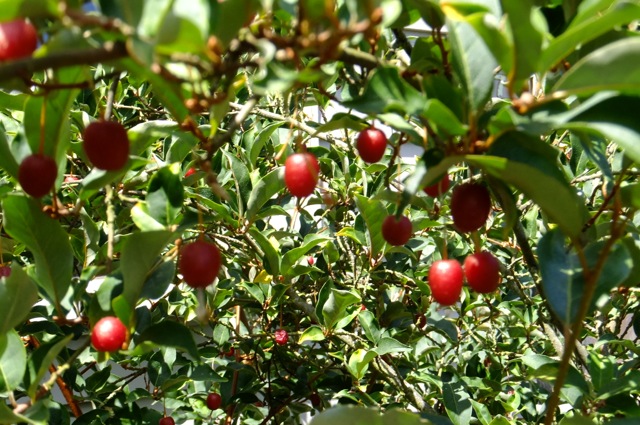
One of my favorite permaculture shrubs is Goumi, Elaeagnus multiflora. This multifunctional plant is easy to grow! The fragrant tiny yellow flowers bloom in April, followed by astringent and sweet fruit by the end of June. In 2018 I ordered plants from One Green World and they recommend planting two varieties, so I planted two Sweet Scarlet and two Red Gem. The former is more robust with dense foliage that hides the fruit from the birds whereas Red Gem has a more open framework, with less foliage and is more productive. If you have limited space and prefer to cook the fruit with a sweetener, then Red Gem is a winner. I mostly eat the fruit raw and share the crop with birds. For the sweetest flavor wait until the fruit is a deeper red.
The genus Elaeagnus is recognized for having a symbiotic bacteria, Frankia that grows in the soil and fixes nitrogen from the air, making it available to the plant. I prune Sweet Scarlet several times a season and use the leafing branches as compost.
Goumi, an Asian native has been cultivated here for at least one hundred years. In Japan it is known as natsugumi. The fruits of this shrub are high in lycopene I wrote a more thorough account here
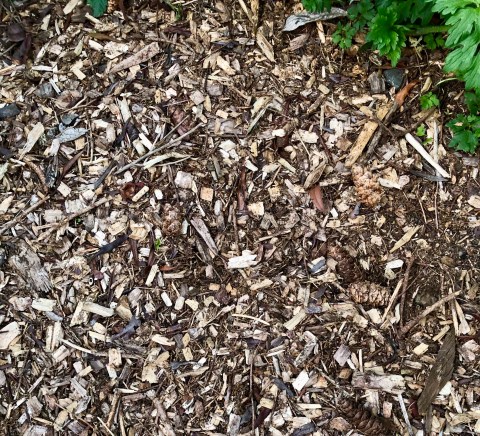
Mulch not only conserves soil moisture; it prevent weeds and soil erosion; improves the soil tilth; and protects it from temperature extremes.
Good mulch decomposes in a year or two and improves the soil. And needs to be reapplied. Examples are arborist’s chips, shredded leaves and compost Most bark mulch, like fir bark and beauty bark add a top layer that doesn’t break down to add organic matter, but instead sometimes creates a barrier to drip irrigation moisture reaching roots.
Different Mulches
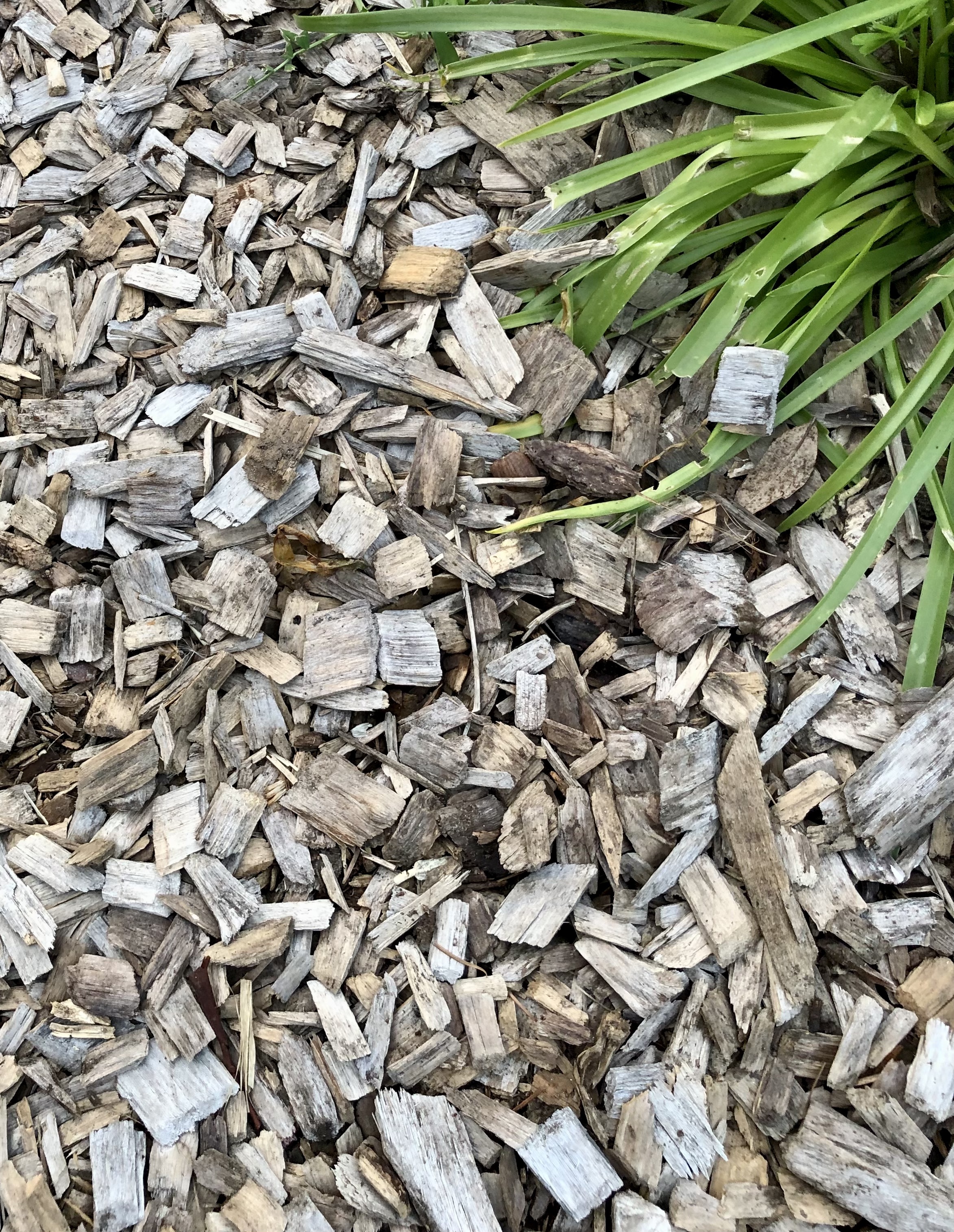
Alder chips: Long lasting mulch with a uniform appearance . Wood eventually breaks down adding carbon.
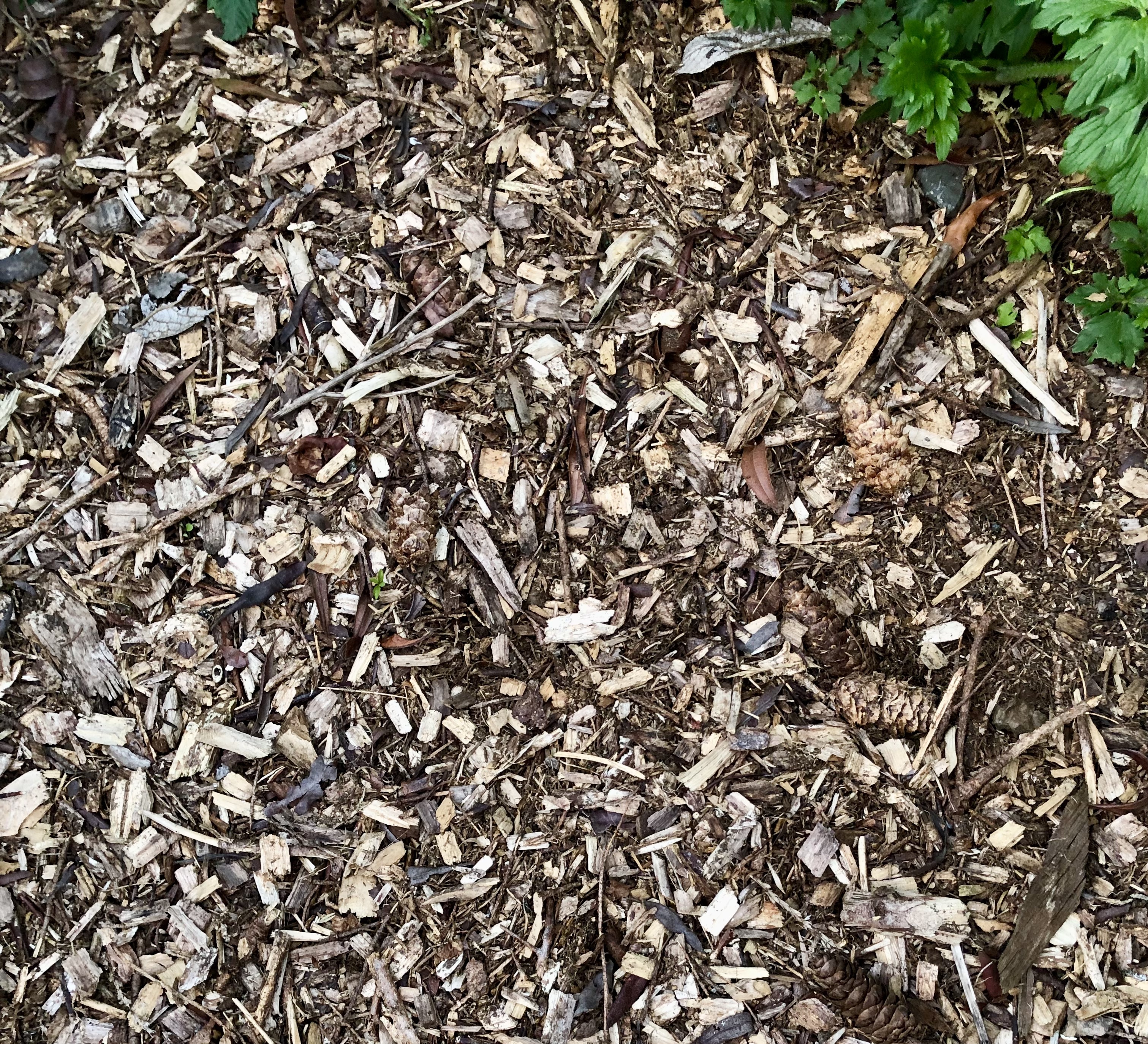
Arborist chips: has small branches and leaves chipped by arborist and road crews. If you let it decay first it provides great organic matter. Adds both carbon and nitrogen. Rough appearance but great for improving the soil. Great in orchards and ornamentla shrubs and trees.
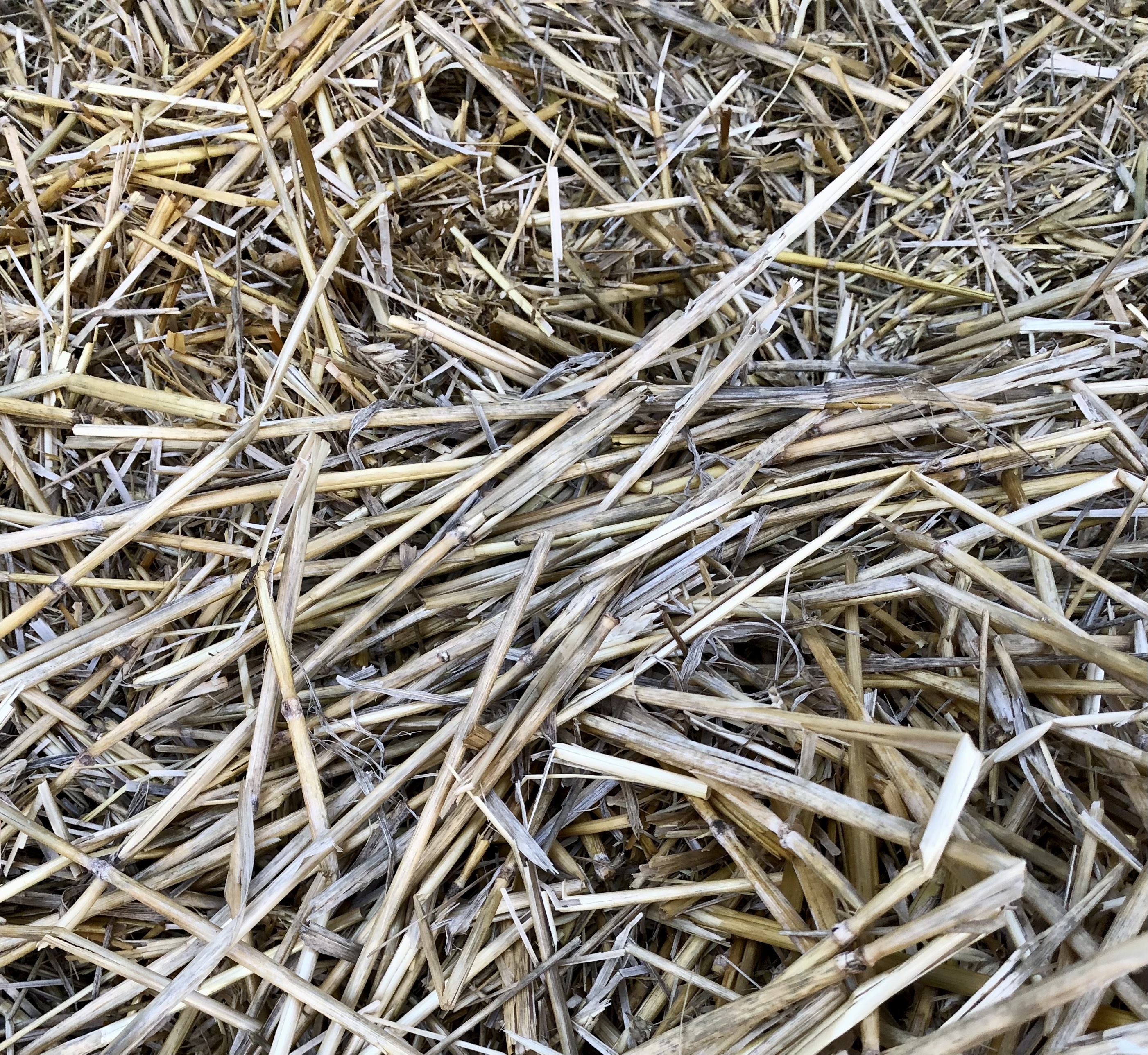
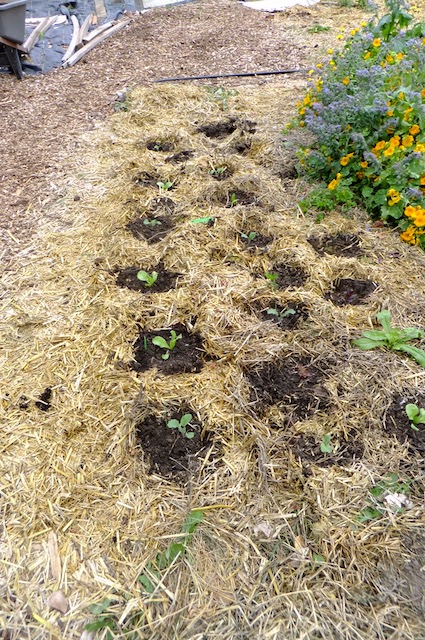
Straw: use in vegetable gardens and be on the look out for slugs and snails.
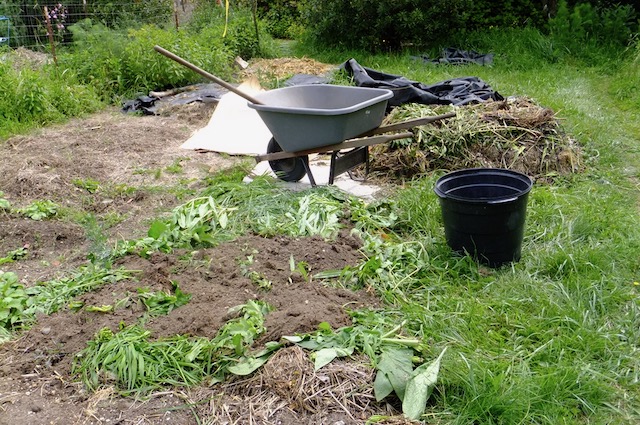
Sheet mulch: Layer about one foot of garden waste (no weeds that are going to seed). Dig a large hole for the vegetable transplants, add a quart of compost and plant.
Rotted cow manure: is mostly free of weeds and has a uniform appearance. attractive as top-dressing for perennials and vegetables.
Aged compost: excellent in vegetable garden and with flowers. May have weed seeds.
Spread mulch about 1 inch deep for vegetables; 2 to 3 inches for perennials; and 3 to 4 inches for shrubs and trees. Be sure to keep the mulch a couple of inches away from their trunks.
When adding powdered fertilizer to the beds of ornamentals and perennials add directly above the rotted cow or horse manure, or the rotted arborist chips. If you are using alder chips then pull away some of the chips to scratch the fertilizer directly into the soil.
Sheet mulch bed with seedlings in compost
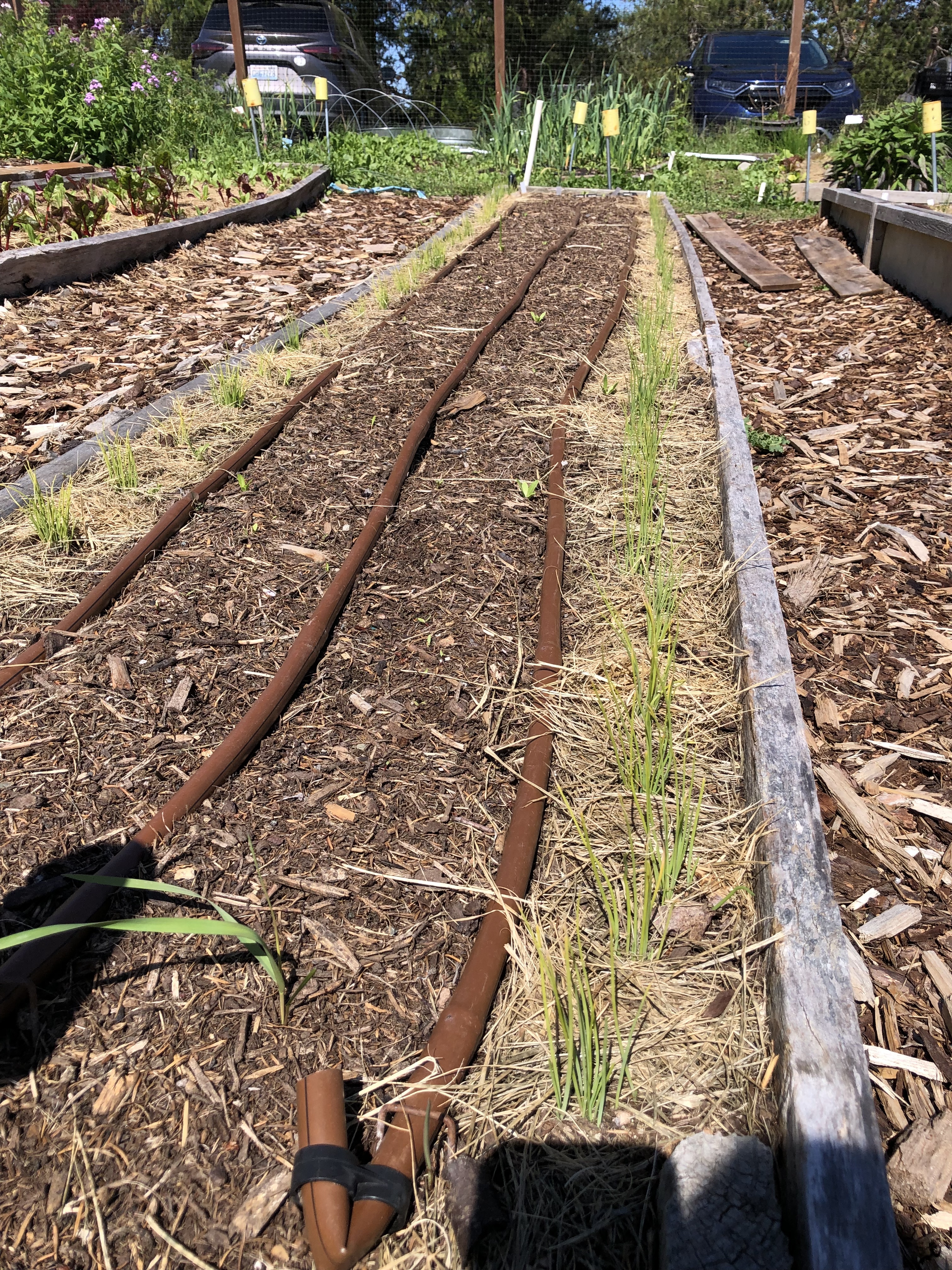
Drip Irrigation
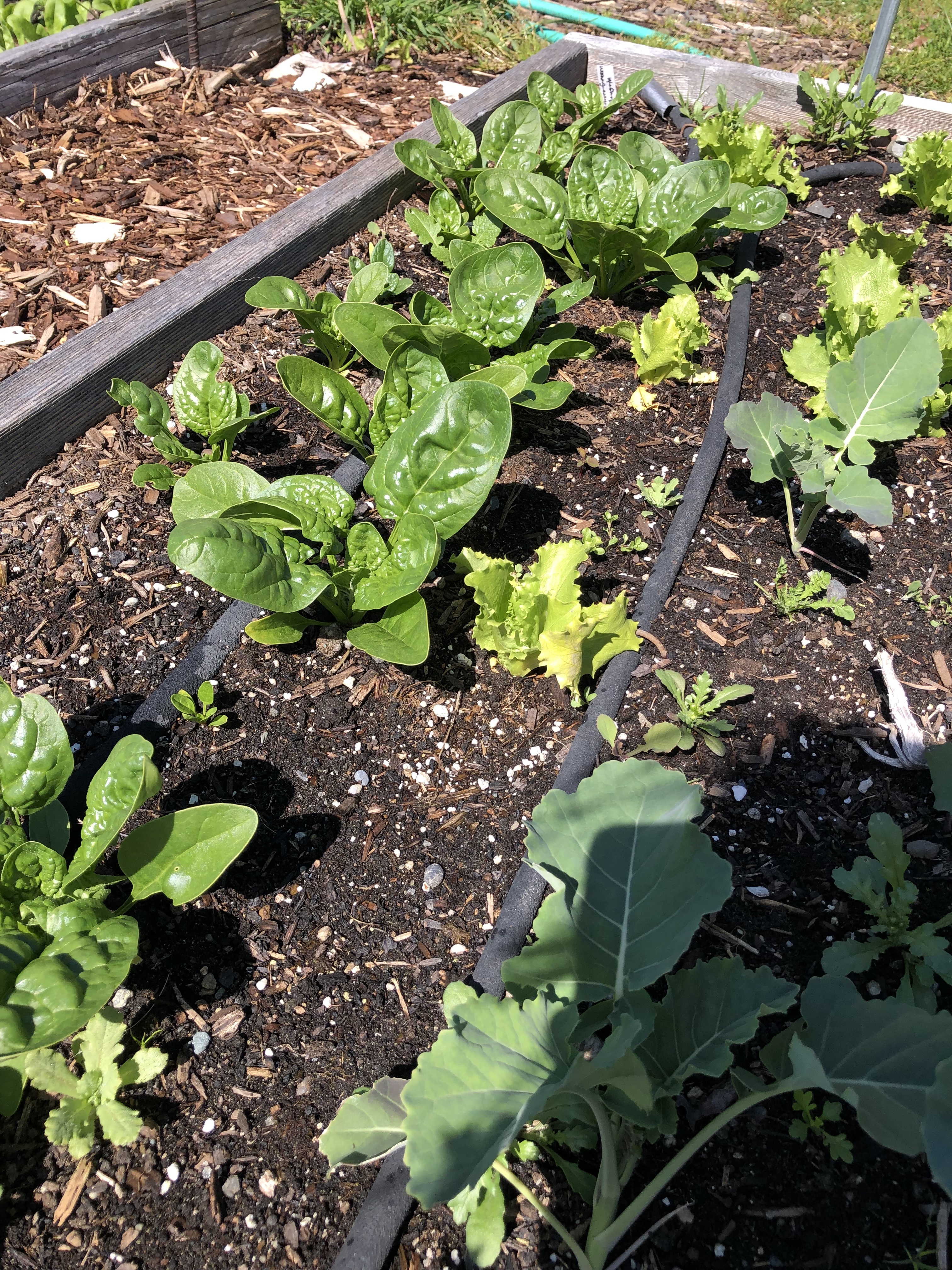
Photos of the Quimper Grange Food Bank Garden drip-tape and porous tubing.
Besides helping the environment by using drip irrigation, you can substantially lower your water bill. It’s possible to make back the cost of purchasing a system in one or two seasons. A great educational resource with how-to videos is Dripworks
Personally, I have been resistant to using drip irrigation because of all the plastic and the need for repairing cut tubing. But I’m ready to make the switch.
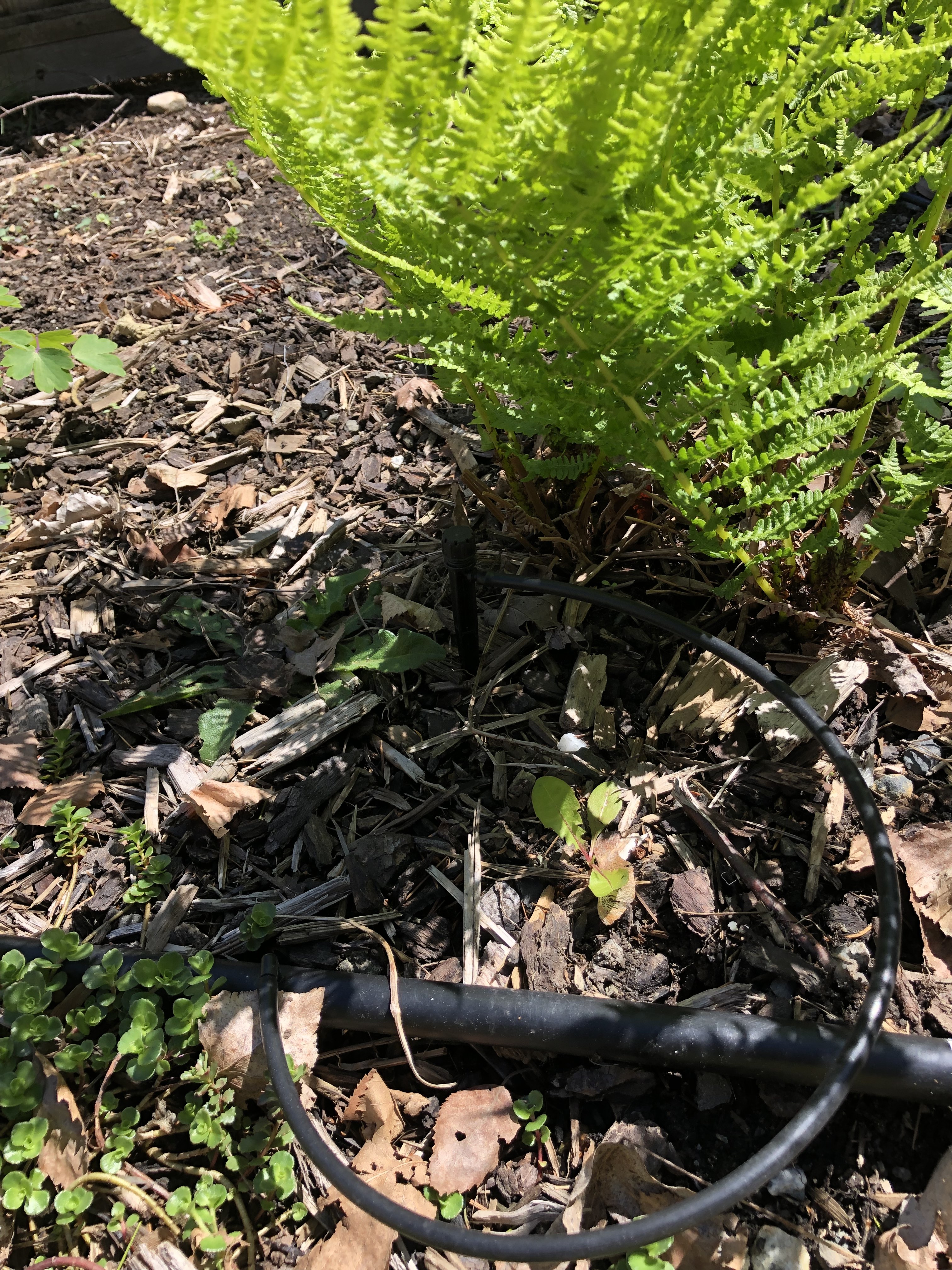
In ornamental gardens, drip emitters are frequently used to water individual plants. Keeping the tubing above ground is one way not to damage it while planting and weeding. A landscape spike dripper can raise the emitter off the ground.
Micro jets put out more water than drippers. This is useful for fast-growing, thirsty plants and for sandy soil. Timers keep everything on schedule.
So you’ve heard of this shrub, Sea Buckthorn, and think you want to try growing it, but you’re not sure if it is a good match for your place? Well, let’s take a look. The reasons to consider it are that as a landscape ornamental with willow-like silvery foliage and attractive orange berries, this is a tough, drought-tolerant plant. A large shrub or small tree, Sea Buckthorn can withstand coastal winds and grows in most soils.
As a permaculture plant Sea Buckthorn, Hippophae rhamnoides, has lots to offer: it restores degraded sites through preventing soil erosion and fixes nitrogen with the help of soil microbes. The edible and medicinal berry is an up-and-coming super-food that goes by the name Seaberry.
There are a couple of factors to think about, especially if you like to practice right plant-right place. If you want to keep it in polite company within the garden as an 8-foot shrub, purchase a named variety from a nursery. A popular choice is Titan, a Russian variety. Be sure to purchase a male too. You can find it and several other varieties at https://www.onegreenworld.com/ and http://www.raintreenursery.com/
Buy a variety and you get a known quantity; buy open-pollinated seedlings and the plants will be variable in size and shape. They can be very thorny. Since Sea Buckthorn is like Holly (dioecious), the female plant requires a separate male plant to produce fruit. One male can pollinate five females. With seedlings you might wait five years until flowering when you can sex the plants. Some seedlings are sold after they have flowered and are sold as female or male.
Sea Buckthorn trees at Ilana Smith’s in Port Townsend (note female tree on left)
Ilana Smith in Port Townsend has grown these two seedlings in her garden for about 25 years. Although she had never heard of the plant at the time, she was curious to try them. She trained them into attractive small trees, planted in the lawn. Mowing over the years has suppressed suckers (leafy sprouts from the roots).
Windbreaks or hedgerows call for many plants, and neither uniform size nor fruit production is critical. Seedlings are also much cheaper, maybe four dollars instead of twenty-five dollars. This farm in Maine has a great blog about seedlings and they sell both plants and seeds: http://www.jiovi.com/plants.html
How invasive is Sea Buckthorn? In vegetated environments with decent soil it will not become a problem because seeds won’t sprout and seedlings can’t survive with shade. Where it does spread is subarctic regions of the world and deserts of sandy soil with low fertility. It has become a problem in Alberta, Canada where one plant can colonize acres. On the other hand, the fibrous and suckering roots bind sand and add nitrogen, so it has been used extensively in China for reforestation and in the Netherlands for dune restoration. For more information on risks see this site connected with University of Wisconsin, Madison http://uncommonfruit.cias.wisc.edu/seaberry-sea-buckthorn/
I spoke to Phil at One Green World and asked how vigorously the varieties will grow. He told me that at their test farm in Molalla, Oregon there are several twenty-year-old shrubs. The largest varieties are about 12 to 15 feet tall but have not spread more than 6 to 8 feet wide. He recommends Titan for the west coast.
Sea Buckthorn can grow almost anywhere as long as it gets sunlight. If it gets less than half-a–day
sunlight, Sea Buckthorn seedlings will wither. Interior branches on mature plants die out from shading. Seedlings destined for a windbreak could be raised in a nursery bed and kept weeded to prevent shading from surrounding vegetation.
To be continued as Part 2 Seaberry Super-food, berry production
As I munched a couple of fresh black currants, I could not imagine them shrinking down to the sweet little dried currants I buy from the bulk bins at the co-op. Turns out dried currants are really tiny grapes originally from the region of Corinth, Greece. Maybe you knew that, but I didn’t! Now that I’m no longer confused, I can appreciate fresh black currants on their own merits! The big shiny berries are juicy and aromatic with tiny seeds. Sweet is not an adjective I would use for the ones I have tasted, but aromatic, spicy, and juicy are.
A good reason to include black currants in the landscape or food forest would be for their nutritional value. They have more phosphorus and potassium than any fruit; more iron and protein than any fruit save elderberry; and are highest in ascorbic acid (Vit C).
Where currants really shine are in preserves and beverages. Consider canning the fruit with cherries to make a preserve. It could be an interesting treat during the winter holidays served on crackers with goat cheese.
Mature size is about 3-5 ft high and wide. Space accordingly. Because they can tolerate more shade than many berries they grow well with trees, it’s just they produce less. Since they have shallow roots, currants work well with drip irrigation. Mulch helps them from drying out.
New branches come up from the crown and produce fruit the following year. Prune out wood older than 4 years old so most of the wood is one to three-years old growth.
Sustainable gardening is based on ecological principles. When we consider the home garden as an ecosystem, we develop the habit of observing patterns in nature and then look for similar patterns in gardens. Mature organic gardens, like natural systems are complex and rich. One of the goals of sustainable gardening is catching and holding resources.
Always start with the soil— enhance and maintain soil fertility by adding organic matter, so the existing soil microbes can thrive and flourish. Even a degraded site can develop a balanced ecosystem over time as the organic matter decomposes and forms humus. When the microbes of the soil web die, their decayed bodies act as slow-release fertilizer for garden plants. Focus on fertility includes compost, planting nitrogen fixers and other cover crops, adding manure, and growing plants that produce mulch.
We create more resilient gardens when we make connections with all of nature. Select plants that provide habitat for native insects, birds, and animals that can function together in a food web, as part of the home garden ecosystem. Layered gardens include trees shrubs and herbaceous plants that invite more beneficial visitors. The food web becomes more involved as rodents, snakes, and predatory birds engage.
When we design by grouping plants with similar environmental needs together there is less maintenance. Port Townsend’s mild wet winters and mostly dry summers are known as a Mediterranean climate. Native plants and plants from similar climates around the world, including Australia and New Zealand, offer many drought tolerant choices. Woody plants with edible fruits can be planted with an understory of perennial and annual herbs and edible flowers. Remember that perennials and annuals are more work than woody plants, so make sure they serve many functions!
Healthy, well-rooted plants withstand environmental stress caused by weather and poor drainage, and develop better resistance to insect pests and diseases. Planting in beds or mounds edged with paths makes a garden more inviting and eliminates the need for grass.
Gardening to the scale of the property lets us enjoy the intimate small garden or work with generous proportions of larger gardens to include the sky as part of the scale. Larger beds with masses of plants create bold simple patterns. Broadleaf evergreen shrubs and small trees can form the structure or bones of the garden. Strategic placement of flowering perennials and annuals allows us to enjoy the color with less work.
A friend of mine has moved to a beautiful old craftsman style-cottage in Port Townsend with a landscape full of edible plants. The other day a fragrant scent greeted me as I opened the gate. I turned down the side brick path before knocking on the door.
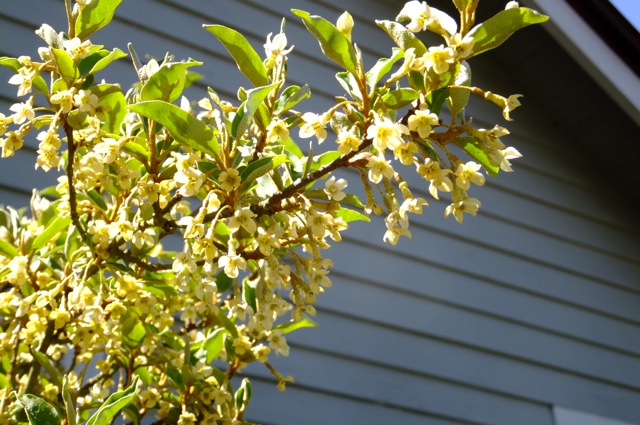
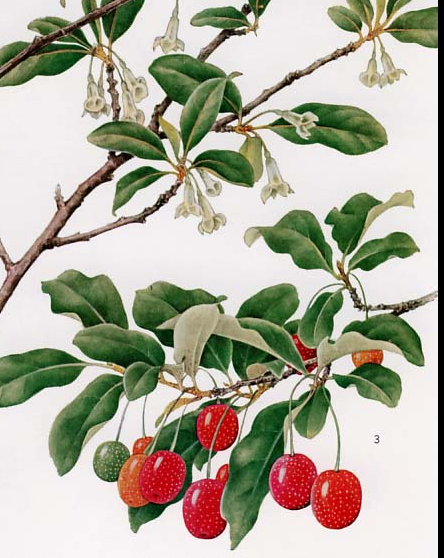
Was it coming from the flowering shrub with an abundance of pale-yellow tubular flowers? The shrub was humming with bees and other pollinators. What was it? The bronze colored scale on the tender stems made me think of Elaeagnus, the genus including Autumn Olive and Silverberry. But so many flowers! Compare the photo to the botanical illustration of the species below.
Late April 2014
Knowing this was an edible landscape, my mind flashed to an unusual deciduous shrub I knew from a garden I once tended in the late 1990’s. What was the name-goji? No, but something like that. The scarlet berries dangled from stems tantalizing me. In late summer I popped them in my mouth to savor the astringent sweet-tart flavors. The longer they were left unpicked the sweeter they became, that is if the birds didn’t get them first.
But the shrub I remembered was never wreathed in blossoms. The flowers were sparse. The shrub was growing on the edge of the garden next to blueberries, rhubarb, and Abronia. The client had gotten the plants from One Green World Nursery. I remember reading their catalog that promoted Mountain Ash, Sea Buckhorn, and other ornamentals that plant breeders in Russia and and Ukraine had been selecting for larger, more delicious fruits. The Oregon nursery owners had gone on plant expeditions to bring back edible crops.
QUICK FACTS
Soil: flexible, variable pH
Water needs: drought tolerant once established
Pest: disease and pest resistant. Protect trunks from girdling by rodent
Height: 6 to 9 feet
Foliage: deciduous silvery green
USDA hardiness: Zones 5-9
Medicinal: Lycopenes help prevent heart disease.
Propagation: Species by seed from ripe seed. Varieties by softwood cuttings with a heel in July/ August or hardwood cuttings from current year’s growth or and layering.
Cultivars: Sweet Scarlet™, Ukranian variety self-fertile but best when cross-pollinated with Red Gem™. Note trademark means plants are patented and cannot be propagated for commercial production!
Elaeagnus multiflora, an Asian native has been cultivated in the US for many years. LH Bailey, one of my horticultural heroes discusses it in The Standard Cyclopedia of Horticulture in 1927. It is native to Japan where it is known as natsugumi. There it grows into a small tree. Other edible Japanese natives in the genus include Aki-gumi, E. umbellate, known here as Autumn Olive. The fruits of this shrub are high in lycopene, so goumi may be too. Unlike Autumn Olive goumi is not invasive.
Nawashiro-gumi, E. pungens.
But this shrub was not a random seedling, but a named variety, grown from cuttings, I’m sure of it. Plant breeders have bred it to produce more flowers. Compare the photo of my friend’s plant with this botanical illustration:
Landscape and Permaculture Use
This drought tolerant, deer-proof and pest-free shrub offers a special bonus; nitrogen fixing. Elaeagnus form symbiotic relationships with bacteria called actinomycetes that form nodules on the shrub roots and fix nitrogen from the air. This characteristic is found in some plants that are the first to colonize disturbed sites. These pioneer plants can grow in poor soils and enrich the soil.
Taking a cue from nature, the permaculture design approach uses Elaeagnus as an early succession plant. Consider planting it in a windbreak of tough plants in poor soil and five years later remove some replacing them with plants that require more fertile soil.
Potential Crop Production
Researchers at the University of Wisconsin are exploring the potential for a commercial market for goumi. Planted in organic systems it can be grown like other hedgerow fruit crops like gooseberry, elderberry, serviceberry, and cornelian cherry. Plant them 4 feet apart and prune into multi trunk shrubs that are allowed to branch about two feet high and maintain at five or to six feet, so it can be mechanically harvested.
The edible portion, the leaf stalk or petiole, tastes like its sibling artichoke.
The form is dramatic—a bold architectural plant for the edible landscape.
Electric-blue flowers attract honeybees.
This giant perennial provides foliage and stalks for the compost pile.
Harvest Cardoon:
Cynara cardunculus is the botanical name of both cardoon and artichoke. If you grow cardoon as an edible ornamental, just harvest a few stalks in spring, the way you would harvest rhubarb. Let the perennial grow into its statuesque form. The early growth is tender while later in the season the stalks grow bitter. Let the flowers bloom as a bee crop but remove the spiky flower heads before they go to seed. In a few years the plant will be six feet tall.
Serious cardoon eaters, most of who live near the Mediterranean Sea, grow cardoon as an annual row crop planted on three-foot centers. Traditional growers blanch the crop in autumn 2 or 3 weeks before harvesting. Blanching deprives the plant of sunlight to reduce the crop’s bitterness. This process will not enhance the ornamental value, only the edible quality!
Here’s how: In September or before autumn rains begin, pound a 5-foot stake into the ground close to the crown of each plant and hug the plant to the stake. Next tie twine to the base and spiral up to within six inches of the top. Or tie three separate pieces. Wrap with corrugated cardboard or heavy brown craft paper. Let the top of the plant peek out. Blanch for two or three weeks and then harvest the entire plant. A faster blanching technique involves cutting roots on one side of the plant, pushing it over without uprooting and covering the plant with dirt.
If you love grey foliage in the garden, but are not interested in the edible petiole, consider this: The Royal Horticultural Society in England has tagged cardoon with their Award of Garden Merit. At Ecology Action Grow-Biointensive the plant has been recognized as a compost crop. A mini-hedge of mature cardoon grows in their Willits garden during the summer and provides carbon for compost piles. Permaculture gardeners like to plant it as an edge crop.
The trick is to harvest the plant before it goes to seed. If you do save seed, please do it responsibly, as escapees have become invasive weeds in Argentina, New Zealand, and parts of California.
Culinary Preparation: Although many traditional cardoon recipes are dairy-rich, Chez Panisse Café has served it as a marinated salad. Prevent the oxidation that turns the leaf stems brown by tossing them in water with lemon juice. Cut stalks to fit in a pan and boil for 15 minutes to remove the bitter flavor. Peel the ribs from large stalks. Cut into pieces and toss with olive oil and vinegar and garnish with hard-boiled eggs.








 Sustainable Garden Design