Late-Autumn Garden Chores

Late autumn usually brings the most precipitation to Port Townsend and the eastern part of the Olympic Peninsula. Atmospheric rivers dump rain. Strong winds blow and fallen leaves swirl. The sun is low in the sky.

The winter vegetable garden is producing, but most growth happened before the fall equinox. Garden beds covered with hoops and floating row covers will be protected from frosts. Fresh salad greens, kale, Swiss chard, and leeks  can be harvested throughout the winter. Monitor vegetables for slugs and cut worms. The wet weather favors slugs and snails. Get them now and there will be less generations come spring. Also cut worms are a problem and can be found during routine weeding.

Fruit Trees

Keep the base of young trees free of tall grass. Better yet, place mulch around the trunks. Winter is the time when voles chew bark and roots. If you have a serious vole problem wrap the trunks with hardware cloth to prevent the rodents from gnawing the bark. Some gardeners even use pea gravel as a mulch to discourage voles.
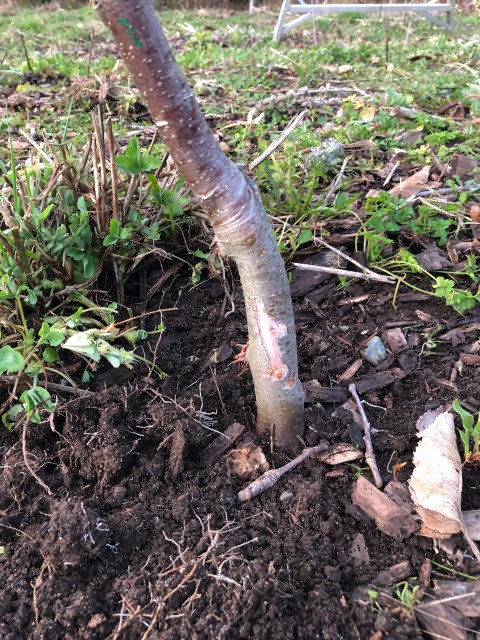
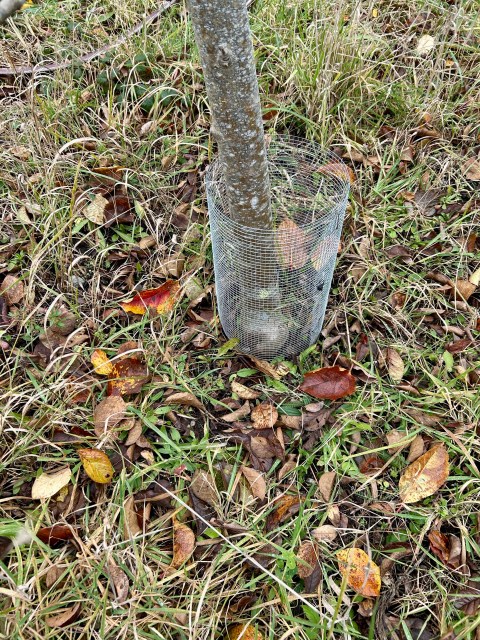
Late winter is a better time for pruning apple and pear trees, ornamentals and raspberries. The reason not to prune now is because we could have a warm, sunny spell in January that could encourage plants to grow—only to be blasted by a deep cold in early February. Better to wait until mid- February for most pruning. Because wet weather promotes bacterial and other diseases, many gardeners prune plums and cherries after flowering during a sunny spell.

This is a good time for large garden projects that warm the body. Pushing wheelbarrows of manure, woodchips, and  making large compost piles. Building planter boxes and retaining walls. Cutting down dead trees or cutting up branches for firewood or hauling them to the yard-waste facility. If you live in the woods, think about a larger tree-free area around the home as future fire-prevention.

Going within

And then there are times to slow down, take walks and notice the birds. Different birds are here for the season. Watch for Pacific wren, red-breasted nut hatch, northern flicker, pine siskin, golden-crown kinglet and spotted towhee.

Winter is a good time to dream about the garden. A garden mentor once said that the garden is forgiving—we can always try again next year. It’s a time to think about rearranging perennial beds and planting more drought tolerant flowers. Or perhaps it is time to think about  simplifying a high maintenance garden. For some gardeners seed catalogs arrive in January and planning the edible gardens begin. Now you can think about how you can extend the season or create a garden sanctuary.
Gardening for the Birds

Winter is a time to step back and evaluate the garden; to appreciate how much it has grown since last year and to analyze how we can improve it. One approach is considering it from a bird’s perspective. Gardens that favor birds provide food, water, cover and a safe place to nest.

Water for drinking and bathing is essential. Place it adjacent to shrubby habitat to provide refuge from predators. Shallow moving water with a place to perch is best, but a bird bath that has clean water is also valuable.

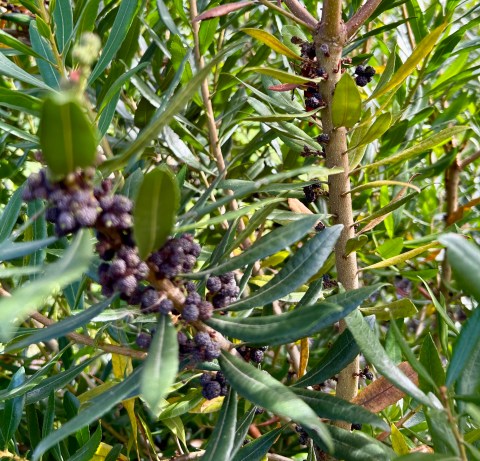
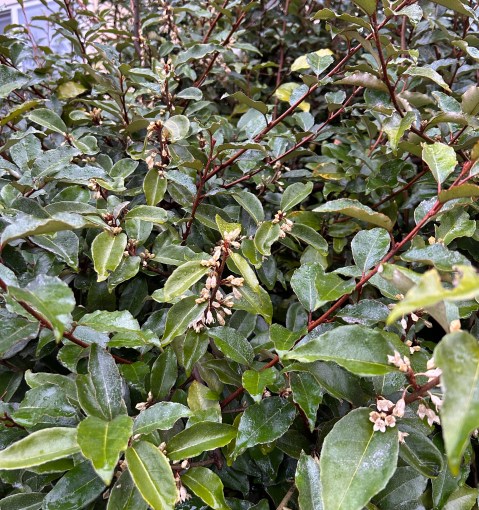
If the shrubs have berries, so much the better. Also, evergreen shrubs provide an excellent place to roost at night. Evergreen foliage provides screening from predators and insulation from winter’s cold. Above is Ebbings Silverberry, Elaeagnus x ebbingei in bloom. Hummingbirds were feeding here mid-November and new flowers keep opening. Below is Strawberry Tree, Arbutus unedo and Pacific Wax Myrtle, featured in an earlier post.

Arbutus undo

Feeding the birds

Bird feeders come to mind first and many people are committed to providing bid seed and suet. Some birds change their diet according to the season. Perennial seed-heads offer another option. Native plants have evolved with the local bird populations. In addition, perennials can be selected for architecturally interesting seed-heads. Plants in the mint family including sages, Salvia; anise hyssop, Agastache and Jerusalem sage, Phlomis. Sunflower family flowers like Joe-Pye weed, Echinacea, black-eyed Susan, Rudbeckia hirta and artichoke are attractive to birds.

Many cat owners recognize that a cat can kill up to eleven birds a year. A ‘Catio’, or cat patio is an outdoor enclosed space that protects cats from eagles and hawks and prevents cats from killing birds. Many homeowners have found ways to integrate this structure into their landscape. One of my favorite catios is that of my friends Kathleen and Pete. They constructed their catio around an existing blueberry patch, thus excluding birds from berries and cats from birds!

Watching birds is a relaxing and invigorating hobby for gardeners. People start off with bird feeders and it opens up an entire world. When David Sibley, author of The Sibley Guide to Birds, was asked why he enjoyed watching birds, he responded:

One of the most enduring attractions for me is that it gives me a chance to learn about an entire system (the natural world) by simply watching and getting to know the birds. When I can name a bird that I see, or notice subtle differences in appearance or behavior, that information gives me access to a store of knowledge about the species’ habits and preferences. I know where its travels might have taken it, what type of food it’s looking for, if it’s likely to be alone or part of a flock. In short, I know that bird and have a sense of how it fits in the world around it.

Check out The Courage of Birds: The Often Surprising Ways They Survive Winter, a new book by the birding team Pete Dunne and David Sibley.

Consider gifting a gardener/birder an online course covering everything about gardening for birds:

Cornell Lab Bird Academy

Hairy Manzanita

Arctostaphylos columbiana

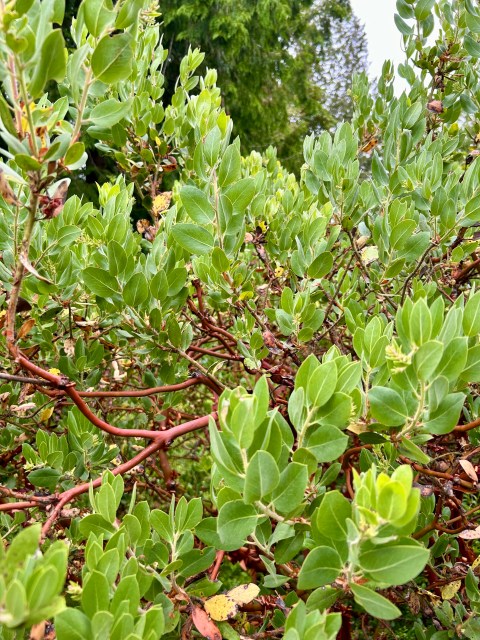
This native manzanita is uncommon on the Quimper Peninsula , but I have seen it growing wild on Cape George Road and close to Kala Point. The above photos are of a shrub that Willy Smothers grew at his place on Marrowstone Island. Recently Janet Welch pruned it to highlight the beautiful peeling bark.

The tiny ‘apple-like’ fruits are eaten by birds, small mammals and patient gardeners. It grows in the coastal scrub community and its range is from Sonoma County, California to Vancouver Island. Along with shore pines, manzanita can grow on and stabilize sand dunes. Native specimens can also be found in the understory of open coniferous forests in the Cascades. The critical factor is gravelly soil. The peeling bark is an attractive feature that it shares with its cousin Madrone. However, it is more closely related to our native groundcover kinnikinnick, Arctostaphylos uva-ursi. In fact a hybrid called Arctostaphylos x media is cross between the two.

Care for Manzanita

Manzanita rewards the patient gardener. Select a site with full sun and excellent drainage. It is best to start with plants in one-gallon containers. Water weekly until new growth appears and then taper off. One way to avoid crown rot is to plant it a little bit higher than the existing grade and mulch with woodchips. Don’t mulch with compost. Use drip irrigation because overhead water will encourage fungal disease. Keep it on the lean-side and avoid adding soil amendments. Once established it is completely drought tolerant.

Here is another manzanita, a hybrid, (probably Arctostaphylos x media) used in the landscape of Kathleen Turaski and Peter Hornsby This drought-tolerant garden includes Ceanothus and red hot poker, Kniphofia. They hope to remove the deer fencing once the plants are mature. But realistically, they may need to keep the fence in place—even if deer don’t browse a plant to death, they often step on and break branches of nearby plants.

Oregon State University, Horticulture Dept has many more photos, including pictures of the flowers and fruits. A great new native plant nursery opened in Kingston. Salish Trees Nursery carries hairy manzanita. Their knowledgeable staff will be a great help. Far Reaches Nursery has a superb variety of Arctostaphylos densiflora—Howard Mc Minn.

This hybrid Manzanita is an excellent drought tolerant choice
Manzanita flowering in April

Native Berry Plants in the Landscape

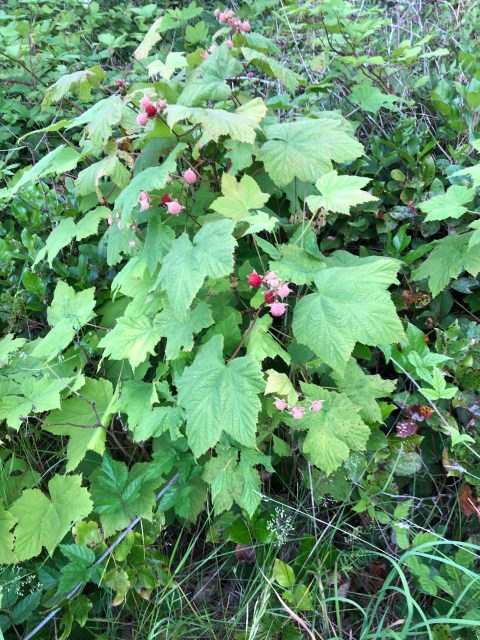
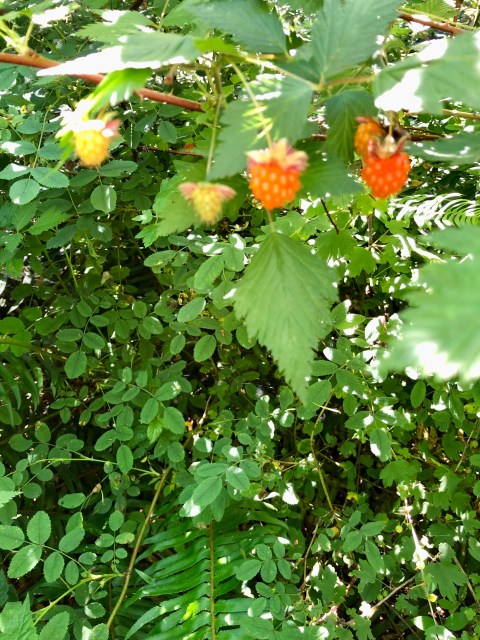
July is the time of wild berries here in the Pacific Northwest. The Rubus clan, best known for raspberry and blackberry also include many other members with edible fruits. Two woody shrubs that are fruiting now are Thimbleberry, Rubus parviflorus, and Salmonberry, R. spectabilis. These two edible berries were staples of native peoples. Around here, harvesting thimbleberries is a summertime pleasure. Children love to place the thimble-like fruit on their fingertips.

On the Quimper Peninsula I have only seen these two Rubus species growing on moist sites, but in some regions wild thimbleberry may occur on drier sites. In Jefferson County the water table is close to the surface in low-lying areas creating wetlands. These plants are also commonly found along stream sides, and can withstand being flooded for short periods of time, thus making these shrubs useful in the rain garden. They can also be part of restoration landscapes. The deer browse the buds and stunt newly planted shrubs. Fencing, caging or spraying deer repellent for a few years is necessary for them to get established. The local deer population has suffered from loss of habitat and loss of predators.

Salmonberry, Rubus spectabilis

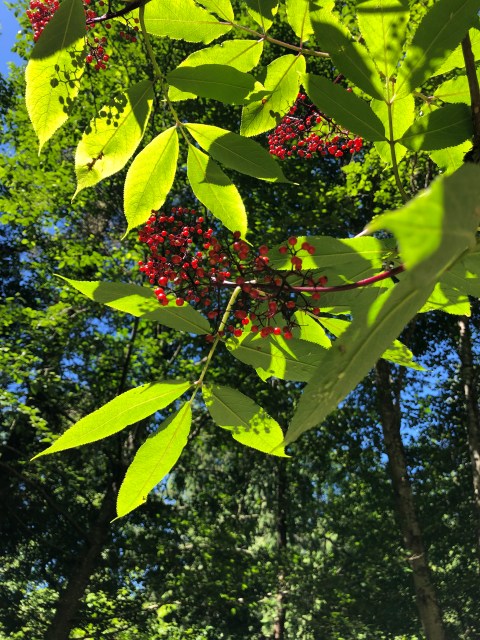
Another coastal native that’s fruiting now is red elderberry, Sambucus racemosa. The white flower cluster of has a pyramidal shape This berry can be edible if cooked, but I have never tasted it. Raw berries can cause nausea. All other parts of the plant are toxic. This plant grows easily in all soils and sun or shade.

Red Elderberry, Sambucus racemosa

(Blue elderberry, Sambucus nigra caerulea has white flower clusters that are flat. It is an edible, medicinal and ornamental plant.)

Other iconic berries will fruit soon including salal and huckleberry, stay tuned!

Serviceberry: A native tree for the edible landscape

Serviceberry, Amelanchier alnifolia, is a multi-trunk small native tree reaching about 15 feet high and about 10 feet wide. It is an attractive addition to the garden—in spring it is covered with white blossoms and the foliage turns a butter yellow in autumn. Edible fruits are a favorite with many birds, including the cedar waxwing. There is nothing like a small flock of these delicate birds in ones tree to stop the mind!

Serviceberry does best in a sunny spot but will tolerate partial shade. To encourage growth water it regularly until it is established, then only water during the driest months. Since its native range is from Alaska to California, it should be hardy even in the toughest winters.

Botanical name: Amelanchier alnifolia

(ame-e-LANG-kee-er al-ni-FO-le-ah)

Working around the tree in summer I might nibble on the delicious tiny fruits, but mostly I leave them for the birds. Around here that include  waxwings, goldfinches, thrushes and towhees, among others. The tree provides nectar for hummingbirds. Washington Native Plant Society offers much more information on using them for restoration.

About 25 years ago, I started a nursery bed for young bare-root trees from the conservation district. I planted them in rows that were easy to water and weed; after a couple of years, I transplanted them around my property. A minimum amount of pruning to shape them has really helped their form. Since they are in the rose family and a relative to our common fruit trees, understanding their growth patterns was straightforward. A row of four trees on the property line is a cheerful herald of spring. These photos were taken in 2015. Since then I forgot to water them during some of our summer ‘heat-domes’ and they have struggled. I plan to water deeply once or twice a month in August and September as needed.

Although I have only grown serviceberry seedlings, there are named varieties that have been bred for fruit and landscape appeal. ‘Regent’ serviceberry is a desirable edible landscape plant that was developed in North Dakota. It grows about 8 feet tall and has delicious berries.

Black Currants

As I munched a couple of fresh black currants, I could not imagine them shrinking down to the sweet little dried currants I buy from the bulk bins at the co-op. Turns out dried currants are really tiny grapes originally from the region of Corinth, Greece. Maybe you knew that, but I didn’t! Now that I’m no longer confused, I can appreciate fresh black currants on their own merits! The big shiny berries are juicy and aromatic with tiny seeds. Sweet is not an adjective I would use for the ones I have tasted, but aromatic, spicy, and juicy are.

A good reason to include black currants in the landscape or food forest would be for their nutritional value. They have more phosphorus and potassium than any fruit; more iron and protein than any fruit save elderberry; and are highest in ascorbic acid (Vit C).

Where currants really shine are in preserves and beverages. Consider canning the fruit with cherries to make a preserve. It could be an interesting treat during the winter holidays served on crackers with goat cheese.

Mature size is about 3-5 ft high and wide. Space accordingly. Because they can tolerate more shade than many berries they grow well with trees, it’s just they produce less. Since they have shallow roots, currants work well with drip irrigation. Mulch helps them from drying out.

New branches come up from the crown and produce fruit the following year. Prune out wood older than 4 years old so most of the wood is one to three-years old growth.

Sustainable Garden Functions

Sustainable gardening is based on ecological principles. When we consider the home garden as an ecosystem, we develop the habit of observing patterns in nature and then look for similar patterns in gardens. Mature organic gardens, like natural systems are complex and rich. One of the goals of sustainable gardening is catching and holding resources.

Always start with the soil— enhance and maintain soil fertility by adding organic matter, so the existing soil microbes can thrive and flourish. Even a degraded site can develop a balanced ecosystem over time as the organic matter decomposes and forms humus. When the microbes of the soil web die, their decayed bodies act as slow-release fertilizer for garden plants. Focus on fertility includes compost, planting nitrogen fixers and other cover crops, adding manure, and growing plants that produce mulch.

We create more resilient gardens when we make connections with all of nature. Select plants that provide habitat for native insects, birds, and animals that can function together in a food web, as part of the home garden ecosystem. Layered gardens include trees shrubs and herbaceous plants that invite more beneficial visitors. The food web becomes more involved as rodents, snakes, and predatory birds engage.

When we design by grouping plants with similar environmental needs together there is less maintenance. Port Townsend’s mild wet winters and mostly dry summers are known as a Mediterranean climate. Native plants and plants from similar climates around the world, including Australia and New Zealand, offer many drought tolerant choices. Woody plants with edible fruits can be planted with an understory of perennial and annual herbs and edible flowers. Remember that perennials and annuals are more work than woody plants, so make sure they serve many functions!

Healthy, well-rooted plants withstand environmental stress caused by weather and poor drainage, and develop better resistance to insect pests and diseases. Planting in beds or mounds edged with paths makes a garden more inviting and eliminates the need for grass.

Gardening to the scale of the property lets us enjoy the intimate small garden or work with generous proportions of larger gardens to include the sky as part of the scale. Larger beds with masses of plants create bold simple patterns. Broadleaf evergreen shrubs and small trees can form the structure or bones of the garden. Strategic placement of flowering perennials and annuals allows us to enjoy the color with less work.

Native tree provides pollen, edible fruit

Permaculture Shrub Goumi


A friend of mine has moved to a beautiful old craftsman style-cottage in Port Townsend with a landscape full of edible plants. The other day a fragrant scent greeted me as I opened the gate. I turned down the side brick path before knocking on the door.

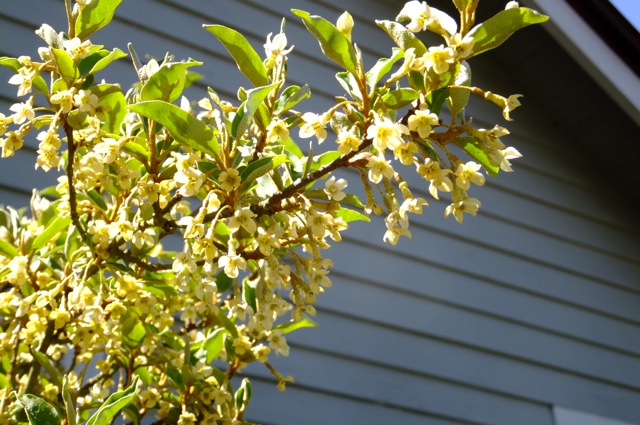
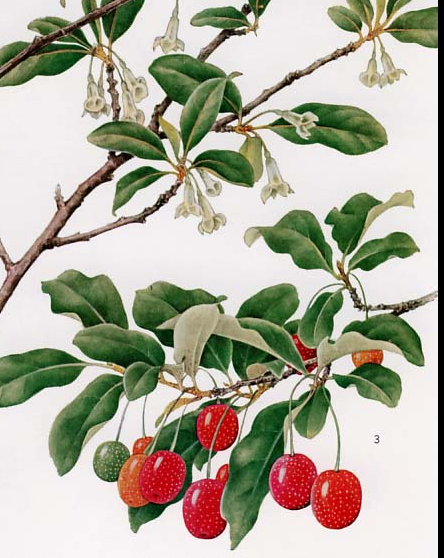
Was it coming from the flowering shrub with an abundance of pale-yellow tubular flowers? The shrub was humming with bees and other pollinators. What was it? The bronze colored scale on the tender stems made me think of Elaeagnus, the genus including Autumn Olive and Silverberry. But so many flowers! Compare the photo to the botanical illustration of the species below.

Late April 2014
Late April 2014

Elaeagnus multiflora

Knowing this was an edible landscape, my mind flashed to an unusual deciduous shrub I knew from a garden I once tended in the late 1990’s. What was the name-goji? No, but something like that. The scarlet berries dangled from stems tantalizing me. In late summer I popped them in my mouth to savor the astringent sweet-tart flavors. The longer they were left unpicked the sweeter they became, that is if the birds didn’t get them first.

But the shrub I remembered was never wreathed in blossoms. The flowers were sparse. The shrub was growing on the edge of the garden next to blueberries, rhubarb, and Abronia. The client had gotten the plants from One Green World Nursery. I remember reading their catalog that promoted Mountain Ash, Sea Buckhorn, and other ornamentals that plant breeders in Russia and and Ukraine had been selecting for larger, more delicious fruits. The Oregon nursery owners had gone on plant expeditions to bring back edible crops.

QUICK FACTS

  • Soil: flexible, variable pH
  • Water needs: drought tolerant once established
  • Pest: disease and pest resistant. Protect trunks from girdling by rodent
  • Height: 6 to 9 feet
  • Foliage: deciduous silvery green
  • USDA hardiness: Zones 5-9
  • Medicinal: Lycopenes help prevent heart disease.
  • Propagation: Species by seed from ripe seed. Varieties by softwood cuttings with a heel in July/ August or hardwood cuttings from current year’s growth or and layering.
  • Cultivars: Sweet Scarlet™, Ukranian variety self-fertile but best when cross-pollinated with Red Gem™. Note trademark means plants are patented and cannot be propagated for commercial production!

Elaeagnus multiflora, an Asian native has been cultivated in the US for many years. LH Bailey, one of my horticultural heroes discusses it in The Standard Cyclopedia of Horticulture in 1927. It is native to Japan where it is known as natsugumi. There it grows into a small tree. Other edible Japanese natives in the genus include Aki-gumi, E. umbellate, known here as Autumn Olive. The fruits of this shrub are high in lycopene, so goumi may be too. Unlike Autumn Olive goumi is not invasive.

Nawashiro-gumi, E. pungens.

But this shrub was not a random seedling, but a named variety, grown from cuttings, I’m sure of it. Plant breeders have bred it to produce more flowers. Compare the photo of my friend’s plant with this botanical illustration:

Landscape and Permaculture Use

This drought tolerant, deer-proof and pest-free shrub offers a special bonus; nitrogen fixing. Elaeagnus form symbiotic relationships with bacteria called actinomycetes that form nodules on the shrub roots and fix nitrogen from the air. This characteristic is found in some plants that are the first to colonize disturbed sites. These pioneer plants can grow in poor soils and enrich the soil.

Taking a cue from nature, the permaculture design approach uses Elaeagnus as an early succession plant. Consider planting it in a windbreak of tough plants in poor soil and five years later remove some replacing them with plants that require more fertile soil.

Potential Crop Production

Researchers at the University of Wisconsin are exploring the potential for a commercial market for goumi. Planted in organic systems it can be grown like other hedgerow fruit crops like gooseberry, elderberry, serviceberry, and cornelian cherry. Plant them 4 feet apart and prune into multi trunk shrubs that are allowed to branch about two feet high and maintain at five or to six feet, so it can be mechanically harvested.

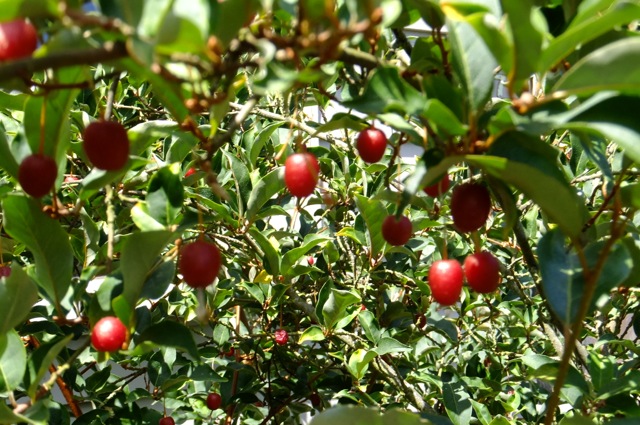
Goumi berries