Radio Interview: The Drought of 2015 and Gardening with Natives

Here is a transcript from a local radio show. Debaran Kelso, host of Nature Now interviews me about the drought and gardening with natives.

DK: I heard that this year is our driest in 64 years, and that the Olympic Peninsula is experiencing severe drought. Our native plants are adapted to dry summers and wet winters, which is the definition of a Mediterranean climate, but it’s hardly ever THIS dry and warm! What are the first indications that a plant is undergoing water stress, Jeanmarie?

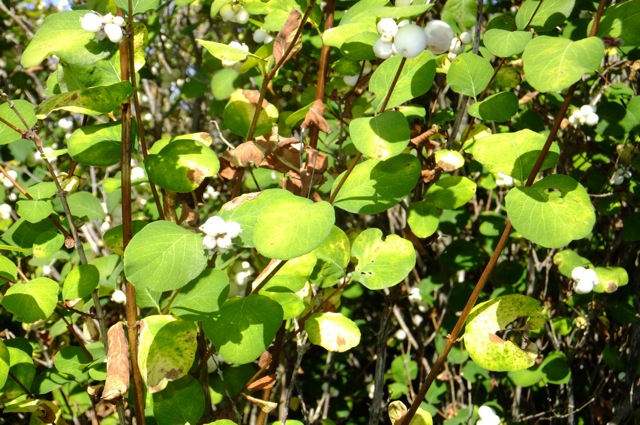
JM: Some native plants started wilting a month ago, some plants have leaves that are brown or scorched along the leaf margins, or even turning yellow and dropping prematurely. If we have several years of drought the plants can get so stressed that they will be prone to disease and possibly die if not given attention.

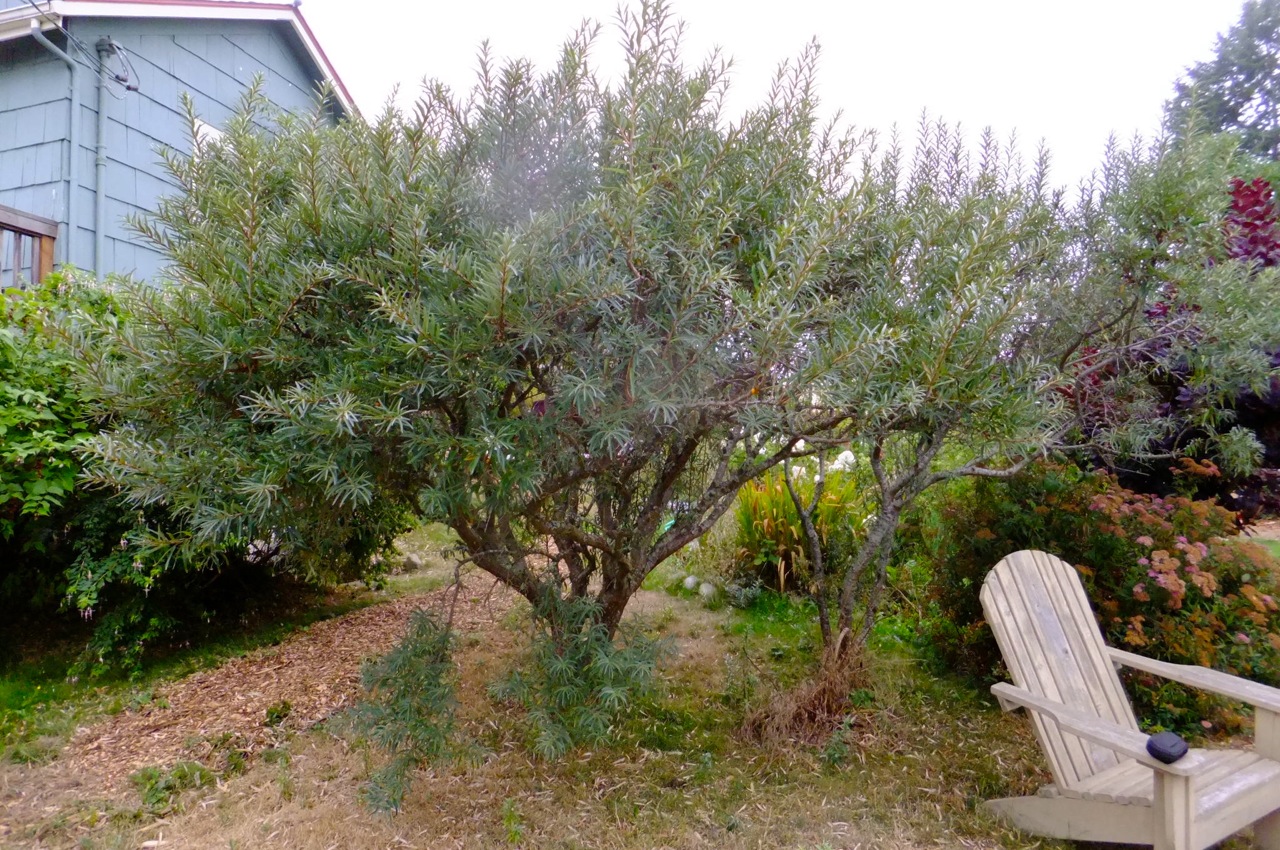
Snowberry drougth

DK: What are the broad categories of plant type that we have in our area, and are some of them better than others at being adapted to drought?


JM: Well we have trees and shrubs, both evergreen and deciduous. Both types loose leaves, by the way, deciduous ones just drop them all at once in the fall. Evergreens loose their leaves slowly all year and always have enough that they look green. When people hear the word “evergreen”, they automatically think of conifers like Doug fir and cedar, but here in the PNW evergreen can describe broadleaf trees and shrubs.


DK: Broadleaf just means flat wide leaves such as maples and oaks.


JM: Right. We have beautiful evergreen broadleaf plants like madrone, rhododendron, and salal. In fact these plants are considered choice ornamentals in England that has similar maritime climate. So our native plants include trees, shrubs, groundcovers, herbaceous perennials, ferns, and annuals.

DK: Would you describe how plants lose water?

JM: On the outer surface of leaves are tiny structures called stomata. Plants breathe through these pores and release moisture that is pulled up from the roots. If you have noticed a squash plant in the middle of the day this summer, it can be totally wilted and then come back to life in the evening. The pores on the leaf let out moisture. Now, as you mentioned earlier, our dry summers and mild wet winters are characteristic of a Mediterranean climate.

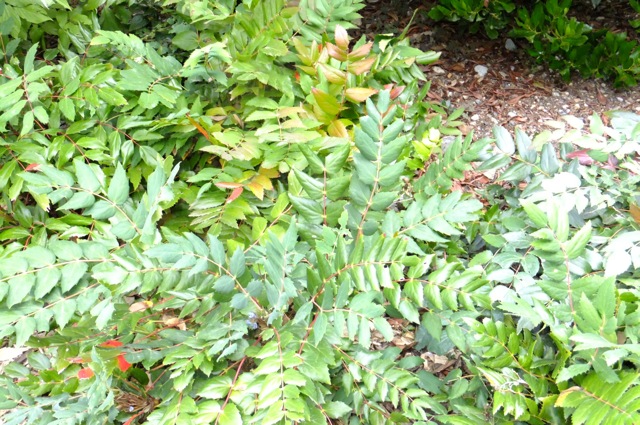
Many of our evergreen natives have adaptations similar to plants from other areas prone to drought, adaptations such as leathery texture or a waxy surface, both help plants loose less water through their leaf pores. We have 2 kinds of Oregon grape here, one shiny and the other leathery. Before I mentioned rhodies, salal, and madrone…

Leathery leaves of Oregon Grape reduce water loss

DK: Don’t forget evergreen huckleberry and beach strawberry! And the succulent leaves of sedum.

JM: Right. Also deciduous plants have ways to reduce moisture loss, grey foliage plants have fine hairs that give it that color. You can notice the gray under side of leaves like Scouler’s willow when the wind blows.


DK: What can we do, in general, to help our plants cope with our current lack of rain?

JM: First we have to rethink watering. Quick light sprinkling will not get water to the root zone of most plants. Frequent shallow watering leads to shallow roots; shallow roots in turn leads to more rapid stress under drought and hot conditions. Deep infrequent watering leads to roots growing deep. Always check soil after watering. Use a trowel or your finger; soil should be moist 3” deep. Overhead watering is a luxury in a drought it is inefficient, some water blows away. The little bit of rain we’ve had might enter plants through their leaves but we need the roots to get a good soaking.

DK: Drip irrigation is a really good way to go, isn’t it?

JM: Yes! It’s great if you are able to make the commitment to convert the garden to drip irrigation. In the long run you will have a healthier garden and save yourself money on water bills. And you won’t have to be wondering which plants to ignore. There are many drip irrigation systems to choose from that vary depending on type of planting, such as annual veggies versus woody trees and shrubs. Drip Irrigation slowly delivers water to the roots.

DK: Soil type is also very important when we’re considering water absorption, right?

JM: Yes, knowing your soil is essential for gardeners! Different types have different needs and will hold the water differently. Sandy soil absorbs water quickly but doesn’t hold it. Drip irrigation emitters need to be closer together cause the water doesn’t spread out as wide. Clay soil absorbs slowly and holds the water longer so use low-flow emitters, water longer, and water less frequently. Water less when it is cloudy. Plants under house eaves and on the western and southern side of house dry out faster.

DK: And adding more organic material to the soil will help it to retain more moisture, correct?

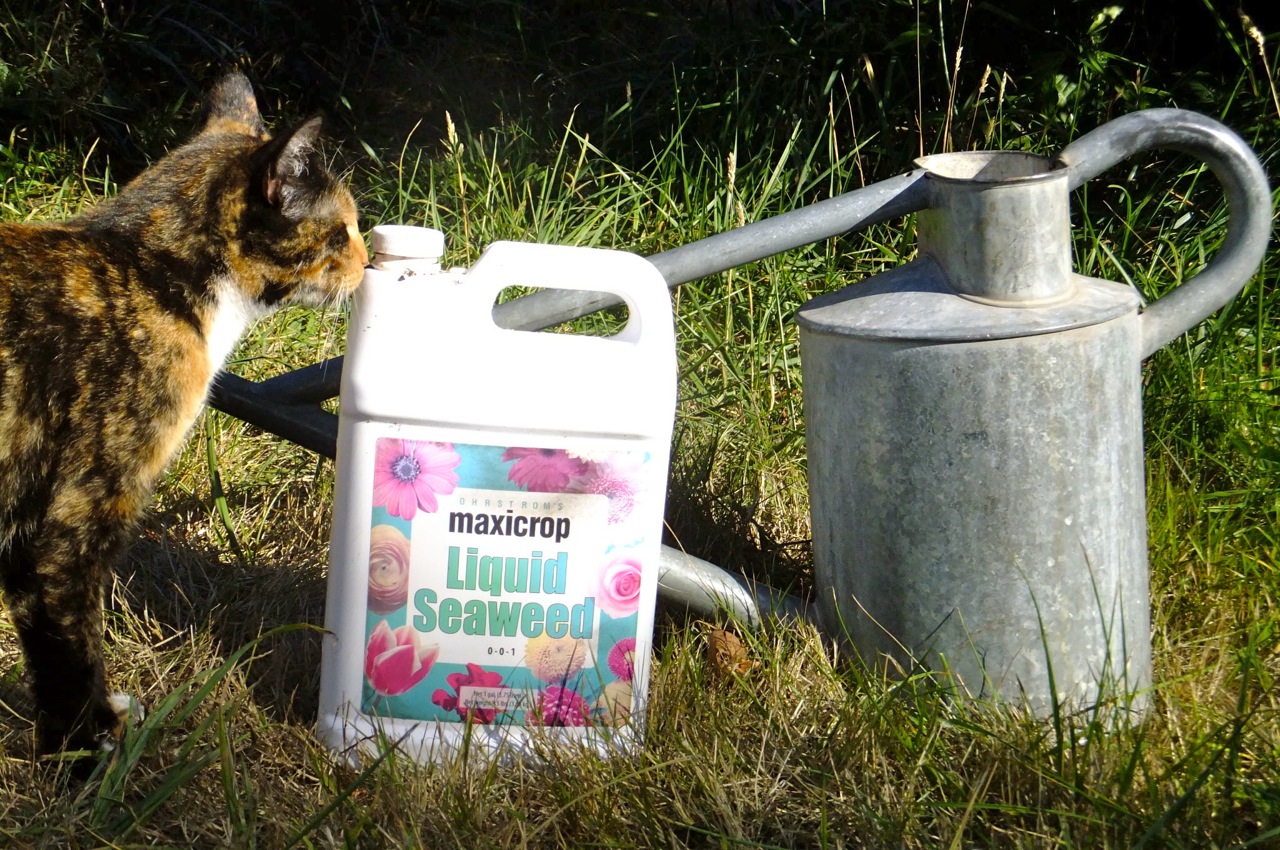
JM: Yes, Add compost to the soil; it acts like a sponge. Also compost tea will encourage healthy soil microbes. It even encourages microbes that will protect the plant roots from disease pathogens entering. Watering plants with a solution of seaweed extract increases their ability to withstand drought stress, because  it adds micronutrients and feeds the soil microbes growing around the roots. These beneficial microbes protect the plant from pathogens. Maxicrop


DK: What about mulch? Perhaps we should have you start with the definition of what “mulch” is!

JM: Mulch is something that covers the surface of garden soil to retain moisture, prevent weeds, and improve soil fertility. It can also be used to visually tie the garden together.

Although sometimes rocks are used, mulch is usually organic matter.

If you are decide to mulch now, make sure you water deeply, then add 3-4 inches of mulch around shrubs and small trees. Leave a well around the trunks because wet mulch touching the trunk can encourage fungal disease. Think of placing the mulch in a donut around trunks not a volcano! Place 2 inches mulch around perennials. Mulch with wood chips, chipped branches and leaves, dairy manure, compost, or bark mulch. Another way to mulch is use the plants fallen leaves, the surrounding weeds and any prunings or trimmings as rough mulch. If I do this, I like to cut them up fine so they breakdown faster. Always check to make sure water is reaching the roots.


DK: So the things that we’ve spoken about thus far are all things that we can do to help plants that are already in the landscape- what would you suggest for our listeners that are wishing to renovate their garden with native species that are more drought tolerant?


JM: There are many beautiful NW natives and the answer depends on several things:

Where you live, including how much rainfall and what type of soil is on the site. What you do on the property and how much space you have. Although we live in the PNW, much of PT and north end of Quimper Peninsula is in a rainshadow of Olympics with only about 20 inches of rain. Outside of town, especially heading south there is lots more rain. Brinnon and Quilcene get over 50 inches, mostly in winter.Native plants occur in plant communities adapted to conditions such as sunny drier locations or shady dry, shady moist. Get to know your property where the coolest, moist sites are and the driest spots that get full afternoon sun.


DK: It seems to me that one of the best things to do is to not be in too much of a hurry to alter the landscape of your property! Living in a place for a year or two can be invaluable in terms of teaching you what likes to grow where, and what the microclimates are in your immediate area…

JM: Yes, there are definitely microclimates on each site. For example, soil on the western and southern side of a house dry out faster. You don’t have to wait for a couple of years, if you want to get started, you can purchase plants and grow them in your own little nursery. Then transplant them next fall. Make sure you protect them from deer!

Always research what a plants need and understand your site. I like to remember: Right Plant Right Place. Some moisture-demanding plants like rhodies, azaleas and ferns need to be watered more often no matter what.

Plant drought tolerant native shrubs and water them in for the first couple of years. Make a basin of dirt walls around the plant to hold more water.

DK: A common error, that I have sadly made myself on multiple occasions, is to think that because a plant in “native” to our area, that it does not need to be babied somewhat during its first couple of years in a new landscape. I have lost several fine native seedlings by planting them and not keeping them properly watered for the two or three years that they usually need to get established!

JM: One thing I like to remind people of is when we see a shrub in the woods; maybe 30 or 40 other seedlings that started at the same time didn’t make it. These are tough little plants that rooted in the decayed leaf litter and slowly grew roots down. Nursery plants have lived a coddled existence, the rooting medium is not too wet or too dry not, protected from freezing, they have been regularly watered and fertilized. In fact, that newly transplanted flowering currant is so tender and lush, that it is like lettuce for the deer. But that is another subject!

One thing to remember is drought tolerant plants don’t necessarily prefer hot, dry weather but they can withstand a certain amount. Woody plants are more tolerant than herbaceous perennials because they can store moisture in woody tissue and roots. Herbaceous plants suffer more.

DK: Which native plants species would you recommend?

JM: For most homes in town that have small lots choose plants that will not get too big. Instead of planting large native trees think of shrubs or small, multi-trunk trees.

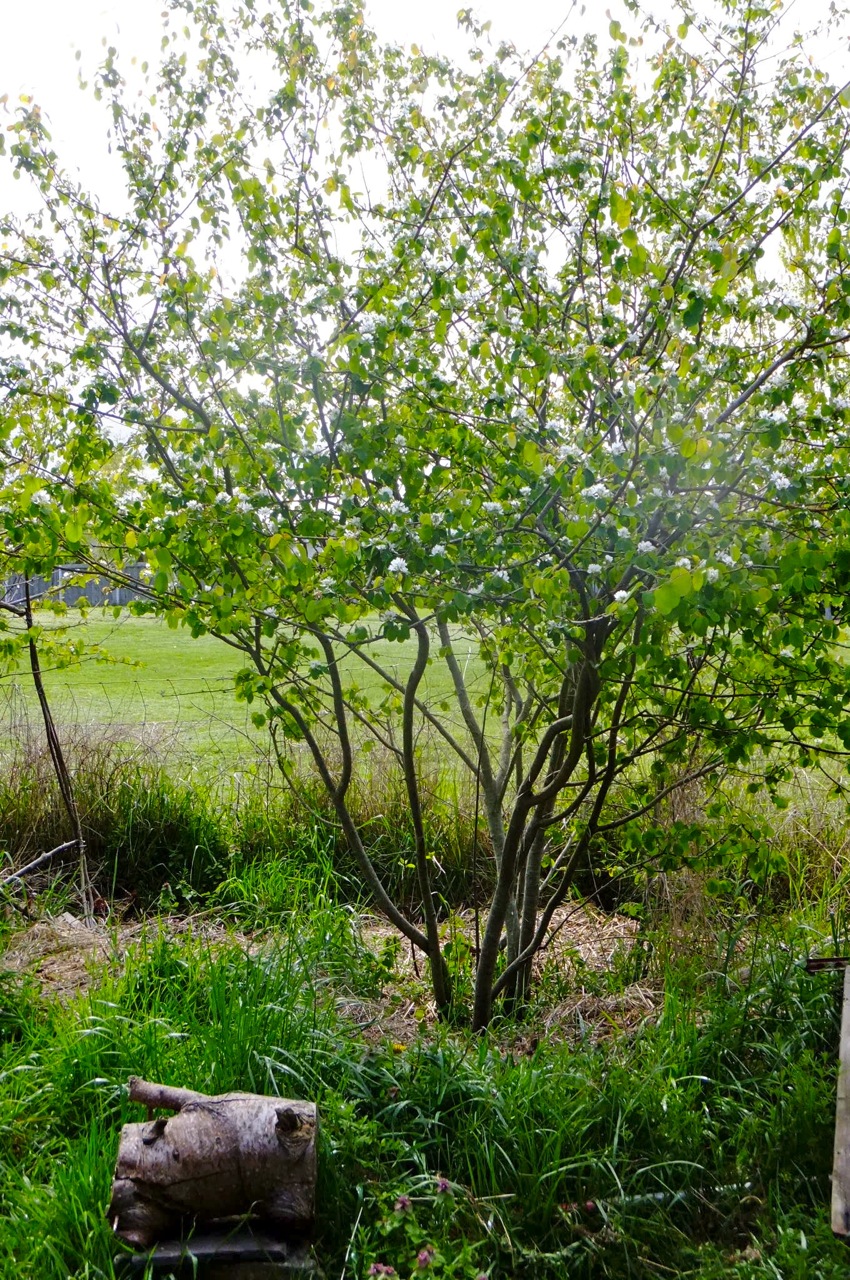
With deer fencing choices: Service berry, flowering currant, Nootka rose, ocean spray,Serviceberry_4.24

Without deer fencing: 2 kinds of Oregon grape, sword fern, shore pine, soapberry or Shephardia.

Large gardens can include salal. This wonderful plant is slow to get established but once it does the gardener always needs to control it from spreading into other plants and pathways.


We are lucky to have a beautiful demonstration garden filled with native plants at Kul Kah Han Garden at HJ Carroll Park. Plants are arranged according by ecosystem so you can go look at examples of plants that thrive in shady conifer forests, dry forest (which would be most of Quimper peninsula). http://nativeplantgarden.org/gardens/forest/


DK: That’s a great idea! I have been meaning to get out there myself and see it, so this is a great reminder! Sadly, we have run out of time for today- thanks so much for speaking with us about this very timely subject, Jeanmarie! If you have any additional questions about plants you can reach Jeanmarie at jeanmarie.morelli@gmail.com


Black Currants

As I munched a couple of fresh black currants, I could not imagine them shrinking down to the sweet little dried currants I buy from the bulk bins at the co-op. Turns out dried currants are really tiny grapes originally from the region of Corinth, Greece. Maybe you knew that, but I didn’t! Now that I’m no longer confused, I can appreciate fresh black currants on their own merits! The big shiny berries are juicy and aromatic with tiny seeds. Sweet is not an adjective I would use for the ones I have tasted, but aromatic, spicy, and juicy are.

A good reason to include black currants in the landscape or food forest would be for their nutritional value. They have more phosphorus and potassium than any fruit; more iron and protein than any fruit save elderberry; and are highest in ascorbic acid (Vit C).

Where currants really shine are in preserves and beverages. Consider canning the fruit with cherries to make a preserve. It could be an interesting treat during the winter holidays served on crackers with goat cheese.

Mature size is about 3-5 ft high and wide. Space accordingly. Because they can tolerate more shade than many berries they grow well with trees, it’s just they produce less. Since they have shallow roots, currants work well with drip irrigation. Mulch helps them from drying out.

New branches come up from the crown and produce fruit the following year. Prune out wood older than 4 years old so most of the wood is one to three-years old growth.

Rhubarb

Rhubarb2.24Rhubarb is an underused edible perennial. It offers seasonal variation with bold red stems in spring, handsome large foliage throughout the growing season, and a tall spire of cream flowers that can add visual appeal. Cooked stems can be eaten as a tangy vegetable or in chutney. Deep organic soil produces vigorous plants. Check regularly for snails. Remove flower stem after initial bloom to redirect growth into  stems and foliage. While the leaves are toxic to ingest, they provide excellent biomass for sheet mulching or added to the compost.

Sustainable Garden Functions

Sustainable gardening is based on ecological principles. When we consider the home garden as an ecosystem, we develop the habit of observing patterns in nature and then look for similar patterns in gardens. Mature organic gardens, like natural systems are complex and rich. One of the goals of sustainable gardening is catching and holding resources.

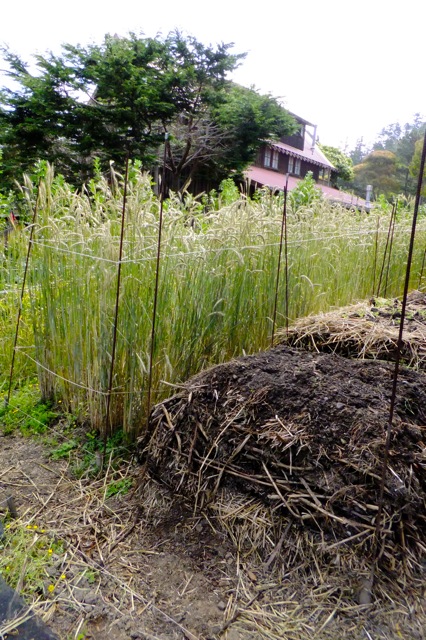
Always start with the soil— enhance and maintain soil fertility by adding organic matter, so the existing soil microbes can thrive and flourish. Even a degraded site can develop a balanced ecosystem over time as the organic matter decomposes and forms humus. When the microbes of the soil web die, their decayed bodies act as slow-release fertilizer for garden plants. Focus on fertility includes compost, planting nitrogen fixers and other cover crops, adding manure, and growing plants that produce mulch.

We create more resilient gardens when we make connections with all of nature. Select plants that provide habitat for native insects, birds, and animals that can function together in a food web, as part of the home garden ecosystem. Layered gardens include trees shrubs and herbaceous plants that invite more beneficial visitors. The food web becomes more involved as rodents, snakes, and predatory birds engage.

When we design by grouping plants with similar environmental needs together there is less maintenance. Port Townsend’s mild wet winters and mostly dry summers are known as a Mediterranean climate. Native plants and plants from similar climates around the world, including Australia and New Zealand, offer many drought tolerant choices. Woody plants with edible fruits can be planted with an understory of perennial and annual herbs and edible flowers. Remember that perennials and annuals are more work than woody plants, so make sure they serve many functions!

Healthy, well-rooted plants withstand environmental stress caused by weather and poor drainage, and develop better resistance to insect pests and diseases. Planting in beds or mounds edged with paths makes a garden more inviting and eliminates the need for grass.

Gardening to the scale of the property lets us enjoy the intimate small garden or work with generous proportions of larger gardens to include the sky as part of the scale. Larger beds with masses of plants create bold simple patterns. Broadleaf evergreen shrubs and small trees can form the structure or bones of the garden. Strategic placement of flowering perennials and annuals allows us to enjoy the color with less work.

Native tree provides pollen, edible fruit

Soil Ecosystems and Compost

Soil and Dirt

Outside, the ground is alive; it’s soil. When it gets on your hands and clothes and you bring it inside it becomes dirt—sand, silt, and clay. It dries out and the organisms die.

The organisms in the soil form an entire ecosystem or a soil food web—from microorganisms like bacteria to top predators like black ground beetles. Here is the invisible part of what we commonly think of as the food chain; the decomposers responsible for decay. Organic matter is an essential part of soil, the storehouse of nutrients and energy. Bacteria utilize the fresh plant material while fungus typically consumes fibrous plant matter, wood, and humus.

Humus defined

Humus results from many organisms using and transforming organic material to the point that the original material can no longer be identified.

Soil organisms consume the physical plant remains until the detritus is reduced to sugar, starch, proteins, and other organic compounds. The process occurs more slowly with the plant fibers of lignin and cellulose. Along the way soil microbes grow, reproduce, die, and decompose. When the original remains of matter are dark, spongy, and smell earthy, we call it humus, one of the building blocks of topsoil. Rather than burning up as CO2, this carbon can last in the soil for hundreds of years.

What is Compost?

Composting is a technique that produces an organic material that mimics the leaf litter of a forest floor by applying the principles of the soil food web. Compost is made by layering organic matter in combination with air; water; and soil or compost inoculant to provide a feast for decomposers. Compost made from materials grown on the land where it is applied is most similar to an ecological cycle, especially compost comprised of materials high in carbon that slowly decomposes. Ecology Action has pioneered the work on this.

What is soil carbon sequestration and how does it reduce greenhouse gases?

Understanding the potential of carbon sequestration allows us to stabilize and even reverse global warming, since one-quarter of the total excess of carbon in the atmosphere comes from agriculture.

Plants use the sun’s energy to draw carbon dioxide from the atmosphere in the process known as photosynthesis. Plants separate the carbon and oxygen to form sugars. These sugars are transformed into more stable forms of carbon compounds. Some carbon moves from the plants roots into the surrounding soil and can remain bound and sequestered. Sustainable practices that mimic this natural process include compost-making, green manures, and growing compost crops, food crops that are high in carbon.

Why is compost important?

  • Compost can reduce atmospheric carbon and other greenhouse gases by increasing the amount of carbon stored in the soil.
  •  Compost reintroduces soil microbes to soils that have been damaged by chemical fertilizer and pesticides.
  • Compost feeds the organisms in the soil web. Alan Chadwick, a great horticulturist always said, “Feed the soil and the soil feeds the plants.”
  • Compost feeds soil microbes that in turn release enzymes and hormones that promote healthy plant growth.
  •  Compost is a form of plant fertilizer; humus organic acids help dissolve soil minerals, making them available to plants.
  • Compost provides beneficial microorganisms that protect plants from pathogens.
  • Compost prevents soil erosion by improving soil structure.
  • Compost adds microorganisms that breakdown toxins in the soil.
  • Compost can buffer soil pH.

Dr. Elaine Ingham http://www.nrcs.usda.gov/wps/portal/nrcs/detailfull/soils/health/biology/?cid=nrcs142p2_053868

http://www.youtube.com/watch?v=GEtl09VZiSU

Compost-making Casa Colibri
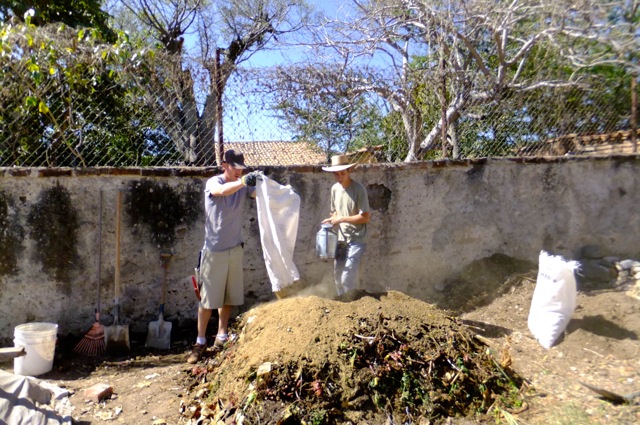
Building a compost pile at Casa Colibri
Matt Drewno, Ecology Action Greenbelt Garden Manager with fava bean compost crop.


Ecology Action www.growbiointensive.org


Mysteries of Maple Sap

5140690930_5c0486e711_z


Most people know maple syrup comes from sugar maple trees, but did you know that forty gallons of maple sap is boiled down to make one gallon of syrup? This is the time of year (late February or March) when maple producers tap the trees and collect sap. Nowadays the process is pretty streamlined by running tubes from all the trees to central tanks. But, in the winter of 1977, when I spent six weeks on a dairy farm in southern Vermont, sap was still gathered in pails hanging from trees and manually carried to a tank on a sled.

Sap is only collected during the window of time before leafing out when the sap tastes sweet but is not tinged with chlorophyll. No sap flows in the dead of winter when the trees are dormant. Daily cycles of freezing and thawing stimulate a pumping action within the tree’s sapwood or vascular system. That winter on Clyde and Florence Twitchell’s dairy farm many days the temperature never rose above freezing, but when it did, I was filled with anticipation.

Each morning after milking, my boyfriend and I, along with the other young couple would wait for the farmer to declare if we’d work the sugarbush. Under the right ecological conditions sugar maple, Acer saccharum grows in dense stands. The deep shade of the forest canopy prevents all but shade-tolerant maple seedlings from getting established. If the weather were right and the sap flowing, we’d climb on to the 100-gallon sap-tank sled pulled by the bulldozer, and head out for the morning.

As the bulldozer slowly chugged down the slope to the sugarbush, I hung on and admired the handsome bare trees. The sturdy gray trunks were grooved with a distinctive bark. Then we would strap on Huron-style snowshoes and get to work. In the beginning of the season the farmer re-drilled holes and tapped in spouts. As part of the crew, I followed with metal pails and hung them from the spouts. Then someone would place a metal cover over each pail. Once the sap was flowing our routine involved visiting every tree, catching the sap that dripped out. As a farm hand, my job was carrying the pail containing the day’s harvest of sap to the awaiting tank, and then replacing the empty pail over the spout.

The snowshoes let me float over the soft snow, but I was clumsy and the long tails got in my way as I maneuvered around the trees. More than once I let the tails cross behind me. In trying to lift the lower snowshoe, I’d lose my balance and fall face forward into the deep snow, spilling the sap. It was cold wet work. When no one was looking I’d take a big gulp of sap from one of the buckets.

Most everyone knows the exquisite taste of real maple syrup, but the taste of sap, now that is something subtle. How can I describe the flavor that has lingered with me for almost 40 years? Cold and refreshing like a mountain stream, but with a mild sweetness that hinted of trees; it tasted like the promise of springtime. I remember wanting to bottle and drink the sap, never mind boil it! That is exactly what people in South Korea do. Maple sap is considered a spring elixir called Gorosoe “good for the bones”. There is even a legend about a 9th-century Buddhist monk who was restored by the sap. The nutrient-rich sap provides the tree with calcium, potassium, and other minerals for the coming season. The 2% sugar content of maple sap is the product of the previous summer’s photosynthesis. The maple converts the stored starch into sugar and it dissolves in the sap.

At the sugar shack, the primitive processing plant, the farmer’s wife would stoke the fire in the evaporator with dried slats of white pine from a local sawmill. As sap flowed through channels in the huge metal pan, steam filled the shack until the water content was cooked off. Maple syrup not only concentrates flavor, but also the sap’s minerals. This makes it one of the healthiest sweeteners available. We stopped collecting sap when the nights got above freezing and the trees no longer pumped the sap into the buckets. I’m glad I had the opportunity to work in a sugarbush and be part of the New England tradition.

(The photos came from Flicker’s Creative Commons. The top one from Keene Public Library, Keene New Hampshire,1975. The bottom from Lezumblaberenjena, in Montpellier, Quebec, Canada.)

Sugar bush

Edible Orchid: Vanilla beans

As I reach for the brown bottle of vanilla extract to add a little to my coffee, I stop to reflect on the journey from orchid vine to the processing of the vanilla beans. At the same time I appreciate the fair trade options available now.

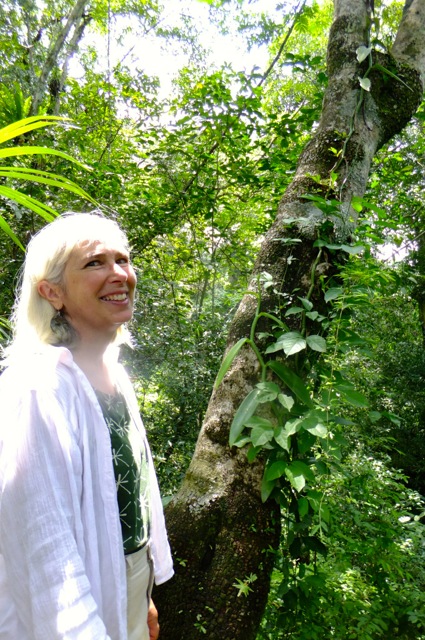
At the Puerto Vallarta Botanical Garden last summer I visited the vanilla trail where orchid vines crawl up tree trunks. My friend Ariel and I explored the forest in the muggy August heat and we were thrilled to find some thick green pods fruiting. We were told they would not be harvested until November.

I was flooded with memories of a vanilla plantation I stayed at in Costa Rica seven years before, where row upon row of native and introduced trees kept out the sunlight with a high canopy of leaves. The orchid vines grew up short trees, known as tutors, and posts made of y-shaped tree limbs. We ducked under long poles that formed the trellises and our feet sunk into the deep leaf litter. Henry Karczynski’s plantation was a biodynamic farm near Quepos on the west coast. It was early December and the fruit had been harvested and was drying in the sun.

If you have ever wondered why vanilla is the second most expensive spice, it has something to do with the labor intensive growing and curing process.

Tiny bees native to the Mexican tropical lowlands pollinate it in the wild. When plant explorers tried to move the crop and start plantations in other countries, it failed until the mid-1800s when a 12-year-old slave on the island of Reunion developed a technique to hand-pollinate the orchid flowers with a toothpick-like stick. Since each flower is only fertile for only a couple of days, astute monitoring and rapid handwork is called for. Watch this YouTube video to see hand pollination at 10.11 minutes https://www.youtube.com/watch?v=Nhju7wj-LnI

In six weeks scentless vanilla pods develop and take six moths to fully mature. The curing process includes four basic steps; killing, sweating, slow drying, and conditioning. The process varies region-to-region and according to the scale of operation. Curing reduces moisture content and changes the chemical makeup of the vanilla bean.

Killing or wilting stops the growth and activates the spice’s enzymes—usually by scalding in hot water for several minutes, or freezing. Sweating initiates more chemical changes and in the Mexican processing method encourages heat-tolerant bacteria to grow. This step involves placing wilted pods in boxes or wrapping them in burlap bags to increase humidity. By alternating the sweating with daily sun drying, the pods ferment rather than rot. It is only at this point that the characteristic aroma begins. After slow drying for up to two weeks the beans become wrinkled, supple and shiny. Careful attention at this stage is needed for even drying. Conditioning continues the curing by drying for two to six months allowing the flavor and aroma to fully develop. The final step is grading and bundling the beans according to visual and aromatic characteristics.

At Henry’s Villa Vanilla I helped with sweating the pods. Each morning we pulled burlap sacks out of 55-gallon drums, emptied the vanilla onto drying racks and spread out the pods. The shiny wrinkled pods were so fragrant, I immediately thought of alcohol. At night we gathered them up and placed them back in the drums. Many years before, Henry had been with the Peace Corp in Madagascar where he learned vanilla cultivation.Vanilla growing up a tree

Much of the world’s crop comes from Madagascar. A British journalist wrote a scathing report in 2010 about 20,000 children working in vanilla plantations instead of attending school. Read Dan Mc Dougall’s article in the London Sunday Times: http://stopchildlabor.org/?p=2072 Much like other tropical crops that rely on exploited labor and chemical inputs for production, organic and fair-trade vanilla is available.

When Ben and Jerry’s Ice Cream was questioned as to sourcing their vanilla product, they scrambled for an answer. They sought corrections by promoting fair-trade vanilla on their website. http://www.benjerry.com/values/issues-we-care-about/fairtrade. They claim to be purchasing more vanilla from family farmers in Uganda. Small family farms in tropical regions around the world now grow fair-trade vanilla intercropped with cardamom, turmeric and bananas. A remarkable story about fair trade vanilla revolves around Lulu Sturdy, a British woman who left her life in the modern world to run the estate of a deceased uncle, and the local farmers she came to love and help empower in rural Uganda. http://www.independent.co.uk/news/world/africa/lulu-sturdy-vanilla-guerrilla-407771.html

Next time you taste the aromatic delight of vanilla, ponder the orchid and the people who cultivated it.

Where Our Food Comes From (revisited)

I had the good fortune to hear Gary Paul Nabhan speak to graduate students at WSU Mt Vernon Experiment Station. Students were responsible for organizing a fall presentation and they chose one of my heroes. You can read my book review August 2011.

The student who introduced Nabhan spoke passionately about how the eminent ethnobotanist’s books had  inspired her to choose plant breeding as a career. His lyrical prose was both scientific and colorful. The stories woven throughout kept her interest.

Nabhan once wrote that he learned and remembered so much more through stories. If you read Where Our Food Comes From: Retracing Nikolay Vavilov’s Quest to End Famine, published in 2009, you just might be able to imagine the almost extinct apple forests of Kazakhstan, the reemergence of teff in the Ethiopian highlands, and the magnificent Pamir Mountains where climate change is having dramatic effects on which grain varieties farmers can cultivate.

Nabhan was able to retrace several of Vavilov’s expeditions because the Russian botanist left copious notes, maps, and photos of people. He said that this story is particularly fascinating to a new generation of plant breeders. (The audience was part grey-haired locals and part young graduate students, many of them women.)

Vavilov was determined to end famine by searching the world for seed for Russian farmers to use during droughts and other environmental challenges. During the 1920’s and 30’s V. collected seeds from five continents on fifty expeditions, and directed another fifty. He was the first to recognize the possibility of the disappearance of crops and the urgency to protect cultivated crop varieties. Because he kept such extensive notes Nabhan was able to use these as a benchmark and track the changes since Vavilov’s time.

His approach was not extractive; instead Vavilov was a strong believer in regional farming wisdom. He was committed to documenting the farming techniques and implements along with collecting seeds. He was adamant that crop biodiversity required traditional farmers to continue practicing. He took 4,000 photos in his travels. One of the tools he used to locate origins of crops was linguistics.

Farmer-bred seeds still dominate rural areas worldwide. Many traditional subsistence farmers don’t trust governments or corporations. They also don’t try to maintain heirloom crops with set characteristics. Seed selection is not static; rather, food security comes from fostering landraces.

Nabhan witnessed an ancient technique of backcrossing with wild relatives in Sinaloa, Mexico where a farmer recognized teosinte, the progenitor of maize, growing wild across the creek. Each season he grew seed corn there to catch a boost from the pollen of teosinte. (The wild relative could pollinate the crop, but the timing was such that the cultivated crop pollen did not genetically affect the wild corn.) This backcrossing offered genetic variation that enhanced the crop’s adaptation. Farmers from 100 miles around would practice intentional ingression by renting this field to rejuvenate their seed crop of cultivated corn and return home with healthier seed.

Resurgence of ancient crops: In the face of drought and famine, Ethiopian farmers chose to grow teff rather than grow wheat and rye varieties that were plagued with diseases. Since then the tough, little-known crop has experienced resurgence.

Nahban’s advice for resilience strategies is choose the best of heirloom varieties and continue breeding them for resilience.

What Does Sustainable Seaweed Harvest Look Like?

Seaweed Harvest Mendocino Coast

My post on nori harvest two years ago was vague because I was hesitant to encourage more people to get out there and possibly damage the environment.

As individuals we have responsibilities not to over-harvest, but like many issues the large-scale commercial operations and loss of habitat are the real culprits. If that is the case, why should we care? I think we cultivate an attitude of respect that reverberates throughout our lives and to all we contact.

What can we do to both protect the marine ecosystems and provide nutritious edible seaweed for our families?

Listen to wildcrafters who are committed to ethical harvest standards:

  • How much to harvest in one area,
  • The importance of pollution-free waters because some seaweeds accumulate metals and become contaminated by sewage, agricultural, industrial, and  radioactive wastes.
  • Protect the plant’s viability by cutting rather than pulling or raking.
  • Cutting distance from the anchor point to allow for regeneration.

Respect the state and local regulations. In Washington state, for example:

  • a license is required,
  • 10 lbs wet-weight limit,
  • specifications for harvest techniques for kelp, bull kelp, and nori

http://wdfw.wa.gov/fishing/shellfish/shellfish_seaweed_rules.html

Ryan Drum, a wildcrafter and biochemist from Waldron Island has a healthy perspective. Learn from a master herbalist On June 15th on Orcas Island. http://www.ryandrum.com/index.htm#workshops

Commercial Harvesting of Wild Seaweed

Sustainable seaweed harvest has been in the news a lot lately from Scientific American to the Huffington Post. http://www.scientificamerican.com/article/help-for-kelp-seaweed-slashers-see-harvesting-cuts-coming/

Industrial processing converts seaweed into the raw materials carrageen and alginate, basic components that act as gels and glue in everything from ice cream to paints and cosmetics. Global consumption is roughly 21 million metric tons a year.

More than 95 % of global seaweed production is from farmed operations. But before the last remaining wild stands are dragged and vacuumed, the Marine Stewardship Council, an international organization recognized for eco-labeling will set standards by January 2015. Europe countries bordering the north Atlantic are also establishing their own criteria.

Upcoming brief blog posts will include more seaweed fun facts. Steven Foster, an herbalist concerned with ethical wildcrafting recently posted this: Fair-wild Standard

http://whygowild.com/en/fair-wild-standard

Seaweed Fun Facts: Nori (Porphyra)

Nori cell walls lack cellulose, but are protein-rich—humans are able to digest it, unlike most kelp.

This seaweed is only 1-cell thick! That’s why it is pliable and perfect for making sushi rolls. Gently tug on the raw plant.

Harvest at low tide in April and May. Always use scissors or sharp knife to harvest. Leave the holdfast so the nori will regrow and produce reproductive structures.

A great travel and backpack food because it is so nutrient-dense: high in protein, Vitamin A, B-6 and C, along with many minerals.

Japanese have been cultivating it for 300 years. Nori does not naturally dry into flat sheets! Traditional techniques are similar to paper-making.

Toasting nori makes it taste better and improves the texture: Hold store-bought sheets over a kitchen burner until edges start to curl and the sheet feels stiff.

Wildcrafted Nori: Harvest, dry, store until ready, then lightly toss with olive oil, place on sheet pan and bake for a few minutes until crisp and shiny.

Natural history: Technically a red algae, although the color varies widely.

Life Cycle: Porphyra undergoes 3 life forms to complete the reproductive cycle.

Intertidal Zone Habitat: Mid to high intertidal zone.Intertidal Zone2 Note the black band.