

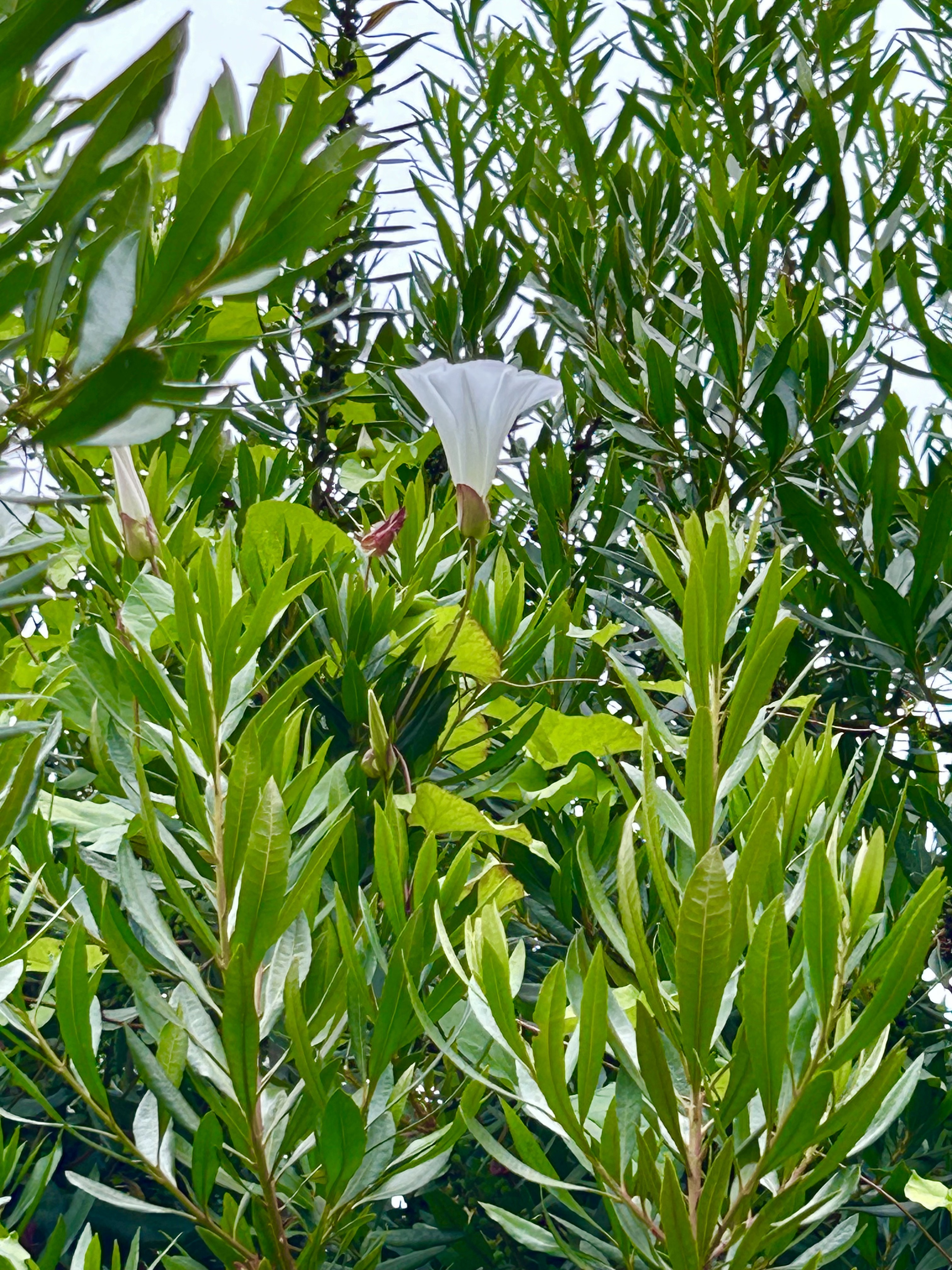
Pacific wax myrtle, Morella californica, is native to the coastal areas of Washington state and south to California. It is considered on of the best evergreen native shrubs for our gardens. Although the flowers are inconspicuous, the waxy black fruits are popular with birds. Knock-on-wood it is still deer resistant.
This hardy native is adaptable to many conditions from full sun to shade. Although it prefers moist, well-drained soil, it can grow in a variety of soils. The root nodules have nitrogen-fixing microorganisms that allow the plant to grow in poor soil.
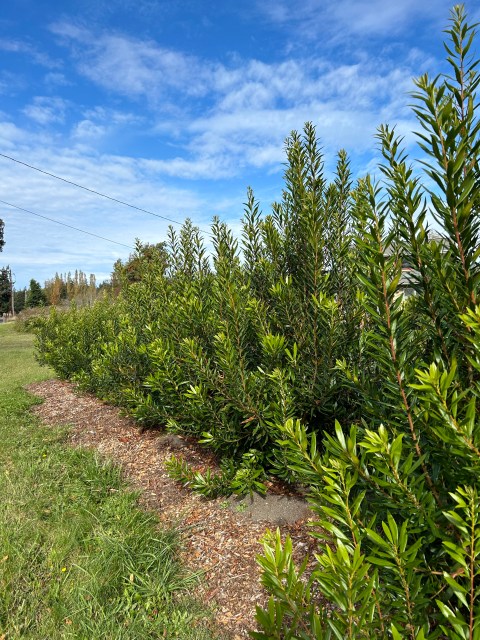

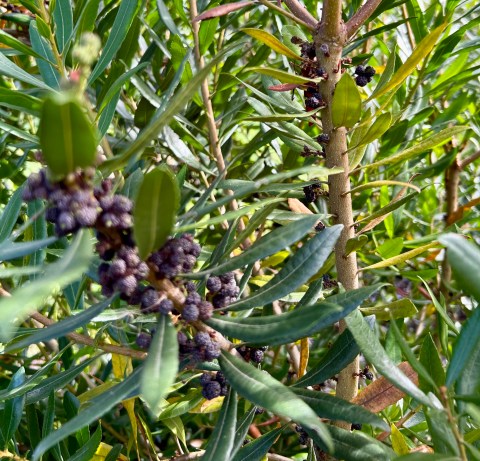
Once established it is completely drought tolerant. It will grow to 30 feet tall and 15 feet wide in thirty years. For the average size garden, pruning will keep it within bounds. Late winter is best for heavy pruning, then general shaping can be made with heading-back cuts through out the season. This remarkable shrub can be pruned as a formal hedge, a loose screen or even a small tree. As a screening hedge, Pacific Wax Myrtle provides habitat for a multitude of birds including Spotted towhee, several sparrows, northern flicker, robin, goldfinch and cedar wax-wing. The latter are especially delightful in winter when small flocks gather on the shrubs. The waxy berries provide vegan fat in the winter.
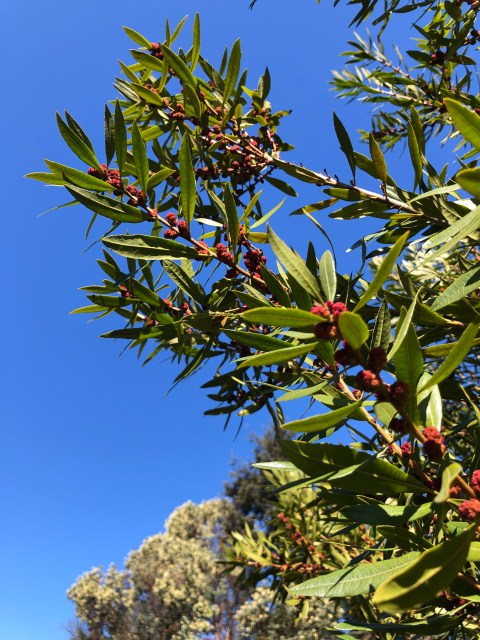
Pacific wax myrtle is slow to grow at first and once established, it grows steadily. Here the tiny flowers are blooming. Within these red catkins are separate male and female flowers. To see a close up and more photos go to the OSU landscape plant descriptions. This website provides excellent plant descriptions. I have not found anything like it in Washington.
For the longest time I didn’t think any disease bothered this shrub, but I noticed some foliage die back and even some stems turning brown. The Pacific Northwest Pest Management Handbook describes a type of leaf blight caused by a phytopthera that only bothers this species. This fungal-like organism was first identified as a pest in 2009 on the Oregon coast. I have been growing several shrubs at my place for thirty years and have only noticed it recently. Some ways to prevent spreading the disease:
- Avoid overhead watering.
- Mulch with arborist chips
- Increase air circulation at the base of the plant by removing weeds or other vegetation.
- Remove any diseased plant material and throw it in the garbage, don’t compost it,
- Don’t over-fertilize and don’t fertilize late in the season.
- Sanitize tools with isopropyl alcohol, or prepare a mix of 1 part bleach to 9 parts water. Dip tool or wipe with moistened rag.
- Water to get the shrub established and then only monthly during summers to grow a hedge or screen.
The leaves make a pleasant tasting tea that is medicinal. The active medicinal substances include an astringent resin. The root and bark can be tinctured and used for inflamed gums according to Michael Moore’s Medicinal Plants of the Pacific West. The plant’s botanical name was changed in 2006. Previously it was known as Myrica californica.
A native plant adaptable to sun or shade and varying soil conditions, one that can synthesize it’s own nitrogen is bound to be more resilient!












 Sustainable Garden Design