Weeds and our perspective

When I would help Tinker in her garden, often she dug up dandelion plants as if they were precious. The roasted roots made a delicious tea that she savored. Imagine if the plants we detested somehow changed in our mind to become useful resources. So much in life is how we frame something. If we look at a weed and notice a couple insect pollinators insects sipping the nectar, maybe the ‘weed’ isn’t so bad. That doesn’t mean we have to keep the plant. I have had weeds that I once hated and then learned to accept them, even as I removed them.
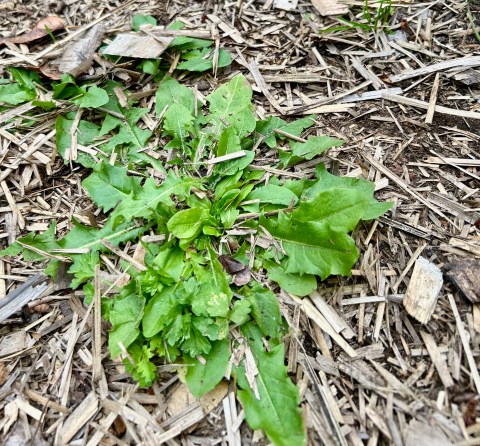
Dandelion, Taraxacum officinale

Gardeners who take the time to identify the plant can be more effective. Knowing a plant lets you determine the best way to control it. Sometimes a weed can be an indicator of environmental conditions: the soil is wet or heavy, or it is very acidic. Some tough weeds will die out if the roots don’t get nutrients from foliage. This requires diligence—regular weed-eating. Small, less-hardy weeds will die from deep mulch that smothers small plants and suppresses weed seeds. Proper ID is key to control.

Weed Identification

Botanical identification begins with a plant’s flower. We can’t rely on the foliage because weeds are by their nature adaptable and have a lot of variety. Vegetative characteristics are malleable. Here’s a short digression: years ago I managed the UCSC agroecology program greenhouse and was responsible for transplanting seedlings. In wood flats full of vegetables or flowers that required pricking out, there would be a number of weed seedlings from the compost. The young weeds could look almost identical to the some of the crops—so much so, that a number of the apprentices I supervised would pot up the weed seedlings! So identify your weed when it is flowering and then start to recognize the plant in all its stages, from young seedling to flowerings going to seed.

I’m old-school and like books. My favorite book for weed identification is Weeds of the West, University of Wyoming Press. Our cooperative Extension had it for sale decades ago. Now it can be downloaded for free from the website or used books can be found online. 900 color photos include the weed at young stages.

Online resources include Hortsense from Washington State University, with 90 fact sheets listed by alphabetical order. University of California, Davis has a useful online weed identification key

Weed Ecology

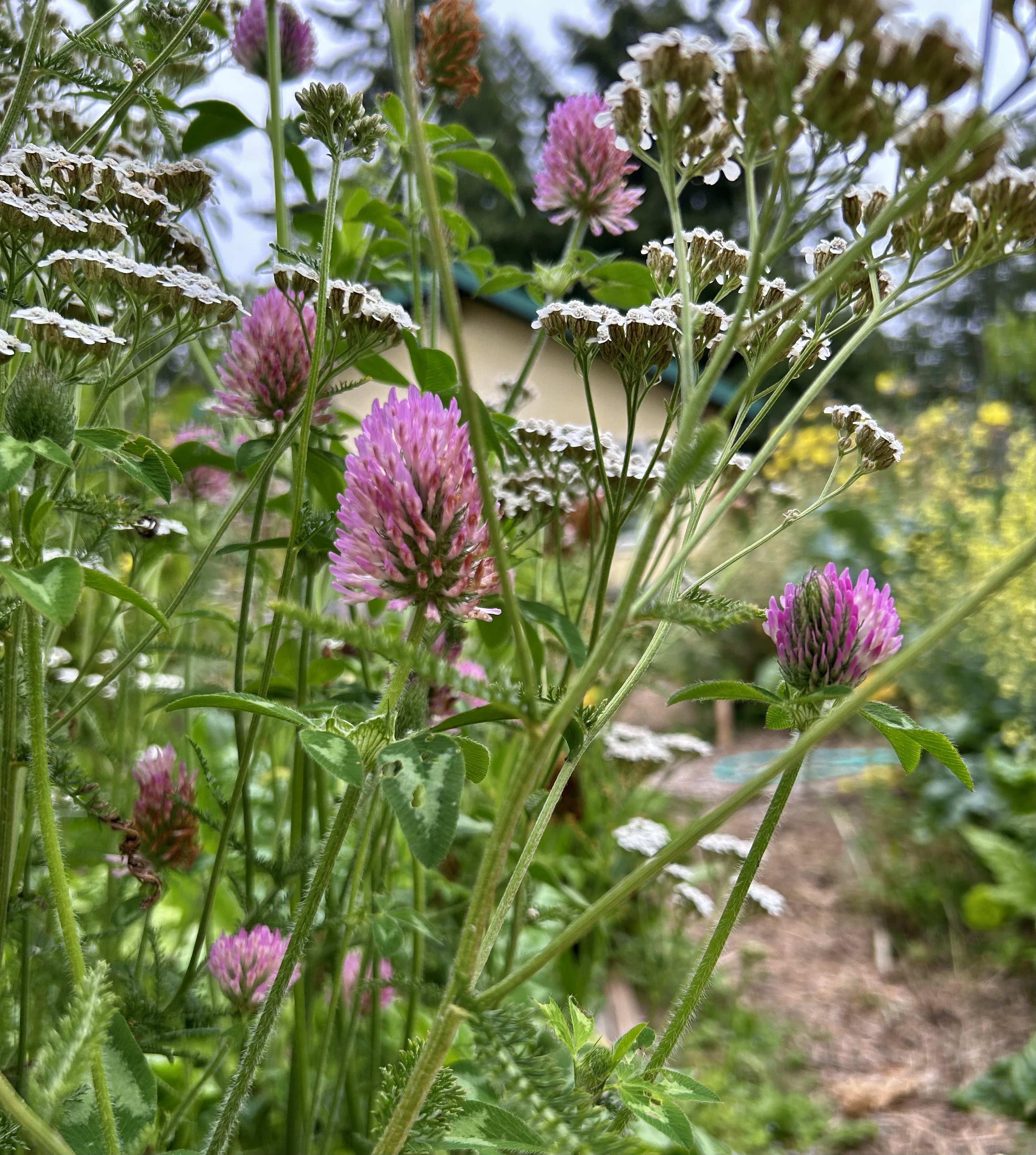
Many weeds are species that have adapted to colonize disturbed sites, such as landslides; after a wildfire has burned off vegetation; along roadsides; or at building sites where excavators have exposed mineral soil. Alan Chadwick, the famous gardener who developed the French-Intensive-Biodynamic method, always said nature abhors a vacuum. That’s why in my garden I sprinkle around borage, red clover, phacelia, or calendula. By regularly weeding out unwanted plants, I have mostly replaced the disturbed areas with annual flowers that are easy to pull and have many benefits. There’s not much room for weeds.
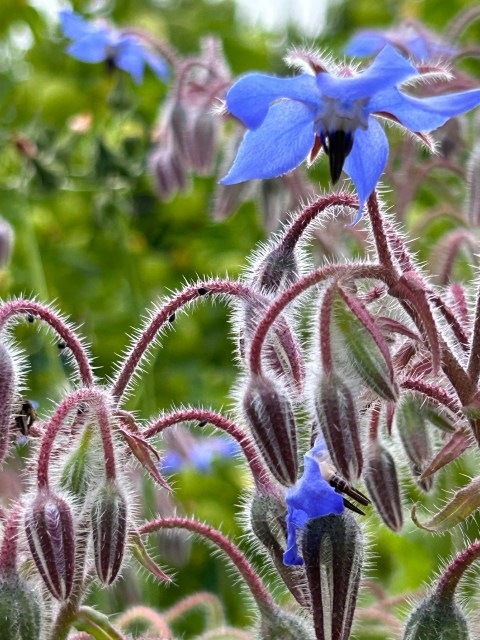
Borage, Borago officinalis

Weeding Techniques

Start weeding early spring, when the ground is still moist and the plants are young. Weed annual gardens regularly. Use lots of mulch around perennials and woody plants. Since weed seeds can remain dormant for decades, it’s important not to let weeds good to seed.
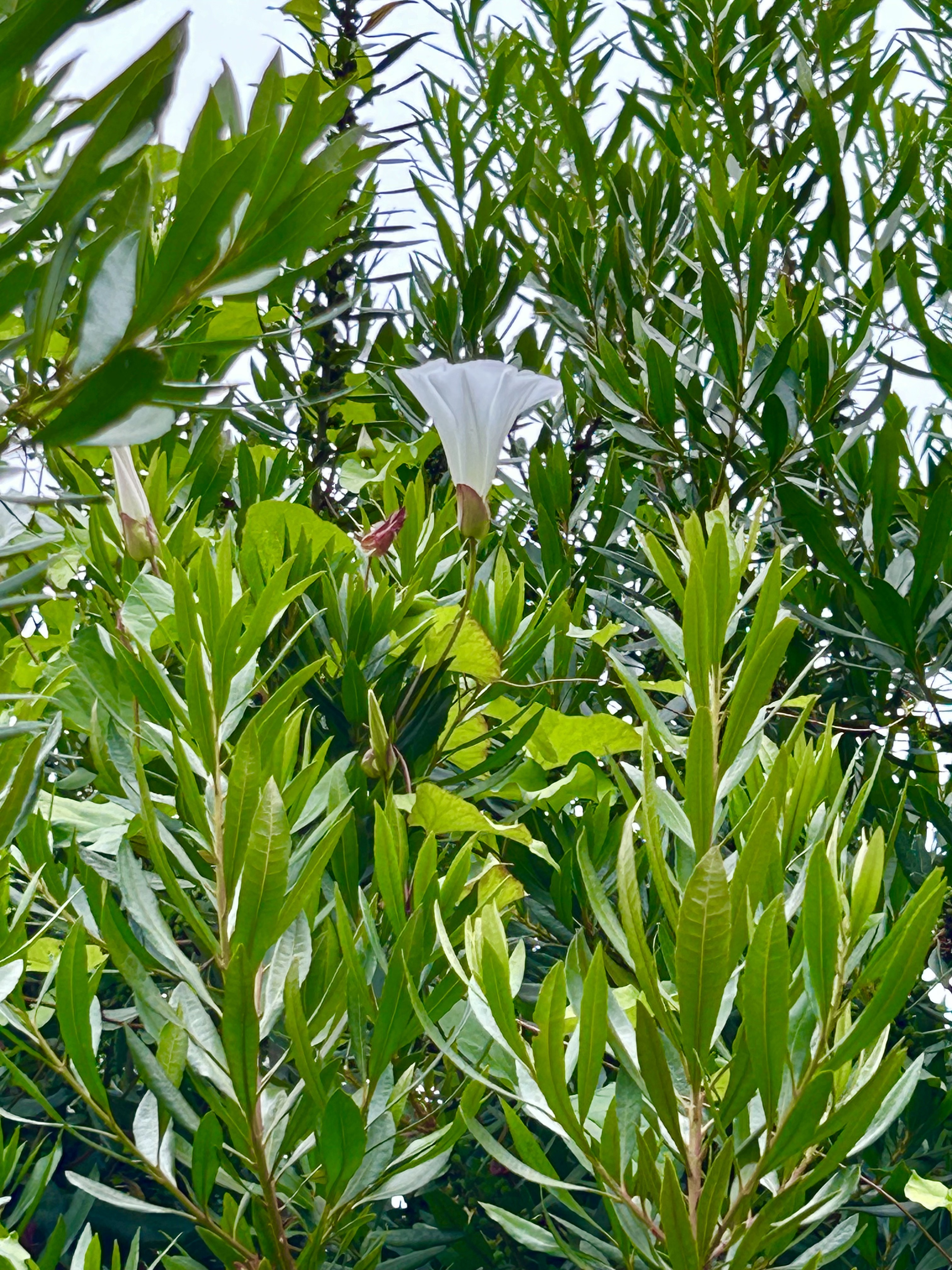
Certain perennial weeds can become one’s nemesis, for example horsetail, bindweed, Canada thistle . If you do nothing else, make sure to cut flower heads before they go to seed, bag them and send to the dump. The county noxious weed board doesn’t want what the state includes as noxious plants in our yard waste. If you cut the flower or seed heads and bag them, then the rest of the material is yard waste and can go to the compost facility. Thick mulch prevents seeds from sprouting. Everyday weeds can go into yard-waste. I have a big pile of plant debris that I will not use as compost, but will let it rot in place. In it I include weeds that have gone to seed but are not listed as noxious.

At one time I added woody plant material to this pile, but now wild roses, native blackberries and branches from hedges and ornamental shrubs go to yard waste. I don’t want excess fuel for potential wild fires.

If you are still using herbicide on weeds in pavement cracks or gravel, please consider a vinegar solution. Horticultural vinegar—at 35% strength is a lot stronger than kitchen vinegar—5% sold at grocery stores, so take more precautions! Wear gloves, glasses and long clothing. Although flame torches are used in agriculture to control weeds ( by boiling the sap, not turning foliage black), when I called our fire dept about using them for weeds in cracks I was informed that we had two wildfires in the county start that way!

For woody plants or deep-rooted perennials, such as Scotch broom, Himalayan blackberry, and poison hemlock, a weed wrench can be used to yank out the entire plant. The county weed board has wrenches they loan out.

A lot of weeds are my friends. I make flower bouquets, or add them to salads. Others are a haven for pollinators. Some are good sources of carbon for my compost piles.
Tinker Cavallaro—tribute to a dear friend

Tinker had a generosity of spirit that seemed nearly boundless. She always had time for people no matter how busy she was. People frequently dropped by and she took the time to enjoy them. If someone needed help, they were never let down.

Tinker had an abundance of energy and was able to do so much. Her gardens were vibrant and well-kept. She took delight in potting up little volunteer plants and have them on a bench in the garden. She watered and kept them alive and gifted them to gardening friends and acquaintances. I look around my garden and see the angelica, lovage, fig tree, Italian dandelion greens and so many other plants.

I copied so many skillful things she did or had and she never complained that I was a copycat. I so admired one of her marvelously-designed garden gates, that now I have three like it. Over the years I enjoyed helping in her garden (sometimes as a trade for taking her yoga classes.) Although I had made compost piles for decades before working in her garden, I found her free-standing compost windrows to be the most practical for converting large quantities of plant material and manure into compost. She was so deliberate in the construction. Working on shaping the rectangle piles of compost became a meditation or art form. I value that and do it in my garden.

Tinker mentored many young farmers and new market gardeners, advising them on the climate, vegetable varieties and local pests. With her broad scientific knowledge and decades of experience growing a variety of plants, she could clearly communicate what she had learned.

When I think of the ten years I took her Vinyasa yoga class, often twice a week, she never ceased to amaze and inspire me. She would arrive—all smiles—at 7 am after bicycling in the rain. She was a true yogi, with deep respect for the spiritual basis of yoga. We started each class with pranayama breathing and ended with a chant. Each class was different, based on the current need or request of students. She created a supportive, warm community of students.

Knowing Tinker Cavallaro has shaped my life immeasurably for the better!

Matilija Poppy

Romneya coulteri

This beautiful grey-grey foliage plant with fragrant large white poppies does best where it has room to spread. It is both drought tolerant and—knock on wood—deer resistant.

Matilija grows well on the loose soil of landslides. I planted some on a mound about 20 years ago and rarely weed it. After a time, the Nootka rose spread across the mound pushing out the poppy. Not much can hold its own against Nootka rose. (That’s why I only suggest it for creating wildlife hedges where it will be kept in check by mowing or weedeating lawns and fields.) Matilija poppy migrated over to a pile of soil and rotting sod. Last year I had a dump truck load of horse manure delivered near the Matilija planting. Some of the plants were buried in the manure. Instead of suffering, the plant spread throughout what was left of the manure after I moved most of it.

Description

  • Perennial flower growing 3 to 6 feet tall
  • Gray-green foliage
  • 4”-8”  fragrant flowers. Described as fried-egg flower

Growing requirements and care:

  • Full sun
  • Drought-tolerant once established
  • Soil: flexible, needs good drainage
  • Cut back to the ground in late fall

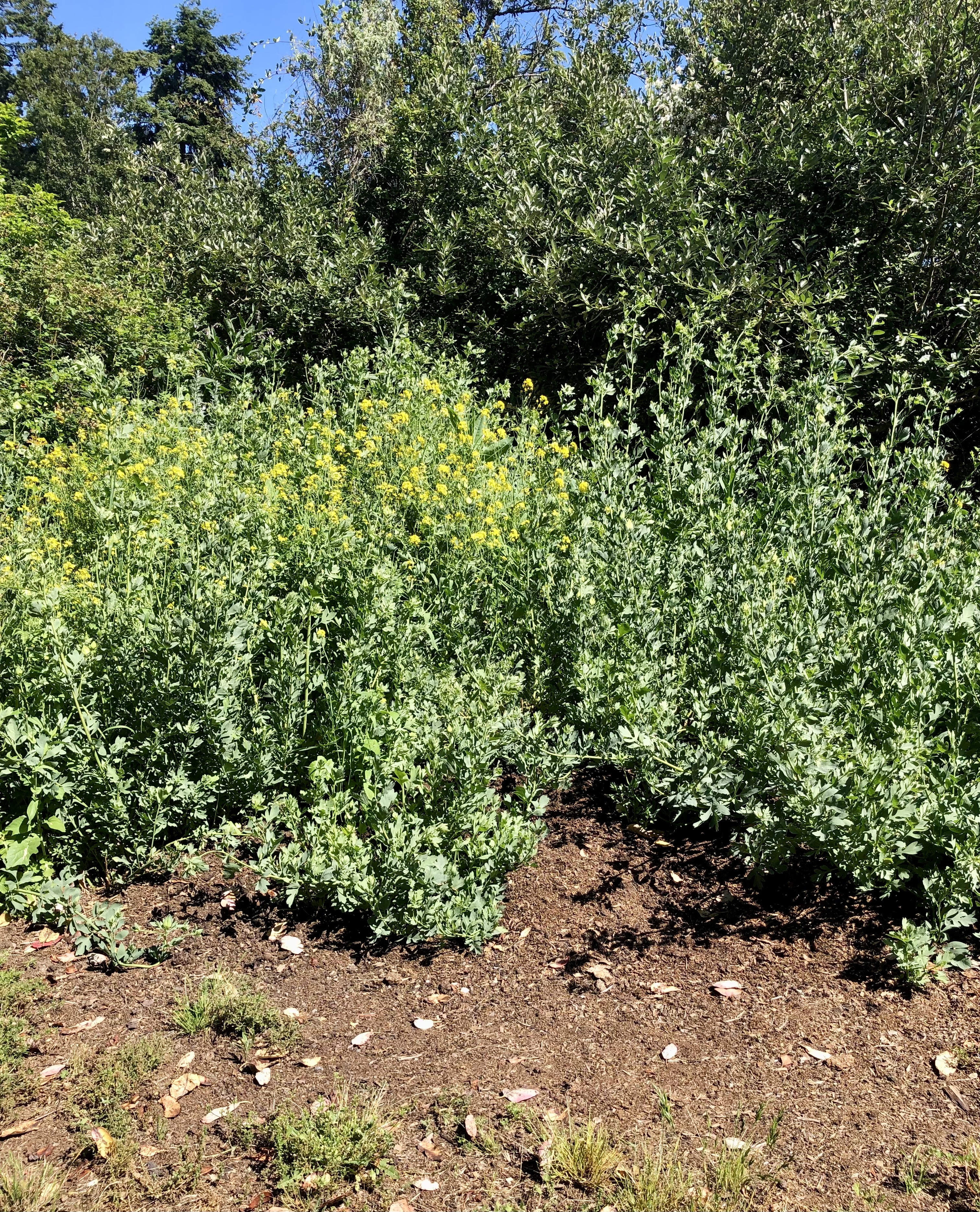
Matilija Poppy spread to adjacent aged-manure pile. Wild mustard’s yellow blossoms in the middle of plants.

The Chumash, an indigenous tribe of central -southern coastal California, values the antimicrobial properties. In fact the name Matilija comes from a Chumash tribal leader. The plant’s alkaloids and other secondary substances make it useful for sensitive gums and preventing plaque. Herbalist Micheal Moore describes Matilija as a good first aid plant: the foliage makes a good external wash for sunburn, and inflammation from allergic reactions. At one time this plant was seriously considered as the state flower of California.

In the landscape, plant this majestic plant with other tall drought-tolerant ornamentals like Miscanthus and cardoon. In the foreground use Russian sage, and red hot poker. Once established these are all deer-resistant.

Native Berry Plants in the Landscape

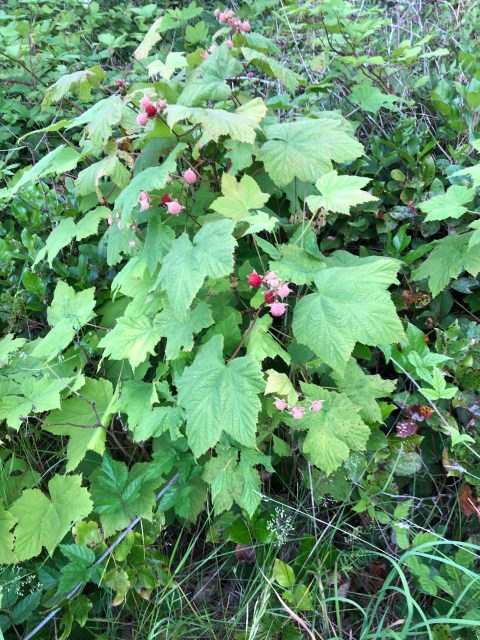
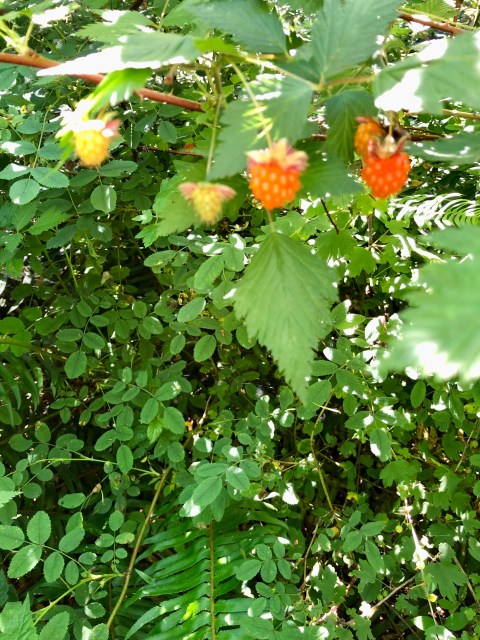
July is the time of wild berries here in the Pacific Northwest. The Rubus clan, best known for raspberry and blackberry also include many other members with edible fruits. Two woody shrubs that are fruiting now are Thimbleberry, Rubus parviflorus, and Salmonberry, R. spectabilis. These two edible berries were staples of native peoples. Around here, harvesting thimbleberries is a summertime pleasure. Children love to place the thimble-like fruit on their fingertips.

On the Quimper Peninsula I have only seen these two Rubus species growing on moist sites, but in some regions wild thimbleberry may occur on drier sites. In Jefferson County the water table is close to the surface in low-lying areas creating wetlands. These plants are also commonly found along stream sides, and can withstand being flooded for short periods of time, thus making these shrubs useful in the rain garden. They can also be part of restoration landscapes. The deer browse the buds and stunt newly planted shrubs. Fencing, caging or spraying deer repellent for a few years is necessary for them to get established. The local deer population has suffered from loss of habitat and loss of predators.

Salmonberry, Rubus spectabilis

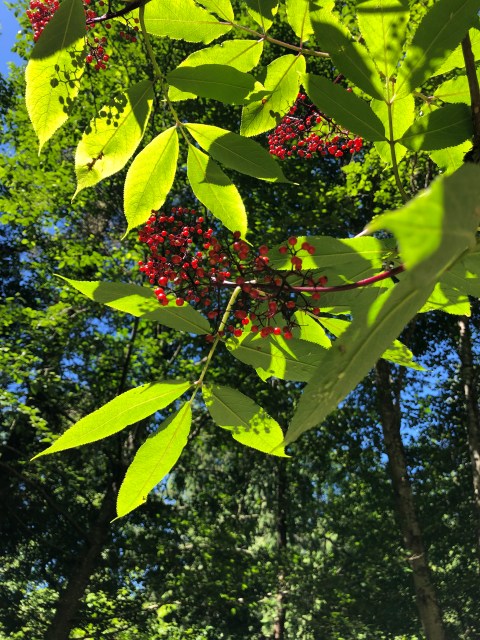
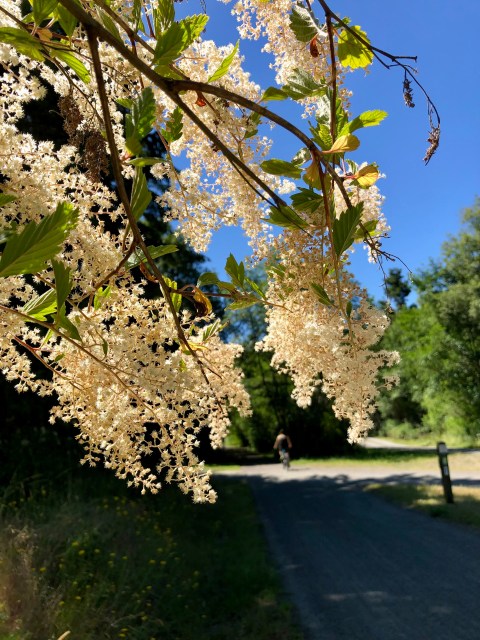
Another coastal native that’s fruiting now is red elderberry, Sambucus racemosa. The white flower cluster of has a pyramidal shape This berry can be edible if cooked, but I have never tasted it. Raw berries can cause nausea. All other parts of the plant are toxic. This plant grows easily in all soils and sun or shade.

Red Elderberry, Sambucus racemosa

(Blue elderberry, Sambucus nigra caerulea has white flower clusters that are flat. It is an edible, medicinal and ornamental plant.)

Other iconic berries will fruit soon including salal and huckleberry, stay tuned!

July in the Garden

Oceanspray, Holodiscus discolor has cascading clusters of tiny cream-colored flowers.

Summertime has arrived on the Olympic Peninsula’s rainshadow! Native shrubs like Oceanspray, Holodiscus discolor and Hardhack, Spirea douglasii are blooming. Others are fruiting: salmonberry, thimbleberry, and red elderberry The garden is filling out with lush greens, and warm-season crops are starting to develop and mature. Just yesterday I saw a garter snake with a big black slug in its mouth.

Edible Garden

Winter garden: Select beds that have finished producing and replenish with compost. Rotating crops prevents diseases from building in the soil.

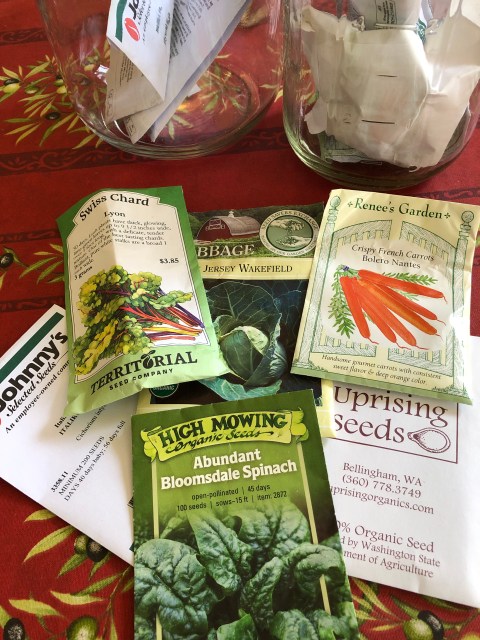
Time to direct sow brassicas and greens, beets and carrots. Varieties: Purple sprouting broccoli, Lacinato and Red Russian Kale, Early Jersey Wakefield cabbage, Winter Density lettuce, Abundant Bloomsdale spinach, Bolero carrots.

Make sure to leave room for your garlic crop that can be planted in November.

Tomatoes: Remove suckers and continue staking.

Weeding: Make a quick pass once a week to eliminate weeds. Some weeds can be companion plants, however they also compete for nutrients, water and light.

Curing garlic: Harvest garlic bulbs when 4-5 leaves are still green, taking care not to damage them. Over-watering or leaving them in the ground too long causes the bulbs to split or become prone to disease. Fresh garlic is fragile. Clean the garlic by gently pulling down the top leaf and removing it from the bulb. ( If the leaf has signs of rust, be sure to throw away the skins instead of composting to prevent spreading the spores.) Brush soil from roots.Drying in a well-ventilated place takes a couple of weeks. Check the stems and when no green remains inside, they are safe and should store well.

Strawberries: Renovate June-bearing varieties (not the everbearing, day-neutral ones). Cut to 2-3 inches. Mowing can accomplish this. Cut out and remove weak and crowded plants. Fertilize with a balanced natural blend like Down To Earth.

Flowers: Save seed from annuals and biennials including: nasturtium, bachelor buttons, foxglove, calendula and bread-seed poppies, cosmos. Dry them in a cool dark place and label the envelope with plant, and date.

Landscape

Time to review the garden. If some plants didn’t make it after the last couple of years of climate ups and downs, maybe replacing part of the landscape with natives could be on your horizon. If you have lots of space maybe it’s time to consider planting a hedgerow that will help slow the wind or screen the road.

Bulbs: Order bulbs  in the next few weeks to plant in the fall. This is especially true if you want to plant some more unusual bulbs. When they arrive check the bulbs to ensure there is no disease or damaged bulbs. Store them in a cool dark place until you are ready to plant. I often order from Johnny Scheepers. Another company, that is good and local is RoozenGaarde.

Irrigation: Determine which plants need extra care and keep their roots growing. Many established shrubs won’t need any water until August, but in the first couple of years a plant will develop nicely and be healthier if it is watered regularly. If plants look weak or diseased, give them a boast with compost and liquid seaweed fertilizer.

Lawns: Port Townsend homeowners have long had an unspoken agreement that green lawns are not a requirement for a beautiful landscape. A well-kept yard is often mowed until mid-July and then the grass goes dormant and the hawkweed or dandelions provide food for pollinators. When the autumn rains return, our lawns green-up again. At that time, spread dolomite lime. This provides calcium and magnesium as well as making the soil less acidic and more inviting for grass. In fact, many people prefer not to have lawns. But if grass is already there, allow it to go dormant.

Caring for English Roses

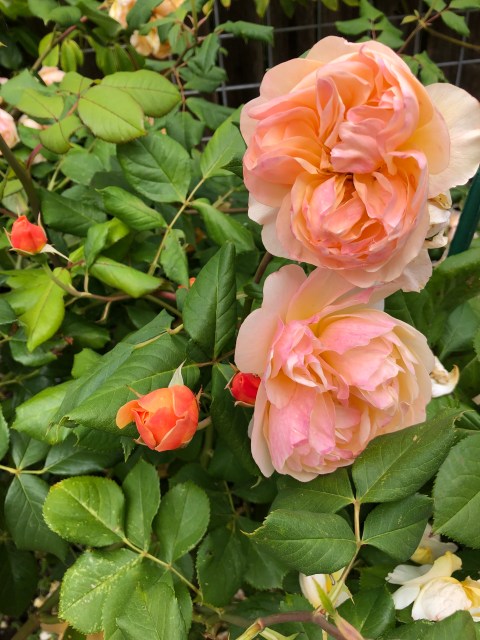
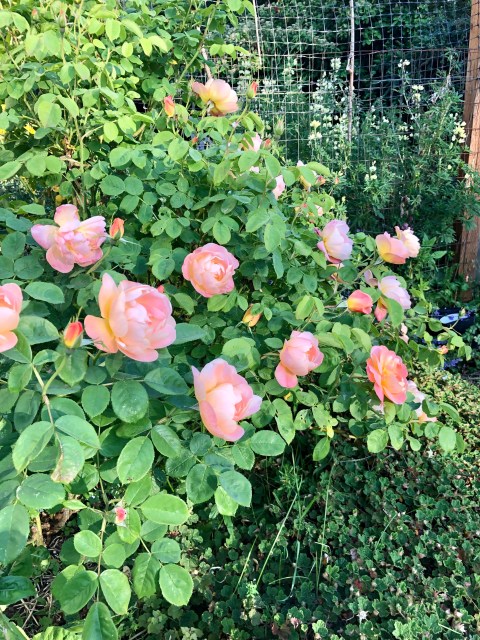
English Rose, Roald Dahl
Roald Dahl , English shrub rose bred by David Austin

This post focuses on modern shrub roses bred by David Austin, a premiere rose breeder who introduced over 190 cultivars in his lifetime. Known as English Roses, these plants are crosses of old garden roses with modern hybrids. ‘Old Garden Roses’ originated before the 18th century. Examples  of OGR include Gallicas, Albas, Bourbons, and Damask. Unfortunately, these incredibly fragrant roses only bloom for a couple of weeks once a year.

Modern roses include hybrid tea, polyantha, and floribunda, shrubs and climbers. Most modern roses are repeat bloomers in six-to-eight week cycles. Many of the hybrid roses are prone to disease and require a stringent spray regime to keep them healthy. Modern shrub roses have been bred from old fashioned roses with the added features of disease resistance, repeat blooming and a wider range of colors. These roses have a more natural form of arching canes with many flowers whereas hybrid teas and floribundas have a stiffer form. Long-stemmed florist rose are usually hybrid tea.

English shrub roses come in all different forms from peony-like full blooms to simple single petal flowers. Other shrub roses include all the rugosa roses, wild roses like our native Nootka rose and many others. I don’t have time here to do these roses justice!

Cultivating Roses

Provide good drainage and fertile soil with plenty of compost. Six hours of full sunlight will allow the roses to flower fully. Water weekly at the base of the shrub. Mulch to conserve moisture.

Deadheading is the term for removing spent flowers. Removing the first flush of blooms not only encourages more blooms but also helps to shape the shrub into a graceful form. I use Felcos #2, but any by-pass clippers work well. Sharpen the blade and then and sanitize it with hydrogen peroxide or alcohol. Always clean before starting to prevent the spread of disease. If you note disease where you need to prune, wipe the blade frequently. Removing the spent flowers prevents the development of rosehips and seed formation. Resist the urge to prune immediately below the spent flower; this results in dieback, stubby dead stems. Pruning at a leaf with 3-leaflets results in dog-legs—many spindly short stems. Instead, look for a thicker stem and make the cut just above a leaf with five leaflets. This encourages robust flowers on longer stems, perfect for cut flowers.

Even though English shrub roses are disease-resistant, they can still suffer from black spot. This fungal disease spreads by splashing water. Irrigate at the base of the plant and handpick diseased leaves and dispose of them. Make sure their is plenty of air circulation. If you need to spray, Safer brand has a fungicide. In the autumn rake and destroy all fallen leaves. If autumn is not getting gradually colder with light frosts, monitor the rose. If it continues to flower into October, stop deadheading and allow rose hips to form; the enzymes and hormones might trigger a dormancy response. By early December, strip the leaves to force the rose into dormancy. If we suddenly get slammed with an arctic blast, it is better for the plant to be dormant. Pruning is best done in February—something for another post.

Learn more about these roses with a free download from David Austin Roses: English rose handbook

Groundcovers for Sustainable Gardens

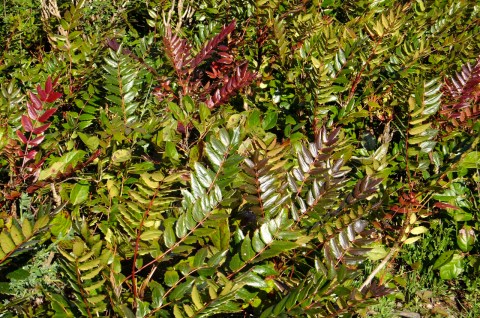
Cascade Oregon Grape, a native groundcover
Cascade Oregon Grape, native groundcover

Sometimes called ‘living mulch’, there are many reasons to choose groundcovers, from covering challenging slopes; to reducing garden maintenance and water consumption; to simply knitting together the landscape. They offer excellent solutions to landscape challenges but groundcovers are not maintenance-free.

Woody Groundcovers

A popular native woody plant is Kinnikinnick, Arctostaphylos uva ursi. Another is Cascade mahonia, Mahonia nervosa. Other standard choices are Taiwan Bramble, Rubus calycinoides and  Pt. Reyes Ceanothus, C. gloriosus.

Emerald Carpet or Creeping Taiwan Bramble, a drought-tolerant plant

As these plants get established they need regular weeding, especially to prevent perennial weeds from getting a foothold. Fertilizing with compost or dry organic blends encourages the plants to grow. Mulching with woodchips or arborist chips reduces the need for watering. Cover bare ground with 2-3 inches of mulch, but don’t bury the crowns (where stem meets root) or go back after and brush mulch away from the crown. The very fastest groundcovers, especially those planted closer than the recommended spacing will not need much additional mulch. But slower groundcovers like Kinnikinnick or bearberry cotoneaster (C. dammeri ) will need more mulch in about three years.

For  woody groundcovers to look their best, prune once or twice a year. Prune back leggy stems to make denser coverage. (The principle is the same as tip-pruning house plants or perennials. It works by removing the plant hormone or auxin in the stem’s tip that maintains apical dominance.) Also, if your goal is a carpet effect, prune out vertical branches.

Herbaceous Groundcovers

These plants are not as tough as woody plants. If the foliage forms dense mats often this shades the soil and prevents weed seeds from germinating.

The smaller the foliage the more work to keep out grass and tiny weeds. If your garden is on a city lot then tiny foliage can work, just plant smaller groupings. There was a time when many people planted  chamomile or woolly thyme as small lawns, however they require regular weeding. If you plant lots of annual flowers that readily reseed themselves, herbaceous groundcovers with tiny foliage will take much more work to maintain because they will easily harbor germinating seedlings.

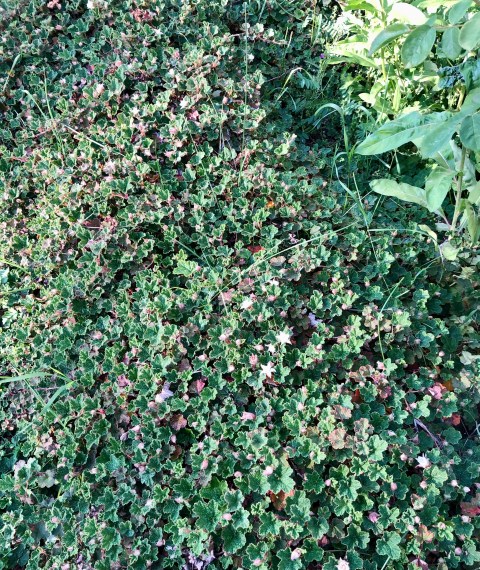
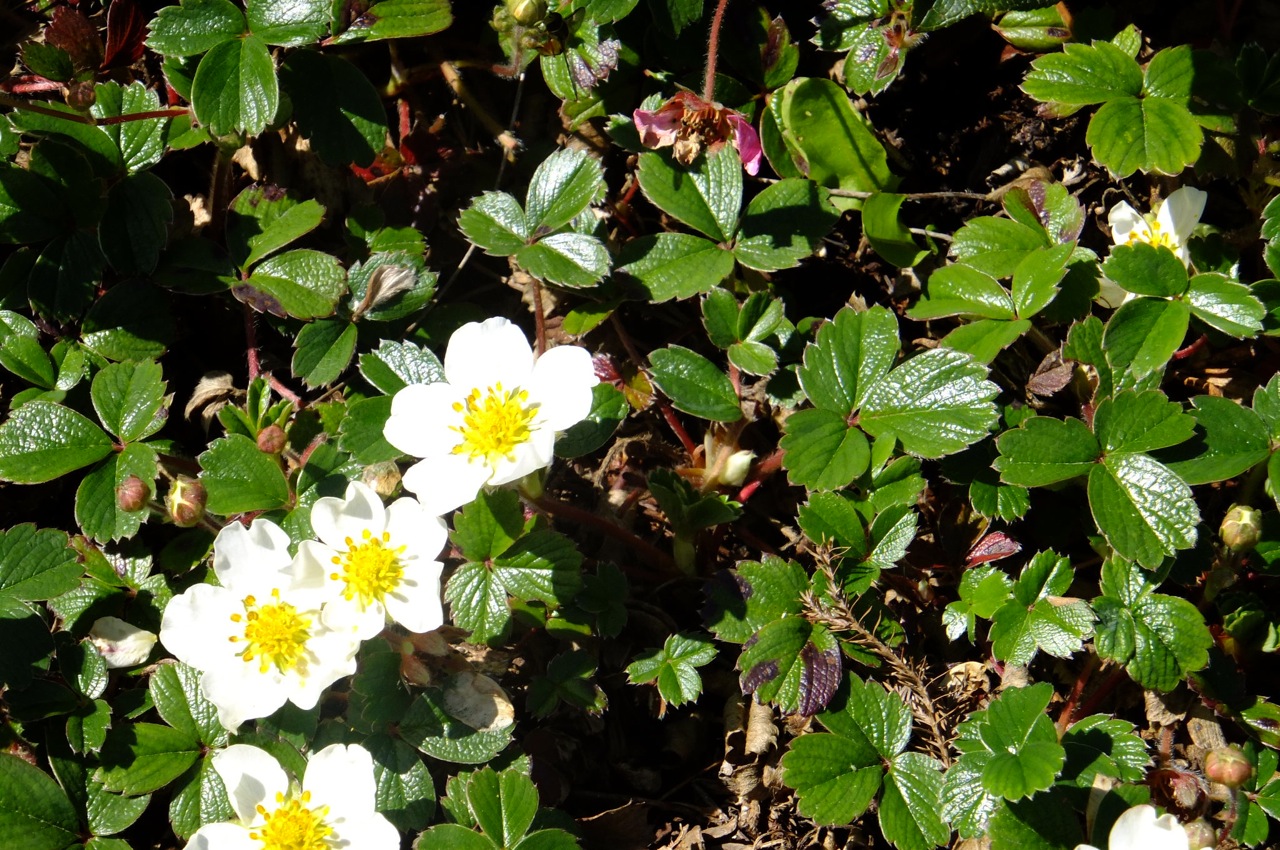
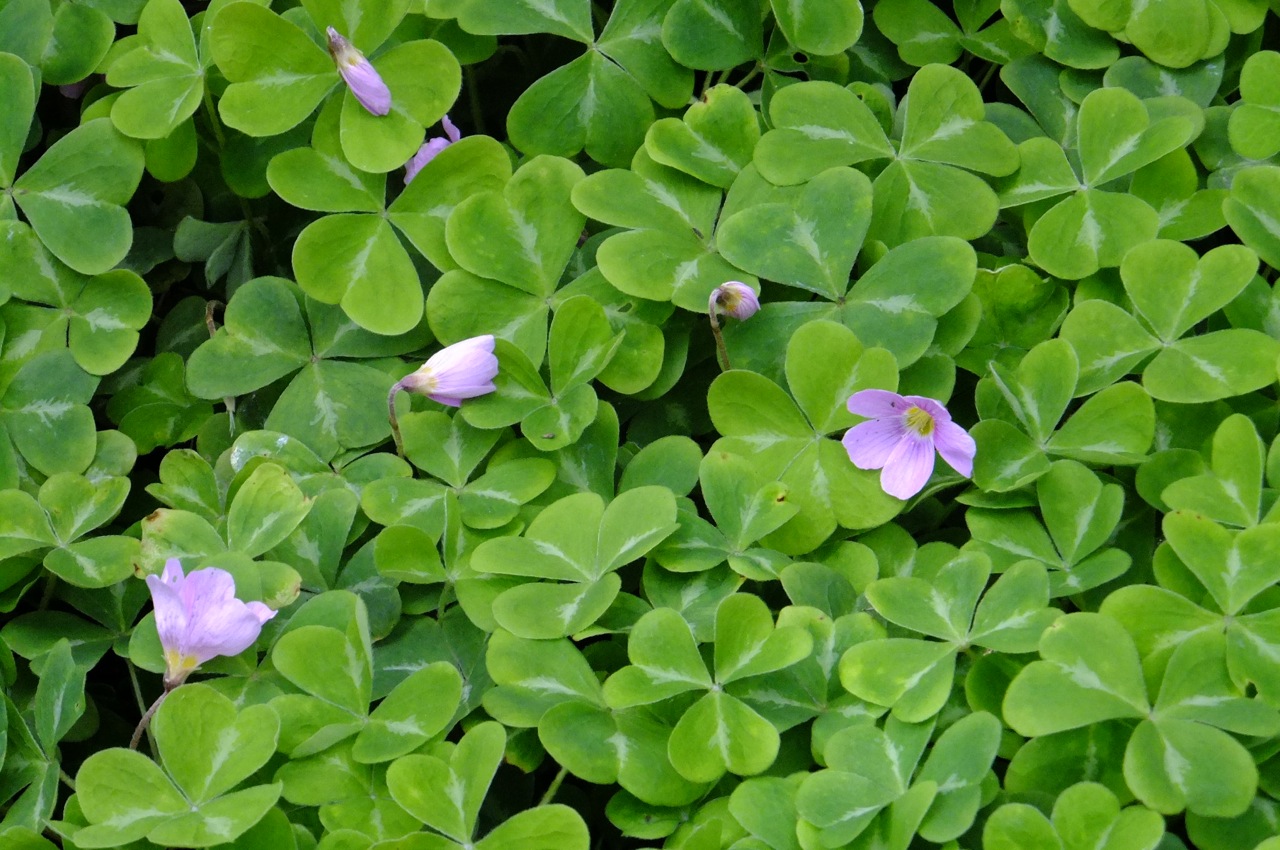
Natives include evergreen coastal strawberry Fargeria chiloensis, inside-out flower, Vancouveria hexandra and redwood sorrel, Oxalis oregana,  and stonecrop, Sedum spathufolium. Non-native groundcovers include many Epimediums, and Geraniums. A low maintenance herbaceous groundcover for shade is hardy geranium or Geranium macrorrhizum, especially the magenta pink ‘Bevan’s Variety’ makes a dense mat of foliage that is deer-resistant. It does require a little water during dry summers.

Plants don’t have to form low carpets to be a groundcover. Distinctive foliage is a good reason to mass plants together. Under conifers the western sword fern is attractive. Larger perennials like Corsican Hellebore, Helleborus argutifolius make a bold statement. Pools of ornamental grasses offer ribbons of texture that can ripple in the wind.

Goumi in my garden

One of my favorite permaculture shrubs is Goumi, Elaeagnus multiflora. This multifunctional plant is easy to grow! The fragrant tiny yellow flowers bloom in April, followed by astringent and sweet fruit by the end of June. In 2018 I ordered plants from One Green World and they recommend planting two varieties, so I planted two Sweet Scarlet and two Red Gem. The former is more robust with dense foliage that hides the fruit from the birds whereas Red Gem has a more open framework, with less foliage and is more productive. If you have limited space and prefer to cook the fruit with a sweetener, then Red Gem is a winner. I mostly eat the fruit raw and share the crop with birds. For the sweetest flavor wait until the fruit is a deeper red.

The genus Elaeagnus is recognized for having a symbiotic bacteria, Frankia that grows in the soil and fixes nitrogen from the air, making it available to the plant. I prune Sweet Scarlet several times a season and use the leafing branches as compost.

Goumi, an Asian native has been cultivated here for at least one hundred years. In Japan it is known as natsugumi. The fruits of this shrub are high in lycopene I wrote a more thorough account here

June 2024 Garden Chores

The garden is a riot of blooms bursting with color. Let’s take a look at English garden roses, one of my favorite. Goumi, the earliest fruit in my garden has a sweet-tart flavor that I love to nibble. The garden is alive with bird songs! Robins in the garden are fun to watch as adults seek out worms and their fledglings beg for food.

By now in the vegetable garden, the cool season crops are producing and warm season crops are in the ground. Before the month is out we will be preparing for the winter garden.

Edibles

Tomatoes: Begin training indeterminate tomatoes. Train a couple of main stems. When new shoots form between the main stems and a leaf, pinch out these suckers. There will be less fruit but they will ripen sooner. Remove some foliage if it is excessive but leave some to protect the fruits from sun-scald.

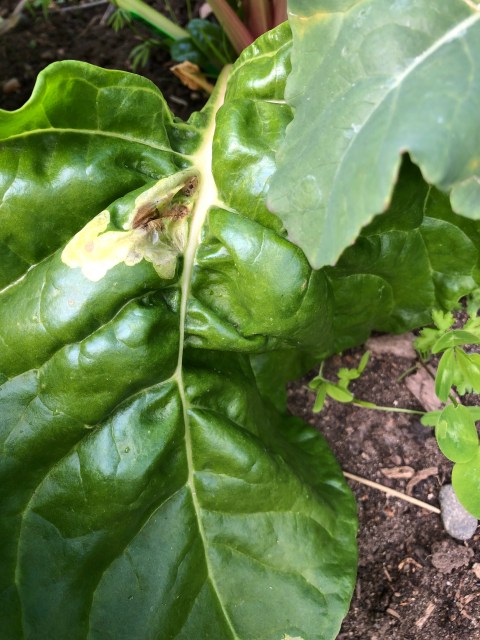
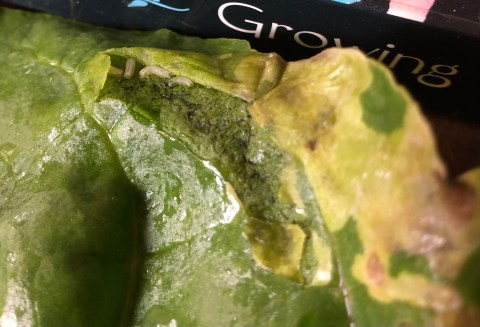
Vegetable Pests: Watch for signs of leaf miners on spinach, beets and Swiss chard. The larvae form tunnels between the layers of leaves that look like yellow trails and pockets. As the fly larvae metabolize the plant they deposit black frass. Hand pick the leaves and trash them. Don’t place them in compost!

Swiss chard leaf with yellow spot indicating leaf borer within.
Leaf miner maggots visible on top left. The top layer of leaf was peeled back to reveal these fly larvae.

Garlic: Harvest scapes ( curvy shoots with flowering head) Stop watering when leaves start to turn yellow. Harvest when only 4 leaves are still green, or the bottom 1/3 of foliage is yellow. For longer storage, cure (dry) garlic with the tops and roots for several weeks, allowing nutrients into the bulb. Cut tops and roots leaving as much skins to protect garlic bulbs.Prevent the spread of garlic rust fungus by starting with certified disease-free bulbs, rotate crops and use a mulch of arborist chips to prevent rust from establishing in soil.

Asparagus:  Mature fronds can get top heavy and fall, sometimes snapping at the base. For attractive plants in an edible landscape stake individual plants or prop up with bamboo. For asparagus in rows place a metal t post at each end and run jute twine between the posts. To keep the plants together weave the string between plants. In the fall when the shoots die to the ground, the jute can go into the compost along with the dead asparagus.

Fruit Trees: Thin fruit, and watch for signs of fungal disease that spreads by splashing water. Use neem oil spray or sulfur powder. Look for and destroy tent caterpillars. Patrol for slugs and snails.

Winter vegetable garden It can be confusing to newbie gardeners that just as the summer solstice arrives, we begin sowing seeds for winter harvest! Sow brassicas  including winter cabbage, kale, and purple sprouting broccoli. from mid- to late June. If you miss this window, buy vegetable starts at the coop next month. Purple sprouting broccoli is the most successful winter broccoli with its small and numerous shoots. Early July is time to sow the following: carrots, beets, Swiss chard, kohlrabi and radicchio. (Crops for late fall harvest grows through the autumn equinox and then growth slows almost to a standstill.)

Ornamental Plants

Deadhead Rhododendron. By gently snapping off the flower cluster, seeds won’t form, instead we allow the shrub’s energy to be directed into growing foliage and starting next year’s flower buds.

Perennial Flowers: Some late summer and fall- blooming perennials, pinch back now for sturdier and shorter stems. Remove the top 1/3 of the following plant Asters, mums, beebalm (Monarda),  and Joe-Pye weed.

Fungal diseases are exacerbated by rain. Powdery mildew is not one disease but a symptom.Caused by different fungal diseases, the symptom is white circular patterns with a powdery texture, becomes gray or brown over time. The disease is more than cosmetic; it inhibits photosynthesis. It can overwinter in buds and also on dropped infected foliage on the ground. Humid weather and crowded conditions that cause stagnant air encourages fungal growth. Neem oil or sulfur can be effective when used  at first signs. Safer brand Fungicide is another option.

Winter Injury: By now many plants have recovered from the winter. Evergreen shrubs that dropped foliage are now leafing out. Old stands of red-hot-poker that completely died to the ground with many rhizomes turning to mush are now leafing out. All these plants require monitoring, removing dead wood and watering during dry spells.

May in the Garden 2024

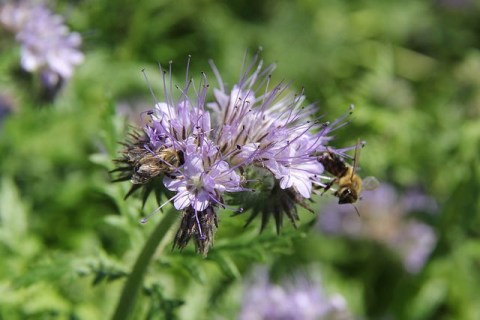
Phacelia flowers attract bees

May on the Olympic Peninsula is a time when everything is in bloom—from our native rhododendrons and madrona trees to lilacs and peonies . Deciduous trees are brilliant with fresh green growth. Spring migration is in full force with songbirds returning and their songs brightening each morning. Insect pollinators are becoming more active. This month is a transition from spring to summer.

Check the weather—It may seem shocking that now is the time to start watering but its true. Here in the rainshadow there may be drizzle, but often if you poke the soil you will notice how shallow the moisture extends. The Dept of Ecology has announced a statewide drought emergency due to the low snowpack. although we currently have a dry forecast, El Niño is rapidly changing into La Niña so the forecast may change.

Garden chores includes transplanting or sowing  warm-season crops. Now is the time to check your irrigation system or consider installing a more water-efficient one. Sow seeds of warm season crops directly in the garden and transplant tomatoes and peppers. Fertilize shrubs by scratching in dry natural fertilizer. Stake perennials. Let’s get out in the garden!

Check the weather—It may seem shocking that now is the time to start watering but its true. Here in the rainshadow there may be drizzle, but often if you poke the soil you will notice how shallow the moisture extends. The Dept of Ecology has announced a statewide drought emergency due to the low snowpack. although we currently have a dry forecast, El Niño is rapidly changing into La Niña so the forecast may change.

Cultural practices

Avoid overhead watering that can spread fungal disease. Water the root zone. Water in the morning.

Drip irrigation and low-water options

  • Avoid water splash from soil. Prevent the spread of phytophthera of tomatoes
  • Prune for air circulation, avoid overcrowding, learn how large plants will grow.
  • Prepare beds with compost. Home-made or bought. Spread 1”-3” deep.
  • Handy tool for determining how much your garden can use;
  • Monitor for pests: Tent caterpillars, winter moth, European sawfly on currants,
  • Vegetable starts; plant the hot season cucurbits and tomato, peppers and basil.
  • Plant dahlia tubers: Late summer here is often warm and dry providing dhalias with the perfect weather to display their amazing variety of flower shapes and colors.
  •  Spring-flowering bulbs: This time of years the daffodils and tulips and smaller bulbs can look tired. Keep them healthy by removing the spent flower to prevent the plant from making seeds. We want all the energy going into nourishing the bulb, so let the foliage remain until it dries out completely. If you are a real neatnik who enjoys labor-intensive gardening that can be relaxing and meditative, consider braiding the narrow foliage of daffodils and snowdrops. To avoid big gaps when the foliage is gone, consider interplanting with native bleeding heart, Chinese for-get-me-not, or love-in-a mist, calendula or annual poppies.
  • Stake Perennials