Late-Autumn Garden Chores

Late autumn usually brings the most precipitation to Port Townsend and the eastern part of the Olympic Peninsula. Atmospheric rivers dump rain. Strong winds blow and fallen leaves swirl. The sun is low in the sky.

The winter vegetable garden is producing, but most growth happened before the fall equinox. Garden beds covered with hoops and floating row covers will be protected from frosts. Fresh salad greens, kale, Swiss chard, and leeks  can be harvested throughout the winter. Monitor vegetables for slugs and cut worms. The wet weather favors slugs and snails. Get them now and there will be less generations come spring. Also cut worms are a problem and can be found during routine weeding.

Fruit Trees

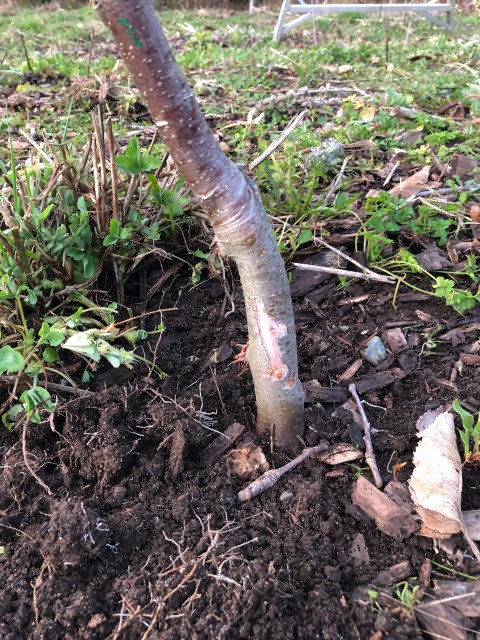
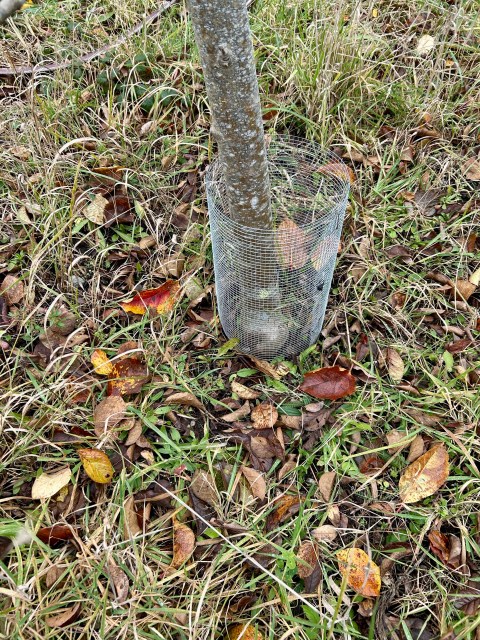
Keep the base of young trees free of tall grass. Better yet, place mulch around the trunks. Winter is the time when voles chew bark and roots. If you have a serious vole problem wrap the trunks with hardware cloth to prevent the rodents from gnawing the bark. Some gardeners even use pea gravel as a mulch to discourage voles.

Late winter is a better time for pruning apple and pear trees, ornamentals and raspberries. The reason not to prune now is because we could have a warm, sunny spell in January that could encourage plants to grow—only to be blasted by a deep cold in early February. Better to wait until mid- February for most pruning. Because wet weather promotes bacterial and other diseases, many gardeners prune plums and cherries after flowering during a sunny spell.

This is a good time for large garden projects that warm the body. Pushing wheelbarrows of manure, woodchips, and  making large compost piles. Building planter boxes and retaining walls. Cutting down dead trees or cutting up branches for firewood or hauling them to the yard-waste facility. If you live in the woods, think about a larger tree-free area around the home as future fire-prevention.

Going within

And then there are times to slow down, take walks and notice the birds. Different birds are here for the season. Watch for Pacific wren, red-breasted nut hatch, northern flicker, pine siskin, golden-crown kinglet and spotted towhee.

Winter is a good time to dream about the garden. A garden mentor once said that the garden is forgiving—we can always try again next year. It’s a time to think about rearranging perennial beds and planting more drought tolerant flowers. Or perhaps it is time to think about  simplifying a high maintenance garden. For some gardeners seed catalogs arrive in January and planning the edible gardens begin. Now you can think about how you can extend the season or create a garden sanctuary.

Gardening for the Senses

Plants with textured foliage invite us to touch or pluck a leaf and stroke it, even caress our face!

Gardens can stimulate or relax us by how they influence the five senses. A relaxing ambiance can come from blending in with the existing natural environment. When we are alive to our senses, we are in the moment. The frargrance of a rose or the soft texture of a leaf slid across the face, contrasting colors in the garden, all influence us through our senses. A repetitive pattern has a soothing or harmonious influence.

Gardens that stimulate and bring the energy up often have bold colors and strong scents. Patterns that contrast and colors that contrast are powerful. Think magenta and orange flowers with combined with chartreuse foliage; ornamental grasses next to large-leaf shrubs like Fatsia; canna lily with ornamental onion, the list goes on! Whimsical garden features like colored globes or blown glass spikes and sculptures with mirrored surfaces all add to an energetic feel. Mahonia media and unusual hebes along with weeping dwarf conifers all add an element of excitement.

Sound

Most of us in Jefferson County are fortunate to live where it is quiet enough to hear natural sounds: wind through conifers, rain on roofs, treefrogs singing, and geese flying overhead. We can create or muffle sounds in the garden. A water feature outside our open window will bubble, gurgle and splash.

Birdsong is another feature we can add to our garden by offering habitat, water and food. Humans have evolved with birds—when they are singing, all is safe. The melodious calls of songbirds encourage us to relax.

Large ornamental grass like Miscanthus grouped together can whisper in the wind. Bamboo make a soft sound as the wind passes through.

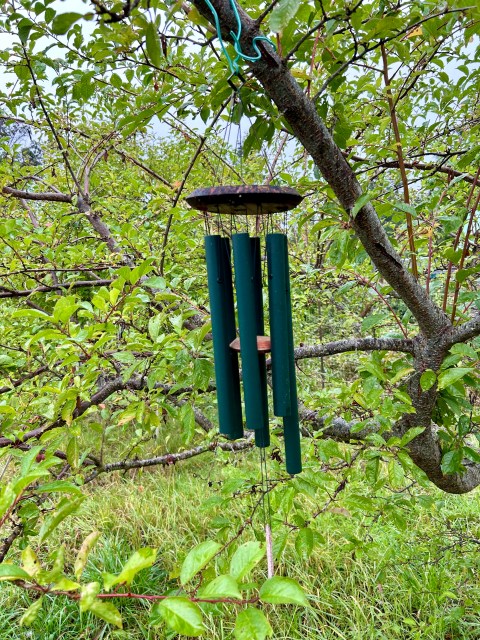
Windchimes create different moods. Determine if high-pitch tinkling sounds or deeper, resonant bass notes bring you joy. Listen to different ones to choose

Science has shown how auditory input impacts us, based on variation of pitch and length of time the sound The rhythmic sound of water on the shore is similar to the sound of humans breathing thus it is often soothing. When we hear many sounds at once it can be discordant and confusing. We can create a peaceful soundscape by muffling unwanted sounds with hedges and berms.

Scent

Flowers come to mind first when we think of scent—roses and lavender. Other scents include volatile oils in foliage and resins in conifers. Ambient temperature affects how strong the scent is. A sunny day will bring out the aroma of ponderosa pine bark or the resin dripping from a spruce. Walkable groundcovers are prostrate plants that can be placed  in pathways or between stepping stones—in the shade Corsican mint and in sunny spots plant caraway thyme or pink ripple thyme. As you walk past fragrant plants along a pathway brush against them or let your hand glide over the surfaces. Better yet, pinch a bit and bring it to your nose, inhale deeply and set the bit in your pocket.

Scented plants along the path are easily pinched as we walk by, sniffed and placed in one’s pocket

Touch

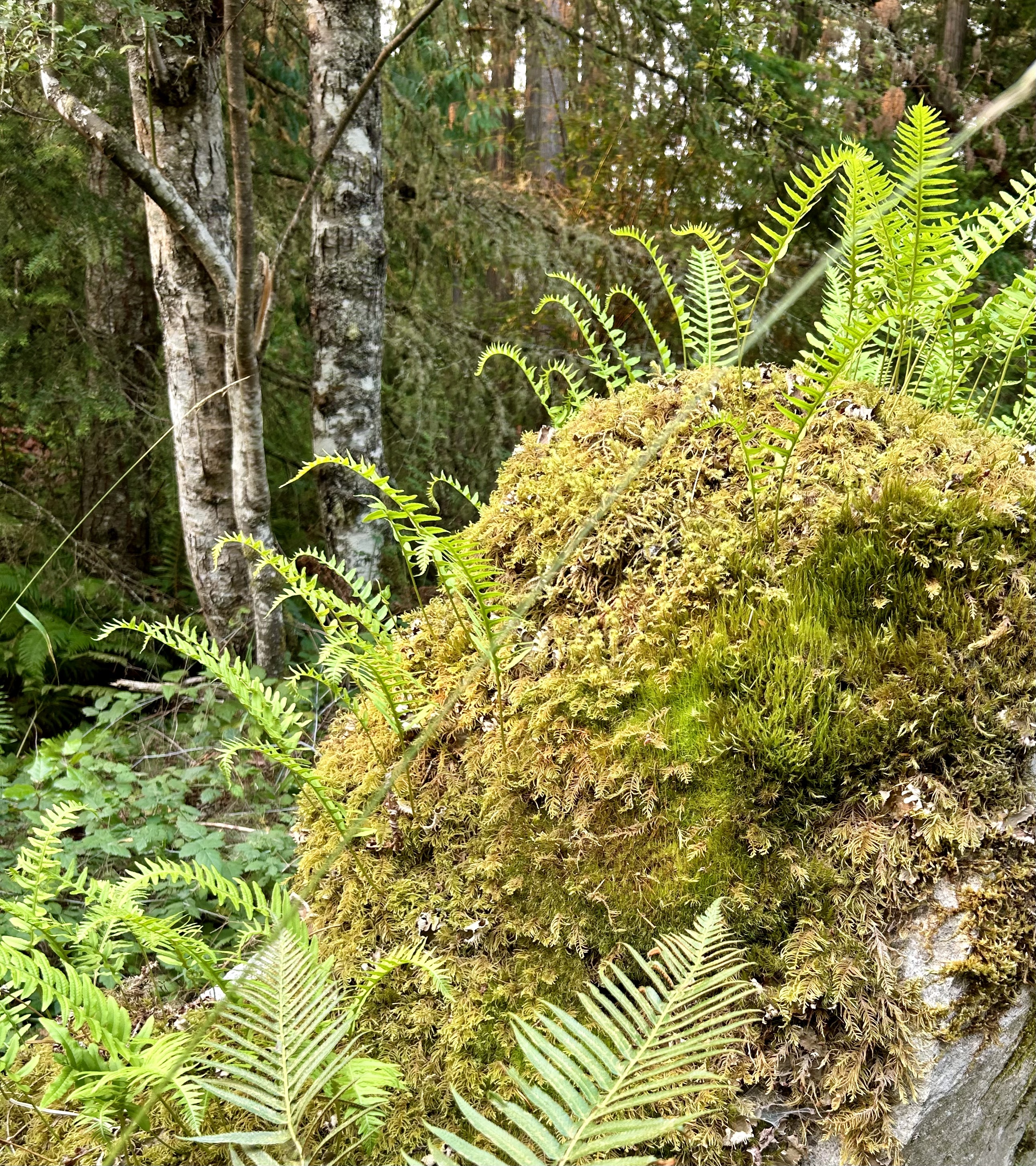
Don’t forget the tactile dimension of the garden. Many gray foliage plants have textured surfaces of fine hairs to reduce water loss. Lambs ears, Stachys byzantina; giant silver Mullein, Verbascum bombyciferum; and the artemisia are ever so soft. Ferns have feathery foliage as does dwarf Japanese plume cedar, Cryptomeria japonica elegans. Moss is plush.

Taste

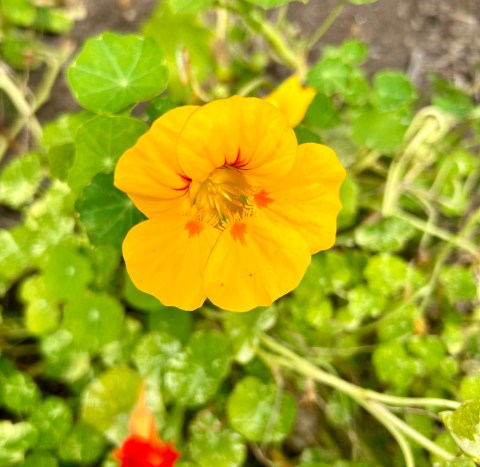
Edible flowers in the garden add an element for our tastebuds. The sweet-licorice flavor of anise hyssop, the peppery bite of nasturtium blooms, or the citrus notes of lemon thyme, all add to the multidimensions of the garden.

Matilija Poppy

Romneya coulteri

This beautiful grey-grey foliage plant with fragrant large white poppies does best where it has room to spread. It is both drought tolerant and—knock on wood—deer resistant.

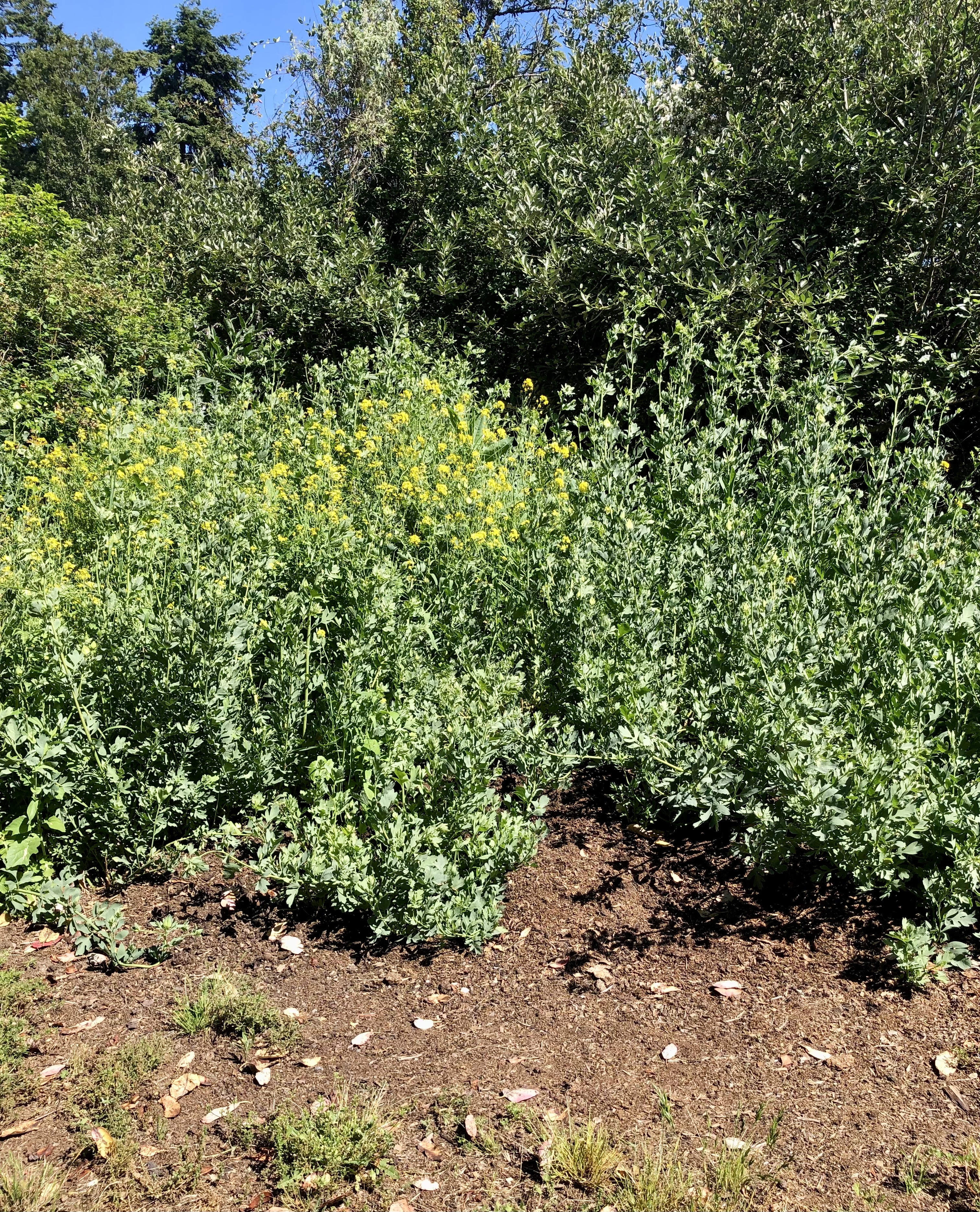
Matilija grows well on the loose soil of landslides. I planted some on a mound about 20 years ago and rarely weed it. After a time, the Nootka rose spread across the mound pushing out the poppy. Not much can hold its own against Nootka rose. (That’s why I only suggest it for creating wildlife hedges where it will be kept in check by mowing or weedeating lawns and fields.) Matilija poppy migrated over to a pile of soil and rotting sod. Last year I had a dump truck load of horse manure delivered near the Matilija planting. Some of the plants were buried in the manure. Instead of suffering, the plant spread throughout what was left of the manure after I moved most of it.

Description

  • Perennial flower growing 3 to 6 feet tall
  • Gray-green foliage
  • 4”-8”  fragrant flowers. Described as fried-egg flower

Growing requirements and care:

  • Full sun
  • Drought-tolerant once established
  • Soil: flexible, needs good drainage
  • Cut back to the ground in late fall

Matilija Poppy spread to adjacent aged-manure pile. Wild mustard’s yellow blossoms in the middle of plants.

The Chumash, an indigenous tribe of central -southern coastal California, values the antimicrobial properties. In fact the name Matilija comes from a Chumash tribal leader. The plant’s alkaloids and other secondary substances make it useful for sensitive gums and preventing plaque. Herbalist Micheal Moore describes Matilija as a good first aid plant: the foliage makes a good external wash for sunburn, and inflammation from allergic reactions. At one time this plant was seriously considered as the state flower of California.

In the landscape, plant this majestic plant with other tall drought-tolerant ornamentals like Miscanthus and cardoon. In the foreground use Russian sage, and red hot poker. Once established these are all deer-resistant.

Caring for English Roses

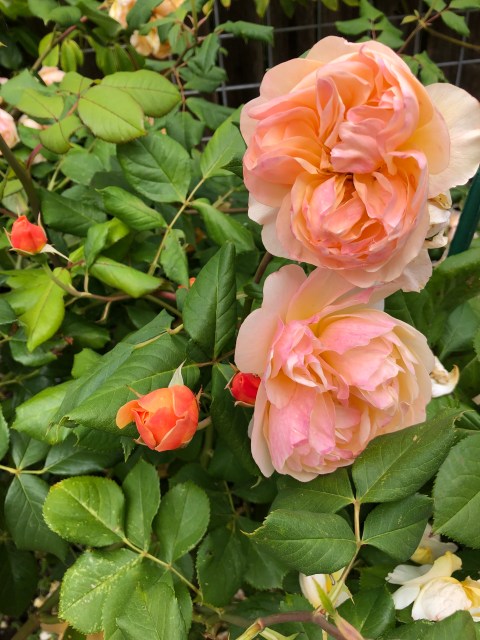
English Rose, Roald Dahl
Roald Dahl , English shrub rose bred by David Austin

This post focuses on modern shrub roses bred by David Austin, a premiere rose breeder who introduced over 190 cultivars in his lifetime. Known as English Roses, these plants are crosses of old garden roses with modern hybrids. ‘Old Garden Roses’ originated before the 18th century. Examples  of OGR include Gallicas, Albas, Bourbons, and Damask. Unfortunately, these incredibly fragrant roses only bloom for a couple of weeks once a year.

Modern roses include hybrid tea, polyantha, and floribunda, shrubs and climbers. Most modern roses are repeat bloomers in six-to-eight week cycles. Many of the hybrid roses are prone to disease and require a stringent spray regime to keep them healthy. Modern shrub roses have been bred from old fashioned roses with the added features of disease resistance, repeat blooming and a wider range of colors. These roses have a more natural form of arching canes with many flowers whereas hybrid teas and floribundas have a stiffer form. Long-stemmed florist rose are usually hybrid tea.

English shrub roses come in all different forms from peony-like full blooms to simple single petal flowers. Other shrub roses include all the rugosa roses, wild roses like our native Nootka rose and many others. I don’t have time here to do these roses justice!

Cultivating Roses

Provide good drainage and fertile soil with plenty of compost. Six hours of full sunlight will allow the roses to flower fully. Water weekly at the base of the shrub. Mulch to conserve moisture.

Deadheading is the term for removing spent flowers. Removing the first flush of blooms not only encourages more blooms but also helps to shape the shrub into a graceful form. I use Felcos #2, but any by-pass clippers work well. Sharpen the blade and then and sanitize it with hydrogen peroxide or alcohol. Always clean before starting to prevent the spread of disease. If you note disease where you need to prune, wipe the blade frequently. Removing the spent flowers prevents the development of rosehips and seed formation. Resist the urge to prune immediately below the spent flower; this results in dieback, stubby dead stems. Pruning at a leaf with 3-leaflets results in dog-legs—many spindly short stems. Instead, look for a thicker stem and make the cut just above a leaf with five leaflets. This encourages robust flowers on longer stems, perfect for cut flowers.

Even though English shrub roses are disease-resistant, they can still suffer from black spot. This fungal disease spreads by splashing water. Irrigate at the base of the plant and handpick diseased leaves and dispose of them. Make sure their is plenty of air circulation. If you need to spray, Safer brand has a fungicide. In the autumn rake and destroy all fallen leaves. If autumn is not getting gradually colder with light frosts, monitor the rose. If it continues to flower into October, stop deadheading and allow rose hips to form; the enzymes and hormones might trigger a dormancy response. By early December, strip the leaves to force the rose into dormancy. If we suddenly get slammed with an arctic blast, it is better for the plant to be dormant. Pruning is best done in February—something for another post.

Learn more about these roses with a free download from David Austin Roses: English rose handbook

Tinker’s Water-saving Tips

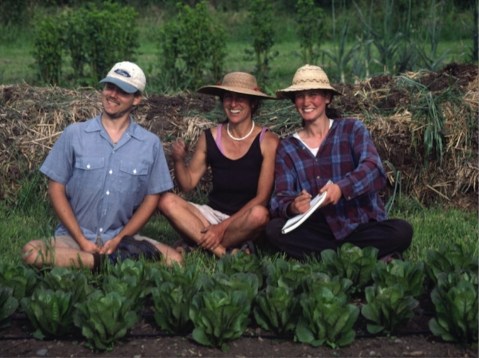
Tinker with apprentices at Abundant Life Garden 1990’s

Tinker was an advocate of living lightly on the Earth by conserving resources and living a joyful life of volunteer simplicity. This post is for local farmers who may not know her legacy and want to continue this important work.

Along with Judy Alexander, Tinker spearheaded the Dryland Farming Project, exploring the limits of what staples can be grown locally with little inputs, especially without irrigation. “We need to research ways that we can locally and sustainably grow staple crops such as grains, legumes, and seed crops.”

Today we have a vibrant farming community and many people share Tinker’s passion. Organic Seed Alliance develops seeds that grow organically with less inputs. Finn River is growing wheat and many others are working together toward a sustainable farming future.

Garden soil acts as a bank account, holding available water.” Tinker Cavallaro gave a presentation based on  the Dryland Farming Project ten years ago at the Quimper Grange. Tinker discussed her presentation with me beforehand and I wrote up the handouts. These are some of the notes:

Understanding our climate and the site’s soil properties is the foundation for making smart choices in garden irrigation. Rainfall quantities vary across the Quimper Peninsula. Close to the mountains, Quilcene gets much more rain. Port Townsend is located in the rainshadow of the Olympics, a unique area with less rainfall than most of Puget Sound. The rainshadow  of the North Olympics extends from Sequim to the San Juan Islands.

“As crops  grow they make heavy withdrawals from the garden soil bank account.” We will investigate more about soil properties but here are some basic tips:

Practices and techniques

  • Develop the habit of checking the soil for moisture
  • Use drip irrigation or low-volume sprinklers
  • Use water-filled containers with holes placed next to larger plants
  • Foliar spray or fertigation with liquid fertilizer known as ‘tea’ made of water and organic matter such as  compost, manure, seaweed or nettle
  • Raised beds hold moisture better than rows do
  • Plant seeds and transplants deeper than normal in the soil

Crops that do well with no extra water

Early Spring Crops

  • Peas
  • Greens: mustard, arugula & early lettuce
  • Kale, cabbage, early broccoli & radish
  • Direct-sown early carrots & beets that are heavily thinned
  •  Grains
  • Potatoes

Late Spring-Sown Crops

  • Field corn
  • Amaranth, quinoa
  • Winter squash
  • Dry beans including field peas, garbanzos, lentils & fava beans
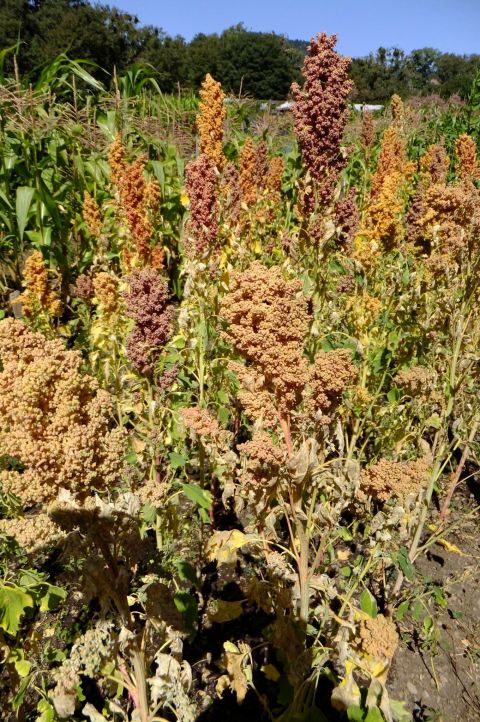
Quinoa trials at Ecology Action in Willits, CA

Crops that require summer irrigation

  • Celery & celeriac
  • Napa cabbage and summer brassicas
  • Summer lettuce & spinach
  • Onions if you expect sizable bulbs
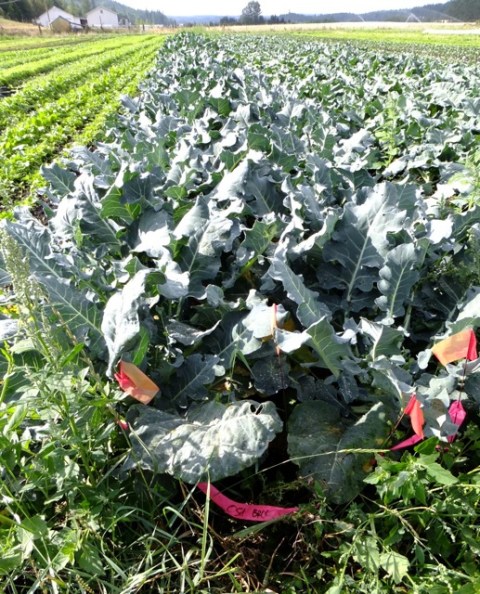
NOVIC Broccoli Field Trials at Red Dog Farm, Chimacum Washington

Understanding the Soil’s Capacity

Our rainy season, extending from fall through winter, provides enough water to bring our soils to field capacity, or the ability for the soil to hold all the moisture possible. Summer rains, on the other hand, are usually insignificant. In our windy location the little rain that falls often evaporates.

As plants  grow they make heavy ‘withdrawals’ from the garden soil bank account. Hot sun and wind cause plants to transpire moisture. The roots of plants pull soil moisture from the soil, up through the plant and out the surface of leaves. Foliage gives clues as to the plants ability to conserve water or use it freely. Drought-tolerant plants from dry climates tend to have small leaves or grey foliage. Magnification reveals tiny hairs that shade the leaf surface. The lush foliage of leafy green vegetables on the other hand can withdraw much water if not properly managed.

How plants utilize water

Plant roots, in a symbiotic relationship with soil microbes form a region known as the rhizosphere, the active site for water and nutrient uptake. Plant enzymes dissolve insoluble starches and oils that are required for plant energy and change them into water-soluble sugars. Roots draw moisture from the soil to their ultimate lateral spread and depth. The size of a plant’s roots indicates drought tolerance.

Healthy soil includes air and water. This water can move upward through the soil by a process known as capillary action. Water is drawn up in a wicking action through the gaps between soil particles. Soil texture determines the soil’s capacity to hold moisture. Sand holds one inch of water per foot of soil. Sandy loam (soil with a bit of silt and clay) can retain 2 inches of water per foot; clay soil retains 3 inches of water per foot. The point is that clayey soil holds three times as much water as sandy soil. If the capillary action is not strong enough then the gravitational pull will sink water deeper into the soil.

Cohesion describes when water is attracted to water and adhesion describes when water is attracted to other materials. When irrigation or rain moistens the ground, soil particles act almost as magnets and water adheres to them. Like a wet sponge, the ground is holding as much water as possible. Water is highly cohesive so gravity will pull water deeper into the soil. This happens when the water cannot adhere to the surface of the soil. If the soil structure has enough pores and humus that acts like glue, more water can be utilized. Root systems have to be able to penetrate the soil, become more extensive, and grow deeper to utilize the soil water.

Plants are much healthier if they can aggressively seek new water in soils unoccupied by roots and grow deeper and wider. Not only will vigorous plants be capable of withstanding drought and wind, they will also create more flavors and sugars.

( For more information on this important topic see Steve Solomon’s Growing Vegetables West of the Cascades, Ch 5)

Selecting Shrubs at the Nursery

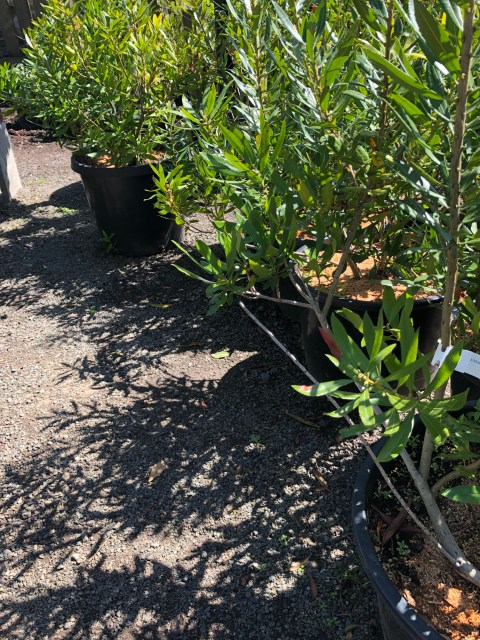
Most garden centers are temporary holding places for potted landscape plants. Freshly delivered plants from a wholesaler tend to be healthier than shrubs sitting in the yard overwinter. During dry spells in summer, note if the plants are getting watered or if the potting soil is dried out. Avoid plants that look like they have been sitting too long at the nursery.

Foliage

At the garden center, look at the foliage of the plant you are interested in. Sometimes it helps to step back and note all the plants of the same kind in pots. Look at the color. Is the overall color dark or bright green? (Of course, some plants are bred for other colored foliage including burgundy or yellow.) Avoid browning, yellowing, or wilting foliage. Are there pale or dark spots? Is the one you want fresh and healthy? A couple of sad leaves are okay—here we are looking at the overall health. Even if it is on sale, it is not worth it, unless you love tending sick plants or are a skilled gardener. Starting with the healthiest plants creates a vibrant garden.

Roots should be firm and white, not mushy or brown. They should mostly fill the pot but not be completely root-bound. A web of young roots filling the pot is okay but not thicker roots. Often at planting we use a knife to cut off slices of the rootball to allow new growth to spread out.

Structure and Overall Form

Now look at the woody stems of this young shrub. Do they join at the base? Sometimes several separate young plants are potted together to give the impression of a healthy big plant. Is it worth the price if your plant is really several juvenile ones packed together?

If the plants are healthy individuals, look at the way the stems are growing. Sometimes the plant is misshapen because all the pots were packed together and can be pruned once you get it home. Other times if you hunt through the offered plants you can find one with more uniform branching. It is worth taking the time to examine several potted shrubs. In any event, once you get the shrub home and dig a hole for it, turning it around in the hole can reveal its most attractive side to face out.

April in the Garden 2024

Springtime can be overwhelming. Everywhere we look something is calling out in need of attention. One of my garden mentors, Beth Nelson from Camp Joy Gardens, always said, “The garden is forgiving. If we don’t get it right this year, we can try again next year. Be patient with yourself.” Enjoy the time in the garden. Here are suggestions for where to begin:

  • General garden maintenance
  • Liquid fertilizer like fish and seaweed solution benefits plants more quickly in cold soil than the dry fertilizer.
  • Control weeds before they flower.
  • In the edible garden
  • Time to pull back straw mulch to allow the soil to warm.
  • Plant bare-root strawberries and raspberries
  • Transplant vegetable starts
  • Cover pea bed with floating row covers
  • Direct sow root crops like radish, spinach, chard, lettuce, mustard greens
  • Top-dress beds of perennial crops and flowers with well-aged compost.
  • Landscape care
  • Read our post about pruning flowering shrubs
  • Replenish alder chips or arborist-chip mulch. Be careful with trunks of shrubs & trees—no mulch within six inches. (Mulch can keep the trunks moist and allow disease organisms to breed.)
  • Add lime to lawns.
  • Learn to appreciate the many benefits of weeds in the lawn—think polyculture!
  • Mow grass leaving it about 2 1/2 inches tall.
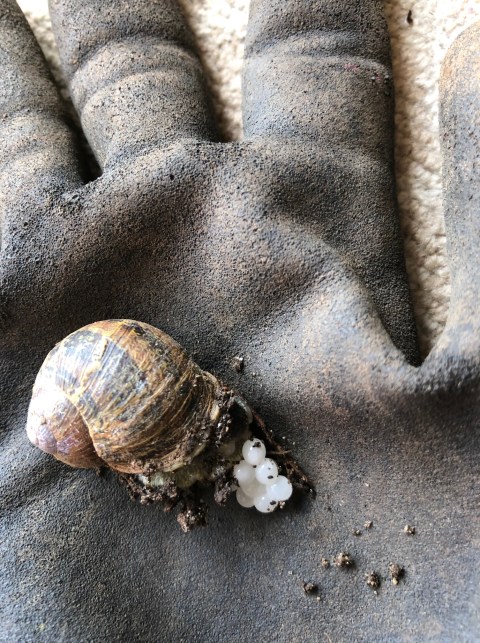
  • Hand pick & destroy slugs and snails. Learn to recognize snail eggs.
  • Sprinkle Sluggo or other nontoxic slug bait

Vegetable Starts

Start seeds indoors if you can grow healthy starts that are sturdy and dark green. Inadequate light causes the seedlings to grow spindly and fragile. Indoor lighting is dim compared with sunshine. Even a cloudy day offers more light than a typical florescent grow-light.

Once they have germinated, place the seedling trays outside on nice days. At first place them in a protected bright spot and then a day or two later, set them in full sunlight. And a light breeze will help then get sturdier. Also, by placing them outside, and bringing them in at night, the seedlings have begun the harden-off process. Otherwise, if they are greenhouse grown and then directly placed in the cold garden soil, the young plants can go into shock rather than grow.

The goal is to transplant them to the garden when they have two or three sets of true leaves. A grey, overcast day helps prevent transplant shock. If all this is too much effort, buy the vegetable starts. You can always sow your own seeds later in the season. We are so lucky here in Jefferson County to have excellent seedlings available from Midori Farm and Red Dog Farm. They are available now at the PT food Coop and Chimacum Corner Farmstand. They carry an array of vegetable varieties that thrive here.

Pruning

Shrubs that produce vigorous replacement shoots are good plants to learn pruning. These  flower on one-year old wood. If you only shear them, they never flower well. Also there will be a lot of thicker woody stems. Remove any crossing branches and weak or dead stems.

Proper pruning is a combination of thinning out—removing the branch all the way back to a larger branch, and heading back—what hedge shears are good for. Most novices just do heading back cuts. The problem is the plant grows into a dense hedge with just an inch or two of vegetation on the surface. A healthy pruning jobs increases the depth of foliage by allowing light and air in to the shrub.

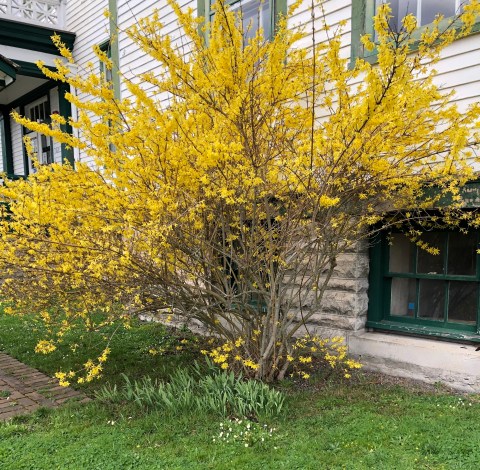
Examples are flowering currant, mock orange (or Philadelphus), forsythia, kerria and flowering quince. Wait until the flowers are faded before pruning.

Making Lists

Springtime can be overwhelming. Everywhere we look something is calling out in need of attention. One solution is making lists. Walk through the garden and write down anything that needs attention. Next set priorities. Sometimes fifteen minutes is enough time to tackle a crucial task. To borrow a term from construction industry, consider making a punch list. Keep a running list of projects that require additional help or some expertise. At the end of the day, it is satisfying to cross off items. Of course, sometimes I enjoy puttering in the garden, skipping around in a relaxed fashion. This can be a form of horticultural therapy where enjoying the clouds skittering across the sky, or watching insect behavior is just as satisfying as accomplishing something.

Serviceberry: A native tree for the edible landscape

Serviceberry, Amelanchier alnifolia, is a multi-trunk small native tree reaching about 15 feet high and about 10 feet wide. It is an attractive addition to the garden—in spring it is covered with white blossoms and the foliage turns a butter yellow in autumn. Edible fruits are a favorite with many birds, including the cedar waxwing. There is nothing like a small flock of these delicate birds in ones tree to stop the mind!

Serviceberry does best in a sunny spot but will tolerate partial shade. To encourage growth water it regularly until it is established, then only water during the driest months. Since its native range is from Alaska to California, it should be hardy even in the toughest winters.

Botanical name: Amelanchier alnifolia

(ame-e-LANG-kee-er al-ni-FO-le-ah)

Working around the tree in summer I might nibble on the delicious tiny fruits, but mostly I leave them for the birds. Around here that include  waxwings, goldfinches, thrushes and towhees, among others. The tree provides nectar for hummingbirds. Washington Native Plant Society offers much more information on using them for restoration.

About 25 years ago, I started a nursery bed for young bare-root trees from the conservation district. I planted them in rows that were easy to water and weed; after a couple of years, I transplanted them around my property. A minimum amount of pruning to shape them has really helped their form. Since they are in the rose family and a relative to our common fruit trees, understanding their growth patterns was straightforward. A row of four trees on the property line is a cheerful herald of spring. These photos were taken in 2015. Since then I forgot to water them during some of our summer ‘heat-domes’ and they have struggled. I plan to water deeply once or twice a month in August and September as needed.

Although I have only grown serviceberry seedlings, there are named varieties that have been bred for fruit and landscape appeal. ‘Regent’ serviceberry is a desirable edible landscape plant that was developed in North Dakota. It grows about 8 feet tall and has delicious berries.

Kraut-chi: Fermented hybrid

Kraut-chi 2

Preserving homegrown food is becoming a regular practice for many gardeners and as they delve into fermentation they want reassurance that preparing and serving fermented vegetables will not harm their family. Across the planet, traditional people have developed the art of managing microbes to age their food without refrigeration or canning. Europeans ferment sauerkraut and olives; Indians ferment cucumbers and make chutney, while Indonesians ferment soybeans as tempeh. Koreans value kimchi, their fermented vegetable preparation so much, they recognize it as the national dish. Twenty five-years experience making sauerkraut gave me the confidence to explore making kraut-chi the old fashioned way, without airlocks or European crocks. Besides that, I have been collaborating with microbes in compost-making for even longer; including studying the science and teaching others composting. By understanding a bit of the microbial ecology within a crock of fermented vegetables, gardeners can ferment with confidence.

In fact, fermented foods offer health-enhancing properties that go beyond preservation. Fermented foods can be one of the cornerstones of a healthy diet. New research indicates the microorganisms in our intestines play a far greater role in our overall health than previously recognized, almost functioning as an organ within an organ. Humans have co-evolved with a trillion microorganisms that effectively breakdown and convert much of what we eat. Fermented foods contain some of the same microbes, replenishing and nurturing our intestinal flora. The process of fermentation can increase the availability of essential amino acids, vitamins, minerals and bioactive compounds. These organisms adapt to changes much faster than the human body does. Microbes can mutate and move DNA around so quickly that the way they function has been compared to using DNA as tools to perform a myriad of biochemical tasks. Our highly refined western diet contains industrial foods that encourage a different intestinal population according to Dr. Daphne Miller. Cutting edge research suggests the loss of the beneficial microorganisms may add to problems of chronic low-grade inflammation, one of the roots of so many health issues today. So I wasn’t surprised to read a blog post in the UN’s Our World site by Jyoti Prakash Tamang, of the Sikkim Central University, India, Benefits of Traditional Fermented Foods, “Korea’s famous accompaniment, kimchi, may take the prize for most benefits however, reportedly helping to prevent constipation and colon cancer and reduce serum cholesterol, as well as possessing anti-stress effects and the ability to ameliorate depression, osteoarthritis, liver disease, obesity and atherosclerosis.”

Kimchi, and an American variation called kraut-chi can be made at home to spice up any meal while strengthening our intestinal flora with probiotics, or live microorganisms. Fermenting without the use of a culture or starter, kimchi introduces us to the mysteries of inviting beneficial microbial populations to take up residence in a crock of homegrown vegetables and later in our digestive tract.  The beauty of this simple fermentation is like so many things in life: what it needs to thrive is right there if we can recognize it.

There are hundreds of recipes for Korea’s national dish, based on seasonal vegetables. A museum in Seoul is devoted to its history and promoting kimchi’s benefits to an urban population rapidly moving toward fast food.

Many are made with a spicy paste that includes oyster sauce and anchovy paste that contribute to the powerful pungent odor. These combined with garlic, chile pepper and ginger produce a potent condiment. Traditionally, the earthenware fermenting jars called onggi are stored outdoors and buried in the ground to regulate the fermentation temperature during winter.  Wealthy urban South Koreans and Korean-Americans have begun using high-tech kimchi refrigerators that can be set for temperatures to ripen kimchi. For those who can’t afford this new appliance, a compact fridge located in another room to contain odors, is common.

Sandor Katz, author of Wild Fermentation, “the fermentation bible according to Newsweek,” coined the phrase kruat chi a modified version of fermented vegetables without the anchovy or oyster sauce. Twenty five-years experience making sauerkraut gave me the confidence to explore making kraut-chi the old fashioned way. Besides that, I have been collaborating with microbes in compost-making for even longer; including studying the science and teaching others the practice.

Cabbage has a naturally occurring dormant microflora, or community of microbes that will consume the sugars in cabbage juice once the conditions are right. By managing the environment through adjusting moisture and temperature and adding salt, the process of fermentation encourages certain lactic acid-producing bacteria or LAB. The process ensures that plant juices and water displace oxygen in the fermenting vegetables creating an anaerobic medium. The salt raises the pH discouraging surface molds and organisms other than LABs and the salt also slows the ferment, enhancing the flavor.  Regulating the temperature modulates the succession of microbes that inhabit the batch of kimchi and allows the ferment to progress slowly.

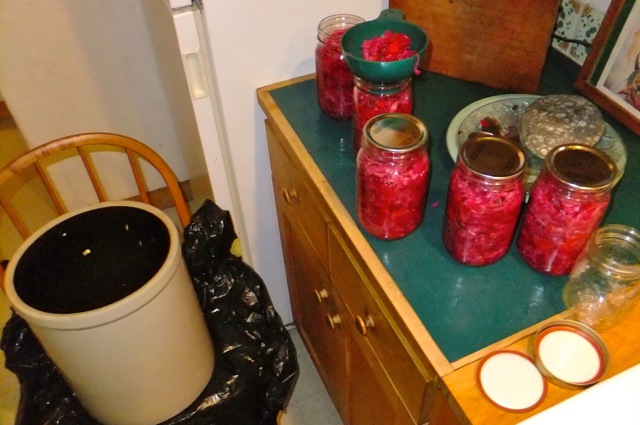
The procedure in brief:  Be sure to start with fresh vegetables, not those beginning to decay. Chop the cabbage leaves to cut their cell walls and release the juice and carbohydrates, and add salt to increases the drawing action. Rub and crush the salt into the cabbage to be more effective. After adding the remaining chopped carrots and onions or other chopped vegetables, garlic, ginger, hot peppers and other ingredients, mix well. Scoop the mixture into a 5-gal ceramic crock, stopping to tamp down every two inches of vegetable mixture to press out air during packing. Moisten a fresh cotton dish towel with water and lay it over the chopped vegetables. Select a flat plate that fits snuggly into the crock, place it on the towel and weigh it down with a clean large stone If there is not enough liquid to keep the vegetables submerged after a couple of hours, add a little water. In warm weather the ferment accelerates, so rinse the cloth. Change the cloth if benign white yeast forms on the surface. The process can take eight weeks.

There are as many ways to make fermented vegetables, as there are people. Each item has variables from the container and the choice of vegetables to be fermented to the amount of salt to use, the season of the year, where and how long to age it.

Why go to all this trouble for putting up vegetables for winter when you could freeze or can them?   In fact, fermented foods offer health-enhancing properties that go beyond preservation. To the uninitiated, fermenting vegetables in the home can smell like rot. The various smells released during the process are indicators of the stage of maturity and —in the rare instance—can warn us if the wrong populations are growing, much like the odors of a properly decomposing compost pile can reveal much to an experienced practitioner. Odors of sweat or cheese are normal. Even a rotten egg odor, released by hydrogen sulfur releasing bacteria, only indicates more aging is required.

Preserving homegrown food is becoming a regular practice for many gardeners and as they delve into fermentation they want reassurance that preparing and serving fermented vegetables will not harm their family. Fred Breidt, a microbiologist with the USDA is qualified to discuss this. “My research program is focused on the safety and microbial ecology of fermented and acidified vegetable products.” In a paper on cucumber fermentation brine he wrote,  “Lactic acid bacteria are highly efficient killers of other bacteria, and they do a marvelous job. This is why vegetable fermentations pretty much always works.  It’s been working for thousands of years.  It’s one of the oldest technologies known to man and it always works, and the reason is these lactic acid bacteria are very good at what they do, and we take advantage of that as a technology.” According to www.foodsaftynews.com Breidt said there are no known cases of people getting ill from properly fermented products. Next time you plan your vegetable garden make sure to include more cabbage, carrots, onions, garlic and hot pepper!

Table: Troubleshooting Fermentation Variables
Desirable Texture:Crunchy Desirable Color: Vegetable color slightly fades unless masked by pigment from red cabbage or beets Desirable Odor:Earthy, Ripe Swiss Cheese
Too soft or mushy. Ambient temperature too high Dark:Exposed to air, dried outOr, stored too long, or iron in the water, or began with damaged cabbage Ripe Swiss Cheese: indicates lactic acid producing bacteria LAB at work
Too soft or mushy. Uneven mixing of salt Pink: Yeast produce pink pigmented carotenoidsPerhaps uneven salt distribution Rotten egg odor indicates hydrogen sulfur reducing bacteria at work. Just wait another week. LABs should dominate
Too soft or mushyAir pockets from not packing the crock firmly White film on surface: yeast, check for yeast smell. Occurs when cabbage not submerged. Scrape it off, not a problem. Potential odor during first 10 days while bubbling may include Sweat or flatulence – Propionic acidSweaty locker room – Isovaleric acid or methyl butanoic acid
Discard batch if Slimy or fluffy mold Discard batch if colorful mold is growing.Discard pink Discard putrid (smell of decomposing proteins or decaying flesh)
Taste after 4 weeks: Can become more tangy and tart, almost carbonated unless masked by ginger and hot peppers. Keep fermenting for total of 2 months

An Edible Petiole: Four Reasons to Grow Cardoon

  • The edible portion, the leaf stalk or petiole, tastes like its sibling artichoke.
  • The form is dramatic—a bold architectural plant for the edible landscape.
  • Electric-blue flowers attract honeybees.
  • This giant perennial provides foliage and stalks for the compost pile.

Harvest Cardoon:

Cynara cardunculus is the botanical name of both cardoon and artichoke. If you grow cardoon as an edible ornamental, just harvest a few stalks in spring, the way you would harvest rhubarb. Let the perennial grow into its statuesque form. The early growth is tender while later in the season the stalks grow bitter. Let the flowers bloom as a bee crop but remove the spiky flower heads before they go to seed. In a few years the plant will be six feet tall.

Serious cardoon eaters, most of who live near the Mediterranean Sea, grow cardoon as an annual row crop planted on three-foot centers. Traditional growers blanch the crop in autumn 2 or 3 weeks before harvesting. Blanching deprives the plant of sunlight to reduce the crop’s bitterness. This process will not enhance the ornamental value, only the edible quality!

Here’s how:  In September or before autumn rains begin, pound a 5-foot stake into the ground close to the crown of each plant and hug the plant to the stake. Next tie twine to the base and spiral up to within six inches of the top. Or tie three separate pieces. Wrap with corrugated cardboard or heavy brown craft paper. Let the top of the plant peek out. Blanch for two or three weeks and then harvest the entire plant. A faster blanching technique  involves cutting roots on one side of the plant, pushing it over without uprooting and covering the plant with dirt.

If you love grey foliage in the garden, but are not interested in the edible petiole, consider this: The Royal Horticultural Society in England has tagged cardoon with their Award of Garden Merit. At Ecology Action Grow-Biointensive the plant has been recognized as a compost crop. A mini-hedge of mature cardoon grows in their Willits garden during the summer and provides carbon for compost piles. Permaculture gardeners like to plant it as an edge crop.

The trick is to harvest the plant before it goes to seed. If you do save seed, please do it responsibly, as escapees have become invasive weeds in Argentina, New Zealand, and parts of California.

Culinary Preparation: Although many traditional cardoon recipes are dairy-rich, Chez Panisse Café has served it as a marinated salad. Prevent the oxidation that turns the leaf stems brown by tossing them in water with lemon juice. Cut stalks to fit in a pan and boil for 15 minutes to remove the bitter flavor. Peel the ribs from large stalks.  Cut into pieces and toss with olive oil and vinegar and garnish with hard-boiled eggs.