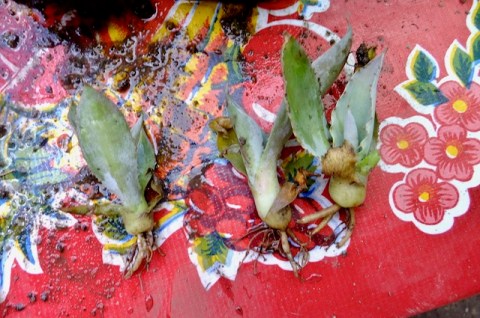
Some types of agave reproduce asexally, making cultivation easier and more uniform. Either small hijuelos (sons) form vegetatively at the base of a mature plant, or bulbils form instead of flowers and seeds. (This latter formation also occurs in many garden plants including garlic and chives.)
Other species are used in traditional mezcal production, but are difficult to grow. Traditionally they have been collected from the wild, but as the demand for mezcal keeps increasing, wild populations are shrinking, and growers are attempting to cultivate other species.
TobaláAgave potatorum, is one I particularly enjoy. The flavor is full-bodied, a complex of notes hinting at floral and spicy. The Tobalá plant is much smaller than Espadín:, requiring up to to eight piñas to equal one of the latter. Combine that with the fact that Tobala rarely produces bublils or pups, so it must be grown from seed. Luis Mendez in Solga Vega Oaxaca is now cultivating the plants to preserve the wild population from over-harvest. A nursery in Santa Catarina Minas is also selling seedlings.
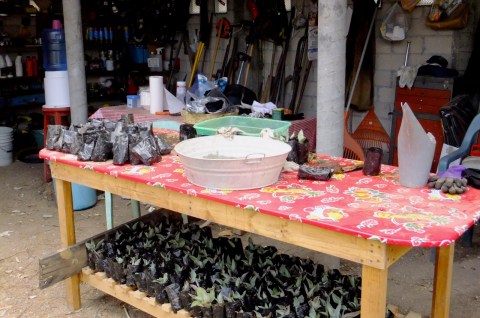
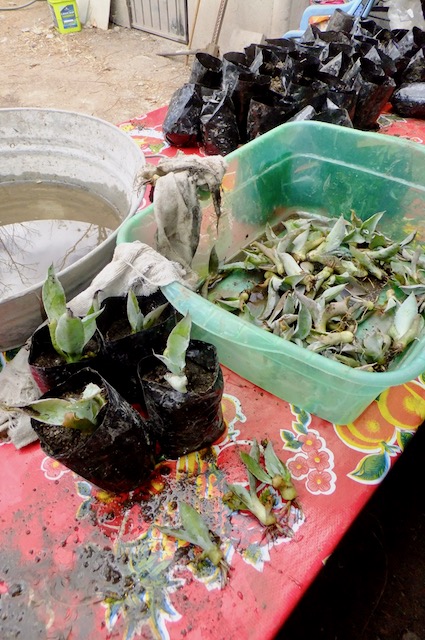
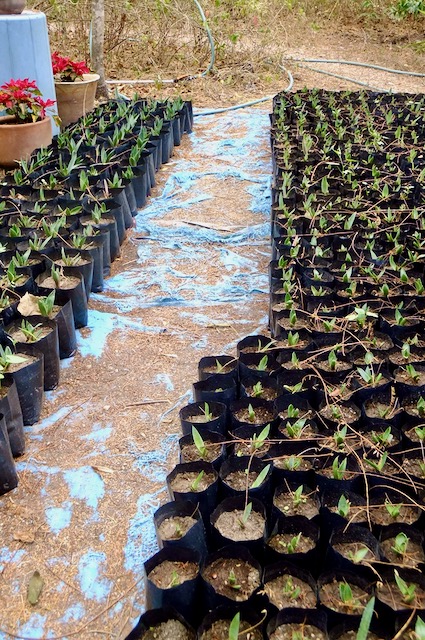
In January 2020 I helped pot up Tobalá plants for Tony Raab at Casa Raab, San Pablo Etla, Oaxaca.
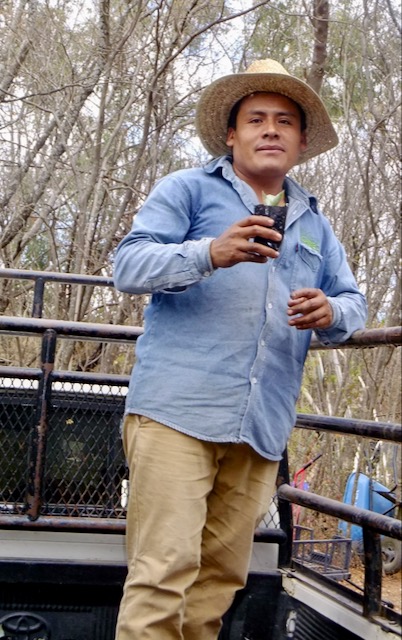
One of Tony’s workers, Rodregio.
Tobala seedlings
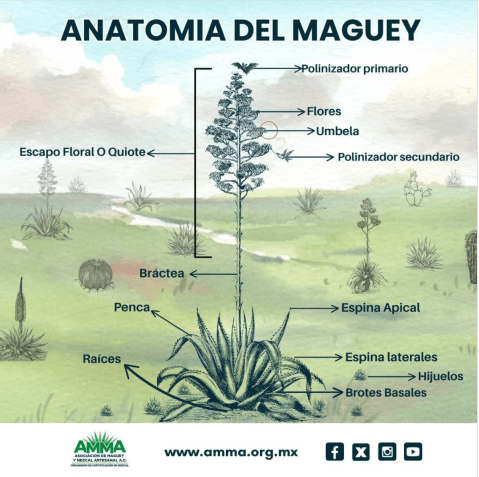
AMMA published this diagram of agave anatomy.
In my search for information on sustainable maguey preservation and cultivation, I came across this post Mescalistas: Can wild agave be successfully grown? In the future I hope to visit more maguey plantations.
Winter is a time to step back and evaluate the garden; to appreciate how much it has grown since last year and to analyze how we can improve it. One approach is considering it from a bird’s perspective. Gardens that favor birds provide food, water, cover and a safe place to nest.
Water for drinking and bathing is essential. Place it adjacent to shrubby habitat to provide refuge from predators. Shallow moving water with a place to perch is best, but a bird bath that has clean water is also valuable.
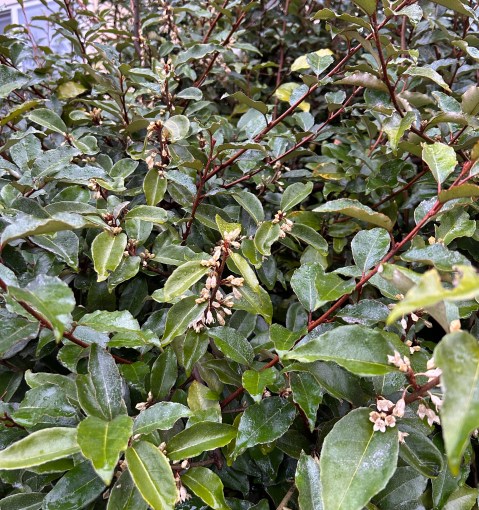
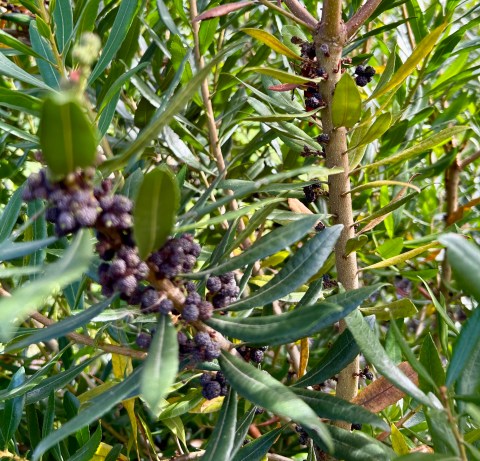
If the shrubs have berries, so much the better. Also, evergreen shrubs provide an excellent place to roost at night. Evergreen foliage provides screening from predators and insulation from winter’s cold. Above is Ebbings Silverberry, Elaeagnus x ebbingei in bloom. Hummingbirds were feeding here mid-November and new flowers keep opening. Below is Strawberry Tree, Arbutus unedo and Pacific Wax Myrtle, featured in an earlier post.
Arbutus undo
Feeding the birds
Bird feeders come to mind first and many people are committed to providing bid seed and suet. Some birds change their diet according to the season. Perennial seed-heads offer another option. Native plants have evolved with the local bird populations. In addition, perennials can be selected for architecturally interesting seed-heads. Plants in the mint family including sages, Salvia; anise hyssop, Agastache and Jerusalem sage, Phlomis. Sunflower family flowers like Joe-Pye weed, Echinacea, black-eyed Susan, Rudbeckia hirta and artichoke are attractive to birds.
Many cat owners recognize that a cat can kill up to eleven birds a year. A ‘Catio’, or cat patio is an outdoor enclosed space that protects cats from eagles and hawks and prevents cats from killing birds. Many homeowners have found ways to integrate this structure into their landscape. One of my favorite catios is that of my friends Kathleen and Pete. They constructed their catio around an existing blueberry patch, thus excluding birds from berries and cats from birds!
Watching birds is a relaxing and invigorating hobby for gardeners. People start off with bird feeders and it opens up an entire world. When David Sibley, author of The Sibley Guide to Birds, was asked why he enjoyed watching birds, he responded:
One of the most enduring attractions for me is that it gives me a chance to learn about an entire system (the natural world) by simply watching and getting to know the birds. When I can name a bird that I see, or notice subtle differences in appearance or behavior, that information gives me access to a store of knowledge about the species’ habits and preferences. I know where its travels might have taken it, what type of food it’s looking for, if it’s likely to be alone or part of a flock. In short, I know that bird and have a sense of how it fits in the world around it.
Check out The Courage of Birds: The Often Surprising Ways They Survive Winter, a new book by the birding team Pete Dunne and David Sibley.
Consider gifting a gardener/birder an online course covering everything about gardening for birds:
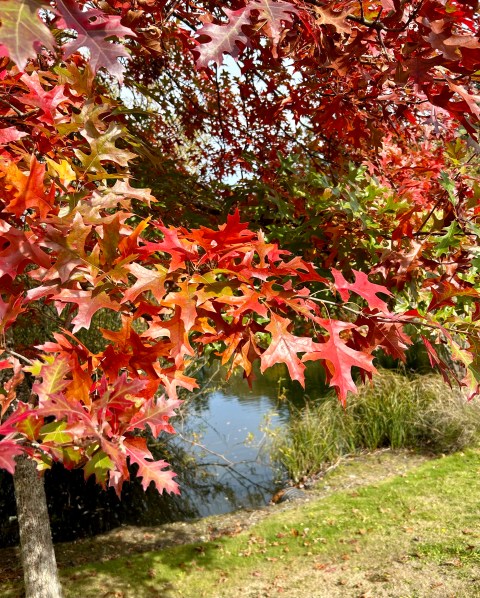
We know it’s autumn when the leaves start turning color. Here a Pin Oak brightens the landscape. It’s time to harvest winter squash and pumpkins, but if your squash isn’t quite ready, perhaps it will have time to continue ripening.
In Port Townsend, our typical first killing frost arrives by the end of November. If autumn temperatures drop slowly over time, plants get acclimated. The high concentration of sugars acts as ‘antifreeze’ in the protoplasm and this is what gives kale and other crops a sweeter flavor after the first frost. But if warm weather prevails until a sudden hard frost hits, then plants are not prepared. Sometimes in November the temperature can suddenly drop twenty degrees! Next month pay attention to the weather forecast and be ready to use floating row covers on crops and newly planted broad-leaf evergreen ornamentals. Forecasts for the next three to six months seem to be leaning toward La Niña but one forecaster described it as “a weak event”. NOAA posted this
Garden Chores
Leaves: Rake and compost, or save for mulch.
Lawns: Over-seed existing ones with white clover, yarrow, English daisy and other flowering plants for pollinators.
Mulch: shrubs and garden beds for winter protection and weed suppression. The increased organic matter will eventually feed the soil ecosystem. (This repeat from last month reinforces how important it is!)
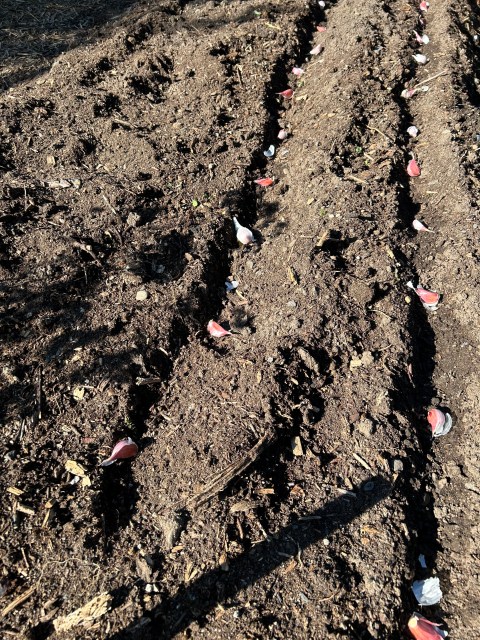
Plant garlic: 2” deep in well-drained soil. Space cloves 5 inches apart with the tip up. Mulch with straw. Prevent disease by rotating crop every 3-5 years. Certified disease free garlic or saving your own is best.
Fruit Trees: Rake and remove any diseased dried leaves, rotten- and mummy-fruits to prevent disease.
Apple tree pests: Examine fruits for coddling moth larvae damage. The Hortsense link offers preventative measures for next year.
Winter squash can be slow to fully mature. One way to encourage this is to remove all small and new squash in September. This allows all the energy to go to the larger, more mature squash. The signs that a squash is mature include a bright yellow spot where the squash touched the ground, the stem becomes brown and corky-textured. Also, as the squash skin toughens up, it becoming duller, and even a bit waxy. It may difficult to make an indentation with your fingernail. These contribute to a good storage crop.
Tinker loved growing the Lower Salmon River winter squash. This variety of Cucurbita maxima is one of the few heritage crops from the PNW, and is known from the Salmon River area of Idaho. It has a distinctive flavor and texture. Seeds are available from Adaptive Seeds.
If you want to taste Lower Salmon River, Midori Farm grows it and the Food Co-op has some now. It takes about 90 days to mature. It can withstand a couple of light frosts although the first one will probably kill the foliage. For Cucurbita maxima aficionados, check out this Johnny’s Seeds critique of flavor and yield for varieties.
After the fall equinox, plant growth slows. We have not had frost yet in early October 20224, so crops are still growing well. Plants are able to sense cold temperatures and respond by producing carbohydrates. In vegetable crops, the high concentration of sugars acts as ‘antifreeze’ in the protoplasm and this is what gives kale and other brassicas a sweeter flavor after the first frost. For more on winter gardens see the OSU Extension Publication
The fall equinox is approaching quickly. The weather is changing. Autumn offers opportunities to plant and transplant; the soil retains warmth longer than the air can—a perfect combination for encouraging root growth. With cooler temperatures and short day length, plant growth slows. The roots have a chance to get established without the additional stress of transpiration or pumping water through plant and out the leaf surfaces.
Autumn is a great time to make compost piles with debris from the vegetable garden, perennial plants and deciduous leaves. Some people prefer to leave the dead foliage and seed heads for spring removal allowing insects and birds food and habitat overwinter. Try it, but note that adding garden clean-up to normal spring chores might overwhelm some gardeners.
Edibles
Fruit trees: Most tree fruits are ripe when they come off easily by lifting and twisting the fruit. Take care not to break off the short branch with buds known as a fruit spur. Cut open an apple —ripe seeds are brown. Pears are picked when they are still hard, before they are fully ripe. They soften from the inside out. Asparagus: Let the fronds remain and turn yellow. Cut them back to the ground after a hard frost. If you have an excess of produce, try making sauerkraut or kraut-chi.
Soil Fertility
Soil Samples: Every couple of years it is worthwhile to take a soil sample and get it tested. Although Jefferson Conservation District no longer handles soil testing, they do lend a tool for extracting clean samples and lab suggestions including A&L. I’ve had good luck with Peaceful Valley Farm Supply.
Compost: Build compost piles in bins or free-standing rectangles. All the autumn decaying foliage from the veggie garden, perennials, and deciduous leaves. Add a source of Nitrogen: manure; powdered fish or bloodmeal; or urine.
Mulch shrubs and garden beds for winter protection and weed suppression. The increased organic matter that will eventually feed the soil ecosystem.
Cover-cropping: After removing spent vegetables, rake the soil, add seeds of clover, field peas, oats, rye, vetch, or fava beans. More information from WSU All seed available at Chimacum Corner.
Pests
Yellow jackets
Recognize yellow jackets and their underground nests. In the autumn listen for buzzing if there are more than two yellow jackets in a location, step back and search the ground for more. Yellow jackets can sting repeatedly. By contrast, bees avoid stinging because it is lethal, it rips out their stinger. Learn to distinguish them.
Spring Bulbs
Plant bulbs and corms now for spring bloom. The earliest bloomers are the small bulbs: snowdrops, crocus, chionodoxa, Siberian squill and winter aconite. Select bulbs that are firm with no signs of injury or mold. If one bulb is lightweight compared to others, discard it. Plant with root side down and pointy end up. Plant at depth three time the length. Small bulbs often are earliest. See Royal Horticulture Society for more information.
Tinker was involved with Abundant Life Seed Garden from its inception in the 1980’s until 2001. She and John Gilardi were garden managers in the latter years. In the above photo, Tinker and an apprentice named Nicole are stripping the flower heads of dried amaranth to remove the seeds. Next steps include winnowing and screening. Later amaranth was one of the crops Tinker experimented with in the dryland farm project.
Amaranth’s importance is twofold—its super nutritious and easy to grow.
Unlike grains, the seeds of amaranth contain all the necessary amino acids. The protein content is 16 percent, more than rice or wheat. Like quinoa, this offers complete protein for vegans. Amaranth is considered a pseudograin (only plants in the grass or Poaceae family are considered true grains)
Grain Amaranth comes from one of three species. All are white-seeded whereas the leafy greens amaranth tend to have black seeds and may become weedy.
A. cruentus, Purple Amaranth: Day-length neutral and most widely adapted. Typically white-seeded from Mexico, this is made into “Alegria”, the popped seeds mixed with molasses pressed into a small cake or bar.
A. hypochondriacus, Prince’s-feather is day-length sensitive. I know little about this species.
A. caudatus , Love Lies Bleeding is native Peru. Sometimes called Inca wheat, it is an important staple in the Andes.
While young foliage can be confused with weedy amaranth, (A.hybridus, A. viridis, A. retroflexus. A. spinosus.) grain amaranth has apical panicles, or seed heads forming only at the top. Grain amaranth can withstand drought conditions because their roots can grow several feet deep.
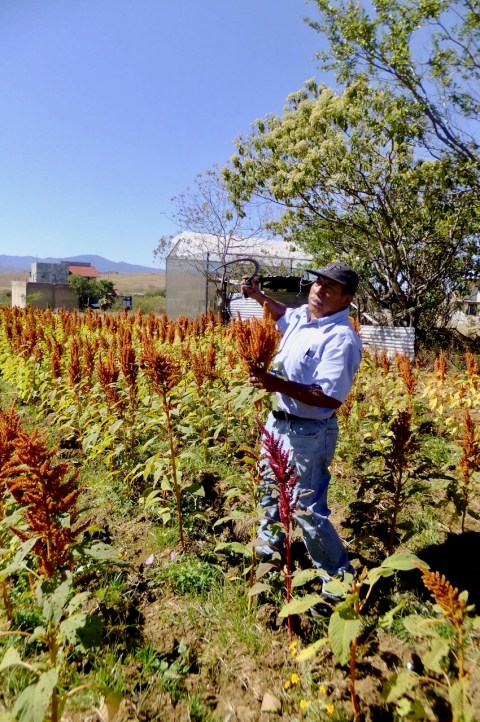
Early strains of A. cruentus were cultivated as far back as the time of the first maize in Oaxaca. The Jardin Etnobotanico de Oaxaca includes a section of early cultivated food crops. I was lucky to volunteer in the garden during the winter of 2019 and had the privilege to work with Roberto Chavez Rendon. Here he is with an early strain of Amaranthus cruentus.
Open-pollinated grain amaranth species can be variable. Many selected strains have full heads laden with seeds. Seed breeders are selecting for shorter plants that don’t shatter. University breeders are developing F-1 hybrids for food production.
Although claims vary, Amaranthus cruentus and A. hypochondriacus were cultivated before 1,000 BC in Mexico. Grain amaranth was an important food source from the Aztecs until European missionaries put a stop to eating or using amaranth in ritual. It is again popular and is best known as “Algeria” , the popped seeds mixed with molasses and pressed into a small cake or bar. An NGO in the Etla Valley of Oaxaca, Puente a la Salud promotes food sovereignty with a focus on grain amaranth not only for cakes but to add as an ingredient in many dishes ground into flour; boiled and used as a thickener in soups; toasted and popped as a cereal. They encourage farmers to grow the crop and teach communities how to make appropriate tech ovens and poppers for cottage industries with amaranth.
Amaranthus cruenthus. Farmer demonstrating harvesting with sickle.
Amaranth has the potential to be an important crop as we move into greater climate change. It is drought-, heat- and pest-tolerant. The nutty flavor can add more nutrients to oatmeal or ground into gluten-fee flour. Try growing this beautiful plant in the edible landscape, or in rows for production. Available from Adaptive Seeds, Bountiful Gardens and Johnny’s selected Seeds.
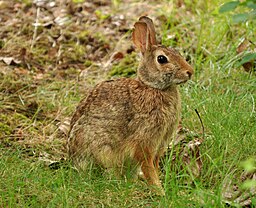
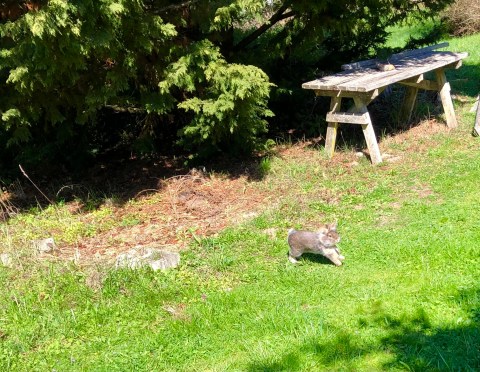
The Eastern cotton-tail rabbit was introduced to Washington in the 1930’s as a game animal for hunters. These introduced rabbits thrive in close proximity to people. As habitat generalists, they adapt to different available plant food and benefit from brushy coverage. Although the state’s mapping shows the introduced rabbits widespread in Kitsap County and Whidby Island, Jefferson county rabbit population is not on the map! The population has recently boomed in Seattle.
The bunnies never bothered my vegetables while I had Black Labs. These dogs have a great sense of smell and can easily track the cottontails. My property is fenced with hog wire with openings large enough for rabbits but not their common predators such as coyotes and bobcats. However, the common garter snake that are abundant on my property probably consume baby rabbits in the nest and barred owls might catch young ones.
I became acutely aware of rabbits when a neighbor’s domestic bunny started living at my place and even chewed through the plastic deer fencing to get in the vegetable garden. As cute as it was I wanted to keep it out. I felt like the mean farmer in the Beatrix Potter stories. The neighbor and his children came over several times and were successful catching the wayward pet.
Rabbit damage is obvious, it looks like someone went through with garden clippers making sharp-angle cuts. The rabbits bite young stems, buds and flowers. By comparison, deer tear away stems, leaving a jagged edge because they don’t have upper front teeth.
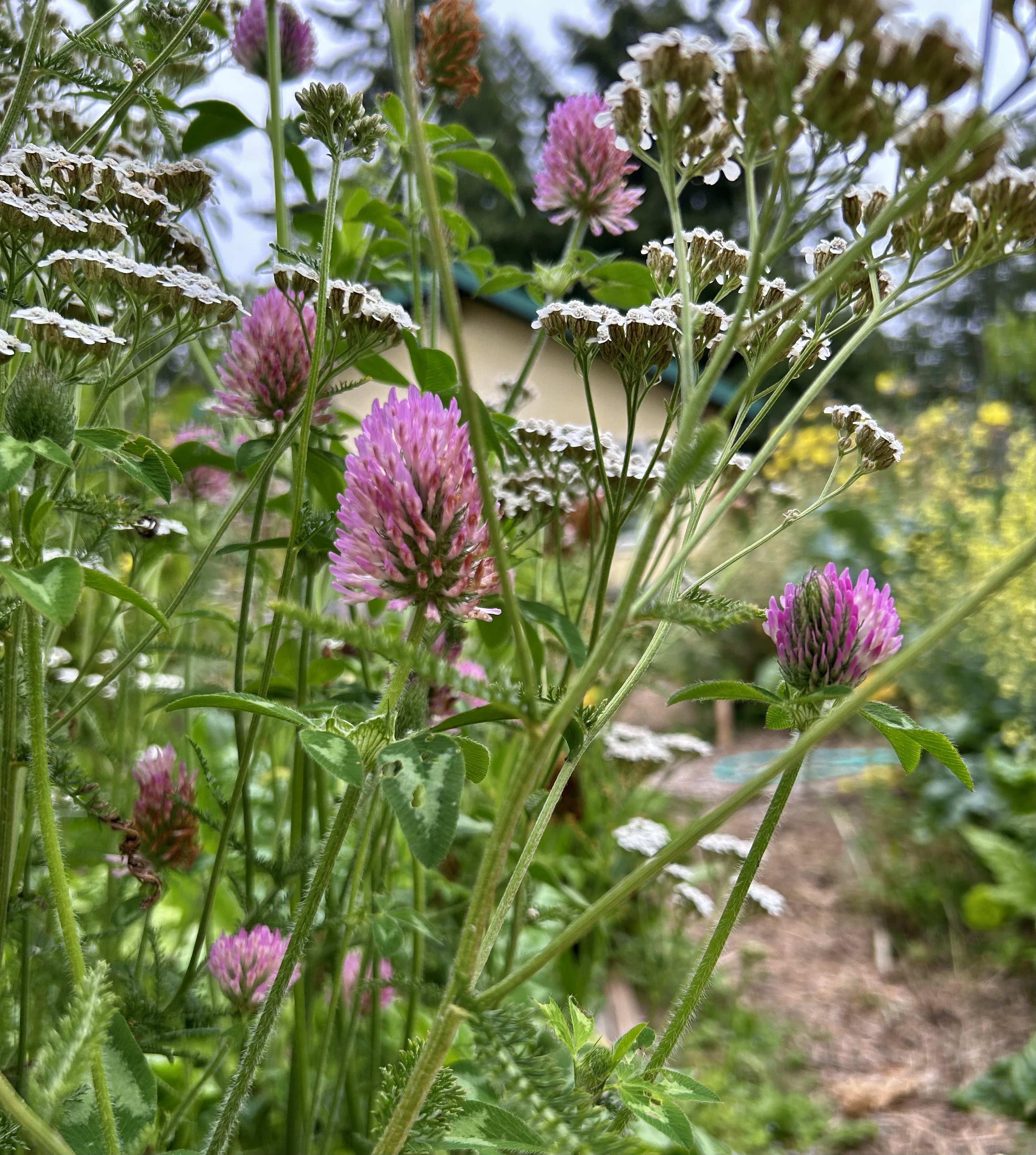
Cottontails are most active dawn and dusk. In spring I noticed vegetable seedlings neatly nipped off. Lucky for me I always have a couple of red clover volunteers on the edge of beds and in the paths. While the rabbits certainly prefer clover to vegetables, I share enough of my garden with the voles and the birds, that I was determined to prevent another creature from entering. I bought some rabbit repellent called Liquid Fence that was effective but requires monthly applications.
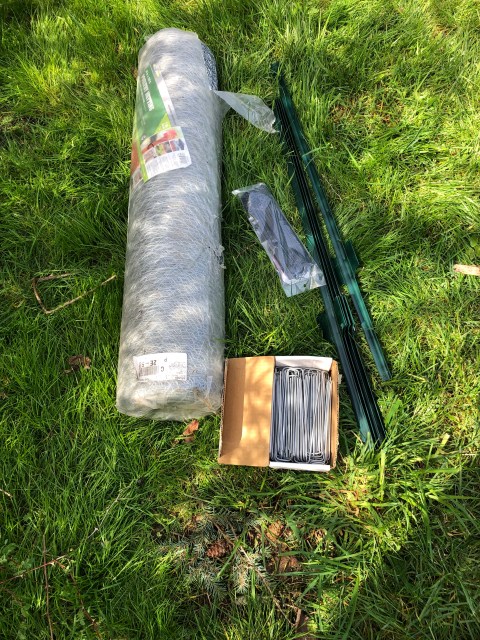
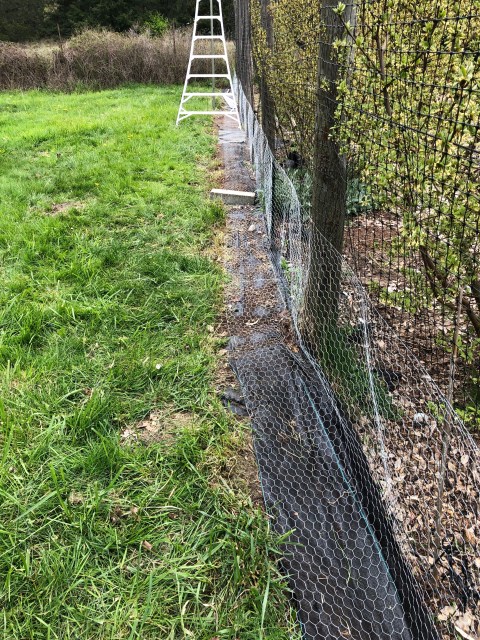
After watching several YouTube videos, I decided rabbit fencing would protect the lower two feet of the deer fencing. So I hired someone to work with me and we installed the fencing where the rabbits were entering from the west. I also had already placed landscape fabric there to prevent grass and weeds from growing underneath the deer fence. One foot of chickenwire on the ground will prevent rabbits from burrowing under the fence. That was effective for several months and now I have noticed a rabbit in the garden at dawn. On to fortifying the deer fence on the north and south sides! For more information on fencing and general cottontail behavior, see the state Fish and Wildlife site
3 ft Chicken wire with 1 inch openings, 3 ft metal stakes, landscape pins and zip ties
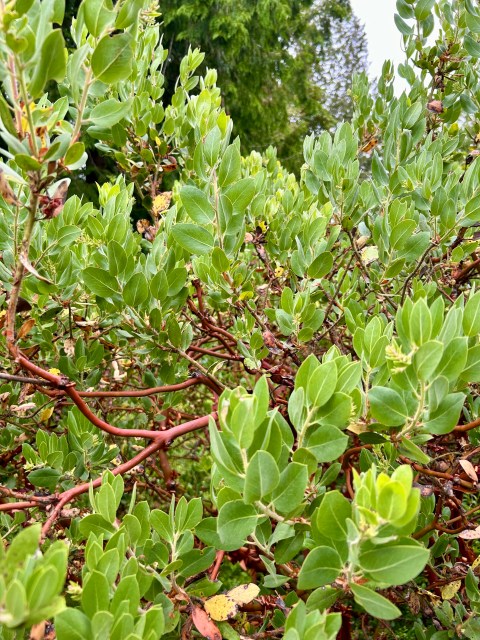
This native manzanita is uncommon on the Quimper Peninsula , but I have seen it growing wild on Cape George Road and close to Kala Point. The above photos are of a shrub that Willy Smothers grew at his place on Marrowstone Island. Recently Janet Welch pruned it to highlight the beautiful peeling bark.
The tiny ‘apple-like’ fruits are eaten by birds, small mammals and patient gardeners. It grows in the coastal scrub community and its range is from Sonoma County, California to Vancouver Island. Along with shore pines, manzanita can grow on and stabilize sand dunes. Native specimens can also be found in the understory of open coniferous forests in the Cascades. The critical factor is gravelly soil. The peeling bark is an attractive feature that it shares with its cousin Madrone. However, it is more closely related to our native groundcover kinnikinnick, Arctostaphylos uva-ursi. In fact a hybrid called Arctostaphylos x media is cross between the two.
Care for Manzanita
Manzanita rewards the patient gardener. Select a site with full sun and excellent drainage. It is best to start with plants in one-gallon containers. Water weekly until new growth appears and then taper off. One way to avoid crown rot is to plant it a little bit higher than the existing grade and mulch with woodchips. Don’t mulch with compost. Use drip irrigation because overhead water will encourage fungal disease. Keep it on the lean-side and avoid adding soil amendments. Once established it is completely drought tolerant.
Here is another manzanita, a hybrid, (probably Arctostaphylos x media) used in the landscape of Kathleen Turaski and Peter Hornsby This drought-tolerant garden includes Ceanothus and red hot poker, Kniphofia. They hope to remove the deer fencing once the plants are mature. But realistically, they may need to keep the fence in place—even if deer don’t browse a plant to death, they often step on and break branches of nearby plants.
Oregon State University, Horticulture Dept has many more photos, including pictures of the flowers and fruits. A great new native plant nursery opened in Kingston. Salish Trees Nursery carries hairy manzanita. Their knowledgeable staff will be a great help. Far Reaches Nursery has a superb variety of Arctostaphylos densiflora—Howard Mc Minn.
This hybrid Manzanita is an excellent drought tolerant choice
When I would help Tinker in her garden, often she dug up dandelion plants as if they were precious. The roasted roots made a delicious tea that she savored. Imagine if the plants we detested somehow changed in our mind to become useful resources. So much in life is how we frame something. If we look at a weed and notice a couple insect pollinators insects sipping the nectar, maybe the ‘weed’ isn’t so bad. That doesn’t mean we have to keep the plant. I have had weeds that I once hated and then learned to accept them, even as I removed them.
Gardeners who take the time to identify the plant can be more effective. Knowing a plant lets you determine the best way to control it. Sometimes a weed can be an indicator of environmental conditions: the soil is wet or heavy, or it is very acidic. Some tough weeds will die out if the roots don’t get nutrients from foliage. This requires diligence—regular weed-eating. Small, less-hardy weeds will die from deep mulch that smothers small plants and suppresses weed seeds. Proper ID is key to control.
Weed Identification
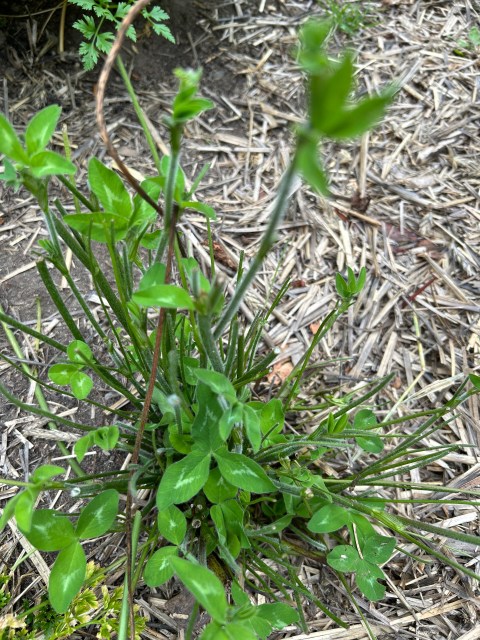
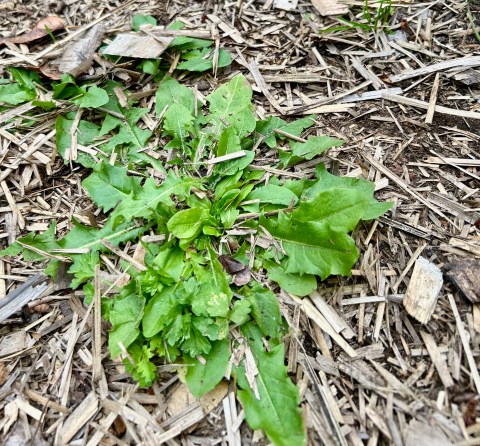
Botanical identification begins with a plant’s flower. We can’t rely on the foliage because weeds are by their nature adaptable and have a lot of variety. Vegetative characteristics are malleable. Here’s a short digression: years ago I managed the UCSC agroecology program greenhouse and was responsible for transplanting seedlings. In wood flats full of vegetables or flowers that required pricking out, there would be a number of weed seedlings from the compost. The young weeds could look almost identical to the some of the crops—so much so, that a number of the apprentices I supervised would pot up the weed seedlings! So identify your weed when it is flowering and then start to recognize the plant in all its stages, from young seedling to flowerings going to seed.
I’m old-school and like books. My favorite book for weed identification is Weeds of the West, University of Wyoming Press. Our cooperative Extension had it for sale decades ago. Now it can be downloaded for free from the website or used books can be found online. 900 color photos include the weed at young stages.
Online resources include Hortsense from Washington State University, with 90 fact sheets listed by alphabetical order. University of California, Davis has a useful online weed identification key
Weed Ecology
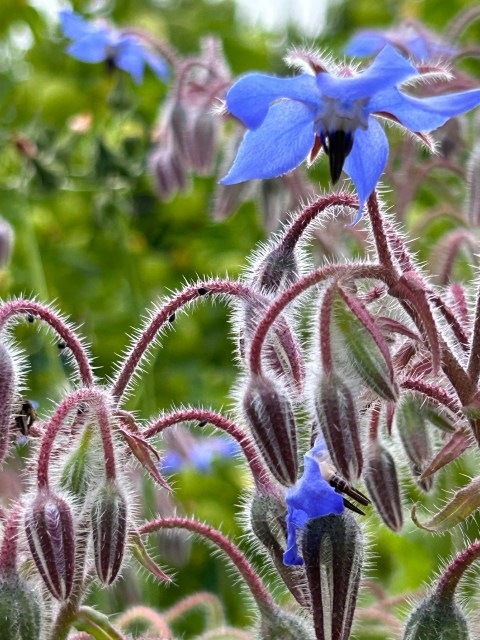
Many weeds are species that have adapted to colonize disturbed sites, such as landslides; after a wildfire has burned off vegetation; along roadsides; or at building sites where excavators have exposed mineral soil. Alan Chadwick, the famous gardener who developed the French-Intensive-Biodynamic method, always said nature abhors a vacuum. That’s why in my garden I sprinkle around borage, red clover, phacelia, or calendula. By regularly weeding out unwanted plants, I have mostly replaced the disturbed areas with annual flowers that are easy to pull and have many benefits. There’s not much room for weeds.
Weeding Techniques
Start weeding early spring, when the ground is still moist and the plants are young. Weed annual gardens regularly. Use lots of mulch around perennials and woody plants. Since weed seeds can remain dormant for decades, it’s important not to let weeds good to seed.
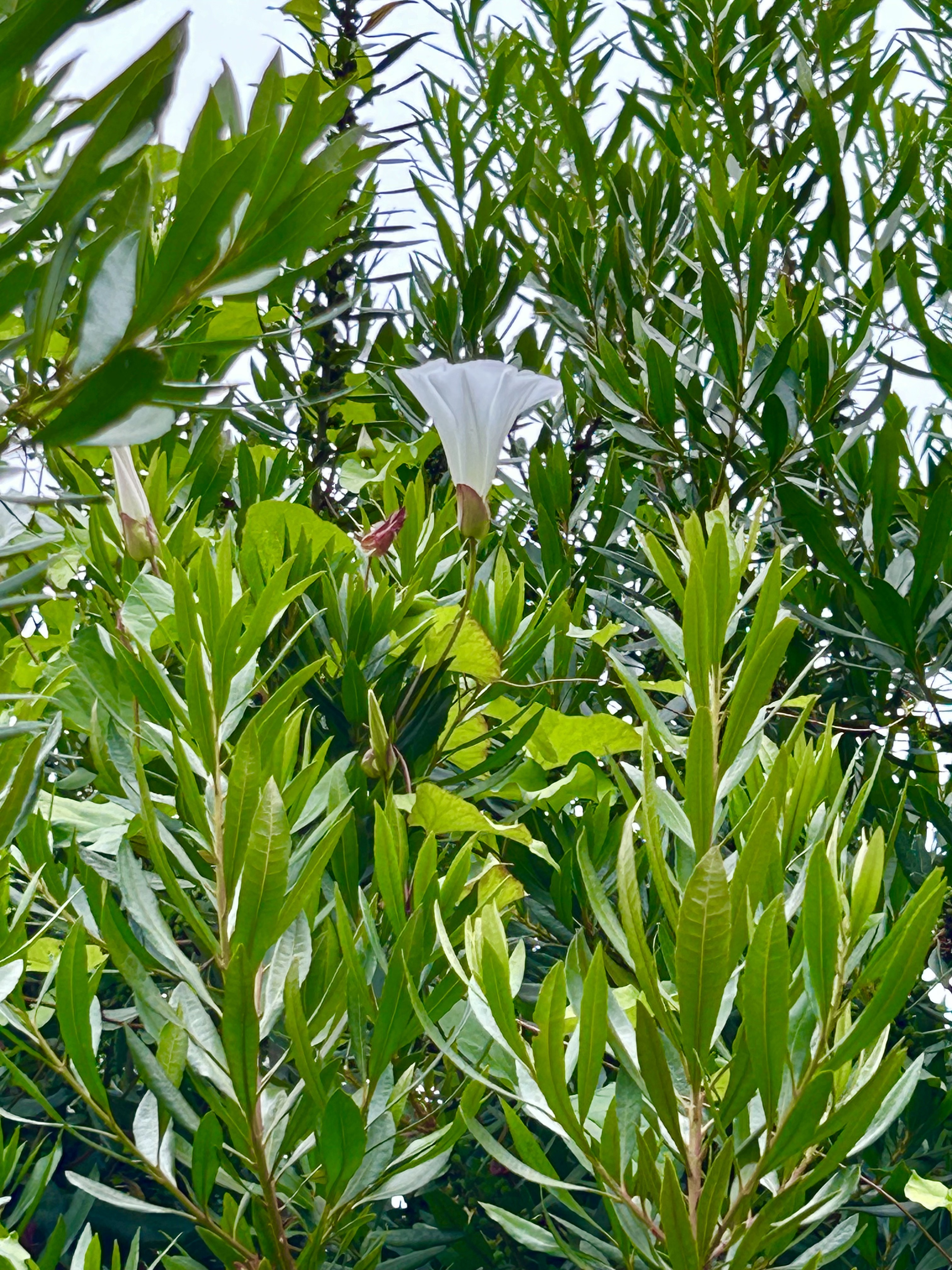
Certain perennial weeds can become one’s nemesis, for example horsetail, bindweed,Canada thistle . If you do nothing else, make sure to cut flower heads before they go to seed, bag them and send to the dump. The county noxious weed board doesn’t want what the state includes as noxious plants in our yard waste. If you cut the flower or seed heads and bag them, then the rest of the material is yard waste and can go to the compost facility. Thick mulch prevents seeds from sprouting. Everyday weeds can go into yard-waste. I have a big pile of plant debris that I will not use as compost, but will let it rot in place. In it I include weeds that have gone to seed but are not listed as noxious.
At one time I added woody plant material to this pile, but now wild roses, native blackberries and branches from hedges and ornamental shrubs go to yard waste. I don’t want excess fuel for potential wild fires.
If you are still using herbicide on weeds in pavement cracks or gravel, please consider a vinegar solution. Horticultural vinegar—at 35% strength is a lot stronger than kitchen vinegar—5% sold at grocery stores, so take more precautions! Wear gloves, glasses and long clothing. Although flame torches are used in agriculture to control weeds ( by boiling the sap, not turning foliage black), when I called our fire dept about using them for weeds in cracks I was informed that we had two wildfires in the county start that way!
For woody plants or deep-rooted perennials, such as Scotch broom, Himalayan blackberry, and poison hemlock, a weed wrench can be used to yank out the entire plant. The county weed board has wrenches they loan out.
A lot of weeds are my friends. I make flower bouquets, or add them to salads. Others are a haven for pollinators. Some are good sources of carbon for my compost piles.
July is the time of wild berries here in the Pacific Northwest. The Rubus clan, best known for raspberry and blackberry also include many other members with edible fruits. Two woody shrubs that are fruiting now are Thimbleberry, Rubus parviflorus, and Salmonberry, R. spectabilis. These two edible berries were staples of native peoples. Around here, harvesting thimbleberries is a summertime pleasure. Children love to place the thimble-like fruit on their fingertips.
On the Quimper Peninsula I have only seen these two Rubus species growing on moist sites, but in some regions wild thimbleberry may occur on drier sites. In Jefferson County the water table is close to the surface in low-lying areas creating wetlands. These plants are also commonly found along stream sides, and can withstand being flooded for short periods of time, thus making these shrubs useful in the rain garden. They can also be part of restoration landscapes. The deer browse the buds and stunt newly planted shrubs. Fencing, caging or spraying deer repellent for a few years is necessary for them to get established. The local deer population has suffered from loss of habitat and loss of predators.
Salmonberry, Rubus spectabilis
Another coastal native that’s fruiting now is red elderberry, Sambucus racemosa. The white flower cluster of has a pyramidal shape This berry can be edible if cooked, but I have never tasted it. Raw berries can cause nausea. All other parts of the plant are toxic. This plant grows easily in all soils and sun or shade.
Red Elderberry, Sambucus racemosa
(Blue elderberry, Sambucus nigra caerulea has white flower clusters that are flat. It is an edible, medicinal and ornamental plant.)
Other iconic berries will fruit soon including salal and huckleberry, stay tuned!
One of my favorite permaculture shrubs is Goumi, Elaeagnus multiflora. This multifunctional plant is easy to grow! The fragrant tiny yellow flowers bloom in April, followed by astringent and sweet fruit by the end of June. In 2018 I ordered plants from One Green World and they recommend planting two varieties, so I planted two Sweet Scarlet and two Red Gem. The former is more robust with dense foliage that hides the fruit from the birds whereas Red Gem has a more open framework, with less foliage and is more productive. If you have limited space and prefer to cook the fruit with a sweetener, then Red Gem is a winner. I mostly eat the fruit raw and share the crop with birds. For the sweetest flavor wait until the fruit is a deeper red.
The genus Elaeagnus is recognized for having a symbiotic bacteria, Frankia that grows in the soil and fixes nitrogen from the air, making it available to the plant. I prune Sweet Scarlet several times a season and use the leafing branches as compost.
Goumi, an Asian native has been cultivated here for at least one hundred years. In Japan it is known as natsugumi. The fruits of this shrub are high in lycopene I wrote a more thorough account here