Sometimes called ‘living mulch’, there are many reasons to choose groundcovers, from covering challenging slopes; to reducing garden maintenance and water consumption; to simply knitting together the landscape. They offer excellent solutions to landscape challenges but groundcovers are not maintenance-free.
Woody Groundcovers
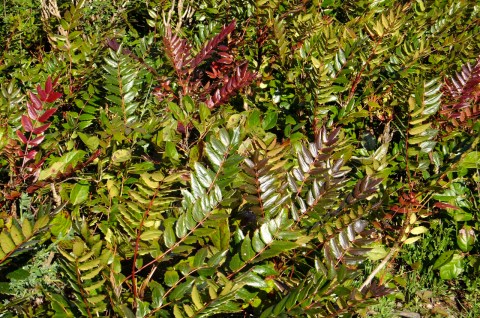
A popular native woody plant is Kinnikinnick, Arctostaphylos uva ursi. Another is Cascade mahonia, Mahonia nervosa. Other standard choices are Taiwan Bramble, Rubuscalycinoides and Pt. Reyes Ceanothus, C. gloriosus.
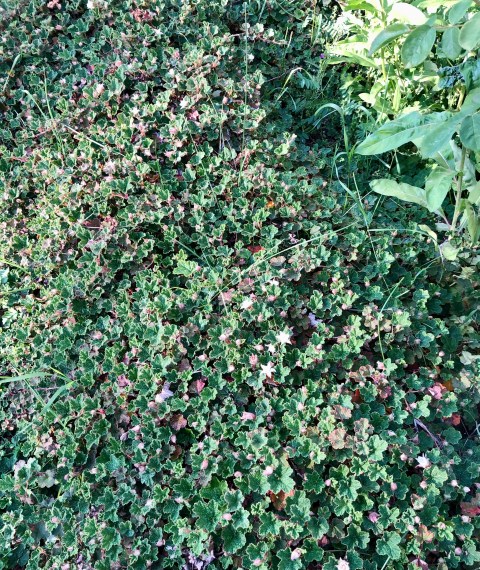
Emerald Carpet or Creeping Taiwan Bramble, a drought-tolerant plant
As these plants get established they need regular weeding, especially to prevent perennial weeds from getting a foothold. Fertilizing with compost or dry organic blends encourages the plants to grow. Mulching with woodchips or arborist chips reduces the need for watering. Cover bare ground with 2-3 inches of mulch, but don’t bury the crowns (where stem meets root) or go back after and brush mulch away from the crown. The very fastest groundcovers, especially those planted closer than the recommended spacing will not need much additional mulch. But slower groundcovers like Kinnikinnick or bearberry cotoneaster (C. dammeri ) will need more mulch in about three years.
For woody groundcovers to look their best, prune once or twice a year. Prune back leggy stems to make denser coverage. (The principle is the same as tip-pruning house plants or perennials. It works by removing the plant hormone or auxin in the stem’s tip that maintains apical dominance.) Also, if your goal is a carpet effect, prune out vertical branches.
Herbaceous Groundcovers
These plants are not as tough as woody plants. If the foliage forms dense mats often this shades the soil and prevents weed seeds from germinating.
The smaller the foliage the more work to keep out grass and tiny weeds. If your garden is on a city lot then tiny foliage can work, just plant smaller groupings. There was a time when many people planted chamomile or woolly thyme as small lawns, however they require regular weeding. If you plant lots of annual flowers that readily reseed themselves, herbaceous groundcovers with tiny foliage will take much more work to maintain because they will easily harbor germinating seedlings.
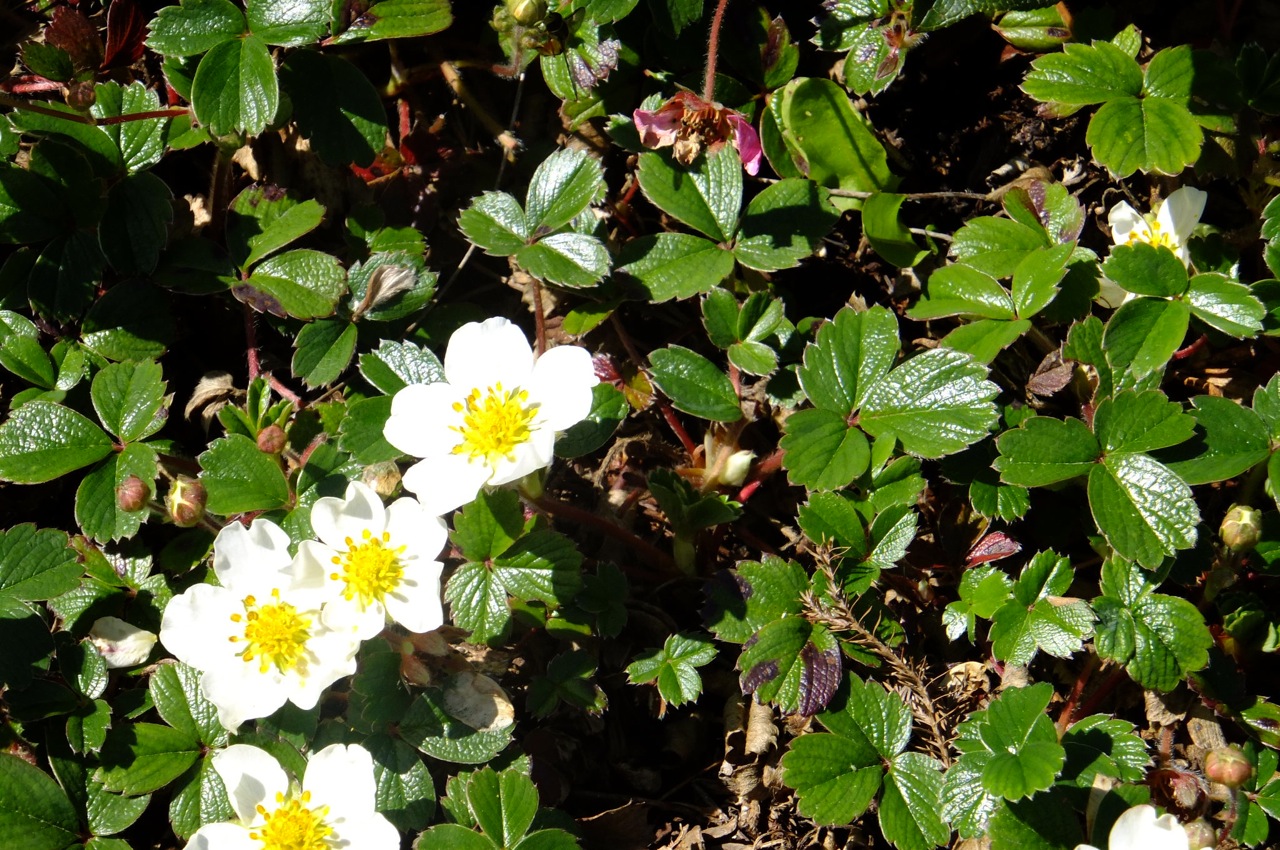
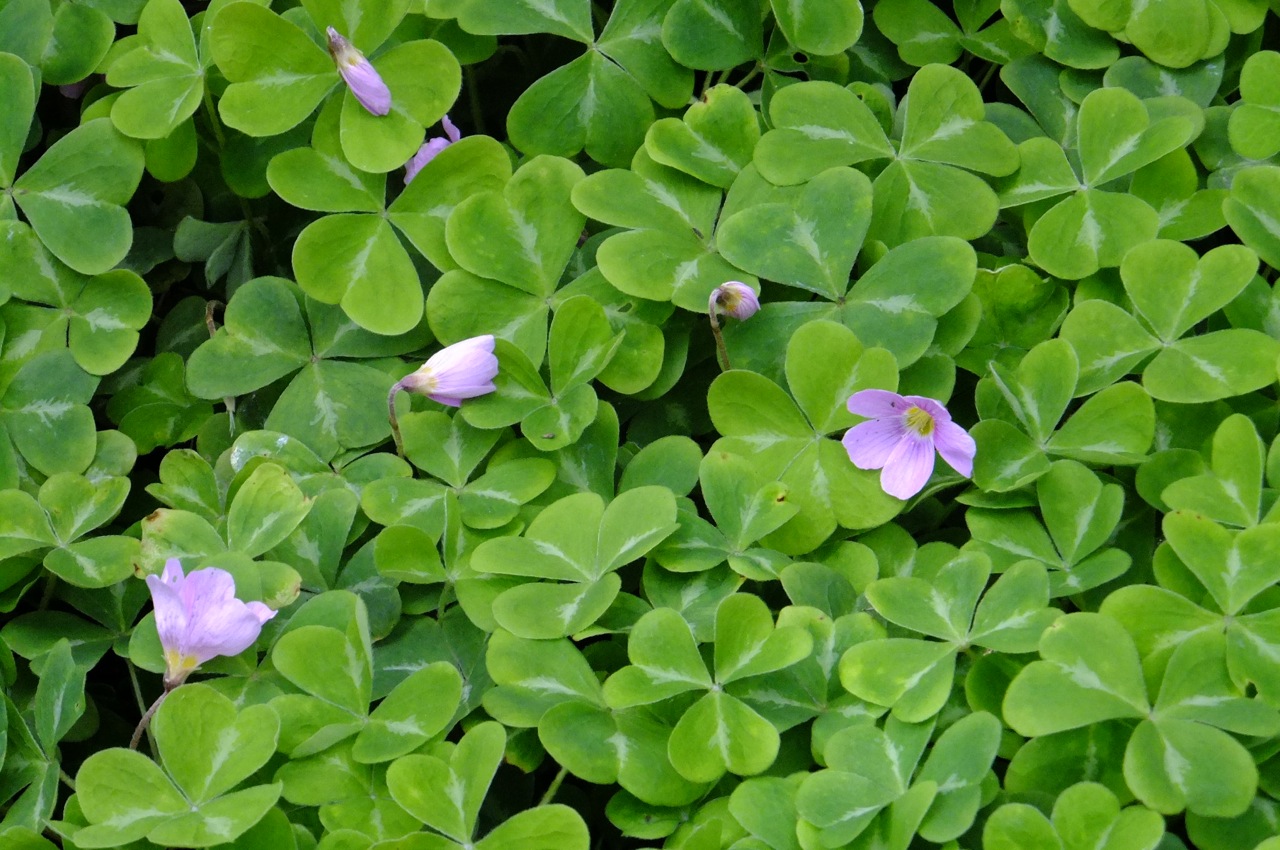
Natives include evergreen coastal strawberry Fargeria chiloensis, inside-out flower, Vancouveria hexandra and redwood sorrel, Oxalis oregana, and stonecrop, Sedum spathufolium. Non-native groundcovers include many Epimediums, and Geraniums. A low maintenance herbaceous groundcover for shade is hardy geranium or Geranium macrorrhizum, especially the magenta pink ‘Bevan’s Variety’ makes a dense mat of foliage that is deer-resistant. It does require a little water during dry summers.
Plants don’t have to form low carpets to be a groundcover. Distinctive foliage is a good reason to mass plants together. Under conifers the western sword fern is attractive. Larger perennials like Corsican Hellebore, Helleborus argutifolius make a bold statement. Pools of ornamental grasses offer ribbons of texture that can ripple in the wind.
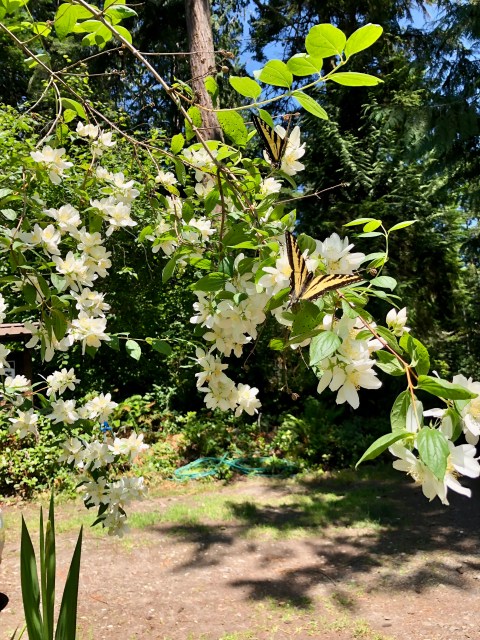
A delightful native shrub for early summer is Lewis’s mock orange, Philadelphus lewisii. This deciduous shrub has a fountain like shape and fragrant white flowers that grow in clusters.
It is equally at home in a cultivated landscape or a natural thicket. My introduction to this native came in a conservation bundle thirty years ago. When the shrubs matured and started to flower, I wondered if a mistake had been made. The flowers looked so much like the Philadelphus coronarius, a European introduction commonly seen on old farms in New England. Our native west coast mock orange is just as beautiful and better adapted!
This multi-stemmed shrub with long arching branches may grow 3-10 ft tall or more. I planted one by a shed where the rain spills off the roof and after thirty years, it is close to 15 ft tall. Since it was part of a native plant thicket planted along the roadside, I never pruned it.
Lewis’ mock orange is equally effective as an ornamental as it is in restoration plantings. It can be used in borders or grouped together for screens. In autumn the foliage turns lemon yellow.
Growing Conditions
Lewis’s Mock Orange is flexible about soil requirements. It prefers soil rich in organic matter but will grow in gravelly soil if provided moisture. Full sun will encourage more blossoms but the plant will be healthy in partial sun. This native will be drought tolerant once established.
Native Habitat
Mock orange can be found throughout the west from British Columbia to California. I am sad to say I have never seen it growing on the Olympic Peninsula but, in Nelsa Buckingham’s book Flora of the Olympic Peninsula, she says it occurs in open habitat here on the peninsula lowlands from north to east. also at mid-elevations from northeast to east.
Benefits
Pollinators love this nectar-rich plant. Birds that eat the seeds in autumn include junco, chickadee, thrush, flicker and finch.
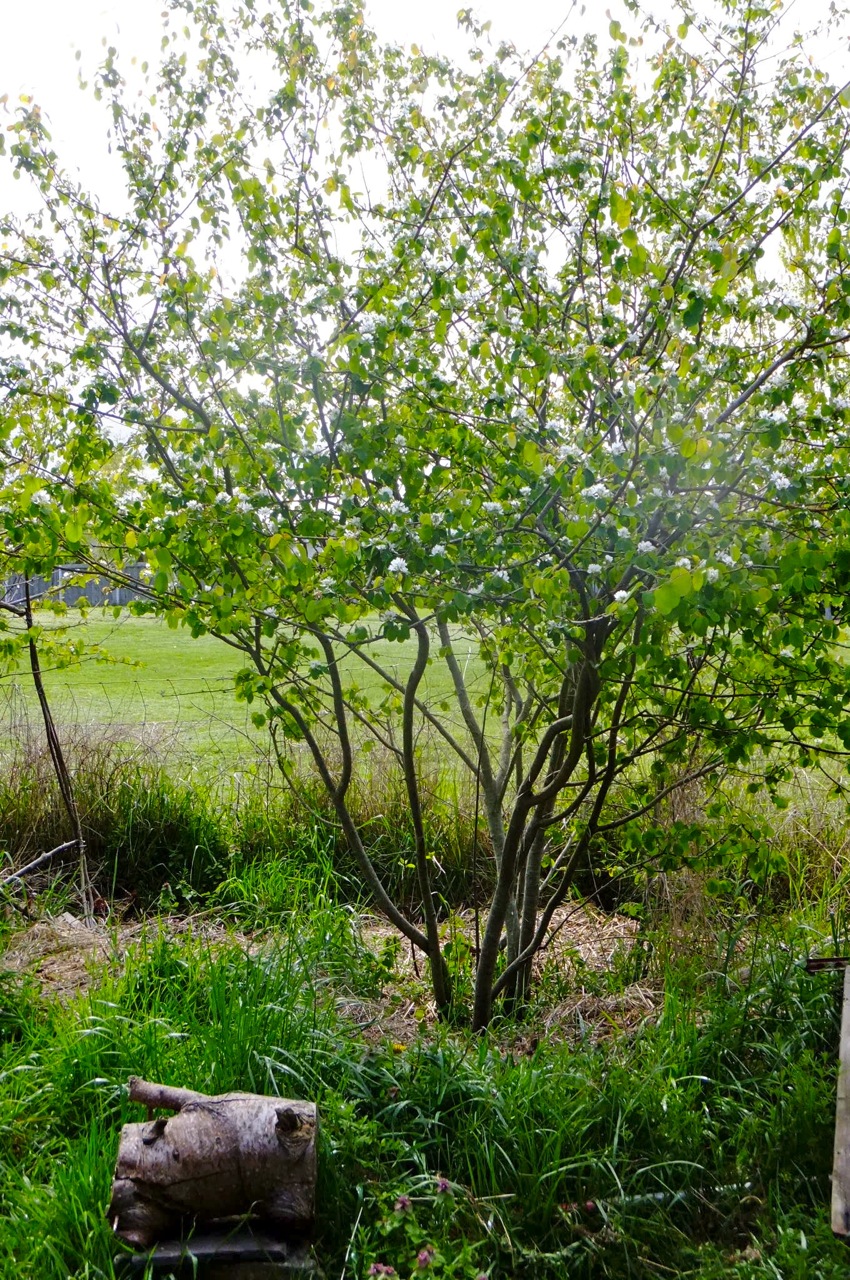
Serviceberry, Amelanchier alnifolia, is a multi-trunk small native tree reaching about 15 feet high and about 10 feet wide. It is an attractive addition to the garden—in spring it is covered with white blossoms and the foliage turns a butter yellow in autumn. Edible fruits are a favorite with many birds, including the cedar waxwing. There is nothing like a small flock of these delicate birds in ones tree to stop the mind!
Serviceberry does best in a sunny spot but will tolerate partial shade. To encourage growth water it regularly until it is established, then only water during the driest months. Since its native range is from Alaska to California, it should be hardy even in the toughest winters.
Botanical name: Amelanchier alnifolia
(ame-e-LANG-kee-er al-ni-FO-le-ah)
Working around the tree in summer I might nibble on the delicious tiny fruits, but mostly I leave them for the birds. Around here that include waxwings, goldfinches, thrushes and towhees, among others. The tree provides nectar for hummingbirds. Washington Native Plant Society offers much more information on using them for restoration.
About 25 years ago, I started a nursery bed for young bare-root trees from the conservation district. I planted them in rows that were easy to water and weed; after a couple of years, I transplanted them around my property. A minimum amount of pruning to shape them has really helped their form. Since they are in the rose family and a relative to our common fruit trees, understanding their growth patterns was straightforward. A row of four trees on the property line is a cheerful herald of spring. These photos were taken in 2015. Since then I forgot to water them during some of our summer ‘heat-domes’ and they have struggled. I plan to water deeply once or twice a month in August and September as needed.
Although I have only grown serviceberry seedlings, there are named varieties that have been bred for fruit and landscape appeal. ‘Regent’ serviceberry is a desirable edible landscape plant that was developed in North Dakota. It grows about 8 feet tall and has delicious berries.
Here is a transcript from a local radio show. Debaran Kelso, host of Nature Now interviews me about the drought and gardening with natives.
DK: I heard that this year is our driest in 64 years, and that the Olympic Peninsula is experiencing severe drought. Our native plants are adapted to dry summers and wet winters, which is the definition of a Mediterranean climate, but it’s hardly ever THIS dry and warm! What are the first indications that a plant is undergoing water stress, Jeanmarie?
JM: Some native plants started wilting a month ago, some plants have leaves that are brown or scorched along the leaf margins, or even turning yellow and dropping prematurely. If we have several years of drought the plants can get so stressed that they will be prone to disease and possibly die if not given attention.
DK: What are the broad categories of plant type that we have in our area, and are some of them better than others at being adapted to drought?
JM: Well we have trees and shrubs, both evergreen and deciduous. Both types loose leaves, by the way, deciduous ones just drop them all at once in the fall. Evergreens loose their leaves slowly all year and always have enough that they look green. When people hear the word “evergreen”, they automatically think of conifers like Doug fir and cedar, but here in the PNW evergreen can describe broadleaf trees and shrubs.
DK: Broadleaf just means flat wide leaves such as maples and oaks.
JM: Right. We have beautiful evergreen broadleaf plants like madrone, rhododendron, and salal. In fact these plants are considered choice ornamentals in England that has similar maritime climate. So our native plants include trees, shrubs, groundcovers, herbaceous perennials, ferns, and annuals.
DK: Would you describe how plants lose water?
JM: On the outer surface of leaves are tiny structures called stomata. Plants breathe through these pores and release moisture that is pulled up from the roots. If you have noticed a squash plant in the middle of the day this summer, it can be totally wilted and then come back to life in the evening. The pores on the leaf let out moisture. Now, as you mentioned earlier, our dry summers and mild wet winters are characteristic of a Mediterranean climate.
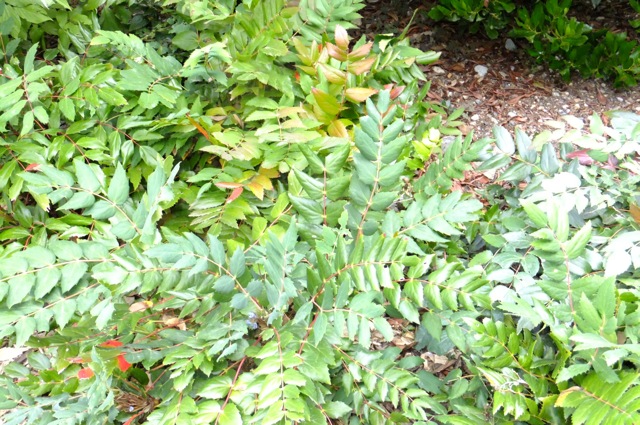
Many of our evergreen natives have adaptations similar to plants from other areas prone to drought, adaptations such as leathery texture or a waxy surface, both help plants loose less water through their leaf pores. We have 2 kinds of Oregon grape here, one shiny and the other leathery. Before I mentioned rhodies, salal, and madrone…
Leathery leaves of Oregon Grape reduce water loss
DK: Don’t forget evergreen huckleberry and beach strawberry! And the succulent leaves of sedum.
JM: Right. Also deciduous plants have ways to reduce moisture loss, grey foliage plants have fine hairs that give it that color. You can notice the gray under side of leaves like Scouler’s willow when the wind blows.
DK: What can we do, in general, to help our plants cope with our current lack of rain?
JM: First we have to rethink watering. Quick light sprinkling will not get water to the root zone of most plants. Frequent shallow watering leads to shallow roots; shallow roots in turn leads to more rapid stress under drought and hot conditions. Deep infrequent watering leads to roots growing deep. Always check soil after watering. Use a trowel or your finger; soil should be moist 3” deep. Overhead watering is a luxury in a drought it is inefficient, some water blows away. The little bit of rain we’ve had might enter plants through their leaves but we need the roots to get a good soaking.
DK: Drip irrigation is a really good way to go, isn’t it?
JM: Yes! It’s great if you are able to make the commitment to convert the garden to drip irrigation. In the long run you will have a healthier garden and save yourself money on water bills. And you won’t have to be wondering which plants to ignore. There are many drip irrigation systems to choose from that vary depending on type of planting, such as annual veggies versus woody trees and shrubs. Drip Irrigation slowly delivers water to the roots.
DK: Soil type is also very important when we’re considering water absorption, right?
JM: Yes, knowing your soil is essential for gardeners! Different types have different needs and will hold the water differently. Sandy soil absorbs water quickly but doesn’t hold it. Drip irrigation emitters need to be closer together cause the water doesn’t spread out as wide. Clay soil absorbs slowly and holds the water longer so use low-flow emitters, water longer, and water less frequently. Water less when it is cloudy. Plants under house eaves and on the western and southern side of house dry out faster.
DK: And adding more organic material to the soil will help it to retain more moisture, correct?
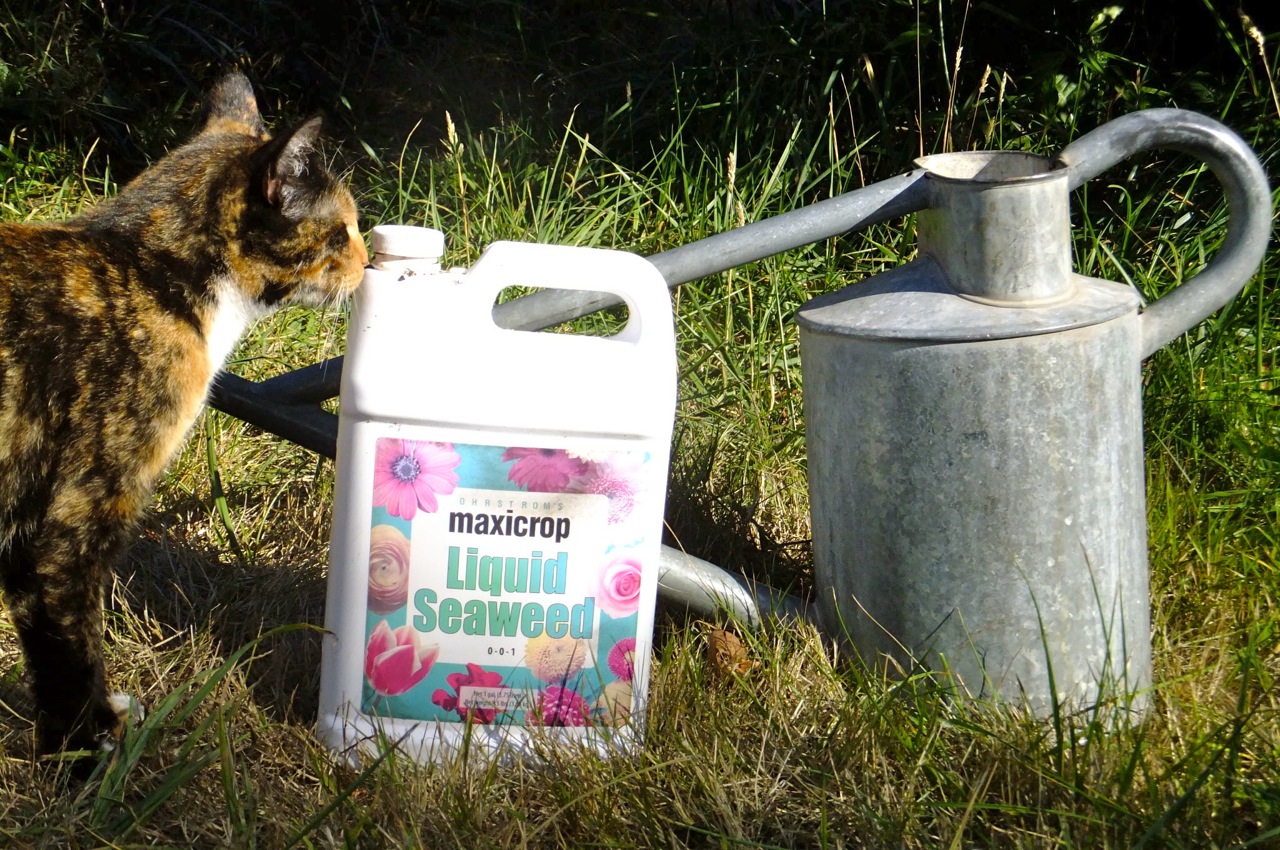
JM: Yes, Add compost to the soil; it acts like a sponge. Also compost tea will encourage healthy soil microbes. It even encourages microbes that will protect the plant roots from disease pathogens entering. Watering plants with a solution of seaweed extract increases their ability to withstand drought stress, because it adds micronutrients and feeds the soil microbes growing around the roots. These beneficial microbes protect the plant from pathogens.
DK: What about mulch? Perhaps we should have you start with the definition of what “mulch” is!
JM: Mulch is something that covers the surface of garden soil to retain moisture, prevent weeds, and improve soil fertility. It can also be used to visually tie the garden together.
Although sometimes rocks are used, mulch is usually organic matter.
If you are decide to mulch now, make sure you water deeply, then add 3-4 inches of mulch around shrubs and small trees. Leave a well around the trunks because wet mulch touching the trunk can encourage fungal disease. Think of placing the mulch in a donut around trunks not a volcano! Place 2 inches mulch around perennials. Mulch with wood chips, chipped branches and leaves, dairy manure, compost, or bark mulch. Another way to mulch is use the plants fallen leaves, the surrounding weeds and any prunings or trimmings as rough mulch. If I do this, I like to cut them up fine so they breakdown faster. Always check to make sure water is reaching the roots.
DK: So the things that we’ve spoken about thus far are all things that we can do to help plants that are already in the landscape- what would you suggest for our listeners that are wishing to renovate their garden with native species that are more drought tolerant?
JM: There are many beautiful NW natives and the answer depends on several things:
Where you live, including how much rainfall and what type of soil is on the site. What you do on the property and how much space you have. Although we live in the PNW, much of PT and north end of Quimper Peninsula is in a rainshadow of Olympics with only about 20 inches of rain. Outside of town, especially heading south there is lots more rain. Brinnon and Quilcene get over 50 inches, mostly in winter.Native plants occur in plant communities adapted to conditions such as sunny drier locations or shady dry, shady moist. Get to know your property where the coolest, moist sites are and the driest spots that get full afternoon sun.
DK: It seems to me that one of the best things to do is to not be in too much of a hurry to alter the landscape of your property! Living in a place for a year or two can be invaluable in terms of teaching you what likes to grow where, and what the microclimates are in your immediate area…
JM: Yes, there are definitely microclimates on each site. For example, soil on the western and southern side of a house dry out faster. You don’t have to wait for a couple of years, if you want to get started, you can purchase plants and grow them in your own little nursery. Then transplant them next fall. Make sure you protect them from deer!
Always research what a plants need and understand your site. I like to remember: Right Plant Right Place. Some moisture-demanding plants like rhodies, azaleas and ferns need to be watered more often no matter what.
Plant drought tolerant native shrubs and water them in for the first couple of years. Make a basin of dirt walls around the plant to hold more water.
DK: A common error, that I have sadly made myself on multiple occasions, is to think that because a plant in “native” to our area, that it does not need to be babied somewhat during its first couple of years in a new landscape. I have lost several fine native seedlings by planting them and not keeping them properly watered for the two or three years that they usually need to get established!
JM: One thing I like to remind people of is when we see a shrub in the woods; maybe 30 or 40 other seedlings that started at the same time didn’t make it. These are tough little plants that rooted in the decayed leaf litter and slowly grew roots down. Nursery plants have lived a coddled existence, the rooting medium is not too wet or too dry not, protected from freezing, they have been regularly watered and fertilized. In fact, that newly transplanted flowering currant is so tender and lush, that it is like lettuce for the deer. But that is another subject!
One thing to remember is drought tolerant plants don’t necessarily prefer hot, dry weather but they can withstand a certain amount. Woody plants are more tolerant than herbaceous perennials because they can store moisture in woody tissue and roots. Herbaceous plants suffer more.
DK: Which native plants species would you recommend?
JM: For most homes in town that have small lots choose plants that will not get too big. Instead of planting large native trees think of shrubs or small, multi-trunk trees.
With deer fencing choices: Service berry, flowering currant, Nootka rose, ocean spray,
Without deer fencing: 2 kinds of Oregon grape, sword fern, shore pine, soapberry or Shephardia.
Large gardens can include salal. This wonderful plant is slow to get established but once it does the gardener always needs to control it from spreading into other plants and pathways.
We are lucky to have a beautiful demonstration garden filled with native plants at Kul Kah Han Garden at HJ Carroll Park. Plants are arranged according by ecosystem so you can go look at examples of plants that thrive in shady conifer forests, dry forest (which would be most of Quimper peninsula). http://nativeplantgarden.org/gardens/forest/
DK: That’s a great idea! I have been meaning to get out there myself and see it, so this is a great reminder! Sadly, we have run out of time for today- thanks so much for speaking with us about this very timely subject, Jeanmarie! If you have any additional questions about plants you can reach Jeanmarie at jeanmarie.morelli@gmail.com
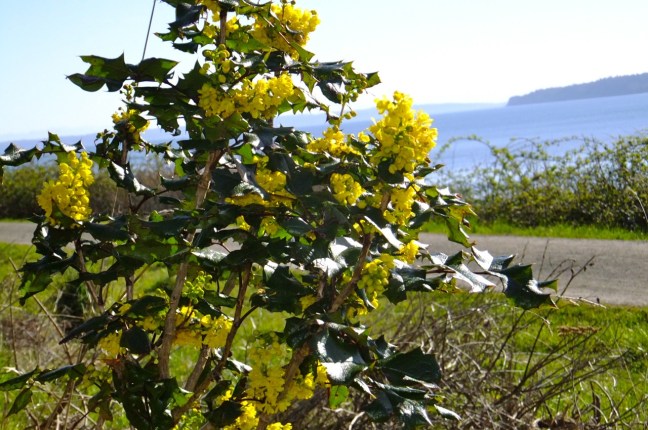
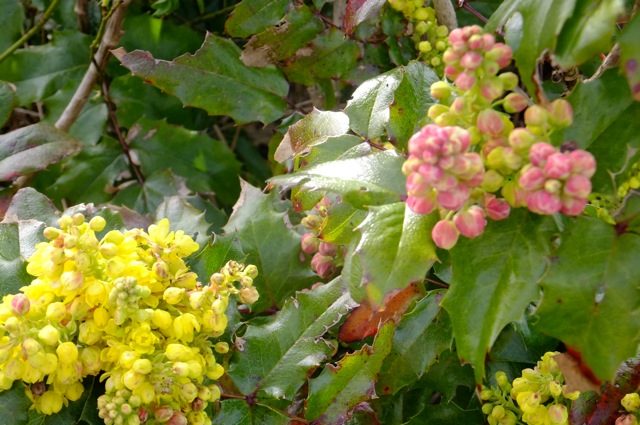
Yellow flowers brighten the hedgerows of Port Townsend. Oregon grape is in bloom! In a couple of months the flowers will mature into berries. Keep an eye out for when they do.
The clusters of ripe berries are tempting. With a name like Oregon grape you would think they would be sweet—but only pop them in your mouth if you want an adventure in flavors. I do so I do. Taste is an interesting subject, if you need everything super sweet you miss out on life’s bitter and pungent flavors. Our culture seems to thrive on sweet, fatty, or salty flavors. Cultivate a healthy palate for the more obscure and you immediately eat healthier foods. I relish bitter and pungent herbs. Tinker Cavallero has made jam with the pectin-rich berries and says it is delicious with a little sweetner.
One of my favorite things about Oregon grape is the bright yellow root hidden beneath the root bark. This berberine-rich root is used medicinally and as a dye plant. When I used to be a landscape gardener I would come across the roots as I was weeding or adding compost to the soil. It spreads by suckers—not as fast as raspberries, but enough to form thickets over time. When I found the roots spreading into other plants, I pulled them out and clipped off a section about four inches long to chew on—like chewing on licorice roots. I enjoy the bitter and earthy flavor.
The roots have medicinal qualities that are best preserved in alcohol-based tinctures. Berberine is an alkaloid similar to the alkaloid hydrastine found in Golden Seal. Both chemicals provide antibiotic and antifungal properties. Oregon grape is also good for the liver, and is anti-inflammatory.
Permaculture gardeners can use this plant for creating wild habitat and hedgerows at the outer edge of their property. It is a great choice for bank stabilization. Purchasing the plant at a nursery can be expensive, especially if you buy varieties like Mahonia ‘compacta’ (The nursery trade has not caught up with the name change, but native plant societies refer to it by its new name Berberis aquifolium,) It grows so easily from seed that you can find the plant from mail order nurseries that specialize in bare root bundles of conservation plants. Order them in late winter.





 Sustainable Garden Design