Late-Autumn Garden Chores

Late autumn usually brings the most precipitation to Port Townsend and the eastern part of the Olympic Peninsula. Atmospheric rivers dump rain. Strong winds blow and fallen leaves swirl. The sun is low in the sky.

The winter vegetable garden is producing, but most growth happened before the fall equinox. Garden beds covered with hoops and floating row covers will be protected from frosts. Fresh salad greens, kale, Swiss chard, and leeks  can be harvested throughout the winter. Monitor vegetables for slugs and cut worms. The wet weather favors slugs and snails. Get them now and there will be less generations come spring. Also cut worms are a problem and can be found during routine weeding.

Fruit Trees

Keep the base of young trees free of tall grass. Better yet, place mulch around the trunks. Winter is the time when voles chew bark and roots. If you have a serious vole problem wrap the trunks with hardware cloth to prevent the rodents from gnawing the bark. Some gardeners even use pea gravel as a mulch to discourage voles.
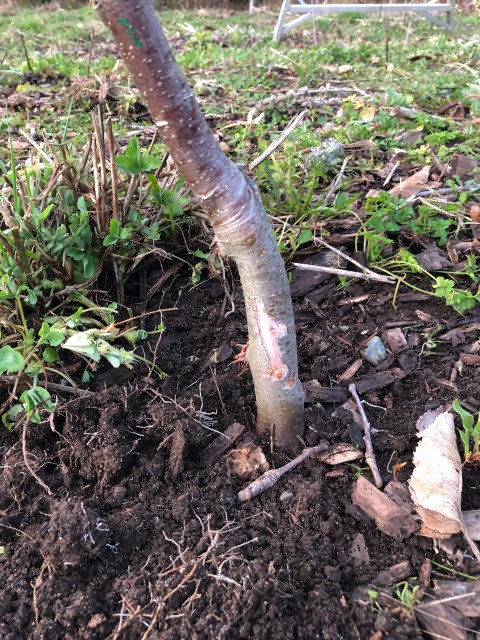
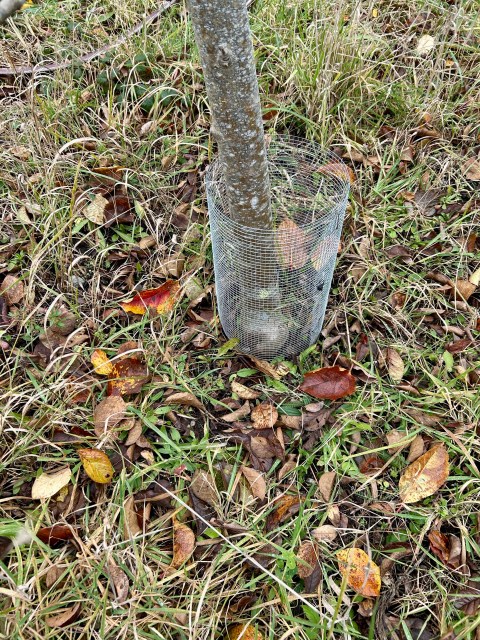
Late winter is a better time for pruning apple and pear trees, ornamentals and raspberries. The reason not to prune now is because we could have a warm, sunny spell in January that could encourage plants to grow—only to be blasted by a deep cold in early February. Better to wait until mid- February for most pruning. Because wet weather promotes bacterial and other diseases, many gardeners prune plums and cherries after flowering during a sunny spell.

This is a good time for large garden projects that warm the body. Pushing wheelbarrows of manure, woodchips, and  making large compost piles. Building planter boxes and retaining walls. Cutting down dead trees or cutting up branches for firewood or hauling them to the yard-waste facility. If you live in the woods, think about a larger tree-free area around the home as future fire-prevention.

Going within

And then there are times to slow down, take walks and notice the birds. Different birds are here for the season. Watch for Pacific wren, red-breasted nut hatch, northern flicker, pine siskin, golden-crown kinglet and spotted towhee.

Winter is a good time to dream about the garden. A garden mentor once said that the garden is forgiving—we can always try again next year. It’s a time to think about rearranging perennial beds and planting more drought tolerant flowers. Or perhaps it is time to think about  simplifying a high maintenance garden. For some gardeners seed catalogs arrive in January and planning the edible gardens begin. Now you can think about how you can extend the season or create a garden sanctuary.
Gardening for the Birds

Winter is a time to step back and evaluate the garden; to appreciate how much it has grown since last year and to analyze how we can improve it. One approach is considering it from a bird’s perspective. Gardens that favor birds provide food, water, cover and a safe place to nest.

Water for drinking and bathing is essential. Place it adjacent to shrubby habitat to provide refuge from predators. Shallow moving water with a place to perch is best, but a bird bath that has clean water is also valuable.

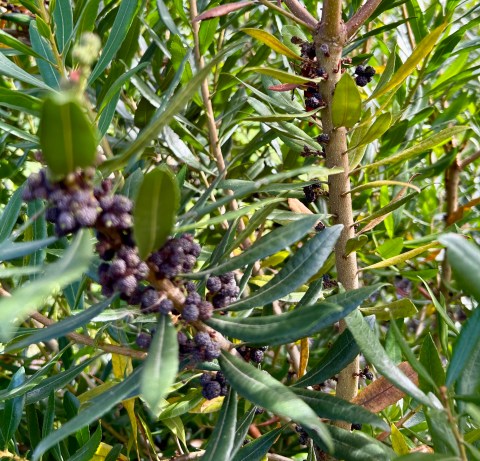
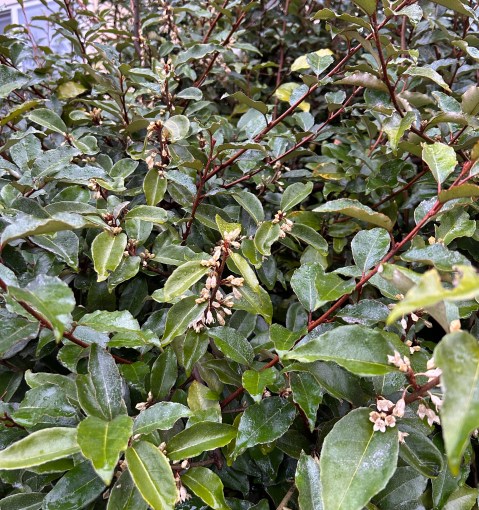
If the shrubs have berries, so much the better. Also, evergreen shrubs provide an excellent place to roost at night. Evergreen foliage provides screening from predators and insulation from winter’s cold. Above is Ebbings Silverberry, Elaeagnus x ebbingei in bloom. Hummingbirds were feeding here mid-November and new flowers keep opening. Below is Strawberry Tree, Arbutus unedo and Pacific Wax Myrtle, featured in an earlier post.

Arbutus undo

Feeding the birds

Bird feeders come to mind first and many people are committed to providing bid seed and suet. Some birds change their diet according to the season. Perennial seed-heads offer another option. Native plants have evolved with the local bird populations. In addition, perennials can be selected for architecturally interesting seed-heads. Plants in the mint family including sages, Salvia; anise hyssop, Agastache and Jerusalem sage, Phlomis. Sunflower family flowers like Joe-Pye weed, Echinacea, black-eyed Susan, Rudbeckia hirta and artichoke are attractive to birds.

Many cat owners recognize that a cat can kill up to eleven birds a year. A ‘Catio’, or cat patio is an outdoor enclosed space that protects cats from eagles and hawks and prevents cats from killing birds. Many homeowners have found ways to integrate this structure into their landscape. One of my favorite catios is that of my friends Kathleen and Pete. They constructed their catio around an existing blueberry patch, thus excluding birds from berries and cats from birds!

Watching birds is a relaxing and invigorating hobby for gardeners. People start off with bird feeders and it opens up an entire world. When David Sibley, author of The Sibley Guide to Birds, was asked why he enjoyed watching birds, he responded:

One of the most enduring attractions for me is that it gives me a chance to learn about an entire system (the natural world) by simply watching and getting to know the birds. When I can name a bird that I see, or notice subtle differences in appearance or behavior, that information gives me access to a store of knowledge about the species’ habits and preferences. I know where its travels might have taken it, what type of food it’s looking for, if it’s likely to be alone or part of a flock. In short, I know that bird and have a sense of how it fits in the world around it.

Check out The Courage of Birds: The Often Surprising Ways They Survive Winter, a new book by the birding team Pete Dunne and David Sibley.

Consider gifting a gardener/birder an online course covering everything about gardening for birds:

Cornell Lab Bird Academy

Gardening for the Senses

Plants with textured foliage invite us to touch or pluck a leaf and stroke it, even caress our face!

Gardens can stimulate or relax us by how they influence the five senses. A relaxing ambiance can come from blending in with the existing natural environment. When we are alive to our senses, we are in the moment. The frargrance of a rose or the soft texture of a leaf slid across the face, contrasting colors in the garden, all influence us through our senses. A repetitive pattern has a soothing or harmonious influence.

Gardens that stimulate and bring the energy up often have bold colors and strong scents. Patterns that contrast and colors that contrast are powerful. Think magenta and orange flowers with combined with chartreuse foliage; ornamental grasses next to large-leaf shrubs like Fatsia; canna lily with ornamental onion, the list goes on! Whimsical garden features like colored globes or blown glass spikes and sculptures with mirrored surfaces all add to an energetic feel. Mahonia media and unusual hebes along with weeping dwarf conifers all add an element of excitement.

Sound

Most of us in Jefferson County are fortunate to live where it is quiet enough to hear natural sounds: wind through conifers, rain on roofs, treefrogs singing, and geese flying overhead. We can create or muffle sounds in the garden. A water feature outside our open window will bubble, gurgle and splash.

Birdsong is another feature we can add to our garden by offering habitat, water and food. Humans have evolved with birds—when they are singing, all is safe. The melodious calls of songbirds encourage us to relax.

Large ornamental grass like Miscanthus grouped together can whisper in the wind. Bamboo make a soft sound as the wind passes through.

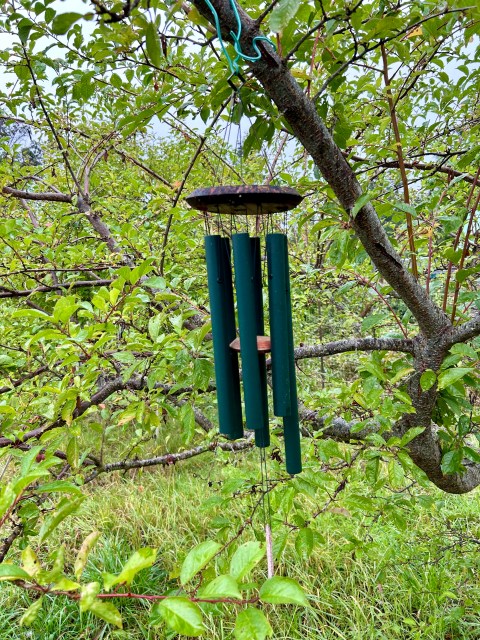
Windchimes create different moods. Determine if high-pitch tinkling sounds or deeper, resonant bass notes bring you joy. Listen to different ones to choose

Science has shown how auditory input impacts us, based on variation of pitch and length of time the sound The rhythmic sound of water on the shore is similar to the sound of humans breathing thus it is often soothing. When we hear many sounds at once it can be discordant and confusing. We can create a peaceful soundscape by muffling unwanted sounds with hedges and berms.

Scent

Flowers come to mind first when we think of scent—roses and lavender. Other scents include volatile oils in foliage and resins in conifers. Ambient temperature affects how strong the scent is. A sunny day will bring out the aroma of ponderosa pine bark or the resin dripping from a spruce. Walkable groundcovers are prostrate plants that can be placed  in pathways or between stepping stones—in the shade Corsican mint and in sunny spots plant caraway thyme or pink ripple thyme. As you walk past fragrant plants along a pathway brush against them or let your hand glide over the surfaces. Better yet, pinch a bit and bring it to your nose, inhale deeply and set the bit in your pocket.

Scented plants along the path are easily pinched as we walk by, sniffed and placed in one’s pocket

Touch

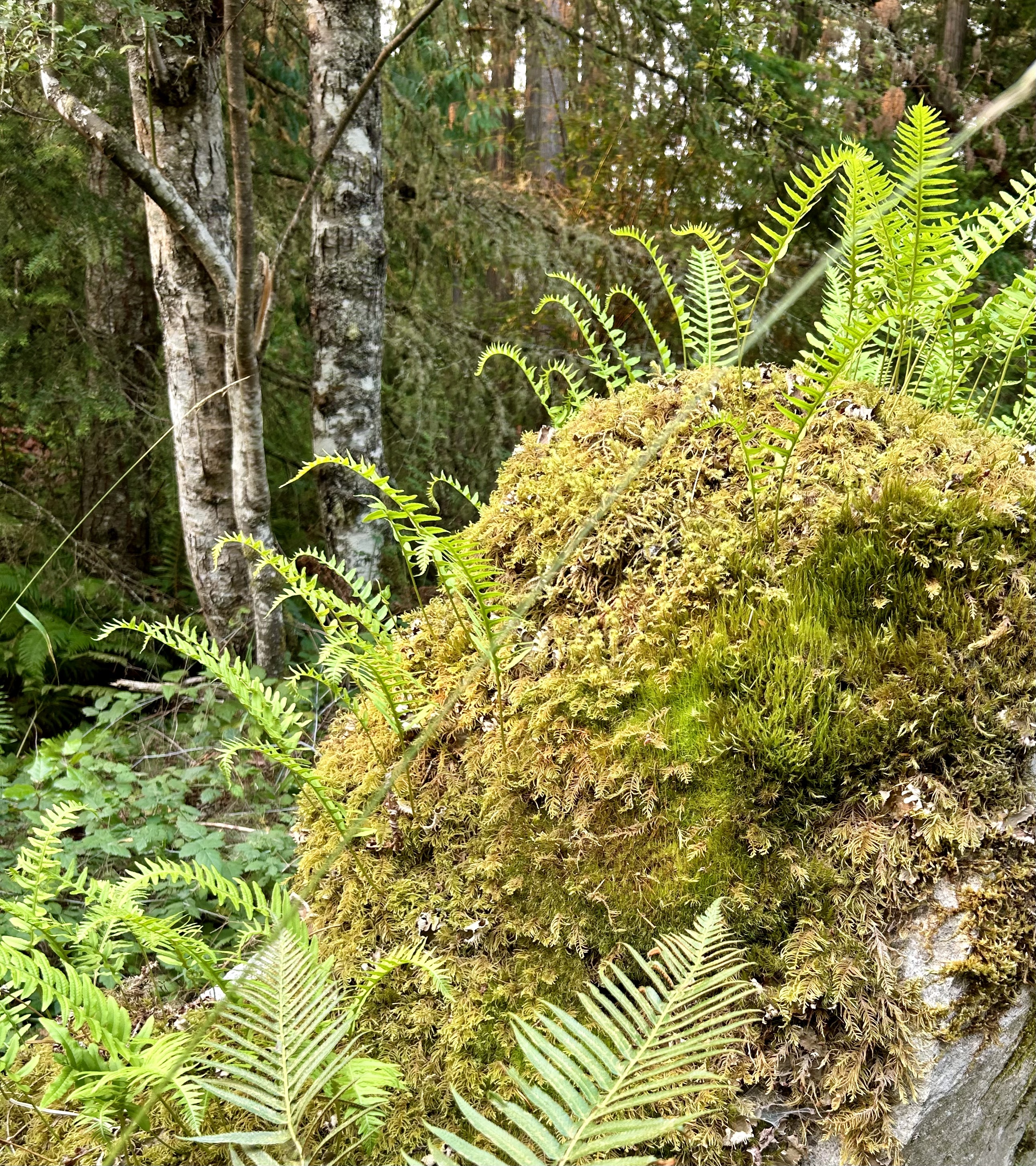
Don’t forget the tactile dimension of the garden. Many gray foliage plants have textured surfaces of fine hairs to reduce water loss. Lambs ears, Stachys byzantina; giant silver Mullein, Verbascum bombyciferum; and the artemisia are ever so soft. Ferns have feathery foliage as does dwarf Japanese plume cedar, Cryptomeria japonica elegans. Moss is plush.

Taste

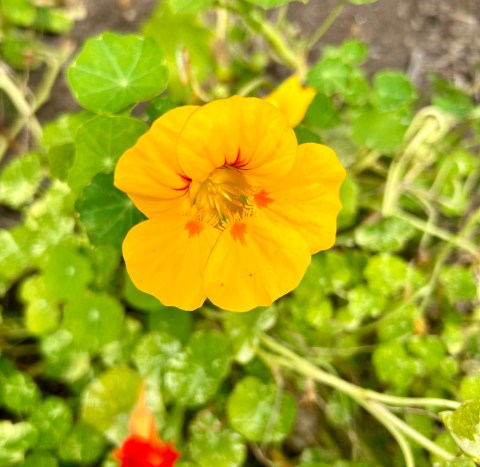
Edible flowers in the garden add an element for our tastebuds. The sweet-licorice flavor of anise hyssop, the peppery bite of nasturtium blooms, or the citrus notes of lemon thyme, all add to the multidimensions of the garden.

September Garden Chores

The fall equinox is approaching quickly. The weather is changing. Autumn offers opportunities to plant and transplant; the soil retains warmth longer than the air can—a perfect combination for encouraging root growth. With cooler temperatures and short day length, plant growth slows. The roots have a chance to get established without the additional stress of transpiration or pumping water through plant and out the leaf surfaces.

Autumn is a great time to make compost piles with debris from the vegetable garden, perennial plants and deciduous leaves. Some people prefer to leave the dead foliage and seed heads for spring removal allowing insects and birds food and habitat overwinter. Try it, but note that adding garden clean-up to normal spring chores might overwhelm some gardeners.

Edibles

Fruit trees: Most tree fruits are ripe when they come off easily by lifting and twisting the fruit. Take care not to break off the short branch with buds known as a fruit spur. Cut open an apple —ripe seeds are brown. Pears are picked when they are still hard, before they are fully ripe. They soften from the inside out. Asparagus: Let the fronds remain and turn yellow. Cut them back to the ground after a hard frost. If you have an excess of produce, try making sauerkraut or kraut-chi.

Soil Fertility

Soil Samples: Every couple of years it is worthwhile to take a soil sample and get it tested. Although Jefferson Conservation District no longer handles soil testing, they do lend a tool for extracting clean samples and lab suggestions including A&L. I’ve had good luck with Peaceful Valley Farm Supply.

Compost: Build compost piles in bins or free-standing rectangles. All the autumn decaying foliage from the veggie garden, perennials, and deciduous leaves. Add a source of Nitrogen: manure; powdered fish or bloodmeal; or urine.

Mulch shrubs and garden beds for winter protection and weed suppression. The increased organic matter that will eventually feed the soil ecosystem.

Cover-cropping: After removing spent vegetables, rake the soil, add seeds of clover,  field peas, oats, rye, vetch, or fava beans. More information from WSU All seed available at Chimacum Corner.

Pests

Yellow jackets

Recognize yellow jackets and their underground nests. In the autumn listen for buzzing if there are more than two yellow jackets in a location, step back and search the ground for more. Yellow jackets can sting repeatedly. By contrast, bees avoid stinging because it is lethal, it rips out their stinger. Learn to distinguish them.

Spring Bulbs

Plant bulbs and corms now for spring bloom. The earliest bloomers are the small bulbs: snowdrops, crocus, chionodoxa, Siberian squill and winter aconite. Select bulbs that are firm with no signs of injury or mold. If one bulb is lightweight compared to  others, discard it. Plant with root side down and pointy end up. Plant at depth three time the length. Small bulbs often are earliest. See Royal Horticulture Society for more information.

Joe-Pye Weed: Pollinator-friendly Perennial

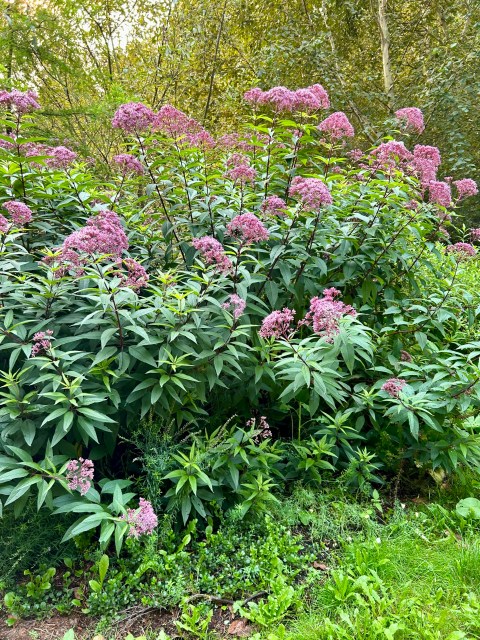
My earliest memories of Joe-Pye-Weed are from the coastal town in MA where I grew up. In late summer the purple flowers towered over other plants growing wild in what we then called swamps. I would bicycle down the country lane and cut stems of the flowers to make dried flower arrangements. Joe-Pye-Weed was likely named for  Joseph Shauquethqueat, a Mohican medicine man who cured settlers.

Although the plants are found throughout the East Coast on moist sites, they can tolerate drought conditions. For this reason, they make a good addition to our landscapes. A myriad of hybrids is available for this popular genus. Formally known as part of the genus Eupatorium, botanists have recently reclassified this group into a distinct genus, Eutrochium.

One hybrid has been bred to grow only 3 feet tall. They can grow in part shade and look more robust with regular watering. If the intention is to encourage them to be drought-tolerant, plant them in lots of compost. After three years divide the plants. They will ocassionally reseed, mostly they spread slowly from the crown.

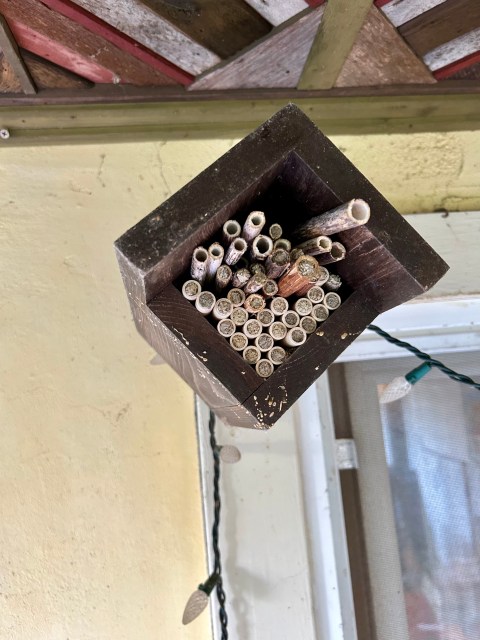
The 6 ft tall hybrid plants I have were divided from a friend’s clump. The hollow stems are a deep purple and after the perennial is finished for the season, these stems make excellent disposable tubes for Mason bee homes!

Landscape uses:

Consider this for outside the deer fence. Eupatorium works well with Miscanthus, perennial sunflower and cardoon for a dramatic late summer perennial display. After growing vigorously in spring and summer, they come into their own in August and September. Rain gardens need plants that can withstand inudated soils.

Other Uses

If you raise mason bees, see my earlier post, then the dried stems of this plant make great disposable nesting tubes for the mothers to lay their brood.The right photo shows the Joe-Pye stems on left and the purchased tubes on right.

Matilija Poppy

Romneya coulteri

This beautiful grey-grey foliage plant with fragrant large white poppies does best where it has room to spread. It is both drought tolerant and—knock on wood—deer resistant.

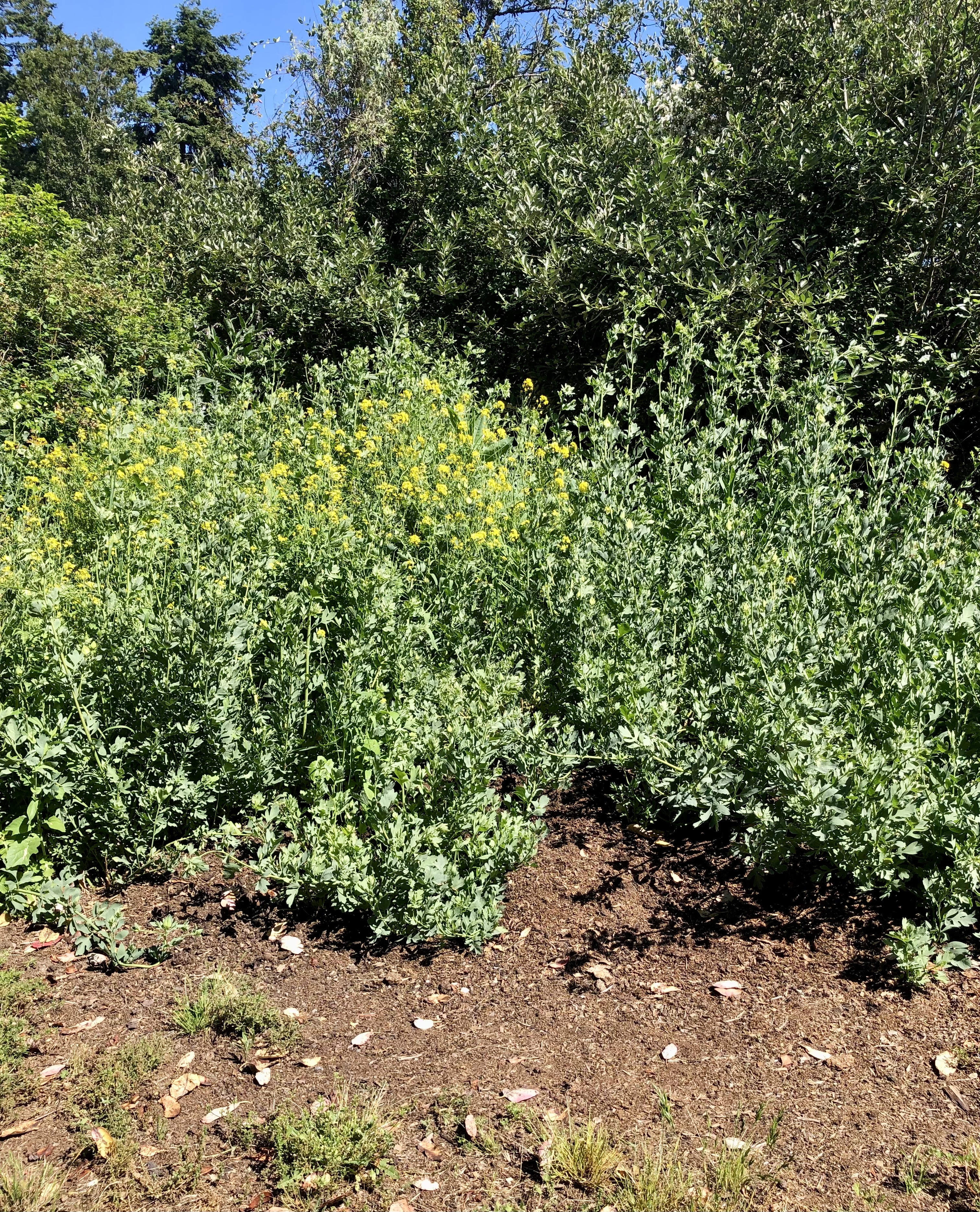
Matilija grows well on the loose soil of landslides. I planted some on a mound about 20 years ago and rarely weed it. After a time, the Nootka rose spread across the mound pushing out the poppy. Not much can hold its own against Nootka rose. (That’s why I only suggest it for creating wildlife hedges where it will be kept in check by mowing or weedeating lawns and fields.) Matilija poppy migrated over to a pile of soil and rotting sod. Last year I had a dump truck load of horse manure delivered near the Matilija planting. Some of the plants were buried in the manure. Instead of suffering, the plant spread throughout what was left of the manure after I moved most of it.

Description

  • Perennial flower growing 3 to 6 feet tall
  • Gray-green foliage
  • 4”-8”  fragrant flowers. Described as fried-egg flower

Growing requirements and care:

  • Full sun
  • Drought-tolerant once established
  • Soil: flexible, needs good drainage
  • Cut back to the ground in late fall

Matilija Poppy spread to adjacent aged-manure pile. Wild mustard’s yellow blossoms in the middle of plants.

The Chumash, an indigenous tribe of central -southern coastal California, values the antimicrobial properties. In fact the name Matilija comes from a Chumash tribal leader. The plant’s alkaloids and other secondary substances make it useful for sensitive gums and preventing plaque. Herbalist Micheal Moore describes Matilija as a good first aid plant: the foliage makes a good external wash for sunburn, and inflammation from allergic reactions. At one time this plant was seriously considered as the state flower of California.

In the landscape, plant this majestic plant with other tall drought-tolerant ornamentals like Miscanthus and cardoon. In the foreground use Russian sage, and red hot poker. Once established these are all deer-resistant.

July in the Garden

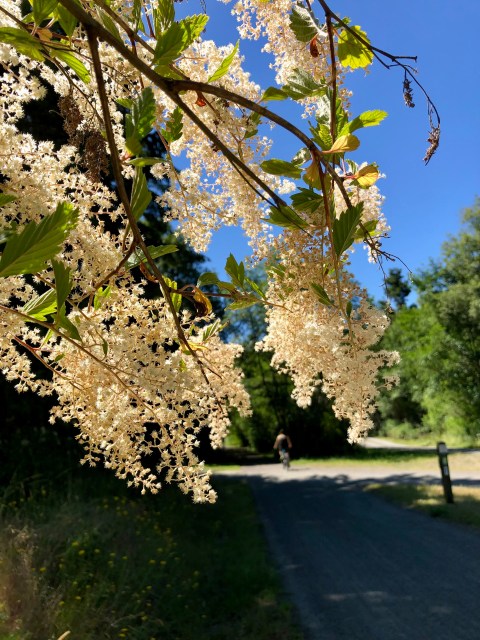
Oceanspray, Holodiscus discolor has cascading clusters of tiny cream-colored flowers.

Summertime has arrived on the Olympic Peninsula’s rainshadow! Native shrubs like Oceanspray, Holodiscus discolor and Hardhack, Spirea douglasii are blooming. Others are fruiting: salmonberry, thimbleberry, and red elderberry The garden is filling out with lush greens, and warm-season crops are starting to develop and mature. Just yesterday I saw a garter snake with a big black slug in its mouth.

Edible Garden

Winter garden: Select beds that have finished producing and replenish with compost. Rotating crops prevents diseases from building in the soil.

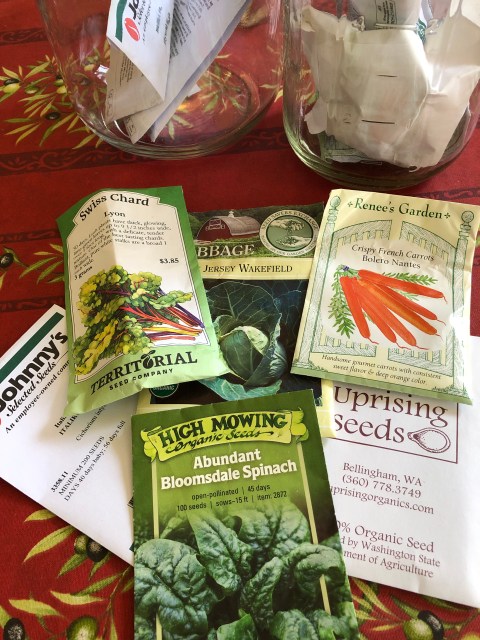
Time to direct sow brassicas and greens, beets and carrots. Varieties: Purple sprouting broccoli, Lacinato and Red Russian Kale, Early Jersey Wakefield cabbage, Winter Density lettuce, Abundant Bloomsdale spinach, Bolero carrots.

Make sure to leave room for your garlic crop that can be planted in November.

Tomatoes: Remove suckers and continue staking.

Weeding: Make a quick pass once a week to eliminate weeds. Some weeds can be companion plants, however they also compete for nutrients, water and light.

Curing garlic: Harvest garlic bulbs when 4-5 leaves are still green, taking care not to damage them. Over-watering or leaving them in the ground too long causes the bulbs to split or become prone to disease. Fresh garlic is fragile. Clean the garlic by gently pulling down the top leaf and removing it from the bulb. ( If the leaf has signs of rust, be sure to throw away the skins instead of composting to prevent spreading the spores.) Brush soil from roots.Drying in a well-ventilated place takes a couple of weeks. Check the stems and when no green remains inside, they are safe and should store well.

Strawberries: Renovate June-bearing varieties (not the everbearing, day-neutral ones). Cut to 2-3 inches. Mowing can accomplish this. Cut out and remove weak and crowded plants. Fertilize with a balanced natural blend like Down To Earth.

Flowers: Save seed from annuals and biennials including: nasturtium, bachelor buttons, foxglove, calendula and bread-seed poppies, cosmos. Dry them in a cool dark place and label the envelope with plant, and date.

Landscape

Time to review the garden. If some plants didn’t make it after the last couple of years of climate ups and downs, maybe replacing part of the landscape with natives could be on your horizon. If you have lots of space maybe it’s time to consider planting a hedgerow that will help slow the wind or screen the road.

Bulbs: Order bulbs  in the next few weeks to plant in the fall. This is especially true if you want to plant some more unusual bulbs. When they arrive check the bulbs to ensure there is no disease or damaged bulbs. Store them in a cool dark place until you are ready to plant. I often order from Johnny Scheepers. Another company, that is good and local is RoozenGaarde.

Irrigation: Determine which plants need extra care and keep their roots growing. Many established shrubs won’t need any water until August, but in the first couple of years a plant will develop nicely and be healthier if it is watered regularly. If plants look weak or diseased, give them a boast with compost and liquid seaweed fertilizer.

Lawns: Port Townsend homeowners have long had an unspoken agreement that green lawns are not a requirement for a beautiful landscape. A well-kept yard is often mowed until mid-July and then the grass goes dormant and the hawkweed or dandelions provide food for pollinators. When the autumn rains return, our lawns green-up again. At that time, spread dolomite lime. This provides calcium and magnesium as well as making the soil less acidic and more inviting for grass. In fact, many people prefer not to have lawns. But if grass is already there, allow it to go dormant.

Caring for English Roses

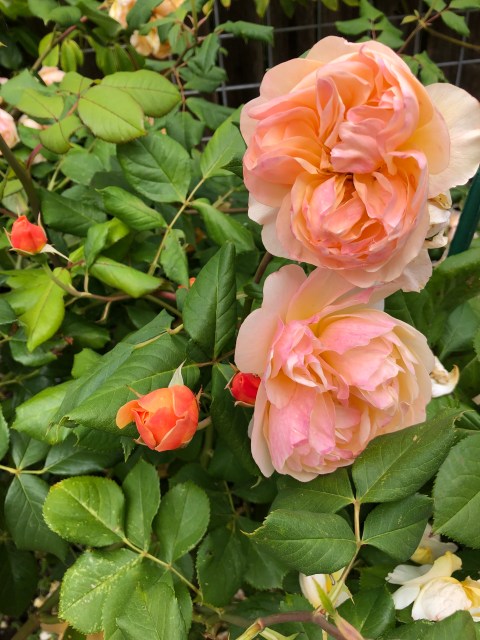
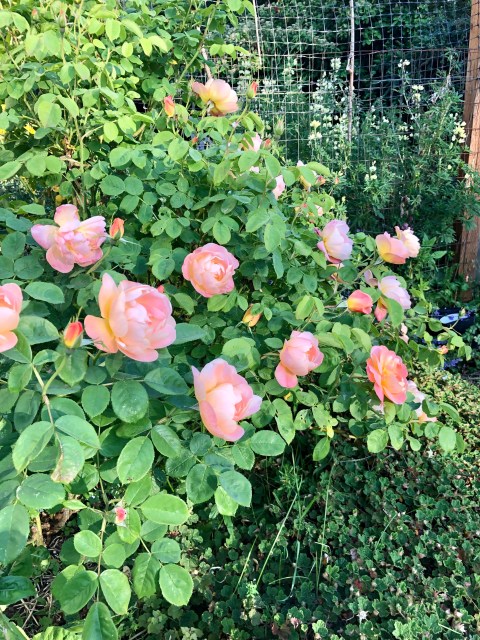
English Rose, Roald Dahl
Roald Dahl , English shrub rose bred by David Austin

This post focuses on modern shrub roses bred by David Austin, a premiere rose breeder who introduced over 190 cultivars in his lifetime. Known as English Roses, these plants are crosses of old garden roses with modern hybrids. ‘Old Garden Roses’ originated before the 18th century. Examples  of OGR include Gallicas, Albas, Bourbons, and Damask. Unfortunately, these incredibly fragrant roses only bloom for a couple of weeks once a year.

Modern roses include hybrid tea, polyantha, and floribunda, shrubs and climbers. Most modern roses are repeat bloomers in six-to-eight week cycles. Many of the hybrid roses are prone to disease and require a stringent spray regime to keep them healthy. Modern shrub roses have been bred from old fashioned roses with the added features of disease resistance, repeat blooming and a wider range of colors. These roses have a more natural form of arching canes with many flowers whereas hybrid teas and floribundas have a stiffer form. Long-stemmed florist rose are usually hybrid tea.

English shrub roses come in all different forms from peony-like full blooms to simple single petal flowers. Other shrub roses include all the rugosa roses, wild roses like our native Nootka rose and many others. I don’t have time here to do these roses justice!

Cultivating Roses

Provide good drainage and fertile soil with plenty of compost. Six hours of full sunlight will allow the roses to flower fully. Water weekly at the base of the shrub. Mulch to conserve moisture.

Deadheading is the term for removing spent flowers. Removing the first flush of blooms not only encourages more blooms but also helps to shape the shrub into a graceful form. I use Felcos #2, but any by-pass clippers work well. Sharpen the blade and then and sanitize it with hydrogen peroxide or alcohol. Always clean before starting to prevent the spread of disease. If you note disease where you need to prune, wipe the blade frequently. Removing the spent flowers prevents the development of rosehips and seed formation. Resist the urge to prune immediately below the spent flower; this results in dieback, stubby dead stems. Pruning at a leaf with 3-leaflets results in dog-legs—many spindly short stems. Instead, look for a thicker stem and make the cut just above a leaf with five leaflets. This encourages robust flowers on longer stems, perfect for cut flowers.

Even though English shrub roses are disease-resistant, they can still suffer from black spot. This fungal disease spreads by splashing water. Irrigate at the base of the plant and handpick diseased leaves and dispose of them. Make sure their is plenty of air circulation. If you need to spray, Safer brand has a fungicide. In the autumn rake and destroy all fallen leaves. If autumn is not getting gradually colder with light frosts, monitor the rose. If it continues to flower into October, stop deadheading and allow rose hips to form; the enzymes and hormones might trigger a dormancy response. By early December, strip the leaves to force the rose into dormancy. If we suddenly get slammed with an arctic blast, it is better for the plant to be dormant. Pruning is best done in February—something for another post.

Learn more about these roses with a free download from David Austin Roses: English rose handbook

Groundcovers for Sustainable Gardens

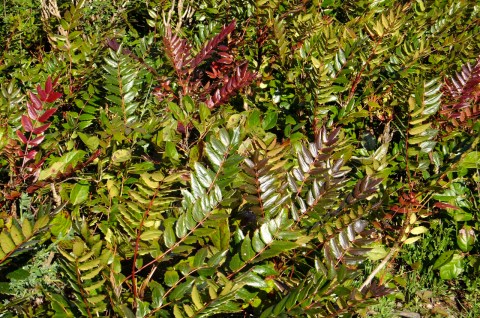
Cascade Oregon Grape, a native groundcover
Cascade Oregon Grape, native groundcover

Sometimes called ‘living mulch’, there are many reasons to choose groundcovers, from covering challenging slopes; to reducing garden maintenance and water consumption; to simply knitting together the landscape. They offer excellent solutions to landscape challenges but groundcovers are not maintenance-free.

Woody Groundcovers

A popular native woody plant is Kinnikinnick, Arctostaphylos uva ursi. Another is Cascade mahonia, Mahonia nervosa. Other standard choices are Taiwan Bramble, Rubus calycinoides and  Pt. Reyes Ceanothus, C. gloriosus.

Emerald Carpet or Creeping Taiwan Bramble, a drought-tolerant plant

As these plants get established they need regular weeding, especially to prevent perennial weeds from getting a foothold. Fertilizing with compost or dry organic blends encourages the plants to grow. Mulching with woodchips or arborist chips reduces the need for watering. Cover bare ground with 2-3 inches of mulch, but don’t bury the crowns (where stem meets root) or go back after and brush mulch away from the crown. The very fastest groundcovers, especially those planted closer than the recommended spacing will not need much additional mulch. But slower groundcovers like Kinnikinnick or bearberry cotoneaster (C. dammeri ) will need more mulch in about three years.

For  woody groundcovers to look their best, prune once or twice a year. Prune back leggy stems to make denser coverage. (The principle is the same as tip-pruning house plants or perennials. It works by removing the plant hormone or auxin in the stem’s tip that maintains apical dominance.) Also, if your goal is a carpet effect, prune out vertical branches.

Herbaceous Groundcovers

These plants are not as tough as woody plants. If the foliage forms dense mats often this shades the soil and prevents weed seeds from germinating.

The smaller the foliage the more work to keep out grass and tiny weeds. If your garden is on a city lot then tiny foliage can work, just plant smaller groupings. There was a time when many people planted  chamomile or woolly thyme as small lawns, however they require regular weeding. If you plant lots of annual flowers that readily reseed themselves, herbaceous groundcovers with tiny foliage will take much more work to maintain because they will easily harbor germinating seedlings.

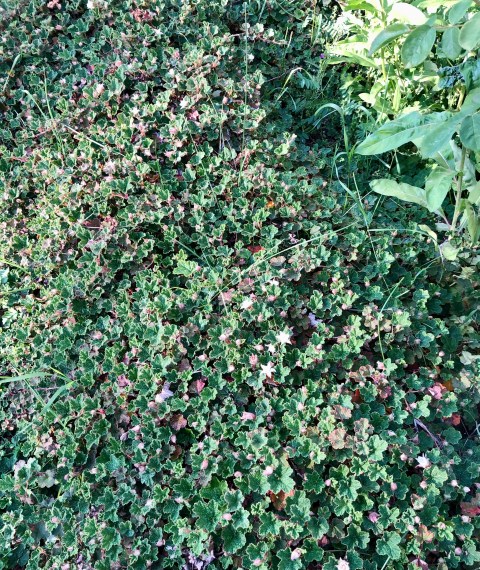
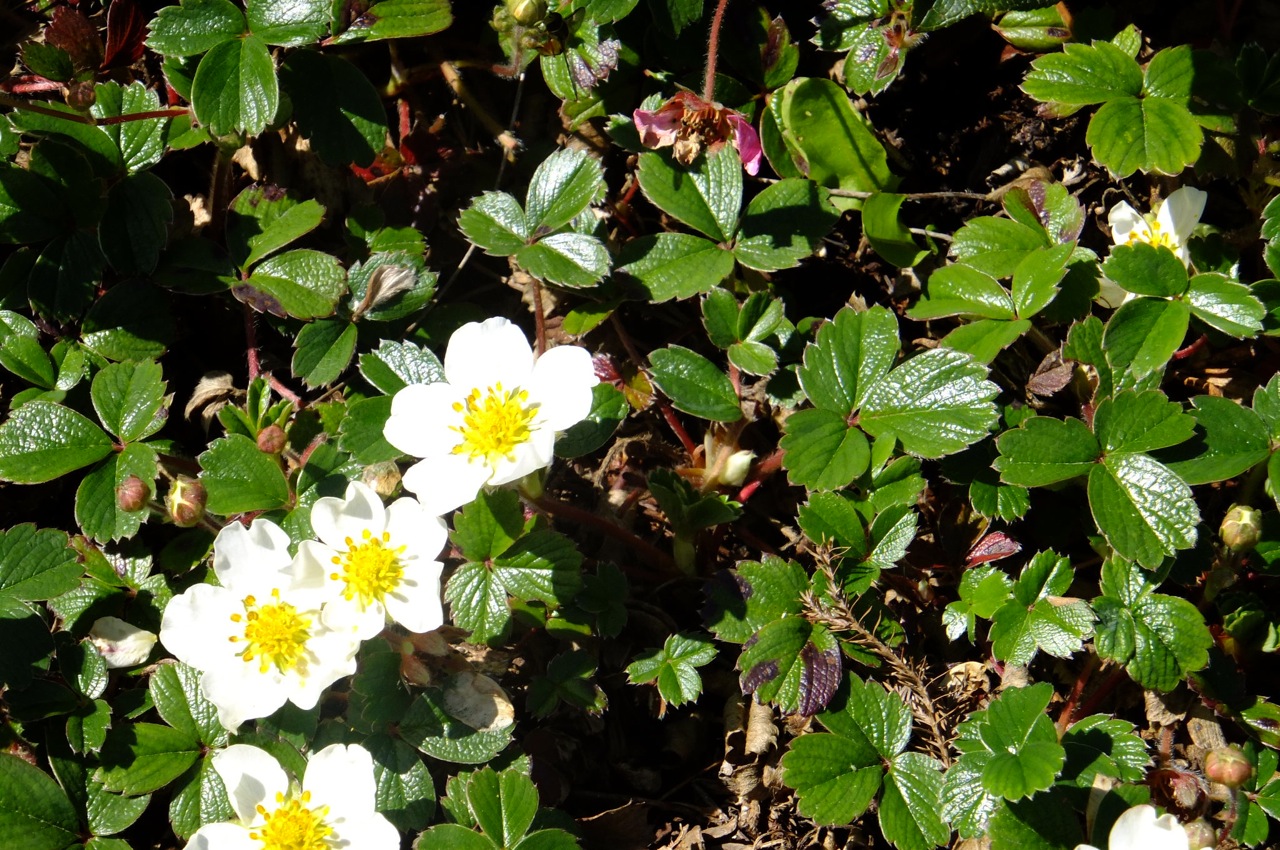
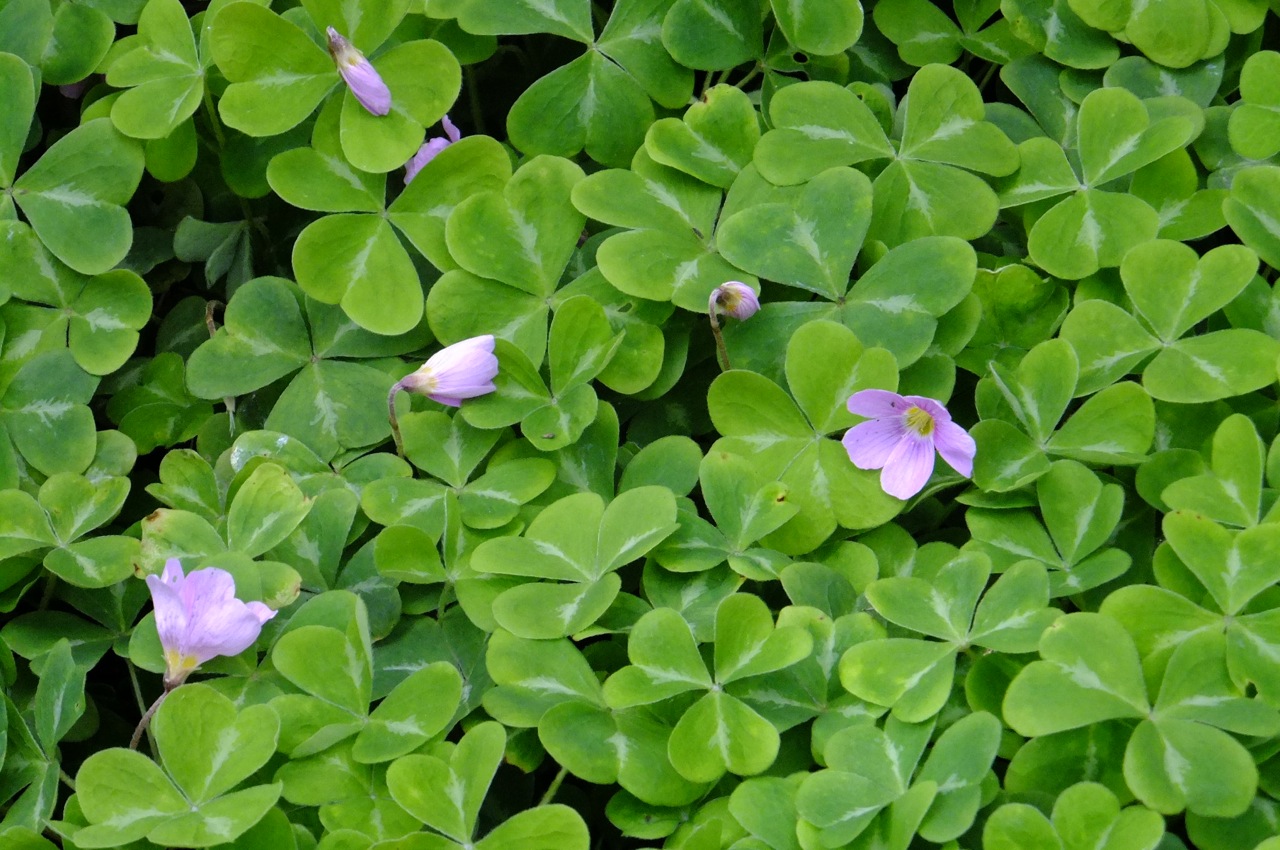
Natives include evergreen coastal strawberry Fargeria chiloensis, inside-out flower, Vancouveria hexandra and redwood sorrel, Oxalis oregana,  and stonecrop, Sedum spathufolium. Non-native groundcovers include many Epimediums, and Geraniums. A low maintenance herbaceous groundcover for shade is hardy geranium or Geranium macrorrhizum, especially the magenta pink ‘Bevan’s Variety’ makes a dense mat of foliage that is deer-resistant. It does require a little water during dry summers.

Plants don’t have to form low carpets to be a groundcover. Distinctive foliage is a good reason to mass plants together. Under conifers the western sword fern is attractive. Larger perennials like Corsican Hellebore, Helleborus argutifolius make a bold statement. Pools of ornamental grasses offer ribbons of texture that can ripple in the wind.

June 2024 Garden Chores

The garden is a riot of blooms bursting with color. Let’s take a look at English garden roses, one of my favorite. Goumi, the earliest fruit in my garden has a sweet-tart flavor that I love to nibble. The garden is alive with bird songs! Robins in the garden are fun to watch as adults seek out worms and their fledglings beg for food.

By now in the vegetable garden, the cool season crops are producing and warm season crops are in the ground. Before the month is out we will be preparing for the winter garden.

Edibles

Tomatoes: Begin training indeterminate tomatoes. Train a couple of main stems. When new shoots form between the main stems and a leaf, pinch out these suckers. There will be less fruit but they will ripen sooner. Remove some foliage if it is excessive but leave some to protect the fruits from sun-scald.

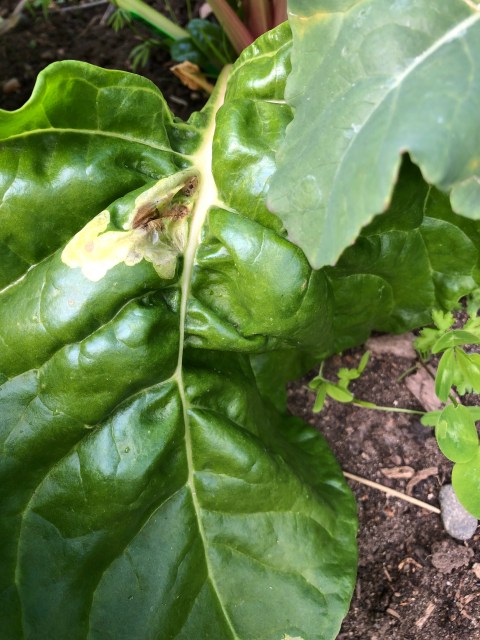
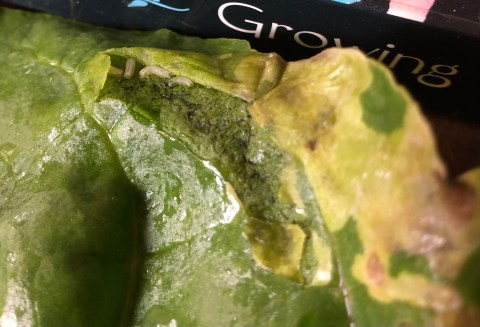
Vegetable Pests: Watch for signs of leaf miners on spinach, beets and Swiss chard. The larvae form tunnels between the layers of leaves that look like yellow trails and pockets. As the fly larvae metabolize the plant they deposit black frass. Hand pick the leaves and trash them. Don’t place them in compost!

Swiss chard leaf with yellow spot indicating leaf borer within.
Leaf miner maggots visible on top left. The top layer of leaf was peeled back to reveal these fly larvae.

Garlic: Harvest scapes ( curvy shoots with flowering head) Stop watering when leaves start to turn yellow. Harvest when only 4 leaves are still green, or the bottom 1/3 of foliage is yellow. For longer storage, cure (dry) garlic with the tops and roots for several weeks, allowing nutrients into the bulb. Cut tops and roots leaving as much skins to protect garlic bulbs.Prevent the spread of garlic rust fungus by starting with certified disease-free bulbs, rotate crops and use a mulch of arborist chips to prevent rust from establishing in soil.

Asparagus:  Mature fronds can get top heavy and fall, sometimes snapping at the base. For attractive plants in an edible landscape stake individual plants or prop up with bamboo. For asparagus in rows place a metal t post at each end and run jute twine between the posts. To keep the plants together weave the string between plants. In the fall when the shoots die to the ground, the jute can go into the compost along with the dead asparagus.

Fruit Trees: Thin fruit, and watch for signs of fungal disease that spreads by splashing water. Use neem oil spray or sulfur powder. Look for and destroy tent caterpillars. Patrol for slugs and snails.

Winter vegetable garden It can be confusing to newbie gardeners that just as the summer solstice arrives, we begin sowing seeds for winter harvest! Sow brassicas  including winter cabbage, kale, and purple sprouting broccoli. from mid- to late June. If you miss this window, buy vegetable starts at the coop next month. Purple sprouting broccoli is the most successful winter broccoli with its small and numerous shoots. Early July is time to sow the following: carrots, beets, Swiss chard, kohlrabi and radicchio. (Crops for late fall harvest grows through the autumn equinox and then growth slows almost to a standstill.)

Ornamental Plants

Deadhead Rhododendron. By gently snapping off the flower cluster, seeds won’t form, instead we allow the shrub’s energy to be directed into growing foliage and starting next year’s flower buds.

Perennial Flowers: Some late summer and fall- blooming perennials, pinch back now for sturdier and shorter stems. Remove the top 1/3 of the following plant Asters, mums, beebalm (Monarda),  and Joe-Pye weed.

Fungal diseases are exacerbated by rain. Powdery mildew is not one disease but a symptom.Caused by different fungal diseases, the symptom is white circular patterns with a powdery texture, becomes gray or brown over time. The disease is more than cosmetic; it inhibits photosynthesis. It can overwinter in buds and also on dropped infected foliage on the ground. Humid weather and crowded conditions that cause stagnant air encourages fungal growth. Neem oil or sulfur can be effective when used  at first signs. Safer brand Fungicide is another option.

Winter Injury: By now many plants have recovered from the winter. Evergreen shrubs that dropped foliage are now leafing out. Old stands of red-hot-poker that completely died to the ground with many rhizomes turning to mush are now leafing out. All these plants require monitoring, removing dead wood and watering during dry spells.