Gardening for the Birds

Winter is a time to step back and evaluate the garden; to appreciate how much it has grown since last year and to analyze how we can improve it. One approach is considering it from a bird’s perspective. Gardens that favor birds provide food, water, cover and a safe place to nest.

Water for drinking and bathing is essential. Place it adjacent to shrubby habitat to provide refuge from predators. Shallow moving water with a place to perch is best, but a bird bath that has clean water is also valuable.

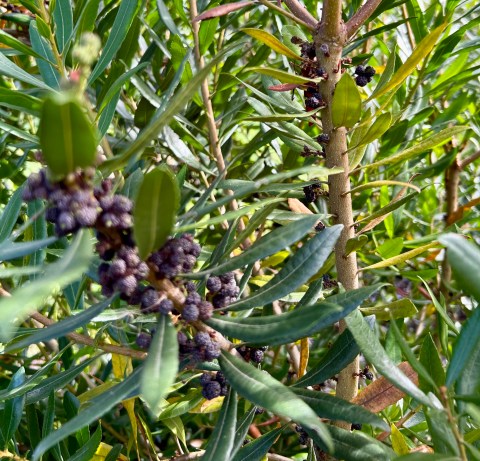
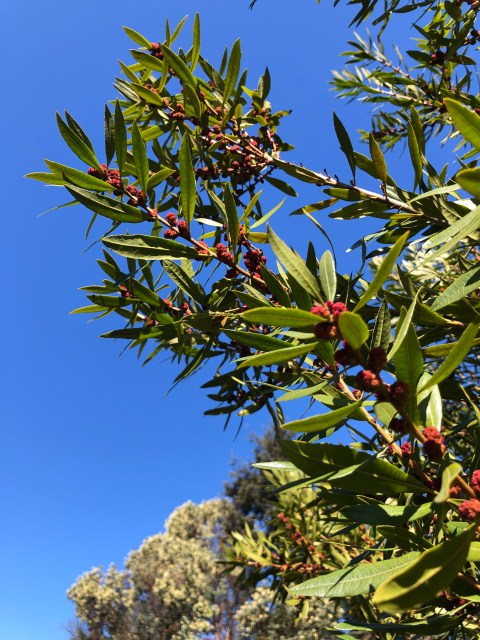
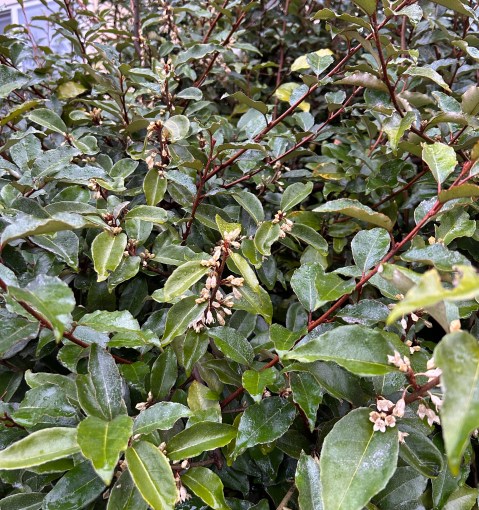
If the shrubs have berries, so much the better. Also, evergreen shrubs provide an excellent place to roost at night. Evergreen foliage provides screening from predators and insulation from winter’s cold. Above is Ebbings Silverberry, Elaeagnus x ebbingei in bloom. Hummingbirds were feeding here mid-November and new flowers keep opening. Below is Strawberry Tree, Arbutus unedo and Pacific Wax Myrtle, featured in an earlier post.

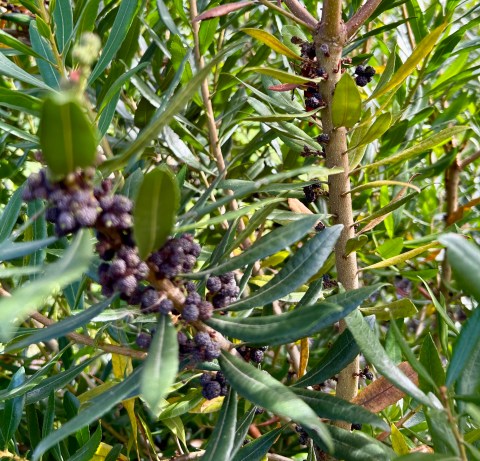
Arbutus undo

Feeding the birds

Bird feeders come to mind first and many people are committed to providing bid seed and suet. Some birds change their diet according to the season. Perennial seed-heads offer another option. Native plants have evolved with the local bird populations. In addition, perennials can be selected for architecturally interesting seed-heads. Plants in the mint family including sages, Salvia; anise hyssop, Agastache and Jerusalem sage, Phlomis. Sunflower family flowers like Joe-Pye weed, Echinacea, black-eyed Susan, Rudbeckia hirta and artichoke are attractive to birds.

Many cat owners recognize that a cat can kill up to eleven birds a year. A ‘Catio’, or cat patio is an outdoor enclosed space that protects cats from eagles and hawks and prevents cats from killing birds. Many homeowners have found ways to integrate this structure into their landscape. One of my favorite catios is that of my friends Kathleen and Pete. They constructed their catio around an existing blueberry patch, thus excluding birds from berries and cats from birds!

Watching birds is a relaxing and invigorating hobby for gardeners. People start off with bird feeders and it opens up an entire world. When David Sibley, author of The Sibley Guide to Birds, was asked why he enjoyed watching birds, he responded:

One of the most enduring attractions for me is that it gives me a chance to learn about an entire system (the natural world) by simply watching and getting to know the birds. When I can name a bird that I see, or notice subtle differences in appearance or behavior, that information gives me access to a store of knowledge about the species’ habits and preferences. I know where its travels might have taken it, what type of food it’s looking for, if it’s likely to be alone or part of a flock. In short, I know that bird and have a sense of how it fits in the world around it.

Check out The Courage of Birds: The Often Surprising Ways They Survive Winter, a new book by the birding team Pete Dunne and David Sibley.

Consider gifting a gardener/birder an online course covering everything about gardening for birds:

Cornell Lab Bird Academy

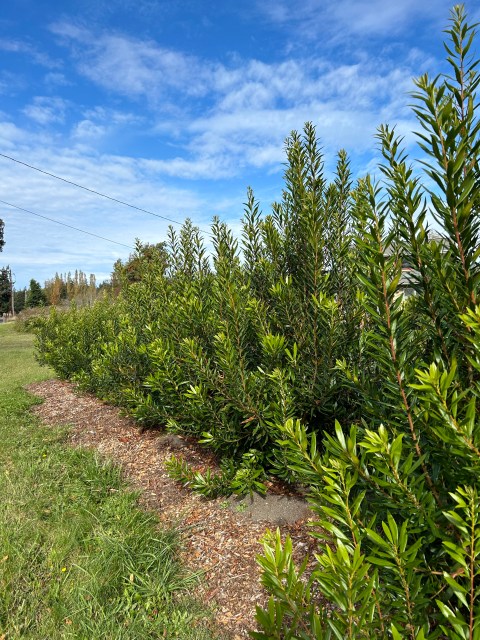
Pacific Wax Myrtle: resilient native evergreen

Pacific wax myrtle, Morella californica, is native to the coastal areas of Washington state and south to California. It is considered on of the best evergreen native shrubs for our gardens. Although the flowers are inconspicuous, the waxy black fruits are popular with birds. Knock-on-wood it is still deer resistant.

This hardy native is adaptable to many conditions from full sun to shade. Although it prefers moist, well-drained soil, it can grow in a variety of soils. The root nodules have nitrogen-fixing microorganisms that allow the plant to grow in poor soil.

Once established it is completely drought tolerant. It will grow to 30 feet tall and 15 feet wide in thirty years. For the average size garden, pruning will keep it within bounds. Late winter is best for heavy pruning, then general shaping can be made with heading-back cuts through out the season. This remarkable shrub can be pruned as a formal hedge, a loose screen or even a small tree. As a screening hedge, Pacific Wax Myrtle provides habitat for a multitude of birds including Spotted towhee, several sparrows, northern flicker, robin, goldfinch and cedar wax-wing. The latter are especially delightful in winter when small flocks gather on the shrubs. The waxy berries provide vegan fat in the winter.

Morella californica blooming in May

Pacific wax myrtle is slow to grow at first and once established, it grows steadily. Here the tiny flowers are blooming. Within these red catkins are separate male and female flowers. To see a close up and more photos go to the OSU landscape plant descriptions. This website provides excellent plant descriptions. I have not found anything like it in Washington.

For the longest time I didn’t think any disease bothered this shrub, but I noticed some foliage die back and even some stems turning brown. The Pacific Northwest Pest Management Handbook describes a type of leaf blight caused by a phytopthera that only bothers this species. This fungal-like organism was first identified as a pest in 2009 on the Oregon coast. I have been growing several shrubs at my place for thirty years and have only noticed it recently. Some ways to prevent spreading the disease:

  • Avoid overhead watering.
  • Mulch with arborist chips
  • Increase air circulation at the base of the plant by removing weeds or other vegetation.
  • Remove any diseased plant material and throw it in the garbage, don’t compost it,
  • Don’t over-fertilize and don’t fertilize late in the season.
  • Sanitize tools with isopropyl alcohol, or prepare a mix of 1 part bleach to 9 parts water. Dip tool or wipe with moistened rag.
  • Water to get the shrub established and then only monthly during summers to grow a hedge or screen.

The leaves make a pleasant tasting tea that is medicinal. The active medicinal substances include an astringent resin. The root and bark can be tinctured and used for inflamed gums according to Michael Moore’s Medicinal Plants of the Pacific West. The plant’s botanical name was changed in 2006. Previously it was known as Myrica californica.

A native plant adaptable to sun or shade and varying soil conditions, one that can synthesize it’s own nitrogen is bound to be more resilient!

Serviceberry: A native tree for the edible landscape

Serviceberry, Amelanchier alnifolia, is a multi-trunk small native tree reaching about 15 feet high and about 10 feet wide. It is an attractive addition to the garden—in spring it is covered with white blossoms and the foliage turns a butter yellow in autumn. Edible fruits are a favorite with many birds, including the cedar waxwing. There is nothing like a small flock of these delicate birds in ones tree to stop the mind!

Serviceberry does best in a sunny spot but will tolerate partial shade. To encourage growth water it regularly until it is established, then only water during the driest months. Since its native range is from Alaska to California, it should be hardy even in the toughest winters.

Botanical name: Amelanchier alnifolia

(ame-e-LANG-kee-er al-ni-FO-le-ah)

Working around the tree in summer I might nibble on the delicious tiny fruits, but mostly I leave them for the birds. Around here that include  waxwings, goldfinches, thrushes and towhees, among others. The tree provides nectar for hummingbirds. Washington Native Plant Society offers much more information on using them for restoration.

About 25 years ago, I started a nursery bed for young bare-root trees from the conservation district. I planted them in rows that were easy to water and weed; after a couple of years, I transplanted them around my property. A minimum amount of pruning to shape them has really helped their form. Since they are in the rose family and a relative to our common fruit trees, understanding their growth patterns was straightforward. A row of four trees on the property line is a cheerful herald of spring. These photos were taken in 2015. Since then I forgot to water them during some of our summer ‘heat-domes’ and they have struggled. I plan to water deeply once or twice a month in August and September as needed.

Although I have only grown serviceberry seedlings, there are named varieties that have been bred for fruit and landscape appeal. ‘Regent’ serviceberry is a desirable edible landscape plant that was developed in North Dakota. It grows about 8 feet tall and has delicious berries.