Late-Autumn Garden Chores

Late autumn usually brings the most precipitation to Port Townsend and the eastern part of the Olympic Peninsula. Atmospheric rivers dump rain. Strong winds blow and fallen leaves swirl. The sun is low in the sky.

The winter vegetable garden is producing, but most growth happened before the fall equinox. Garden beds covered with hoops and floating row covers will be protected from frosts. Fresh salad greens, kale, Swiss chard, and leeks  can be harvested throughout the winter. Monitor vegetables for slugs and cut worms. The wet weather favors slugs and snails. Get them now and there will be less generations come spring. Also cut worms are a problem and can be found during routine weeding.

Fruit Trees

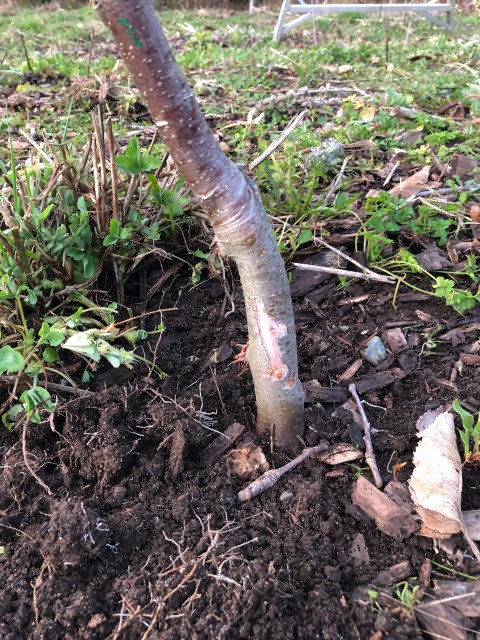
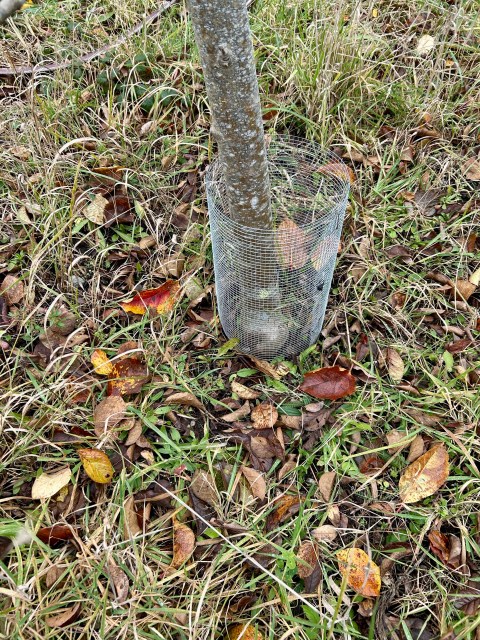
Keep the base of young trees free of tall grass. Better yet, place mulch around the trunks. Winter is the time when voles chew bark and roots. If you have a serious vole problem wrap the trunks with hardware cloth to prevent the rodents from gnawing the bark. Some gardeners even use pea gravel as a mulch to discourage voles.
Late winter is a better time for pruning apple and pear trees, ornamentals and raspberries. The reason not to prune now is because we could have a warm, sunny spell in January that could encourage plants to grow—only to be blasted by a deep cold in early February. Better to wait until mid- February for most pruning. Because wet weather promotes bacterial and other diseases, many gardeners prune plums and cherries after flowering during a sunny spell.

This is a good time for large garden projects that warm the body. Pushing wheelbarrows of manure, woodchips, and  making large compost piles. Building planter boxes and retaining walls. Cutting down dead trees or cutting up branches for firewood or hauling them to the yard-waste facility. If you live in the woods, think about a larger tree-free area around the home as future fire-prevention.

Going within

And then there are times to slow down, take walks and notice the birds. Different birds are here for the season. Watch for Pacific wren, red-breasted nut hatch, northern flicker, pine siskin, golden-crown kinglet and spotted towhee.

Winter is a good time to dream about the garden. A garden mentor once said that the garden is forgiving—we can always try again next year. It’s a time to think about rearranging perennial beds and planting more drought tolerant flowers. Or perhaps it is time to think about  simplifying a high maintenance garden. For some gardeners seed catalogs arrive in January and planning the edible gardens begin. Now you can think about how you can extend the season or create a garden sanctuary.

Gardening for the Senses

Plants with textured foliage invite us to touch or pluck a leaf and stroke it, even caress our face!

Gardens can stimulate or relax us by how they influence the five senses. A relaxing ambiance can come from blending in with the existing natural environment. When we are alive to our senses, we are in the moment. The frargrance of a rose or the soft texture of a leaf slid across the face, contrasting colors in the garden, all influence us through our senses. A repetitive pattern has a soothing or harmonious influence.

Gardens that stimulate and bring the energy up often have bold colors and strong scents. Patterns that contrast and colors that contrast are powerful. Think magenta and orange flowers with combined with chartreuse foliage; ornamental grasses next to large-leaf shrubs like Fatsia; canna lily with ornamental onion, the list goes on! Whimsical garden features like colored globes or blown glass spikes and sculptures with mirrored surfaces all add to an energetic feel. Mahonia media and unusual hebes along with weeping dwarf conifers all add an element of excitement.

Sound

Most of us in Jefferson County are fortunate to live where it is quiet enough to hear natural sounds: wind through conifers, rain on roofs, treefrogs singing, and geese flying overhead. We can create or muffle sounds in the garden. A water feature outside our open window will bubble, gurgle and splash.

Birdsong is another feature we can add to our garden by offering habitat, water and food. Humans have evolved with birds—when they are singing, all is safe. The melodious calls of songbirds encourage us to relax.

Large ornamental grass like Miscanthus grouped together can whisper in the wind. Bamboo make a soft sound as the wind passes through.

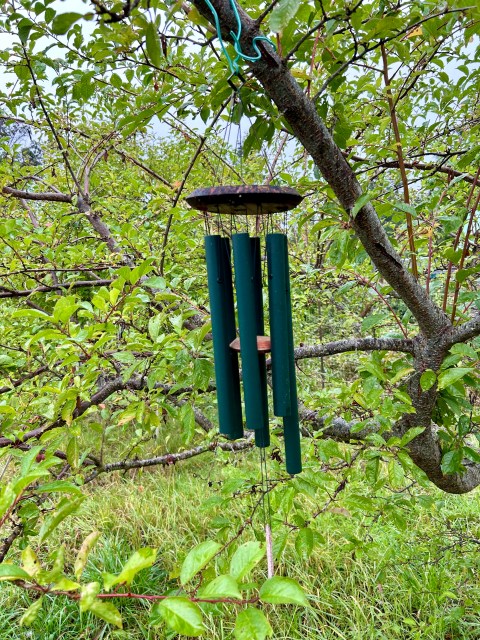
Windchimes create different moods. Determine if high-pitch tinkling sounds or deeper, resonant bass notes bring you joy. Listen to different ones to choose

Science has shown how auditory input impacts us, based on variation of pitch and length of time the sound The rhythmic sound of water on the shore is similar to the sound of humans breathing thus it is often soothing. When we hear many sounds at once it can be discordant and confusing. We can create a peaceful soundscape by muffling unwanted sounds with hedges and berms.

Scent

Flowers come to mind first when we think of scent—roses and lavender. Other scents include volatile oils in foliage and resins in conifers. Ambient temperature affects how strong the scent is. A sunny day will bring out the aroma of ponderosa pine bark or the resin dripping from a spruce. Walkable groundcovers are prostrate plants that can be placed  in pathways or between stepping stones—in the shade Corsican mint and in sunny spots plant caraway thyme or pink ripple thyme. As you walk past fragrant plants along a pathway brush against them or let your hand glide over the surfaces. Better yet, pinch a bit and bring it to your nose, inhale deeply and set the bit in your pocket.

Scented plants along the path are easily pinched as we walk by, sniffed and placed in one’s pocket

Touch

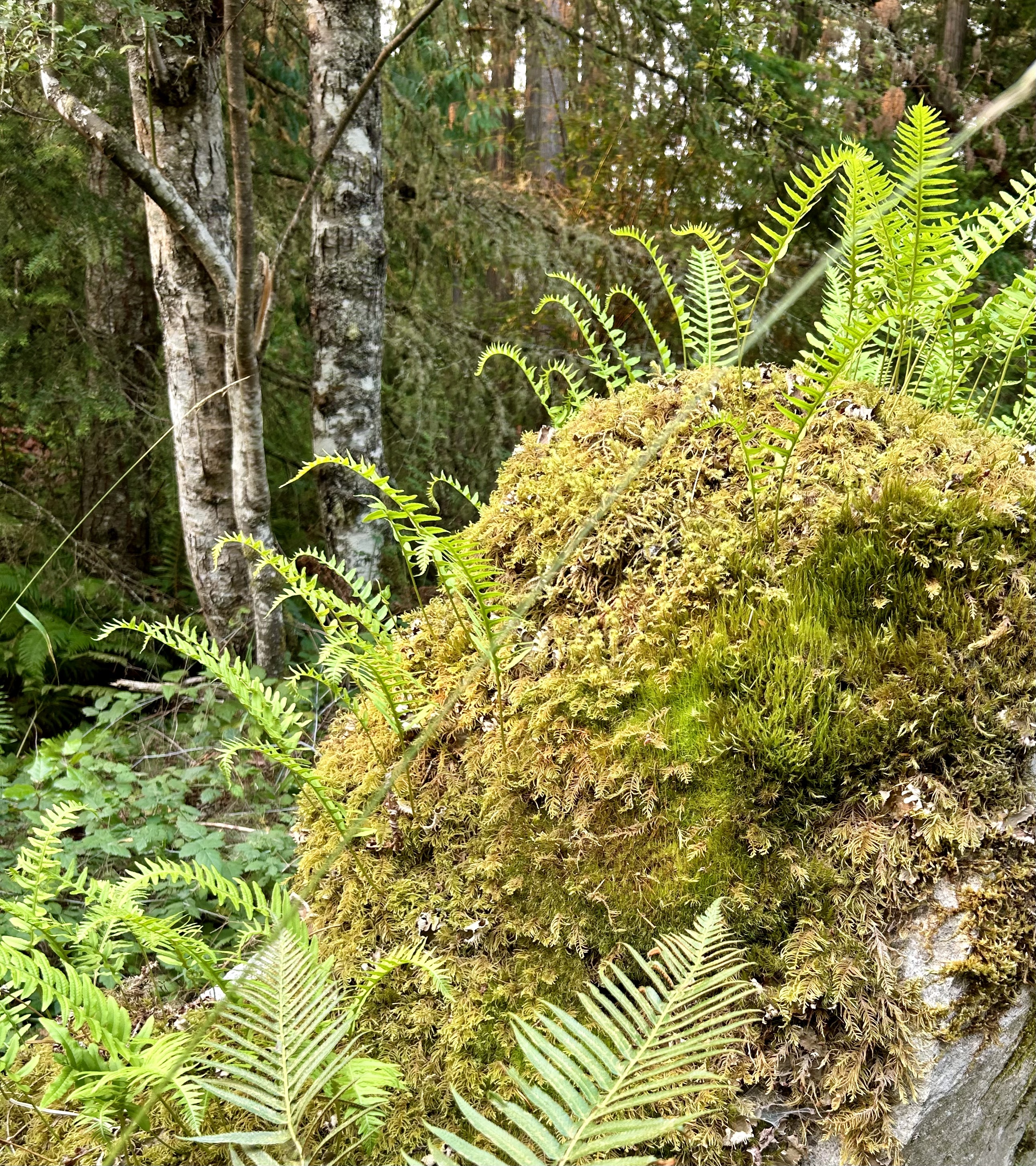
Don’t forget the tactile dimension of the garden. Many gray foliage plants have textured surfaces of fine hairs to reduce water loss. Lambs ears, Stachys byzantina; giant silver Mullein, Verbascum bombyciferum; and the artemisia are ever so soft. Ferns have feathery foliage as does dwarf Japanese plume cedar, Cryptomeria japonica elegans. Moss is plush.

Taste

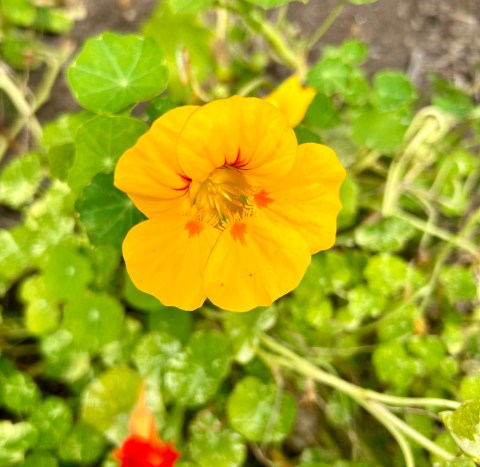
Edible flowers in the garden add an element for our tastebuds. The sweet-licorice flavor of anise hyssop, the peppery bite of nasturtium blooms, or the citrus notes of lemon thyme, all add to the multidimensions of the garden.

September Garden Chores

The fall equinox is approaching quickly. The weather is changing. Autumn offers opportunities to plant and transplant; the soil retains warmth longer than the air can—a perfect combination for encouraging root growth. With cooler temperatures and short day length, plant growth slows. The roots have a chance to get established without the additional stress of transpiration or pumping water through plant and out the leaf surfaces.

Autumn is a great time to make compost piles with debris from the vegetable garden, perennial plants and deciduous leaves. Some people prefer to leave the dead foliage and seed heads for spring removal allowing insects and birds food and habitat overwinter. Try it, but note that adding garden clean-up to normal spring chores might overwhelm some gardeners.

Edibles

Fruit trees: Most tree fruits are ripe when they come off easily by lifting and twisting the fruit. Take care not to break off the short branch with buds known as a fruit spur. Cut open an apple —ripe seeds are brown. Pears are picked when they are still hard, before they are fully ripe. They soften from the inside out. Asparagus: Let the fronds remain and turn yellow. Cut them back to the ground after a hard frost. If you have an excess of produce, try making sauerkraut or kraut-chi.

Soil Fertility

Soil Samples: Every couple of years it is worthwhile to take a soil sample and get it tested. Although Jefferson Conservation District no longer handles soil testing, they do lend a tool for extracting clean samples and lab suggestions including A&L. I’ve had good luck with Peaceful Valley Farm Supply.

Compost: Build compost piles in bins or free-standing rectangles. All the autumn decaying foliage from the veggie garden, perennials, and deciduous leaves. Add a source of Nitrogen: manure; powdered fish or bloodmeal; or urine.

Mulch shrubs and garden beds for winter protection and weed suppression. The increased organic matter that will eventually feed the soil ecosystem.

Cover-cropping: After removing spent vegetables, rake the soil, add seeds of clover,  field peas, oats, rye, vetch, or fava beans. More information from WSU All seed available at Chimacum Corner.

Pests

Yellow jackets

Recognize yellow jackets and their underground nests. In the autumn listen for buzzing if there are more than two yellow jackets in a location, step back and search the ground for more. Yellow jackets can sting repeatedly. By contrast, bees avoid stinging because it is lethal, it rips out their stinger. Learn to distinguish them.

Spring Bulbs

Plant bulbs and corms now for spring bloom. The earliest bloomers are the small bulbs: snowdrops, crocus, chionodoxa, Siberian squill and winter aconite. Select bulbs that are firm with no signs of injury or mold. If one bulb is lightweight compared to  others, discard it. Plant with root side down and pointy end up. Plant at depth three time the length. Small bulbs often are earliest. See Royal Horticulture Society for more information.

Grain Amaranth

Abundant Life Seed Foundation Gardens 1999

Tinker was involved with Abundant Life Seed Garden from its inception in the 1980’s until 2001. She and John Gilardi were garden managers in the latter years. In the above photo, Tinker and an apprentice named Nicole are stripping the flower heads of dried amaranth to remove the seeds. Next steps include winnowing and screening. Later amaranth was one of the crops Tinker experimented with in the dryland farm project.

 Amaranth’s importance is twofold—its super nutritious and easy to grow.

Unlike grains, the seeds of amaranth contain all the necessary amino acids. The protein content is 16 percent, more than rice or wheat. Like quinoa, this offers complete protein for vegans. Amaranth is considered a pseudograin (only plants in the grass or Poaceae family are considered true grains)

Grain Amaranth comes from one of three species. All are white-seeded whereas the leafy greens amaranth tend to have black seeds and may become weedy.

A. cruentus, Purple Amaranth: Day-length neutral and most widely adapted. Typically white-seeded from Mexico, this is made into “Alegria”, the popped seeds mixed with molasses pressed into a small cake or bar.

A. hypochondriacus, Prince’s-feather is day-length sensitive. I know little about this species.

A. caudatus , Love Lies Bleeding is native Peru. Sometimes called Inca wheat, it is an important staple in the Andes.

While young foliage can be confused with weedy amaranth, (A.hybridus, A. viridis, A. retroflexus. A. spinosus.) grain amaranth has apical panicles, or seed heads forming only at the top. Grain amaranth can withstand drought conditions because their roots can grow several feet deep.

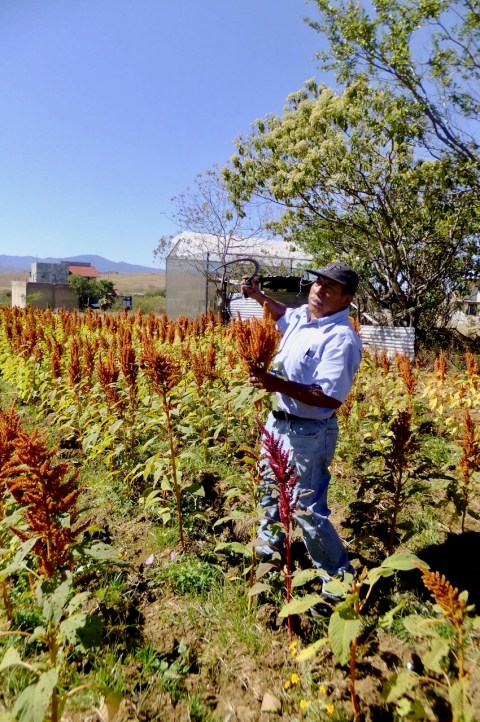
Early strains of A. cruentus were cultivated as far back as the time of the first maize in Oaxaca. The Jardin Etnobotanico de Oaxaca includes a section of early cultivated food crops. I was lucky to volunteer in the garden during the winter of 2019 and had the privilege to work with Roberto Chavez Rendon. Here he is with an early strain of Amaranthus cruentus.

Open-pollinated grain amaranth species can be variable. Many selected strains have full heads laden with seeds. Seed breeders are selecting for shorter plants that don’t shatter. University breeders are developing F-1 hybrids for food production.

Although claims vary, Amaranthus cruentus and A. hypochondriacus were cultivated before 1,000 BC in Mexico. Grain amaranth was an important food source from the Aztecs until European missionaries put a stop to eating or using amaranth in ritual. It is again popular and is best known as “Algeria” , the popped seeds mixed with molasses and pressed into a small cake or bar. An NGO in the Etla Valley of Oaxaca, Puente a la Salud promotes food sovereignty with a focus on grain amaranth not only for cakes but to add as an ingredient in many dishes ground into flour; boiled and used as a thickener in soups; toasted and popped as a cereal. They encourage farmers to grow the crop and teach communities how to make appropriate tech ovens and poppers for cottage industries with amaranth.

Amaranthus cruenthus. Farmer demonstrating harvesting with sickle.

Amaranth has the potential to be an important crop as we move into greater climate change. It is drought-, heat- and pest-tolerant. The nutty flavor can add more nutrients to oatmeal or ground into gluten-fee flour. Try growing this beautiful plant in the edible landscape, or in rows for production. Available from Adaptive Seeds, Bountiful Gardens and Johnny’s selected Seeds.

Joe-Pye Weed: Pollinator-friendly Perennial

My earliest memories of Joe-Pye-Weed are from the coastal town in MA where I grew up. In late summer the purple flowers towered over other plants growing wild in what we then called swamps. I would bicycle down the country lane and cut stems of the flowers to make dried flower arrangements. Joe-Pye-Weed was likely named for  Joseph Shauquethqueat, a Mohican medicine man who cured settlers.

Although the plants are found throughout the East Coast on moist sites, they can tolerate drought conditions. For this reason, they make a good addition to our landscapes. A myriad of hybrids is available for this popular genus. Formally known as part of the genus Eupatorium, botanists have recently reclassified this group into a distinct genus, Eutrochium.

One hybrid has been bred to grow only 3 feet tall. They can grow in part shade and look more robust with regular watering. If the intention is to encourage them to be drought-tolerant, plant them in lots of compost. After three years divide the plants. They will ocassionally reseed, mostly they spread slowly from the crown.

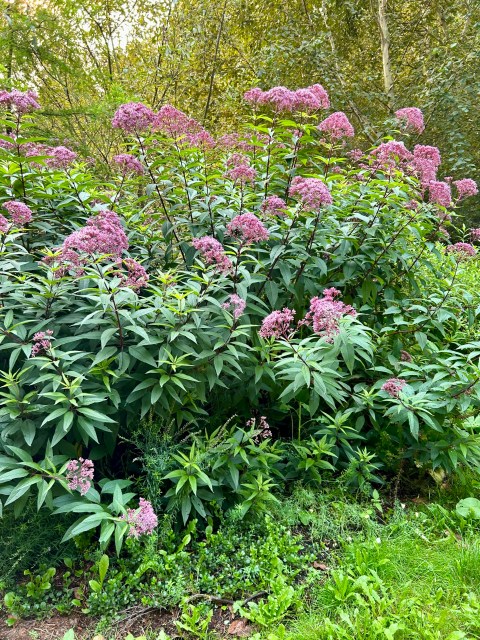
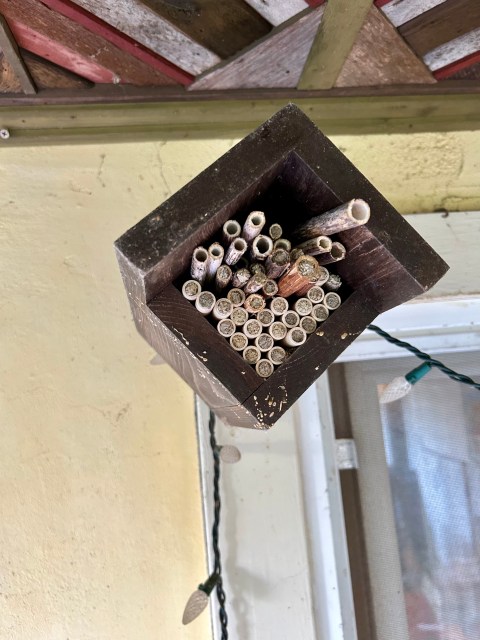
The 6 ft tall hybrid plants I have were divided from a friend’s clump. The hollow stems are a deep purple and after the perennial is finished for the season, these stems make excellent disposable tubes for Mason bee homes!

Landscape uses:

Consider this for outside the deer fence. Eupatorium works well with Miscanthus, perennial sunflower and cardoon for a dramatic late summer perennial display. After growing vigorously in spring and summer, they come into their own in August and September. Rain gardens need plants that can withstand inudated soils.

Other Uses

If you raise mason bees, see my earlier post, then the dried stems of this plant make great disposable nesting tubes for the mothers to lay their brood.The right photo shows the Joe-Pye stems on left and the purchased tubes on right.

Hairy Manzanita

Arctostaphylos columbiana

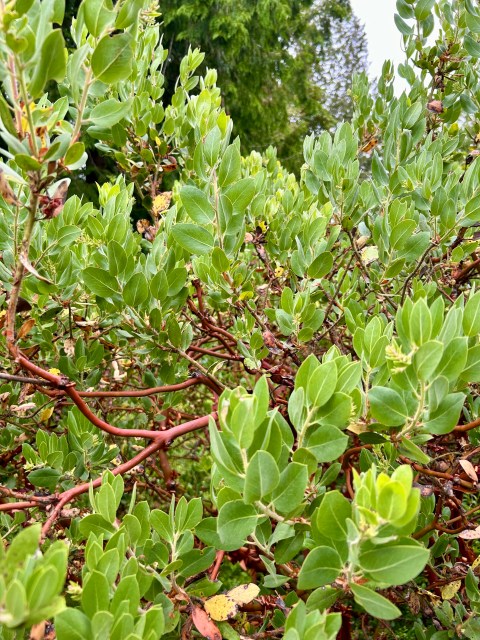
This native manzanita is uncommon on the Quimper Peninsula , but I have seen it growing wild on Cape George Road and close to Kala Point. The above photos are of a shrub that Willy Smothers grew at his place on Marrowstone Island. Recently Janet Welch pruned it to highlight the beautiful peeling bark.

The tiny ‘apple-like’ fruits are eaten by birds, small mammals and patient gardeners. It grows in the coastal scrub community and its range is from Sonoma County, California to Vancouver Island. Along with shore pines, manzanita can grow on and stabilize sand dunes. Native specimens can also be found in the understory of open coniferous forests in the Cascades. The critical factor is gravelly soil. The peeling bark is an attractive feature that it shares with its cousin Madrone. However, it is more closely related to our native groundcover kinnikinnick, Arctostaphylos uva-ursi. In fact a hybrid called Arctostaphylos x media is cross between the two.

Care for Manzanita

Manzanita rewards the patient gardener. Select a site with full sun and excellent drainage. It is best to start with plants in one-gallon containers. Water weekly until new growth appears and then taper off. One way to avoid crown rot is to plant it a little bit higher than the existing grade and mulch with woodchips. Don’t mulch with compost. Use drip irrigation because overhead water will encourage fungal disease. Keep it on the lean-side and avoid adding soil amendments. Once established it is completely drought tolerant.

Here is another manzanita, a hybrid, (probably Arctostaphylos x media) used in the landscape of Kathleen Turaski and Peter Hornsby This drought-tolerant garden includes Ceanothus and red hot poker, Kniphofia. They hope to remove the deer fencing once the plants are mature. But realistically, they may need to keep the fence in place—even if deer don’t browse a plant to death, they often step on and break branches of nearby plants.

Oregon State University, Horticulture Dept has many more photos, including pictures of the flowers and fruits. A great new native plant nursery opened in Kingston. Salish Trees Nursery carries hairy manzanita. Their knowledgeable staff will be a great help. Far Reaches Nursery has a superb variety of Arctostaphylos densiflora—Howard Mc Minn.

This hybrid Manzanita is an excellent drought tolerant choice
Manzanita flowering in April