
Winter is a time to step back and evaluate the garden; to appreciate how much it has grown since last year and to analyze how we can improve it. One approach is considering it from a bird’s perspective. Gardens that favor birds provide food, water, cover and a safe place to nest.
Water for drinking and bathing is essential. Place it adjacent to shrubby habitat to provide refuge from predators. Shallow moving water with a place to perch is best, but a bird bath that has clean water is also valuable.
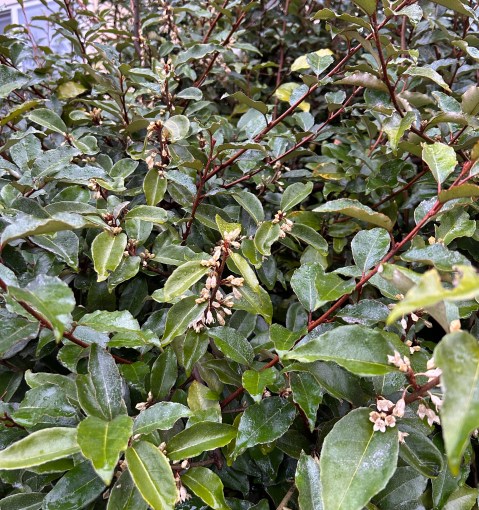
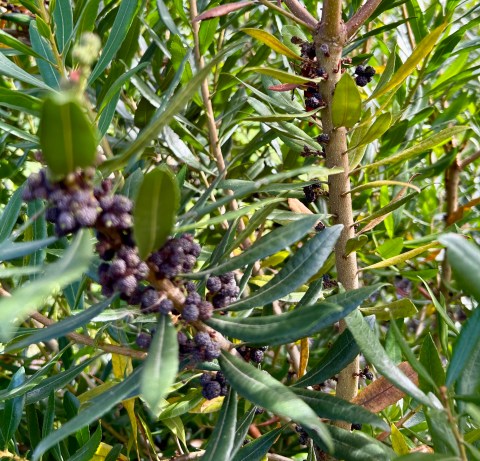
If the shrubs have berries, so much the better. Also, evergreen shrubs provide an excellent place to roost at night. Evergreen foliage provides screening from predators and insulation from winter’s cold. Above is Ebbings Silverberry, Elaeagnus x ebbingei in bloom. Hummingbirds were feeding here mid-November and new flowers keep opening. Below is Strawberry Tree, Arbutus unedo and Pacific Wax Myrtle, featured in an earlier post.

Feeding the birds
Bird feeders come to mind first and many people are committed to providing bid seed and suet. Some birds change their diet according to the season. Perennial seed-heads offer another option. Native plants have evolved with the local bird populations. In addition, perennials can be selected for architecturally interesting seed-heads. Plants in the mint family including sages, Salvia; anise hyssop, Agastache and Jerusalem sage, Phlomis. Sunflower family flowers like Joe-Pye weed, Echinacea, black-eyed Susan, Rudbeckia hirta and artichoke are attractive to birds.
Many cat owners recognize that a cat can kill up to eleven birds a year. A ‘Catio’, or cat patio is an outdoor enclosed space that protects cats from eagles and hawks and prevents cats from killing birds. Many homeowners have found ways to integrate this structure into their landscape. One of my favorite catios is that of my friends Kathleen and Pete. They constructed their catio around an existing blueberry patch, thus excluding birds from berries and cats from birds!
Watching birds is a relaxing and invigorating hobby for gardeners. People start off with bird feeders and it opens up an entire world. When David Sibley, author of The Sibley Guide to Birds, was asked why he enjoyed watching birds, he responded:
One of the most enduring attractions for me is that it gives me a chance to learn about an entire system (the natural world) by simply watching and getting to know the birds. When I can name a bird that I see, or notice subtle differences in appearance or behavior, that information gives me access to a store of knowledge about the species’ habits and preferences. I know where its travels might have taken it, what type of food it’s looking for, if it’s likely to be alone or part of a flock. In short, I know that bird and have a sense of how it fits in the world around it.
Check out The Courage of Birds: The Often Surprising Ways They Survive Winter, a new book by the birding team Pete Dunne and David Sibley.
Consider gifting a gardener/birder an online course covering everything about gardening for birds:
 Sustainable Garden Design