Rabbits in the garden

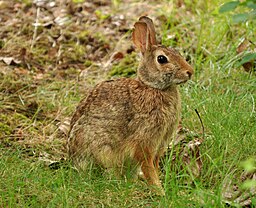
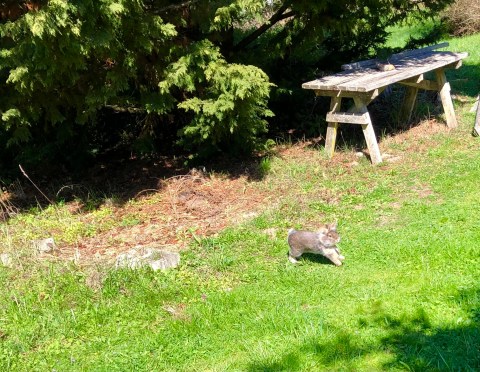
Eastern Cottontail photo from Wikimedia

The Eastern cotton-tail rabbit was introduced to Washington in the 1930’s as a game animal for hunters. These introduced rabbits thrive in close proximity to people. As habitat generalists, they adapt to different available plant food and benefit from brushy coverage. Although the state’s mapping shows the introduced rabbits widespread in Kitsap County and Whidby Island, Jefferson county rabbit population is not on the map! The population has recently boomed in Seattle.

The bunnies never bothered my vegetables while I had Black Labs. These dogs have a great sense of smell and can easily track the cottontails. My property is fenced with hog wire with openings large enough for rabbits but not their common predators such as coyotes and bobcats. However, the common garter snake that are abundant on my property probably consume baby rabbits in the nest and barred owls might catch young ones.

I became acutely aware of rabbits when a neighbor’s domestic bunny started living at my place and even chewed through the plastic deer fencing to get in the vegetable garden. As cute as it was I wanted to keep it out. I felt like the mean farmer in the Beatrix Potter stories. The neighbor and his children came over several times and were successful catching the wayward pet.
Rabbit damage is obvious, it looks like someone went through with garden clippers making sharp-angle cuts. The rabbits bite young stems, buds and flowers. By comparison, deer tear away stems, leaving a jagged edge because they don’t have upper front teeth.
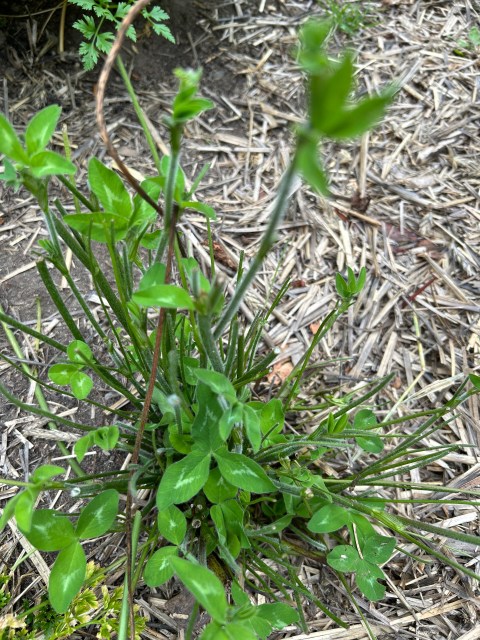
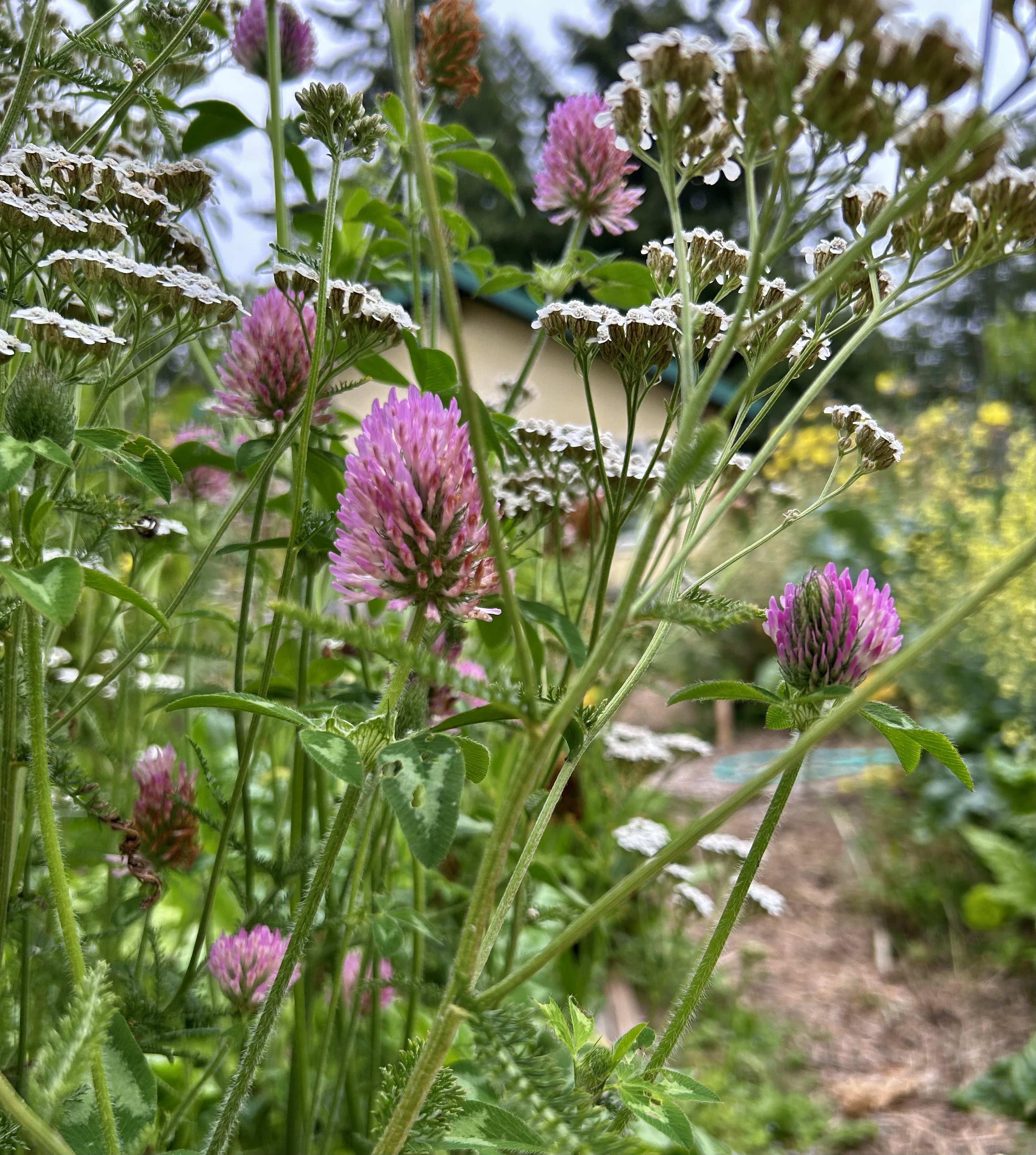
Cottontails are most active dawn and dusk. In spring I noticed vegetable seedlings neatly nipped off. Lucky for me I always have a couple of red clover volunteers on the edge of beds and in the paths. While the rabbits certainly prefer clover to vegetables, I share enough of my garden with the voles and the birds, that I was determined to prevent another creature from entering. I bought some rabbit repellent called Liquid Fence that was effective but requires monthly applications.

After watching several YouTube videos, I decided rabbit fencing would protect the lower two feet of the deer fencing. So I hired someone to work with me and we installed the fencing where the rabbits were entering from the west. I also had already placed landscape fabric there to prevent grass and weeds from growing underneath the deer fence. One foot of chickenwire on the ground will prevent rabbits from burrowing under the fence. That was effective for several months and now I have noticed a rabbit in the garden at dawn. On to fortifying the deer fence on the north and south sides! For more information on fencing and general cottontail behavior, see the state Fish and Wildlife site
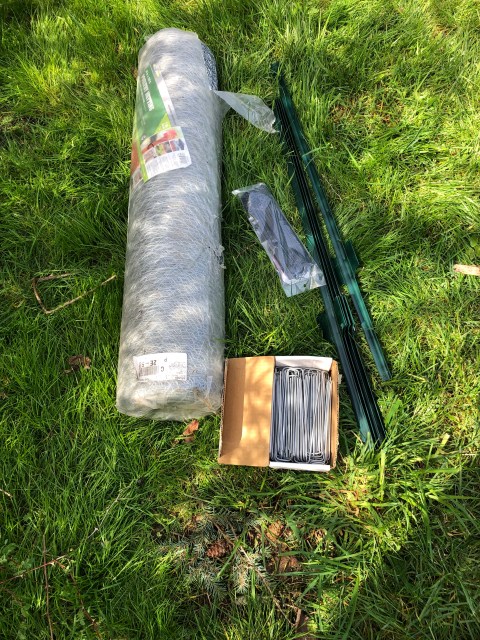
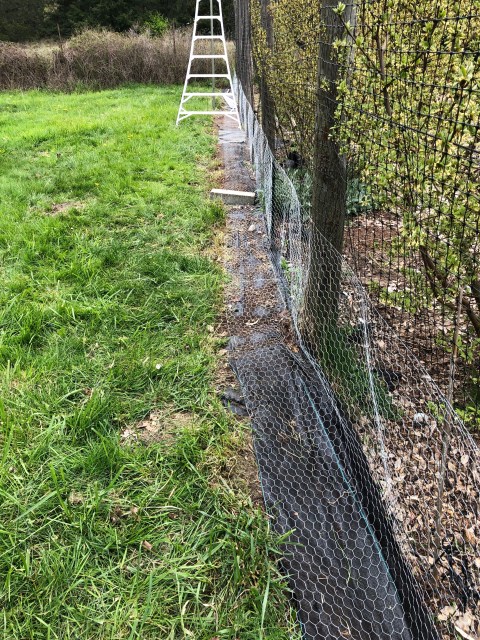
3 ft Chicken wire with 1 inch openings, 3 ft metal stakes, landscape pins and zip ties

August in the Garden

By August the garden is often humming along on autopilot, although sometimes the garden (or more likely the gardener) feels tired by late summer. This year, July only got a bit of rain on the last day. The current forecast for the remainder of August is cooler than normal— great for the cool-season vegetable starts, but not so encouraging for the warm season crops that have just started to pump out vegetables like zucchini, beans and tomatoes.

This is a time to reflect on garden priorities. What thrives in your garden? Do you have an intention or a vision for it? Are you in a phase of expansion or contraction? This changes with how the garden matures and ages along with our own interests and energy levels. Walk around and make notes. Beth Benjamin, one of my favorite garden teachers from when I was an apprentice at Camp Joy, in the Santa Cruz Mountains, always said, “The garden is forgiving. Next year we can try again or change how we garden.”

Garden Chores

Shrubs and Trees: Don’t add any more fertilizer that is high in nitrogen to shrubs and trees. Plants need to harden off before the winter cold settles in. All-purpose natural fertilizer with fertilizer ratios in single digits are okay. Apply the last fertilizer to roses by mid-August. Aged compost is also okay.

Perennials: Continue deadheading, ease up on watering and fertilizing. Consider which large perennials could be divided and moved around to fill in gaps in the garden. Determine which plants are aligned with your watering regime. Plan to move or divide perennials in September or October.

Rockrose: They typical rock rose, Cistus hybridus tops out at 3 ft. But, here in Jefferson County can grow to 5 ft. and sprawl. Older shrubs can be completely renovated. Remove dead branches and then prune with a combination of thinning and heading cuts. Sometimes these plants can be pruned into artistic sculptural forms. Remove splayed and sprawling branches.

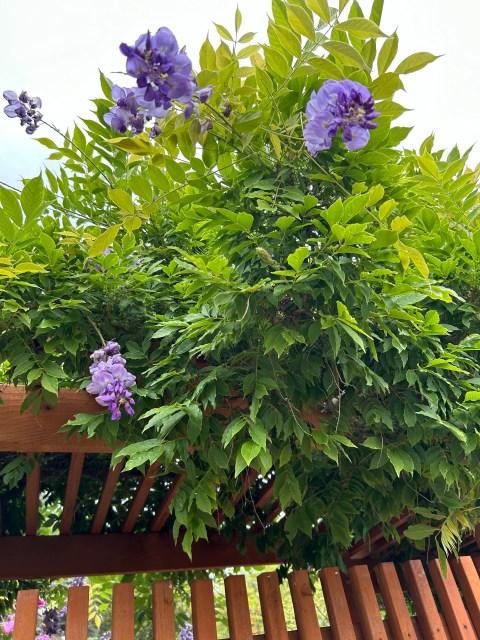
Wisteria: flowers better if pruned regularly. Prune the vine now after flowering and also when the vines are dormant in January/February. Now cut back new growth, leaving five or six leaves on a branch. This will encourage flower buds. In the winter cut back to three buds. These become spurs that will flower next year.

Wisteria was cut back about 2 weeks ago after prolific flowering earlier. Pruning encourages vines to grow flowering spurs

Raspberries: Summer bearing canes (floricanes) that have finished fruiting on the previous seasons wood. Cut these canes to the ground and remove. Any new growth thinner than a pencil should be prune to the ground. Then look at the canes that started this year—primocanes. Select 6-8 canes per plant spaced about  3-4 inches apart. When the plants go dormant in winter cut these canes back to just above top wire. These will produce lateral flowering and fruiting branches next summer.

Fruit Tree late summer pruning: Plum and cherry. Did your trees grow vigorously this summer? If so, prune back branches that pumped out two feet or more new growth. This can reduce next year’s vegetative vigor and encourage fruit buds. But if the tree grew moderately, then wait until winter or even after next year’s flowering before pruning. Poorly executed summer pruning can stunt a tree.

Apples: Sometimes apples get in a cycle of over-producing fruit one year and then the next one the tree is recuperating and has no fruit. Biennial fruit-bearing can happen for numerous reasons. If too many fruit form one year and are not thinned out then the tree doesn’t have the energy to form many flowers the next year. Some  apple varieties  like Honeycrisp and heirloom Brambley Seedling are naturally biennial fruiting. Other trees fall into this pattern through lack of nutrients, irregular watering, or one winter frost destroys the blooms. RHS always has good information. Thinning flowers (once you confirm they are pollinated) is more effective than thinning young fruit. Advanced gardeners can look at the Royal Horticulture Society’s post on summer pruning of apples and pears.

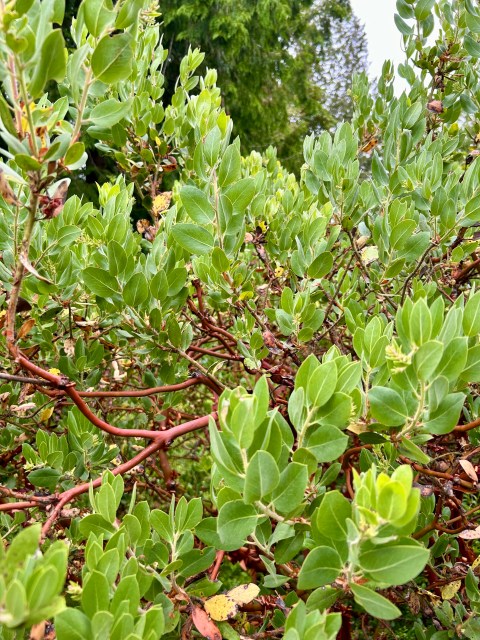
Hairy Manzanita

Arctostaphylos columbiana

This native manzanita is uncommon on the Quimper Peninsula , but I have seen it growing wild on Cape George Road and close to Kala Point. The above photos are of a shrub that Willy Smothers grew at his place on Marrowstone Island. Recently Janet Welch pruned it to highlight the beautiful peeling bark.

The tiny ‘apple-like’ fruits are eaten by birds, small mammals and patient gardeners. It grows in the coastal scrub community and its range is from Sonoma County, California to Vancouver Island. Along with shore pines, manzanita can grow on and stabilize sand dunes. Native specimens can also be found in the understory of open coniferous forests in the Cascades. The critical factor is gravelly soil. The peeling bark is an attractive feature that it shares with its cousin Madrone. However, it is more closely related to our native groundcover kinnikinnick, Arctostaphylos uva-ursi. In fact a hybrid called Arctostaphylos x media is cross between the two.

Care for Manzanita

Manzanita rewards the patient gardener. Select a site with full sun and excellent drainage. It is best to start with plants in one-gallon containers. Water weekly until new growth appears and then taper off. One way to avoid crown rot is to plant it a little bit higher than the existing grade and mulch with woodchips. Don’t mulch with compost. Use drip irrigation because overhead water will encourage fungal disease. Keep it on the lean-side and avoid adding soil amendments. Once established it is completely drought tolerant.

Here is another manzanita, a hybrid, (probably Arctostaphylos x media) used in the landscape of Kathleen Turaski and Peter Hornsby This drought-tolerant garden includes Ceanothus and red hot poker, Kniphofia. They hope to remove the deer fencing once the plants are mature. But realistically, they may need to keep the fence in place—even if deer don’t browse a plant to death, they often step on and break branches of nearby plants.

Oregon State University, Horticulture Dept has many more photos, including pictures of the flowers and fruits. A great new native plant nursery opened in Kingston. Salish Trees Nursery carries hairy manzanita. Their knowledgeable staff will be a great help. Far Reaches Nursery has a superb variety of Arctostaphylos densiflora—Howard Mc Minn.

This hybrid Manzanita is an excellent drought tolerant choice
Manzanita flowering in April

Weeds and our perspective

When I would help Tinker in her garden, often she dug up dandelion plants as if they were precious. The roasted roots made a delicious tea that she savored. Imagine if the plants we detested somehow changed in our mind to become useful resources. So much in life is how we frame something. If we look at a weed and notice a couple insect pollinators insects sipping the nectar, maybe the ‘weed’ isn’t so bad. That doesn’t mean we have to keep the plant. I have had weeds that I once hated and then learned to accept them, even as I removed them.

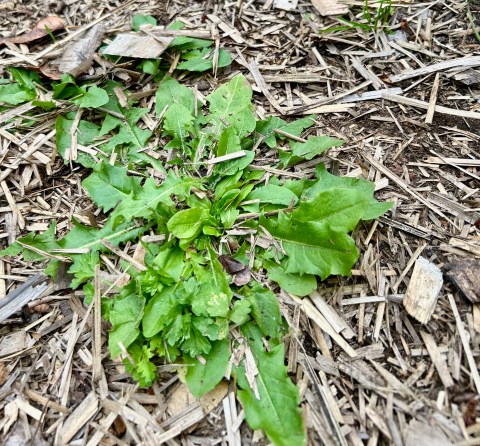
Dandelion, Taraxacum officinale

Gardeners who take the time to identify the plant can be more effective. Knowing a plant lets you determine the best way to control it. Sometimes a weed can be an indicator of environmental conditions: the soil is wet or heavy, or it is very acidic. Some tough weeds will die out if the roots don’t get nutrients from foliage. This requires diligence—regular weed-eating. Small, less-hardy weeds will die from deep mulch that smothers small plants and suppresses weed seeds. Proper ID is key to control.

Weed Identification

Botanical identification begins with a plant’s flower. We can’t rely on the foliage because weeds are by their nature adaptable and have a lot of variety. Vegetative characteristics are malleable. Here’s a short digression: years ago I managed the UCSC agroecology program greenhouse and was responsible for transplanting seedlings. In wood flats full of vegetables or flowers that required pricking out, there would be a number of weed seedlings from the compost. The young weeds could look almost identical to the some of the crops—so much so, that a number of the apprentices I supervised would pot up the weed seedlings! So identify your weed when it is flowering and then start to recognize the plant in all its stages, from young seedling to flowerings going to seed.

I’m old-school and like books. My favorite book for weed identification is Weeds of the West, University of Wyoming Press. Our cooperative Extension had it for sale decades ago. Now it can be downloaded for free from the website or used books can be found online. 900 color photos include the weed at young stages.

Online resources include Hortsense from Washington State University, with 90 fact sheets listed by alphabetical order. University of California, Davis has a useful online weed identification key

Weed Ecology

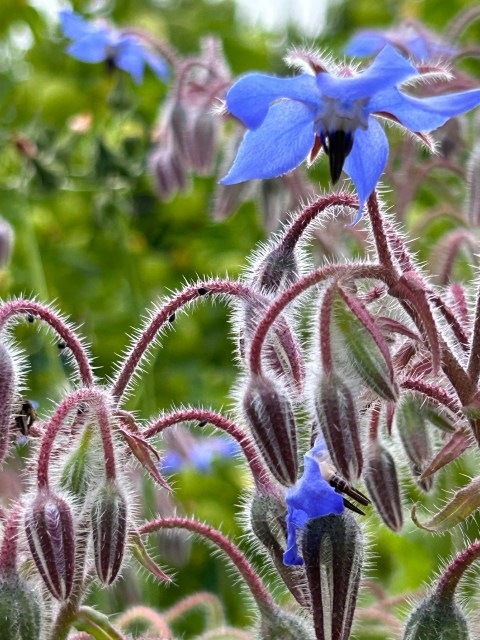
Many weeds are species that have adapted to colonize disturbed sites, such as landslides; after a wildfire has burned off vegetation; along roadsides; or at building sites where excavators have exposed mineral soil. Alan Chadwick, the famous gardener who developed the French-Intensive-Biodynamic method, always said nature abhors a vacuum. That’s why in my garden I sprinkle around borage, red clover, phacelia, or calendula. By regularly weeding out unwanted plants, I have mostly replaced the disturbed areas with annual flowers that are easy to pull and have many benefits. There’s not much room for weeds.

Borage, Borago officinalis

Weeding Techniques

Start weeding early spring, when the ground is still moist and the plants are young. Weed annual gardens regularly. Use lots of mulch around perennials and woody plants. Since weed seeds can remain dormant for decades, it’s important not to let weeds good to seed.

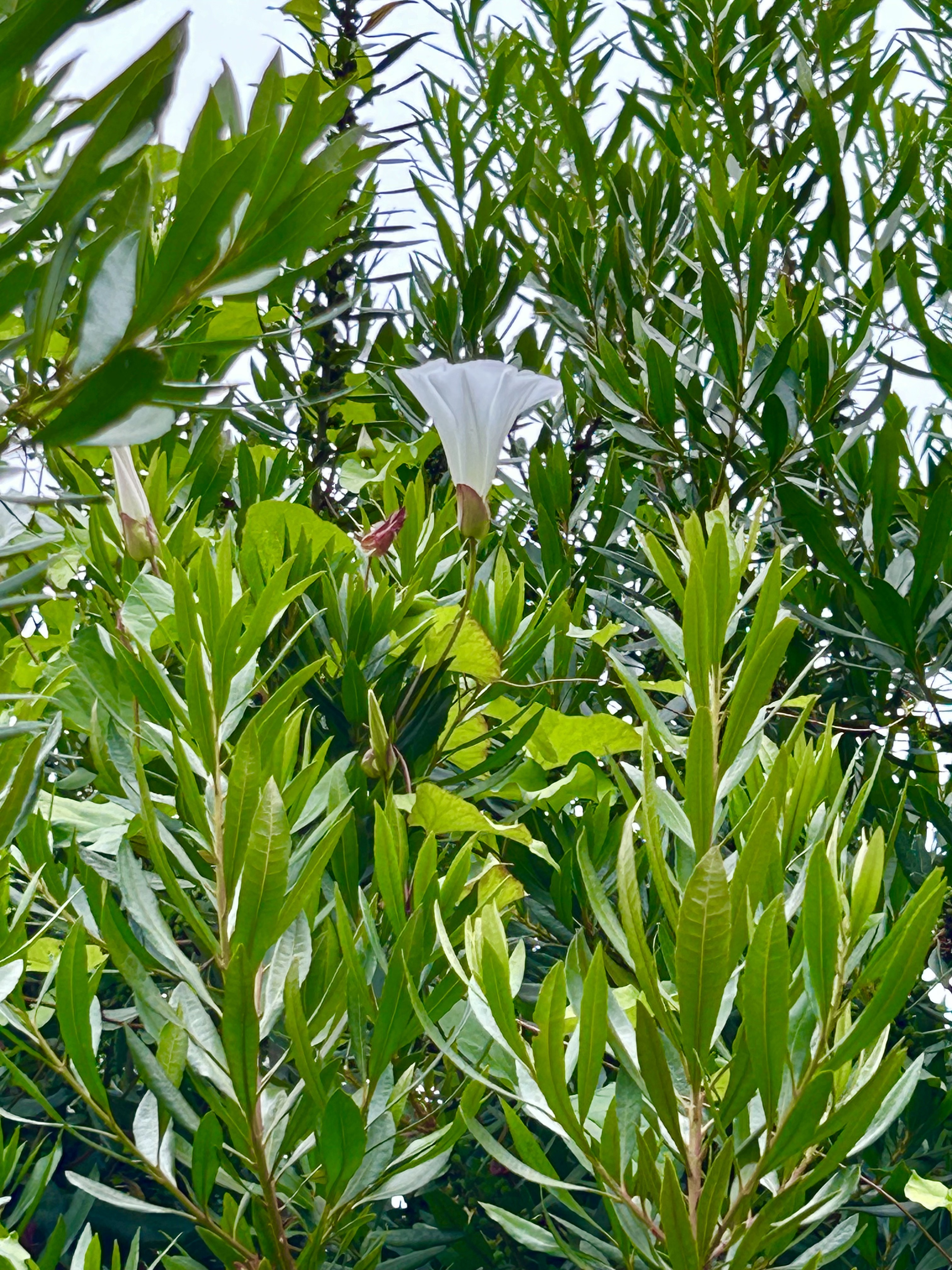
Certain perennial weeds can become one’s nemesis, for example horsetail, bindweed, Canada thistle . If you do nothing else, make sure to cut flower heads before they go to seed, bag them and send to the dump. The county noxious weed board doesn’t want what the state includes as noxious plants in our yard waste. If you cut the flower or seed heads and bag them, then the rest of the material is yard waste and can go to the compost facility. Thick mulch prevents seeds from sprouting. Everyday weeds can go into yard-waste. I have a big pile of plant debris that I will not use as compost, but will let it rot in place. In it I include weeds that have gone to seed but are not listed as noxious.

At one time I added woody plant material to this pile, but now wild roses, native blackberries and branches from hedges and ornamental shrubs go to yard waste. I don’t want excess fuel for potential wild fires.

If you are still using herbicide on weeds in pavement cracks or gravel, please consider a vinegar solution. Horticultural vinegar—at 35% strength is a lot stronger than kitchen vinegar—5% sold at grocery stores, so take more precautions! Wear gloves, glasses and long clothing. Although flame torches are used in agriculture to control weeds ( by boiling the sap, not turning foliage black), when I called our fire dept about using them for weeds in cracks I was informed that we had two wildfires in the county start that way!

For woody plants or deep-rooted perennials, such as Scotch broom, Himalayan blackberry, and poison hemlock, a weed wrench can be used to yank out the entire plant. The county weed board has wrenches they loan out.

A lot of weeds are my friends. I make flower bouquets, or add them to salads. Others are a haven for pollinators. Some are good sources of carbon for my compost piles.