
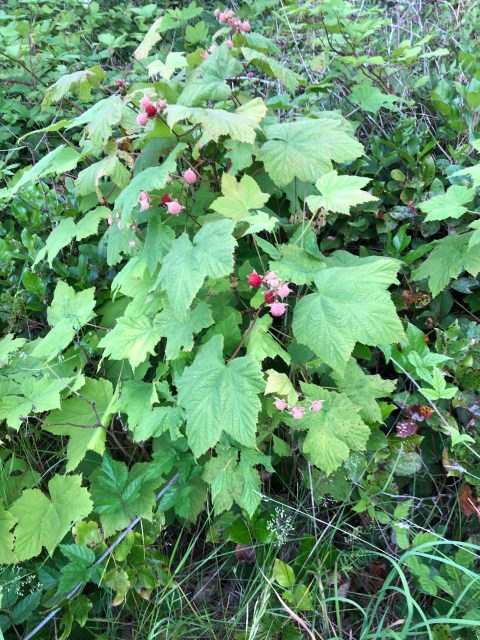
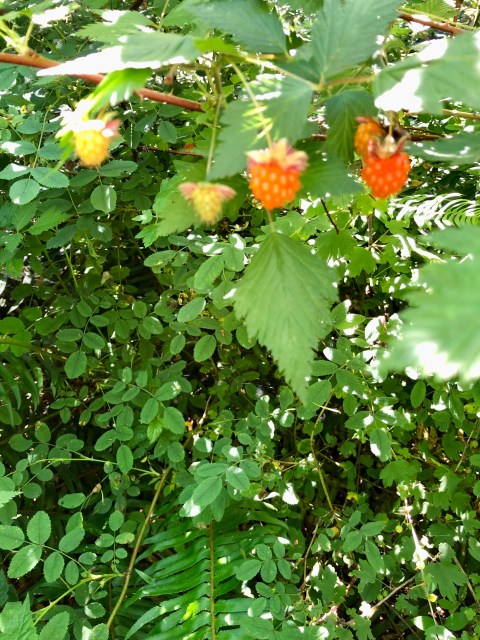
July is the time of wild berries here in the Pacific Northwest. The Rubus clan, best known for raspberry and blackberry also include many other members with edible fruits. Two woody shrubs that are fruiting now are Thimbleberry, Rubus parviflorus, and Salmonberry, R. spectabilis. These two edible berries were staples of native peoples. Around here, harvesting thimbleberries is a summertime pleasure. Children love to place the thimble-like fruit on their fingertips.
On the Quimper Peninsula I have only seen these two Rubus species growing on moist sites, but in some regions wild thimbleberry may occur on drier sites. In Jefferson County the water table is close to the surface in low-lying areas creating wetlands. These plants are also commonly found along stream sides, and can withstand being flooded for short periods of time, thus making these shrubs useful in the rain garden. They can also be part of restoration landscapes. The deer browse the buds and stunt newly planted shrubs. Fencing, caging or spraying deer repellent for a few years is necessary for them to get established. The local deer population has suffered from loss of habitat and loss of predators.
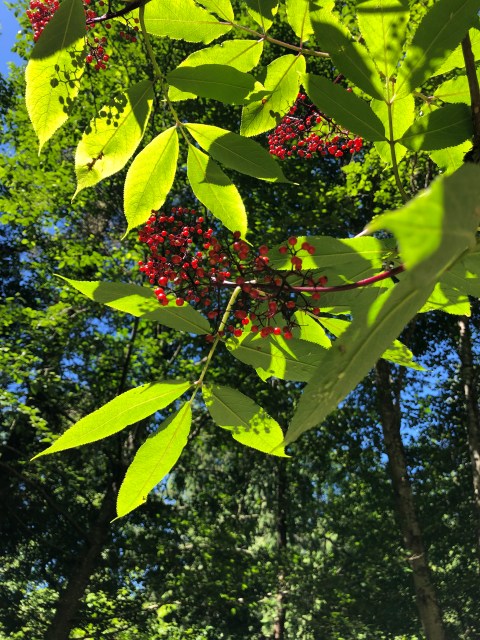
Another coastal native that’s fruiting now is red elderberry, Sambucus racemosa. The white flower cluster of has a pyramidal shape This berry can be edible if cooked, but I have never tasted it. Raw berries can cause nausea. All other parts of the plant are toxic. This plant grows easily in all soils and sun or shade.
(Blue elderberry, Sambucus nigra caerulea has white flower clusters that are flat. It is an edible, medicinal and ornamental plant.)
Other iconic berries will fruit soon including salal and huckleberry, stay tuned!
 Sustainable Garden Design