Tinker Cavallaro—tribute to a dear friend

Tinker had a generosity of spirit that seemed nearly boundless. She always had time for people no matter how busy she was. People frequently dropped by and she took the time to enjoy them. If someone needed help, they were never let down.

Tinker had an abundance of energy and was able to do so much. Her gardens were vibrant and well-kept. She took delight in potting up little volunteer plants and have them on a bench in the garden. She watered and kept them alive and gifted them to gardening friends and acquaintances. I look around my garden and see the angelica, lovage, fig tree, Italian dandelion greens and so many other plants.

I copied so many skillful things she did or had and she never complained that I was a copycat. I so admired one of her marvelously-designed garden gates, that now I have three like it. Over the years I enjoyed helping in her garden (sometimes as a trade for taking her yoga classes.) Although I had made compost piles for decades before working in her garden, I found her free-standing compost windrows to be the most practical for converting large quantities of plant material and manure into compost. She was so deliberate in the construction. Working on shaping the rectangle piles of compost became a meditation or art form. I value that and do it in my garden.

Tinker mentored many young farmers and new market gardeners, advising them on the climate, vegetable varieties and local pests. With her broad scientific knowledge and decades of experience growing a variety of plants, she could clearly communicate what she had learned.

When I think of the ten years I took her Vinyasa yoga class, often twice a week, she never ceased to amaze and inspire me. She would arrive—all smiles—at 7 am after bicycling in the rain. She was a true yogi, with deep respect for the spiritual basis of yoga. We started each class with pranayama breathing and ended with a chant. Each class was different, based on the current need or request of students. She created a supportive, warm community of students.

Knowing Tinker Cavallaro has shaped my life immeasurably for the better!

Matilija Poppy

Romneya coulteri

This beautiful grey-grey foliage plant with fragrant large white poppies does best where it has room to spread. It is both drought tolerant and—knock on wood—deer resistant.

Matilija grows well on the loose soil of landslides. I planted some on a mound about 20 years ago and rarely weed it. After a time, the Nootka rose spread across the mound pushing out the poppy. Not much can hold its own against Nootka rose. (That’s why I only suggest it for creating wildlife hedges where it will be kept in check by mowing or weedeating lawns and fields.) Matilija poppy migrated over to a pile of soil and rotting sod. Last year I had a dump truck load of horse manure delivered near the Matilija planting. Some of the plants were buried in the manure. Instead of suffering, the plant spread throughout what was left of the manure after I moved most of it.

Description

  • Perennial flower growing 3 to 6 feet tall
  • Gray-green foliage
  • 4”-8”  fragrant flowers. Described as fried-egg flower

Growing requirements and care:

  • Full sun
  • Drought-tolerant once established
  • Soil: flexible, needs good drainage
  • Cut back to the ground in late fall

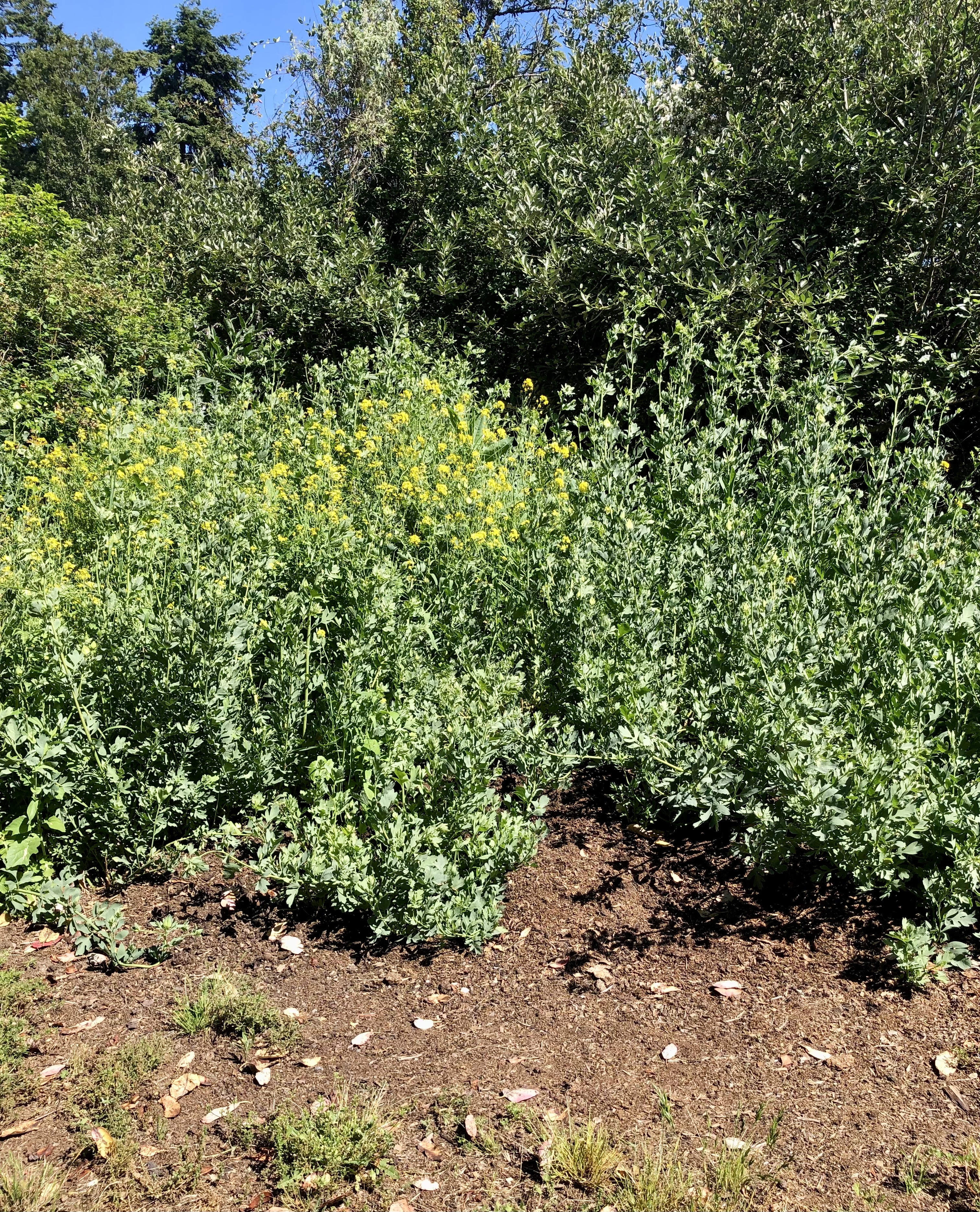
Matilija Poppy spread to adjacent aged-manure pile. Wild mustard’s yellow blossoms in the middle of plants.

The Chumash, an indigenous tribe of central -southern coastal California, values the antimicrobial properties. In fact the name Matilija comes from a Chumash tribal leader. The plant’s alkaloids and other secondary substances make it useful for sensitive gums and preventing plaque. Herbalist Micheal Moore describes Matilija as a good first aid plant: the foliage makes a good external wash for sunburn, and inflammation from allergic reactions. At one time this plant was seriously considered as the state flower of California.

In the landscape, plant this majestic plant with other tall drought-tolerant ornamentals like Miscanthus and cardoon. In the foreground use Russian sage, and red hot poker. Once established these are all deer-resistant.

Native Berry Plants in the Landscape

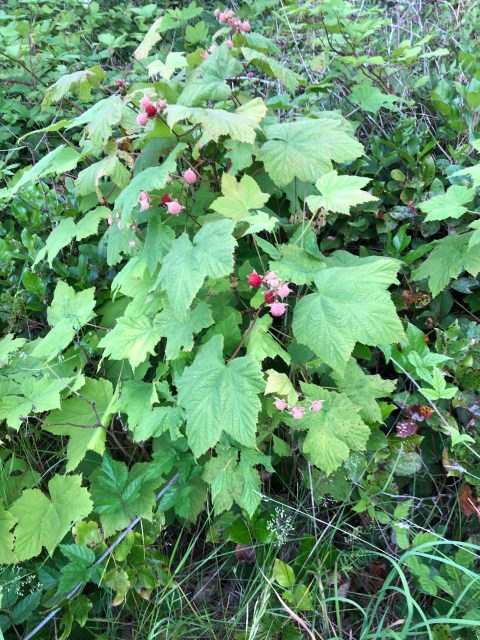
July is the time of wild berries here in the Pacific Northwest. The Rubus clan, best known for raspberry and blackberry also include many other members with edible fruits. Two woody shrubs that are fruiting now are Thimbleberry, Rubus parviflorus, and Salmonberry, R. spectabilis. These two edible berries were staples of native peoples. Around here, harvesting thimbleberries is a summertime pleasure. Children love to place the thimble-like fruit on their fingertips.

On the Quimper Peninsula I have only seen these two Rubus species growing on moist sites, but in some regions wild thimbleberry may occur on drier sites. In Jefferson County the water table is close to the surface in low-lying areas creating wetlands. These plants are also commonly found along stream sides, and can withstand being flooded for short periods of time, thus making these shrubs useful in the rain garden. They can also be part of restoration landscapes. The deer browse the buds and stunt newly planted shrubs. Fencing, caging or spraying deer repellent for a few years is necessary for them to get established. The local deer population has suffered from loss of habitat and loss of predators.

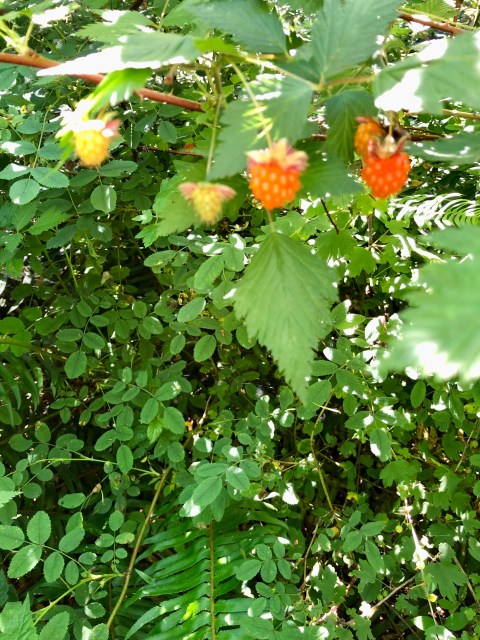
Salmonberry, Rubus spectabilis

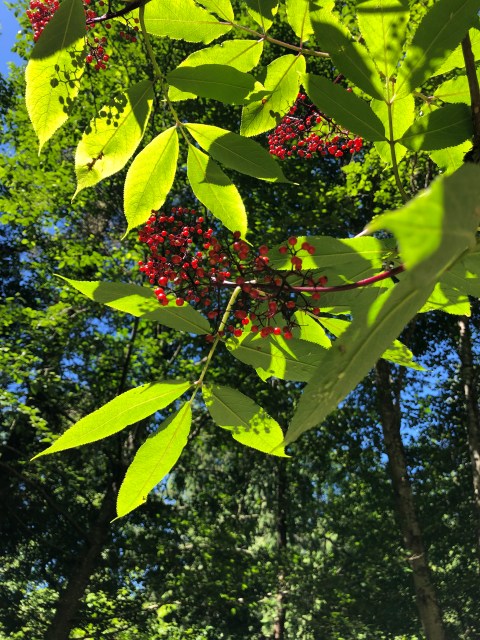
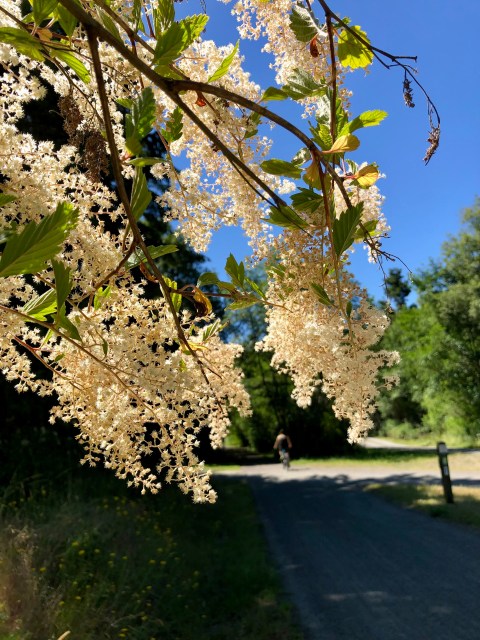
Another coastal native that’s fruiting now is red elderberry, Sambucus racemosa. The white flower cluster of has a pyramidal shape This berry can be edible if cooked, but I have never tasted it. Raw berries can cause nausea. All other parts of the plant are toxic. This plant grows easily in all soils and sun or shade.

Red Elderberry, Sambucus racemosa

(Blue elderberry, Sambucus nigra caerulea has white flower clusters that are flat. It is an edible, medicinal and ornamental plant.)

Other iconic berries will fruit soon including salal and huckleberry, stay tuned!

July in the Garden

Oceanspray, Holodiscus discolor has cascading clusters of tiny cream-colored flowers.

Summertime has arrived on the Olympic Peninsula’s rainshadow! Native shrubs like Oceanspray, Holodiscus discolor and Hardhack, Spirea douglasii are blooming. Others are fruiting: salmonberry, thimbleberry, and red elderberry The garden is filling out with lush greens, and warm-season crops are starting to develop and mature. Just yesterday I saw a garter snake with a big black slug in its mouth.

Edible Garden

Winter garden: Select beds that have finished producing and replenish with compost. Rotating crops prevents diseases from building in the soil.

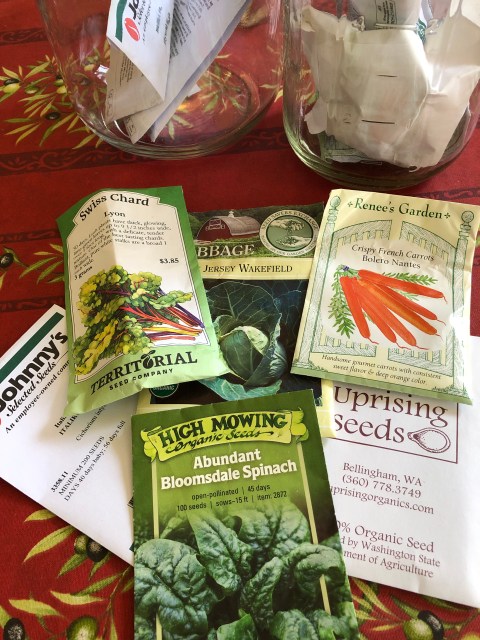
Time to direct sow brassicas and greens, beets and carrots. Varieties: Purple sprouting broccoli, Lacinato and Red Russian Kale, Early Jersey Wakefield cabbage, Winter Density lettuce, Abundant Bloomsdale spinach, Bolero carrots.

Make sure to leave room for your garlic crop that can be planted in November.

Tomatoes: Remove suckers and continue staking.

Weeding: Make a quick pass once a week to eliminate weeds. Some weeds can be companion plants, however they also compete for nutrients, water and light.

Curing garlic: Harvest garlic bulbs when 4-5 leaves are still green, taking care not to damage them. Over-watering or leaving them in the ground too long causes the bulbs to split or become prone to disease. Fresh garlic is fragile. Clean the garlic by gently pulling down the top leaf and removing it from the bulb. ( If the leaf has signs of rust, be sure to throw away the skins instead of composting to prevent spreading the spores.) Brush soil from roots.Drying in a well-ventilated place takes a couple of weeks. Check the stems and when no green remains inside, they are safe and should store well.

Strawberries: Renovate June-bearing varieties (not the everbearing, day-neutral ones). Cut to 2-3 inches. Mowing can accomplish this. Cut out and remove weak and crowded plants. Fertilize with a balanced natural blend like Down To Earth.

Flowers: Save seed from annuals and biennials including: nasturtium, bachelor buttons, foxglove, calendula and bread-seed poppies, cosmos. Dry them in a cool dark place and label the envelope with plant, and date.

Landscape

Time to review the garden. If some plants didn’t make it after the last couple of years of climate ups and downs, maybe replacing part of the landscape with natives could be on your horizon. If you have lots of space maybe it’s time to consider planting a hedgerow that will help slow the wind or screen the road.

Bulbs: Order bulbs  in the next few weeks to plant in the fall. This is especially true if you want to plant some more unusual bulbs. When they arrive check the bulbs to ensure there is no disease or damaged bulbs. Store them in a cool dark place until you are ready to plant. I often order from Johnny Scheepers. Another company, that is good and local is RoozenGaarde.

Irrigation: Determine which plants need extra care and keep their roots growing. Many established shrubs won’t need any water until August, but in the first couple of years a plant will develop nicely and be healthier if it is watered regularly. If plants look weak or diseased, give them a boast with compost and liquid seaweed fertilizer.

Lawns: Port Townsend homeowners have long had an unspoken agreement that green lawns are not a requirement for a beautiful landscape. A well-kept yard is often mowed until mid-July and then the grass goes dormant and the hawkweed or dandelions provide food for pollinators. When the autumn rains return, our lawns green-up again. At that time, spread dolomite lime. This provides calcium and magnesium as well as making the soil less acidic and more inviting for grass. In fact, many people prefer not to have lawns. But if grass is already there, allow it to go dormant.