Tinker had a generosity of spirit that seemed nearly boundless. She always had time for people no matter how busy she was. People frequently dropped by and she took the time to enjoy them. If someone needed help, they were never let down.
Tinker had an abundance of energy and was able to do so much. Her gardens were vibrant and well-kept. She took delight in potting up little volunteer plants and have them on a bench in the garden. She watered and kept them alive and gifted them to gardening friends and acquaintances. I look around my garden and see the angelica, lovage, fig tree, Italian dandelion greens and so many other plants.
I copied so many skillful things she did or had and she never complained that I was a copycat. I so admired one of her marvelously-designed garden gates, that now I have three like it. Over the years I enjoyed helping in her garden (sometimes as a trade for taking her yoga classes.) Although I had made compost piles for decades before working in her garden, I found her free-standing compost windrows to be the most practical for converting large quantities of plant material and manure into compost. She was so deliberate in the construction. Working on shaping the rectangle piles of compost became a meditation or art form. I value that and do it in my garden.
Tinker mentored many young farmers and new market gardeners, advising them on the climate, vegetable varieties and local pests. With her broad scientific knowledge and decades of experience growing a variety of plants, she could clearly communicate what she had learned.
When I think of the ten years I took her Vinyasa yoga class, often twice a week, she never ceased to amaze and inspire me. She would arrive—all smiles—at 7 am after bicycling in the rain. She was a true yogi, with deep respect for the spiritual basis of yoga. We started each class with pranayama breathing and ended with a chant. Each class was different, based on the current need or request of students. She created a supportive, warm community of students.
Knowing Tinker Cavallaro has shaped my life immeasurably for the better!
Sometimes called ‘living mulch’, there are many reasons to choose groundcovers, from covering challenging slopes; to reducing garden maintenance and water consumption; to simply knitting together the landscape. They offer excellent solutions to landscape challenges but groundcovers are not maintenance-free.
Woody Groundcovers
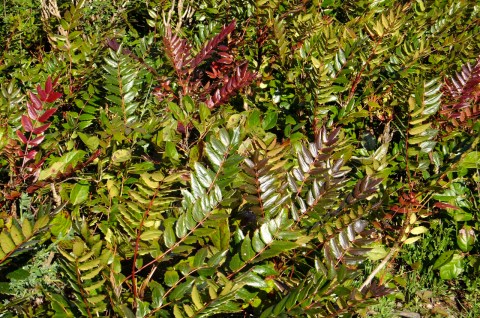
A popular native woody plant is Kinnikinnick, Arctostaphylos uva ursi. Another is Cascade mahonia, Mahonia nervosa. Other standard choices are Taiwan Bramble, Rubuscalycinoides and Pt. Reyes Ceanothus, C. gloriosus.
Emerald Carpet or Creeping Taiwan Bramble, a drought-tolerant plant
As these plants get established they need regular weeding, especially to prevent perennial weeds from getting a foothold. Fertilizing with compost or dry organic blends encourages the plants to grow. Mulching with woodchips or arborist chips reduces the need for watering. Cover bare ground with 2-3 inches of mulch, but don’t bury the crowns (where stem meets root) or go back after and brush mulch away from the crown. The very fastest groundcovers, especially those planted closer than the recommended spacing will not need much additional mulch. But slower groundcovers like Kinnikinnick or bearberry cotoneaster (C. dammeri ) will need more mulch in about three years.
For woody groundcovers to look their best, prune once or twice a year. Prune back leggy stems to make denser coverage. (The principle is the same as tip-pruning house plants or perennials. It works by removing the plant hormone or auxin in the stem’s tip that maintains apical dominance.) Also, if your goal is a carpet effect, prune out vertical branches.
Herbaceous Groundcovers
These plants are not as tough as woody plants. If the foliage forms dense mats often this shades the soil and prevents weed seeds from germinating.
The smaller the foliage the more work to keep out grass and tiny weeds. If your garden is on a city lot then tiny foliage can work, just plant smaller groupings. There was a time when many people planted chamomile or woolly thyme as small lawns, however they require regular weeding. If you plant lots of annual flowers that readily reseed themselves, herbaceous groundcovers with tiny foliage will take much more work to maintain because they will easily harbor germinating seedlings.
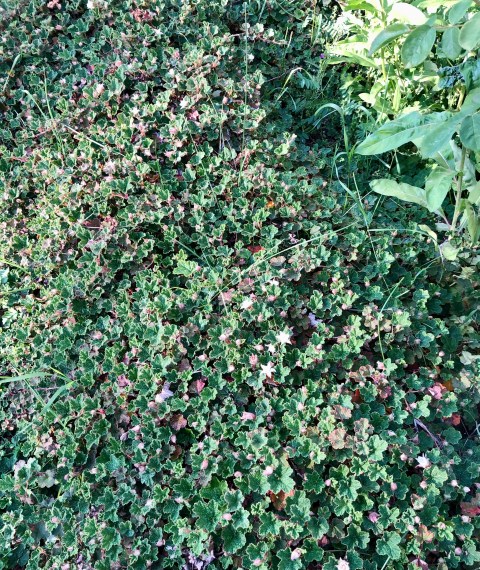
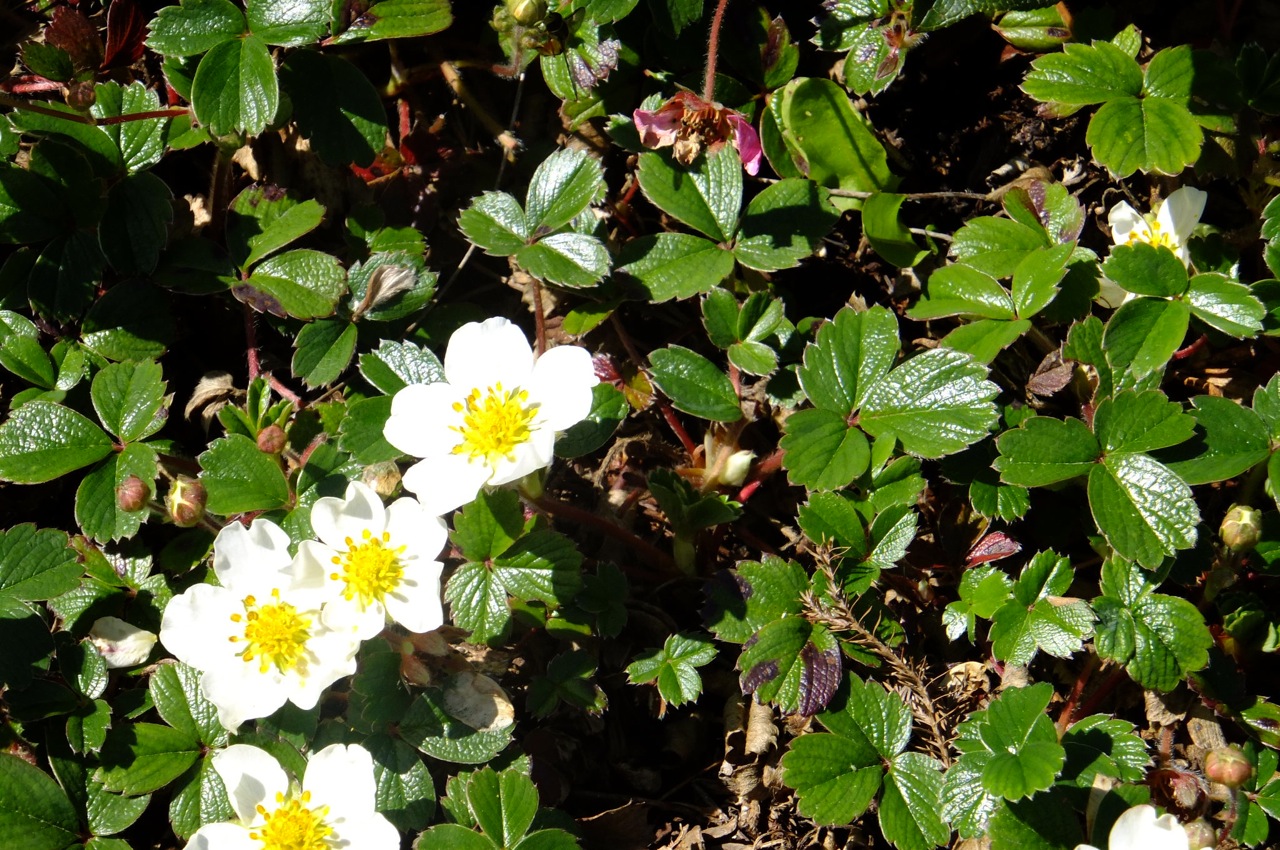
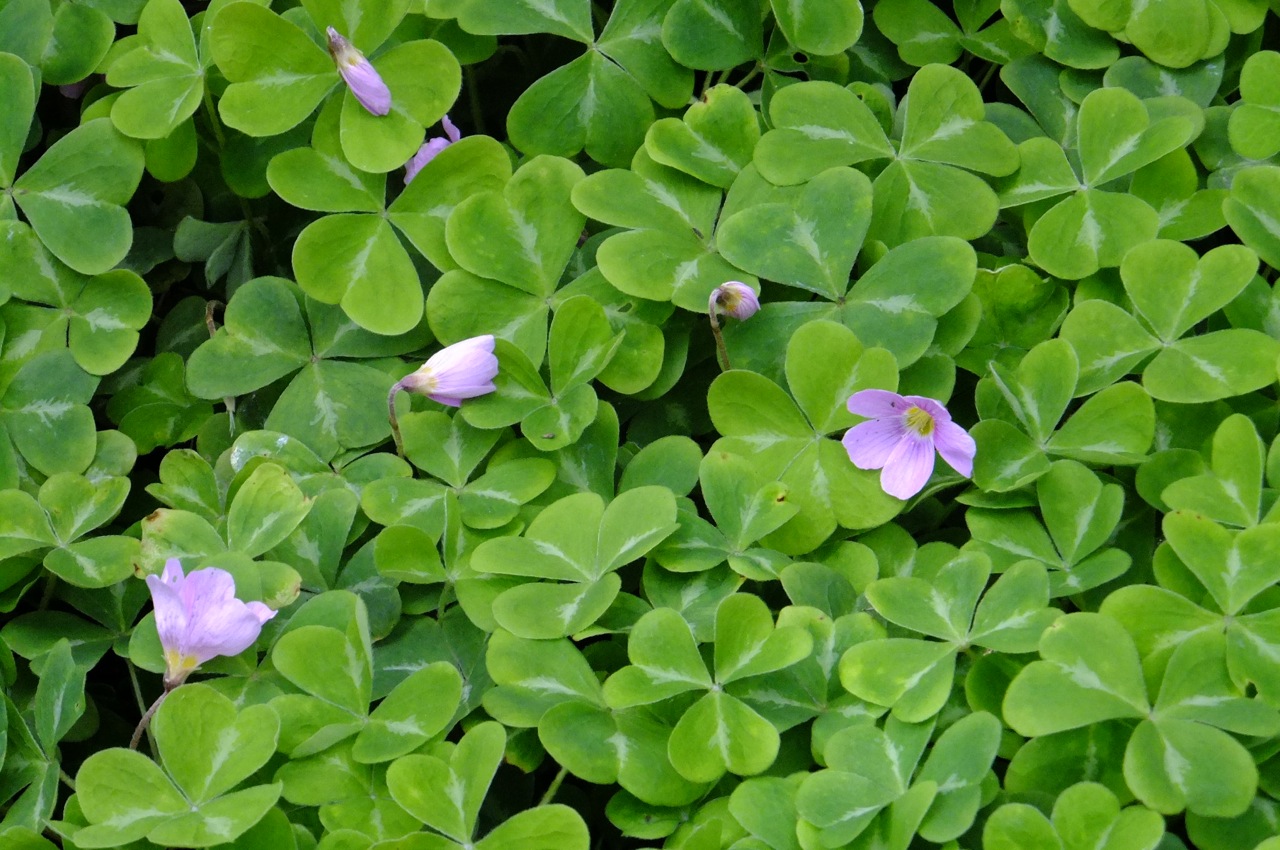
Natives include evergreen coastal strawberry Fargeria chiloensis, inside-out flower, Vancouveria hexandra and redwood sorrel, Oxalis oregana, and stonecrop, Sedum spathufolium. Non-native groundcovers include many Epimediums, and Geraniums. A low maintenance herbaceous groundcover for shade is hardy geranium or Geranium macrorrhizum, especially the magenta pink ‘Bevan’s Variety’ makes a dense mat of foliage that is deer-resistant. It does require a little water during dry summers.
Plants don’t have to form low carpets to be a groundcover. Distinctive foliage is a good reason to mass plants together. Under conifers the western sword fern is attractive. Larger perennials like Corsican Hellebore, Helleborus argutifolius make a bold statement. Pools of ornamental grasses offer ribbons of texture that can ripple in the wind.
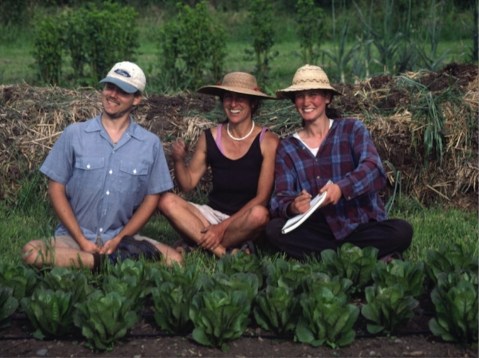
Tinker with apprentices at Abundant Life Garden 1990’s
Tinker was an advocate of living lightly on the Earth by conserving resources and living a joyful life of volunteer simplicity. This post is for local farmers who may not know her legacy and want to continue this important work.
Along with Judy Alexander, Tinker spearheaded the Dryland Farming Project, exploring the limits of what staples can be grown locally with little inputs, especially without irrigation. “We need to research ways that we can locally and sustainably grow staple crops such as grains, legumes, and seed crops.”
Today we have a vibrant farming community and many people share Tinker’s passion. Organic Seed Alliance develops seeds that grow organically with less inputs. Finn River is growing wheat and many others are working together toward a sustainable farming future.
Garden soil acts as a bank account, holding available water.” Tinker Cavallaro gave a presentation based on the Dryland Farming Project ten years ago at the Quimper Grange. Tinker discussed her presentation with me beforehand and I wrote up the handouts. These are some of the notes:
Understanding our climate and the site’s soil properties is the foundation for making smart choices in garden irrigation.Rainfall quantities vary across the Quimper Peninsula. Close to the mountains, Quilcene gets much more rain. Port Townsend is located in the rainshadow of the Olympics, a unique area with less rainfall than most of Puget Sound. The rainshadow of the North Olympics extends from Sequim to the San Juan Islands.
“As crops grow they make heavy withdrawals from the garden soil bank account.” We will investigate more about soil properties but here are some basic tips:
Practices and techniques
Develop the habit of checking the soil for moisture
Use drip irrigation or low-volume sprinklers
Use water-filled containers with holes placed next to larger plants
Foliar spray or fertigation with liquid fertilizer known as ‘tea’ made of water and organic matter such as compost, manure, seaweed or nettle
Raised beds hold moisture better than rows do
Plant seeds and transplants deeper than normal in the soil
Crops that do well with no extra water
Early Spring Crops
Peas
Greens: mustard, arugula & early lettuce
Kale, cabbage, early broccoli & radish
Direct-sown early carrots & beets that are heavily thinned
Grains
Potatoes
Late Spring-Sown Crops
Field corn
Amaranth, quinoa
Winter squash
Dry beans including field peas, garbanzos, lentils & fava beans
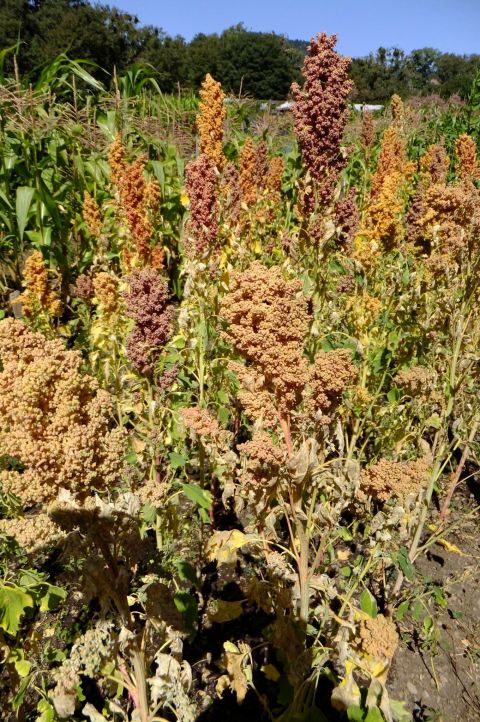
Quinoa trials at Ecology Action in Willits, CA
Crops that require summer irrigation
Celery & celeriac
Napa cabbage and summer brassicas
Summer lettuce & spinach
Onions if you expect sizable bulbs
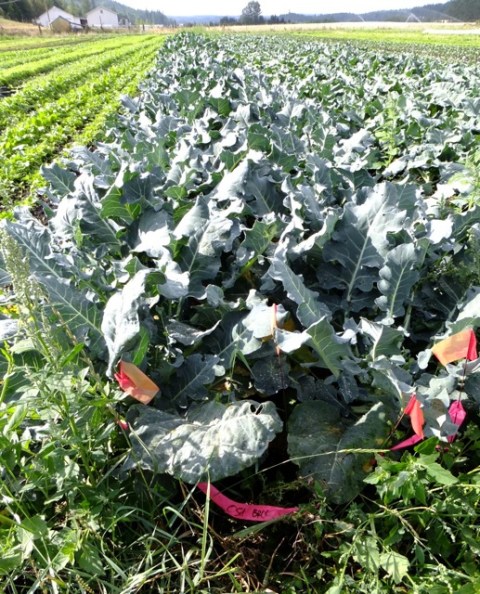
NOVIC Broccoli Field Trials at Red Dog Farm, Chimacum Washington
Understanding the Soil’s Capacity
Our rainy season, extending from fall through winter, provides enough water to bring our soils to field capacity, or the ability for the soil to hold all the moisture possible. Summer rains, on the other hand, are usually insignificant. In our windy location the little rain that falls often evaporates.
As plants grow they make heavy ‘withdrawals’ from the garden soil bank account. Hot sun and wind cause plants to transpire moisture. The roots of plants pull soil moisture from the soil, up through the plant and out the surface of leaves. Foliage gives clues as to the plants ability to conserve water or use it freely. Drought-tolerant plants from dry climates tend to have small leaves or grey foliage. Magnification reveals tiny hairs that shade the leaf surface. The lush foliage of leafy green vegetables on the other hand can withdraw much water if not properly managed.
How plants utilize water
Plant roots, in a symbiotic relationship with soil microbes form a region known as the rhizosphere, the active site for water and nutrient uptake. Plant enzymes dissolve insoluble starches and oils that are required for plant energy and change them into water-soluble sugars. Roots draw moisture from the soil to their ultimate lateral spread and depth. The size of a plant’s roots indicates drought tolerance.
Healthy soil includes air and water. This water can move upward through the soil by a process known as capillary action. Water is drawn up in a wicking action through the gaps between soil particles. Soil texture determines the soil’s capacity to hold moisture. Sand holds one inch of water per foot of soil. Sandy loam (soil with a bit of silt and clay) can retain 2 inches of water per foot; clay soil retains 3 inches of water per foot. The point is that clayey soil holds three times as much water as sandy soil. If the capillary action is not strong enough then the gravitational pull will sink water deeper into the soil.
Cohesion describes when water is attracted to water and adhesion describes when water is attracted to other materials. When irrigation or rain moistens the ground, soil particles act almost as magnets and water adheres to them. Like a wet sponge, the ground is holding as much water as possible. Water is highly cohesive so gravity will pull water deeper into the soil. This happens when the water cannot adhere to the surface of the soil. If the soil structure has enough pores and humus that acts like glue, more water can be utilized. Root systems have to be able to penetrate the soil, become more extensive, and grow deeper to utilize the soil water.
Plants are much healthier if they can aggressively seek new water in soils unoccupied by roots and grow deeper and wider. Not only will vigorous plants be capable of withstanding drought and wind, they will also create more flavors and sugars.
( For more information on this important topic see Steve Solomon’s Growing Vegetables West of the Cascades, Ch 5)



 Sustainable Garden Design