
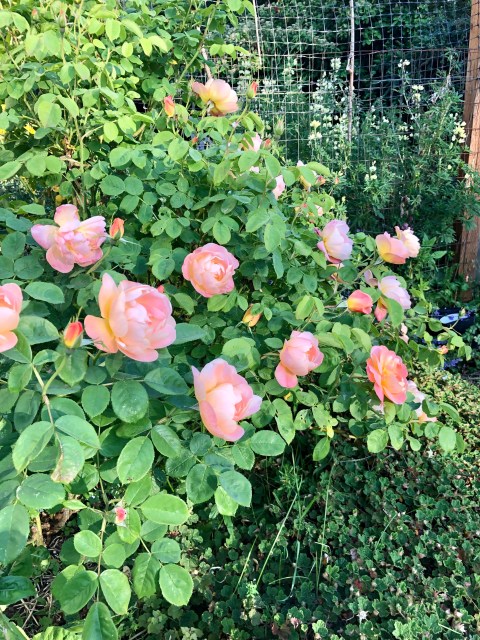
The garden is a riot of blooms bursting with color. Let’s take a look at English garden roses, one of my favorite. Goumi, the earliest fruit in my garden has a sweet-tart flavor that I love to nibble. The garden is alive with bird songs! Robins in the garden are fun to watch as adults seek out worms and their fledglings beg for food.
By now in the vegetable garden, the cool season crops are producing and warm season crops are in the ground. Before the month is out we will be preparing for the winter garden.
Edibles
Tomatoes: Begin training indeterminate tomatoes. Train a couple of main stems. When new shoots form between the main stems and a leaf, pinch out these suckers. There will be less fruit but they will ripen sooner. Remove some foliage if it is excessive but leave some to protect the fruits from sun-scald.
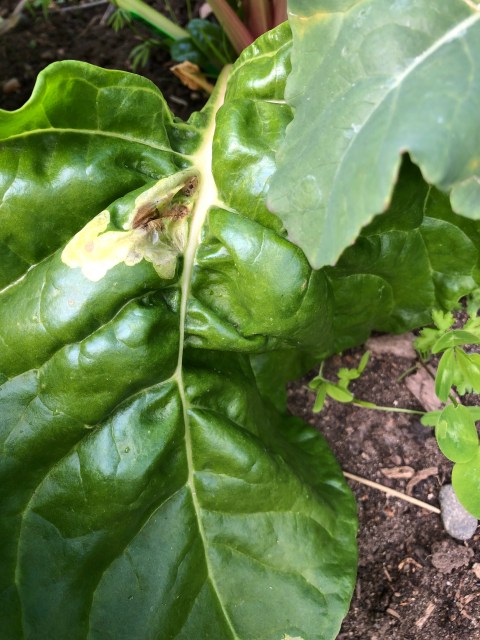
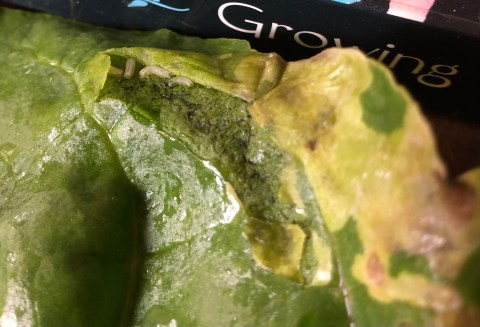
Vegetable Pests: Watch for signs of leaf miners on spinach, beets and Swiss chard. The larvae form tunnels between the layers of leaves that look like yellow trails and pockets. As the fly larvae metabolize the plant they deposit black frass. Hand pick the leaves and trash them. Don’t place them in compost!
Garlic: Harvest scapes ( curvy shoots with flowering head) Stop watering when leaves start to turn yellow. Harvest when only 4 leaves are still green, or the bottom 1/3 of foliage is yellow. For longer storage, cure (dry) garlic with the tops and roots for several weeks, allowing nutrients into the bulb. Cut tops and roots leaving as much skins to protect garlic bulbs.Prevent the spread of garlic rust fungus by starting with certified disease-free bulbs, rotate crops and use a mulch of arborist chips to prevent rust from establishing in soil.
Asparagus: Mature fronds can get top heavy and fall, sometimes snapping at the base. For attractive plants in an edible landscape stake individual plants or prop up with bamboo. For asparagus in rows place a metal t post at each end and run jute twine between the posts. To keep the plants together weave the string between plants. In the fall when the shoots die to the ground, the jute can go into the compost along with the dead asparagus.
Fruit Trees: Thin fruit, and watch for signs of fungal disease that spreads by splashing water. Use neem oil spray or sulfur powder. Look for and destroy tent caterpillars. Patrol for slugs and snails.
Winter vegetable garden It can be confusing to newbie gardeners that just as the summer solstice arrives, we begin sowing seeds for winter harvest! Sow brassicas including winter cabbage, kale, and purple sprouting broccoli. from mid- to late June. If you miss this window, buy vegetable starts at the coop next month. Purple sprouting broccoli is the most successful winter broccoli with its small and numerous shoots. Early July is time to sow the following: carrots, beets, Swiss chard, kohlrabi and radicchio. (Crops for late fall harvest grows through the autumn equinox and then growth slows almost to a standstill.)
Ornamental Plants
Deadhead Rhododendron. By gently snapping off the flower cluster, seeds won’t form, instead we allow the shrub’s energy to be directed into growing foliage and starting next year’s flower buds.
Perennial Flowers: Some late summer and fall- blooming perennials, pinch back now for sturdier and shorter stems. Remove the top 1/3 of the following plant Asters, mums, beebalm (Monarda), and Joe-Pye weed.
Fungal diseases are exacerbated by rain. Powdery mildew is not one disease but a symptom.Caused by different fungal diseases, the symptom is white circular patterns with a powdery texture, becomes gray or brown over time. The disease is more than cosmetic; it inhibits photosynthesis. It can overwinter in buds and also on dropped infected foliage on the ground. Humid weather and crowded conditions that cause stagnant air encourages fungal growth. Neem oil or sulfur can be effective when used at first signs. Safer brand Fungicide is another option.
Winter Injury: By now many plants have recovered from the winter. Evergreen shrubs that dropped foliage are now leafing out. Old stands of red-hot-poker that completely died to the ground with many rhizomes turning to mush are now leafing out. All these plants require monitoring, removing dead wood and watering during dry spells.


 Sustainable Garden Design