
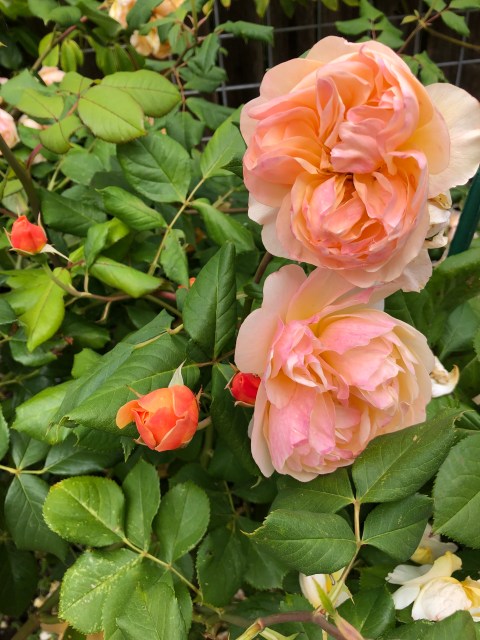
This post focuses on modern shrub roses bred by David Austin, a premiere rose breeder who introduced over 190 cultivars in his lifetime. Known as English Roses, these plants are crosses of old garden roses with modern hybrids. ‘Old Garden Roses’ originated before the 18th century. Examples of OGR include Gallicas, Albas, Bourbons, and Damask. Unfortunately, these incredibly fragrant roses only bloom for a couple of weeks once a year.
Modern roses include hybrid tea, polyantha, and floribunda, shrubs and climbers. Most modern roses are repeat bloomers in six-to-eight week cycles. Many of the hybrid roses are prone to disease and require a stringent spray regime to keep them healthy. Modern shrub roses have been bred from old fashioned roses with the added features of disease resistance, repeat blooming and a wider range of colors. These roses have a more natural form of arching canes with many flowers whereas hybrid teas and floribundas have a stiffer form. Long-stemmed florist rose are usually hybrid tea.
English shrub roses come in all different forms from peony-like full blooms to simple single petal flowers. Other shrub roses include all the rugosa roses, wild roses like our native Nootka rose and many others. I don’t have time here to do these roses justice!
Cultivating Roses
Provide good drainage and fertile soil with plenty of compost. Six hours of full sunlight will allow the roses to flower fully. Water weekly at the base of the shrub. Mulch to conserve moisture.
Deadheading is the term for removing spent flowers. Removing the first flush of blooms not only encourages more blooms but also helps to shape the shrub into a graceful form. I use Felcos #2, but any by-pass clippers work well. Sharpen the blade and then and sanitize it with hydrogen peroxide or alcohol. Always clean before starting to prevent the spread of disease. If you note disease where you need to prune, wipe the blade frequently. Removing the spent flowers prevents the development of rosehips and seed formation. Resist the urge to prune immediately below the spent flower; this results in dieback, stubby dead stems. Pruning at a leaf with 3-leaflets results in dog-legs—many spindly short stems. Instead, look for a thicker stem and make the cut just above a leaf with five leaflets. This encourages robust flowers on longer stems, perfect for cut flowers.
Even though English shrub roses are disease-resistant, they can still suffer from black spot. This fungal disease spreads by splashing water. Irrigate at the base of the plant and handpick diseased leaves and dispose of them. Make sure their is plenty of air circulation. If you need to spray, Safer brand has a fungicide. In the autumn rake and destroy all fallen leaves. If autumn is not getting gradually colder with light frosts, monitor the rose. If it continues to flower into October, stop deadheading and allow rose hips to form; the enzymes and hormones might trigger a dormancy response. By early December, strip the leaves to force the rose into dormancy. If we suddenly get slammed with an arctic blast, it is better for the plant to be dormant. Pruning is best done in February—something for another post.
Learn more about these roses with a free download from David Austin Roses: English rose handbook
 Sustainable Garden Design