
Romneya coulteri

This beautiful grey-grey foliage plant with fragrant large white poppies does best where it has room to spread. It is both drought tolerant and—knock on wood—deer resistant.
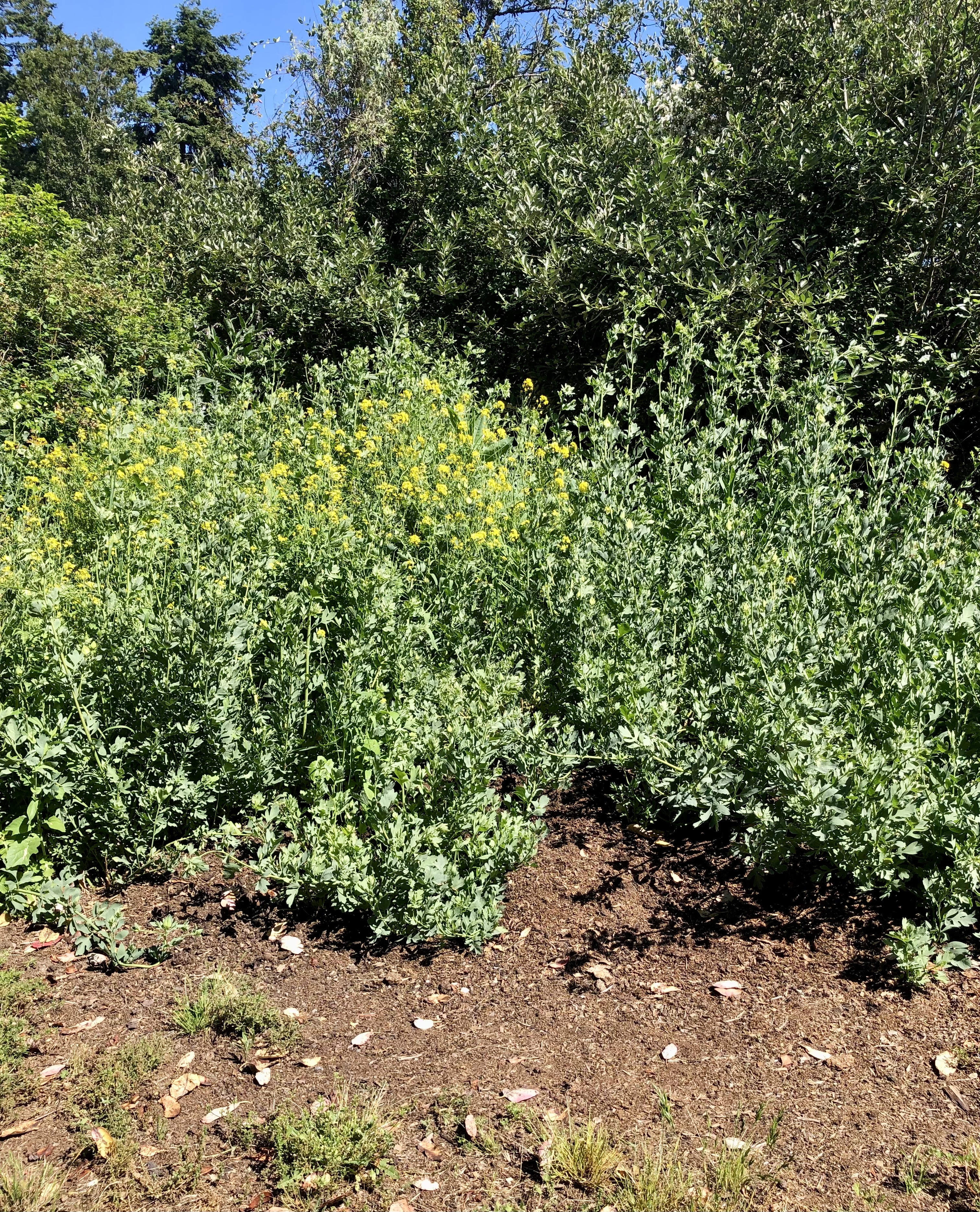
Matilija grows well on the loose soil of landslides. I planted some on a mound about 20 years ago and rarely weed it. After a time, the Nootka rose spread across the mound pushing out the poppy. Not much can hold its own against Nootka rose. (That’s why I only suggest it for creating wildlife hedges where it will be kept in check by mowing or weedeating lawns and fields.) Matilija poppy migrated over to a pile of soil and rotting sod. Last year I had a dump truck load of horse manure delivered near the Matilija planting. Some of the plants were buried in the manure. Instead of suffering, the plant spread throughout what was left of the manure after I moved most of it.
Description
- Perennial flower growing 3 to 6 feet tall
- Gray-green foliage
- 4”-8” fragrant flowers. Described as fried-egg flower
Growing requirements and care:
- Full sun
- Drought-tolerant once established
- Soil: flexible, needs good drainage
- Cut back to the ground in late fall

Matilija Poppy spread to adjacent aged-manure pile. Wild mustard’s yellow blossoms in the middle of plants.
The Chumash, an indigenous tribe of central -southern coastal California, values the antimicrobial properties. In fact the name Matilija comes from a Chumash tribal leader. The plant’s alkaloids and other secondary substances make it useful for sensitive gums and preventing plaque. Herbalist Micheal Moore describes Matilija as a good first aid plant: the foliage makes a good external wash for sunburn, and inflammation from allergic reactions. At one time this plant was seriously considered as the state flower of California.
In the landscape, plant this majestic plant with other tall drought-tolerant ornamentals like Miscanthus and cardoon. In the foreground use Russian sage, and red hot poker. Once established these are all deer-resistant.

 Sustainable Garden Design