Making Mezcal in Oaxaca

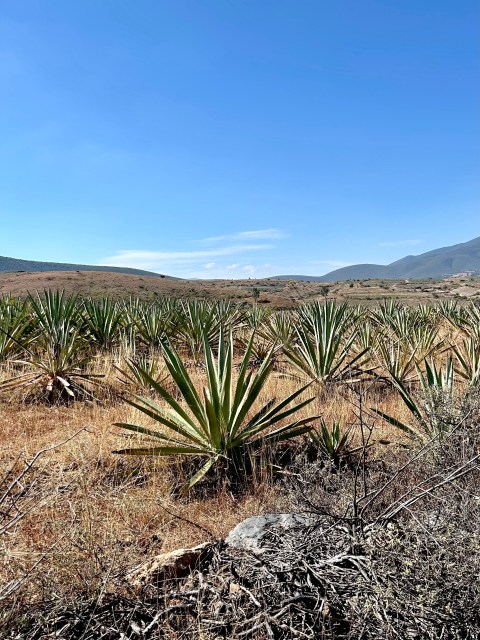
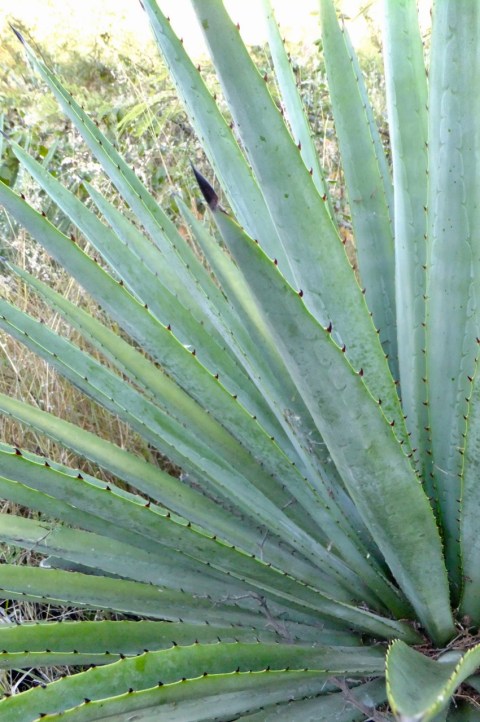
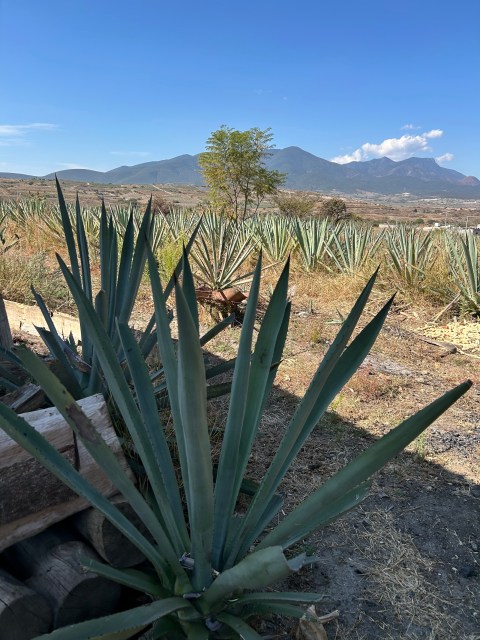
Espadin agave

Last week I visited a small, artisanal palenque in Santiago Matatlán that has been a family operation for many generations. I had the opportunity to visit because my Spanish tutor in Teotitlan del Valle knew them. In fact, they supply her family’s store and had invited her to come tour their operation. Matatlán is referred to as the Mezcal Capital del Mundo because over one hundred small-scale producers grow and make mezcal.
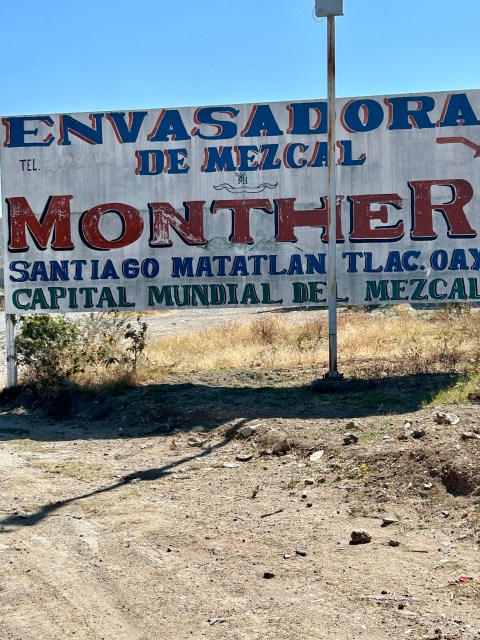
Sign on the roadside claiming Matlan as the Mezcal Capital

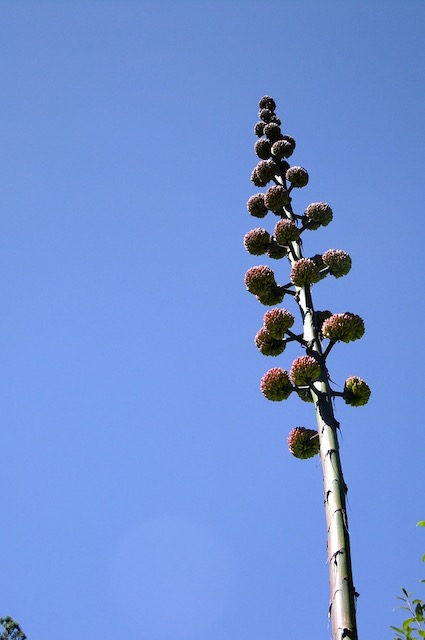
Nereo explained that agaves, in nature only flower after many years. Once enough sugars and juices are concentrated in the heart of the plant, it sends up a tall shoot adorned with flowers. After seeds mature, the entire plant dies. In cultivation, the agave or maguey is harvested right before flowering.

Harvesting
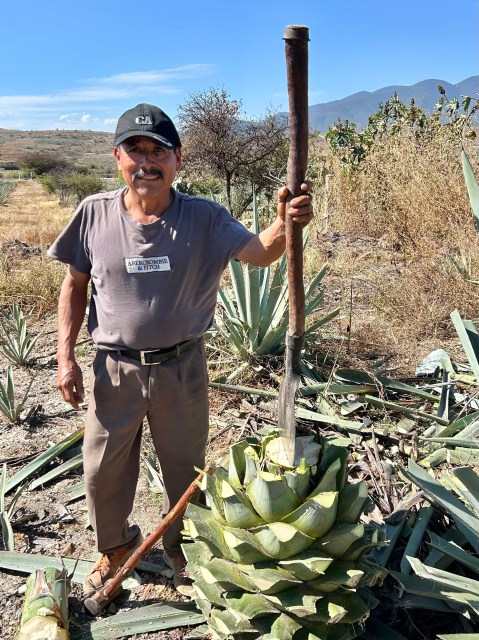
Mezcaleros  want the sweet juices at the core of the plant so they walk the rows to select agave plants with an emerging flowering stalk or quiote. Harvesting the plant is done by hand—leaves are chopped off with a machete, leaving the core or the piña—called that because it looks like a pineapple.

Nereo’s grandson harvesting Espadin plants.
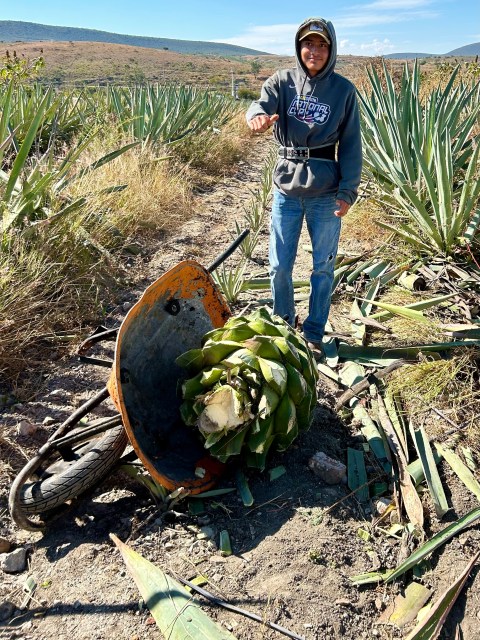
It takes 6-15 kg of piña and 10 liters of water to distill 1 liter of mezcal
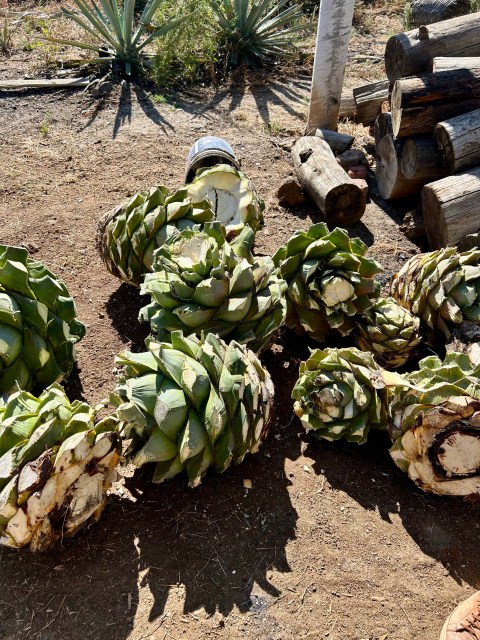
Espadin piña
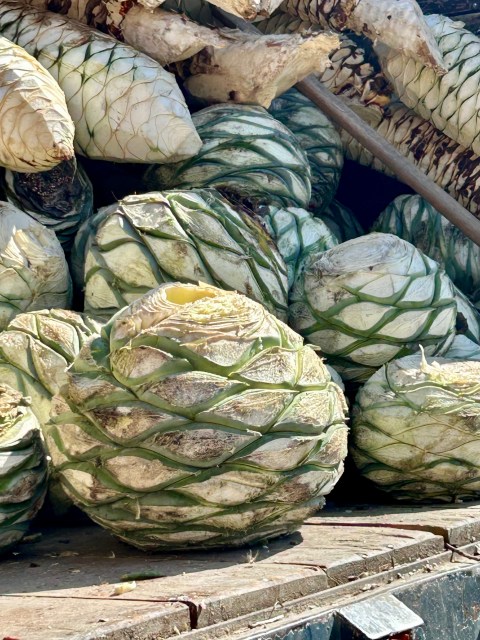
Tobala piña delivered by truck from the wild.

Roasting

Once they have enough piñas, the mescaleros start the roasting procedure. Unfortunately, I have not watched this process, but I think a fire is started in the pit with oak or mesquite, then covered with volcanic rocks that turn bright red. Next the piñas are placed in a heap and covered with agave foliage or burlap sacks. Volcanic rocks absorb more smoke so the roasting agave aquire less smoke flavor. Apparently in different regions a slight smoke flavor is valued and other rocks are used. Nereo said that a smokey flavor is undesirable. The roasting process is monitored for 3-5 days.
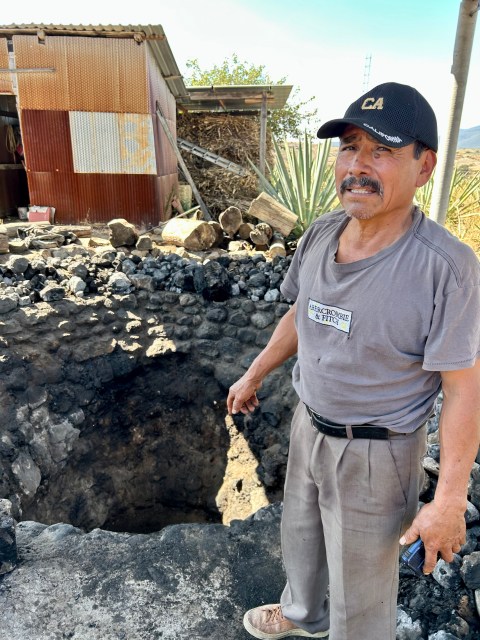
Mashing piñas

When the piñas are removed, they are brown, caramelized, sweet and stringy. (Since Nereo didn’t have a current batch, the below photo is from Don Agave’s pulque, located across the highway from Teotitlan del Valle.)
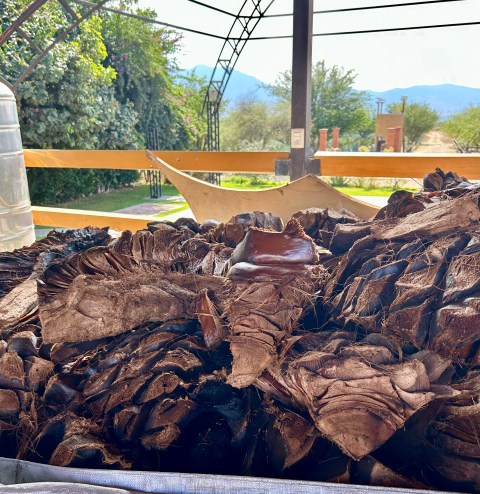
The roasted piñas are then mashed in the traditional stone mill pulled by a single horse.
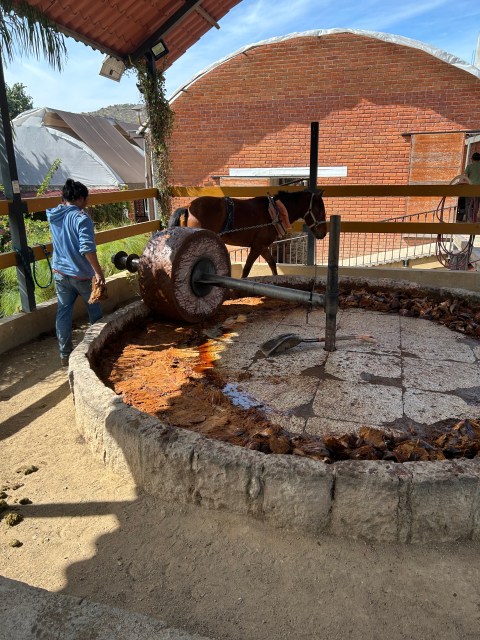
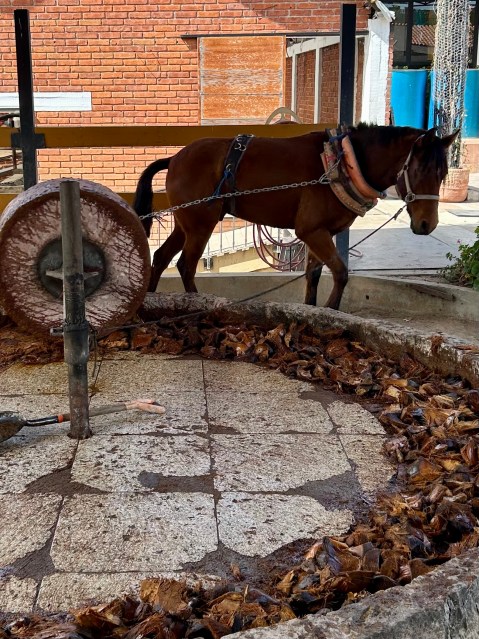
Horse pulls stone mill to mash roasted maguey

Fermentation

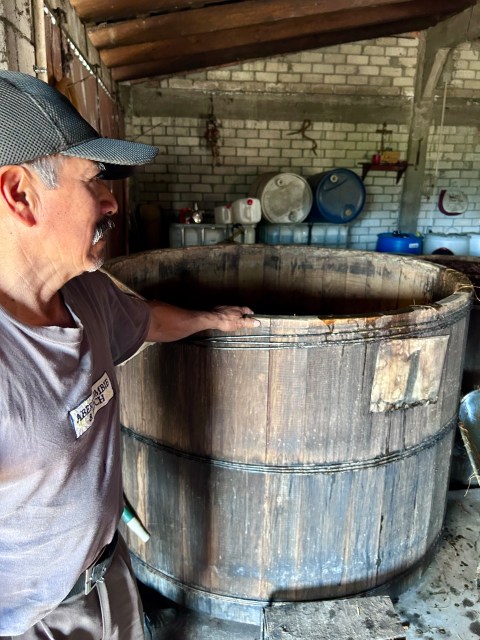
The maguey mash is forked out, carted to oak tanks, where water is added and it’s allowed to ferment for two weeks. Over the years, these tanks acquire natural yeast residue that assists with the conversion of agave sugars and juice into alcohol.

Distillation

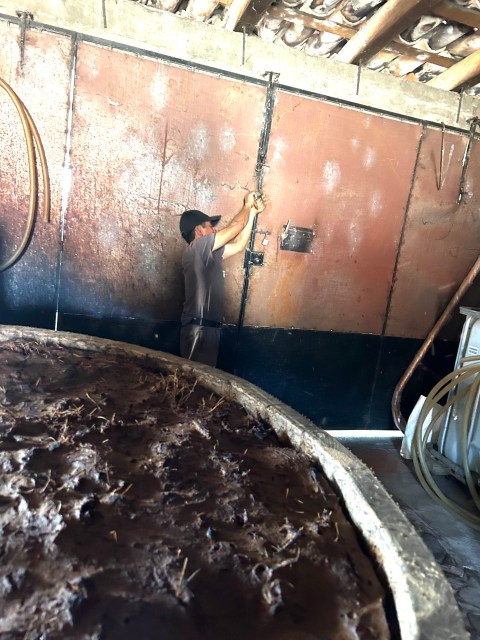
The fermented liquid is poured into a traditional still consisting of masonry ovens, copper tubes, clay pots heated from below by a wood fire. Water cools the pipes causing the alcohol vapor to condense back to liquid. the flowing water absorbs heat. A constant stream of water through the condenser ensures efficient cooling.
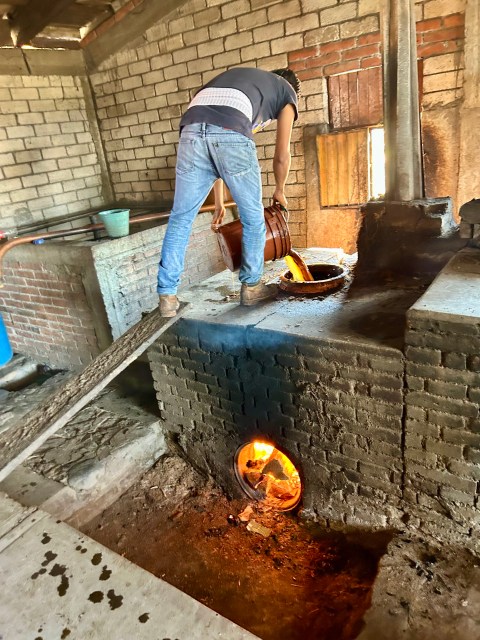
Nereo’s other grandson pouring the fermented liquid into the still, to begin distillation.
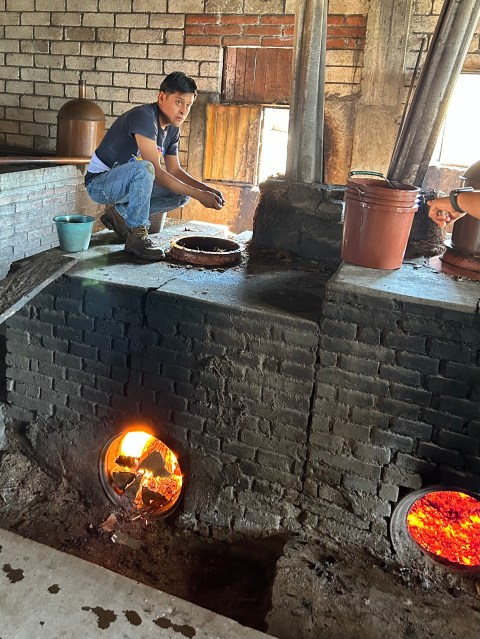
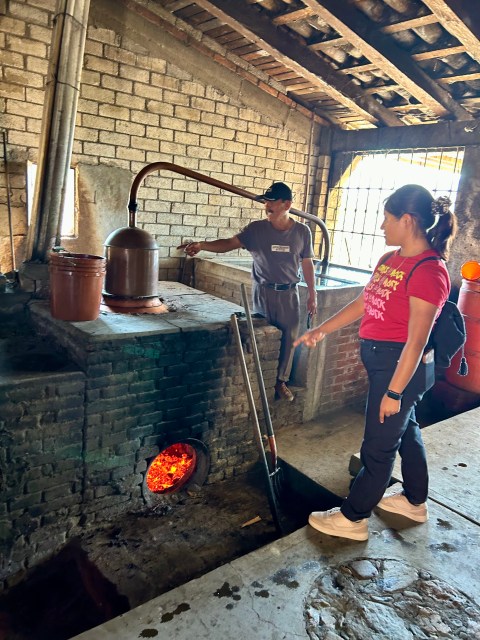
Angelica Mendoza asking about the distillation process.

Water cools the pipes causing the alcohol vapor to condense back to liquid. The flowing water absorbs heat. A constant stream of water through the condenser ensures efficient cooling.
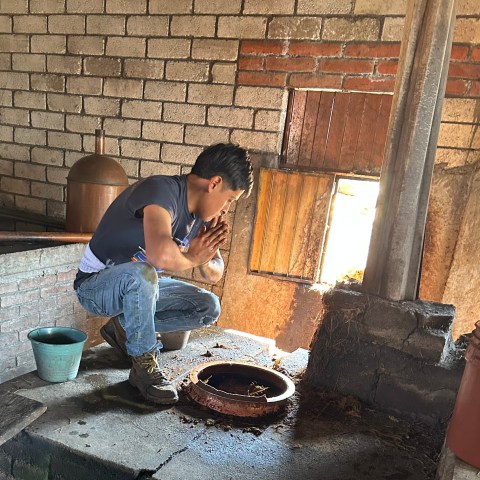
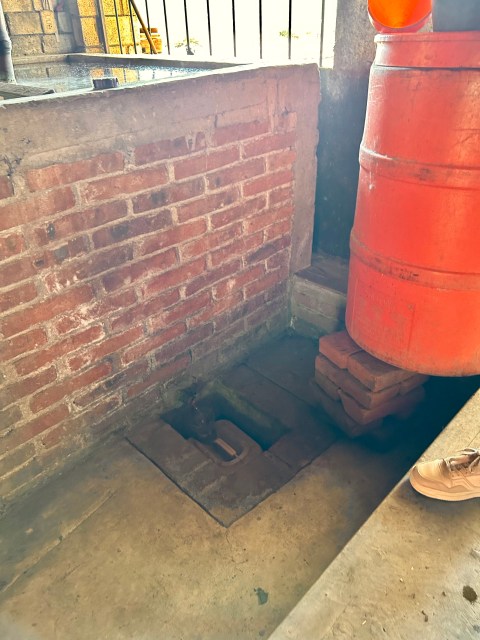
The alcohol emerges from below the last brick tank. The spigot at the base is just barely visible.
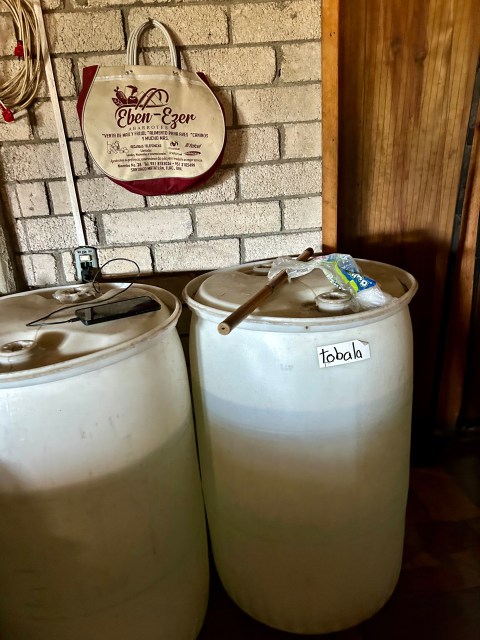
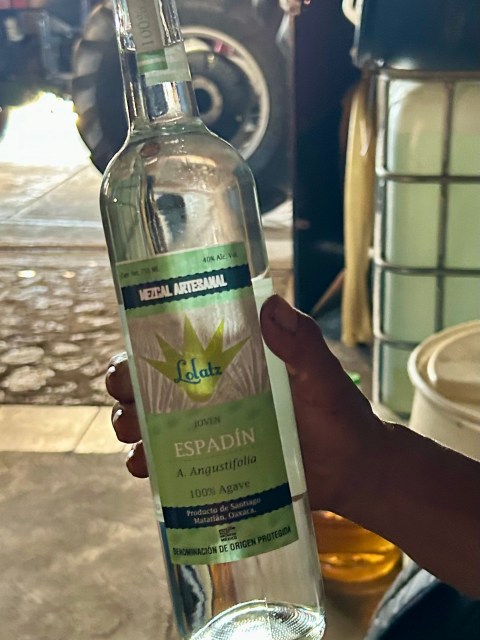
We enjoyed sampling the joven mezcal!

Cultivating Agave for Mezcal

Some types of agave reproduce asexally, making cultivation easier and more uniform. Either small hijuelos (sons) form vegetatively at the base of a mature plant, or bulbils form instead of flowers and seeds. (This latter formation also occurs in many garden plants including garlic and chives.)

Other species are used in traditional mezcal production, but are difficult to grow. Traditionally they have been collected from the wild, but as the demand for mezcal keeps increasing, wild populations are shrinking, and growers are attempting to cultivate other species.

Tobala agave

Tobalá Agave potatorum, is one I particularly enjoy. The flavor is full-bodied, a complex of notes hinting at floral and spicy. The Tobalá plant is much smaller than Espadín:, requiring up to to eight piñas to equal one of the latter. Combine that with the fact that Tobala rarely produces bublils or pups, so it must be grown from seed. Luis Mendez in Solga Vega Oaxaca is now cultivating the plants to preserve the wild population from over-harvest. A nursery in Santa Catarina Minas is also selling seedlings.

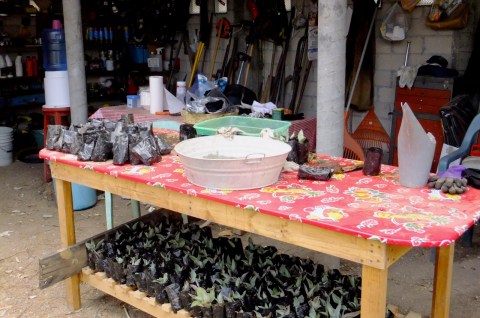
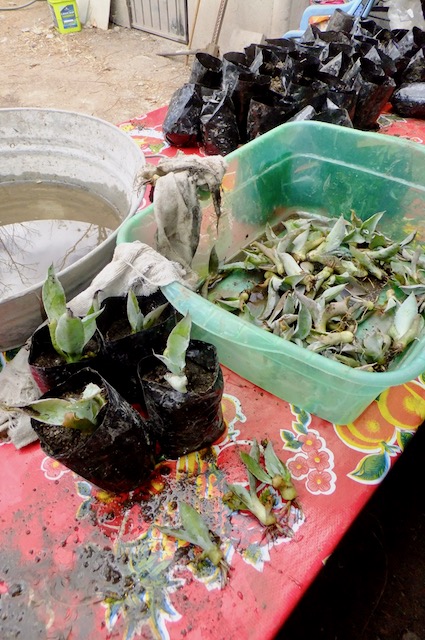
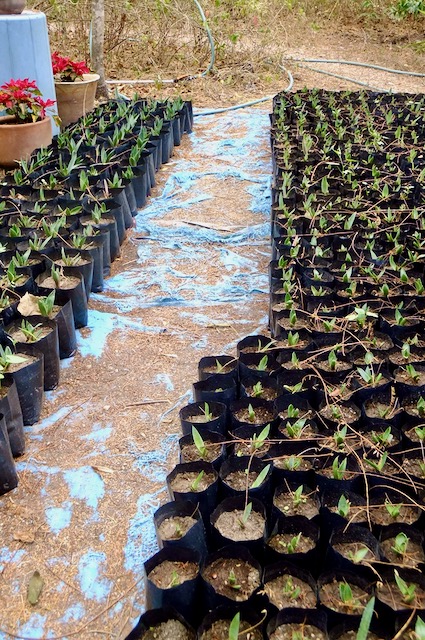
In January 2020 I helped pot up Tobalá plants for Tony Raab at Casa Raab, San Pablo Etla, Oaxaca.

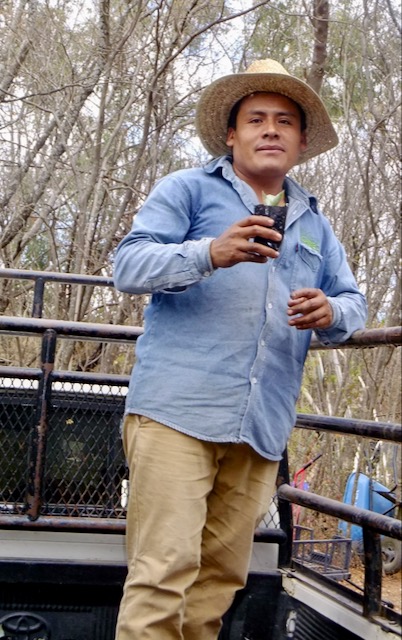
One of Tony’s workers, Rodregio.

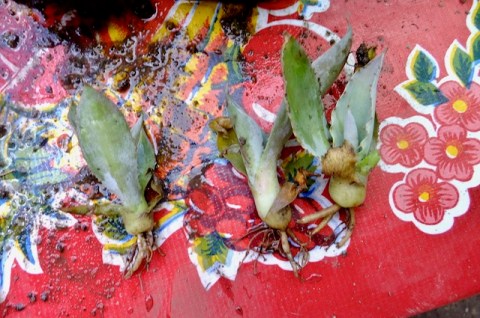
Tobala seedlings

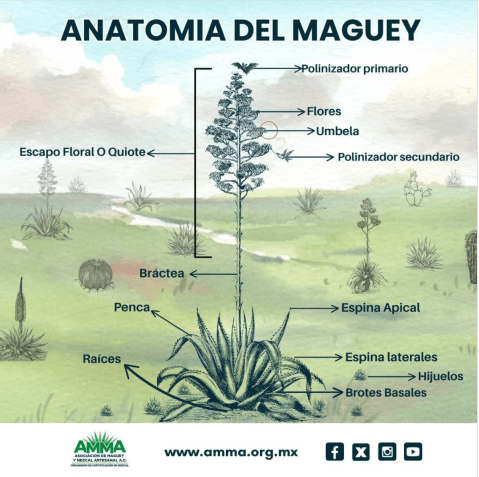
AMMA published this diagram of agave anatomy.

In my search for information on sustainable maguey preservation and cultivation, I came across this post Mescalistas: Can wild agave be successfully grown? In the future I hope to visit more maguey plantations.

Mexican Agave

Mexico is rich in biodiversity, and Oaxaca is the state with the most diversity. Agaves are richly represented here with 200 species and often grow in tropical deciduous forests or deserts. Most agave plants only flower once and then they die. Archeological sites around the country show signs of agave for medicine, food, and textiles including ropes and nets.

Maguey is the name for any number of agave species that are used for making mezcal. Although I have a passing interest in the alcoholic beverage, I am fascinated by the ethnobotany of maguey.

Oaxaca is the epicenter of mezcal that draws travelers and connoisseurs from around the world. Forty-two kinds of maguey can be made into distilled alcohol, and proponents of sustainable mezcal production want to see more Mexican species planted and used. Two agave species dominate the market and grow as monocrops, A.tequiliana and A. angustifolia var.oaxacaencis. (Tequila, the distilled beverage of Agave tequilana can only bear that name if it comes from the northern region of the state of Jalisco, where it is commercially grown and produced on an industrial scale in the town of Tequila.) In Oaxaca the number one plant is Espadin, or Agave angustifolia, cultivated because it matures uniformly in about 6-8 years.

Espadin, Agave angustifolia var. oaxacensis

Drive along Hwy 190 through the Tlacolula Valley to see field after field of narrow-leaved Espadin. Milpas that once flourished with maiz and squash for local consumption are now monocrops of Espadin. Commercial brands like Mezcal Benevà produce mezcal on an industrial scale and require larger fields. It matures uniformly in about 6-8 years. There are many common names for espadin including: arroqueño, coyote, cenizo, and dua-bzog, a Zapoteco name. While the species Agave americana grows throughout Mexico and even as far north as Texas in the US (where it goes by the common name century plant.) The variety A. americana oaxacensis is endemic to Oaxaca and Puebla.

Maguey for Pulque

Other maguey used in mezcal include a couple of large, dramatic plants that are significant in making a traditional fermented drink called pulque. This historic fermented product is still drunk today and is considered healthy. It is an acquired taste, being both sour and viscous!

Tepextate, Tepestate, Agave marmorata

Photo from the gardens of Don Agave in Teotitlan del Valle.

Green agave, or pulque agave, Agave salmiana,

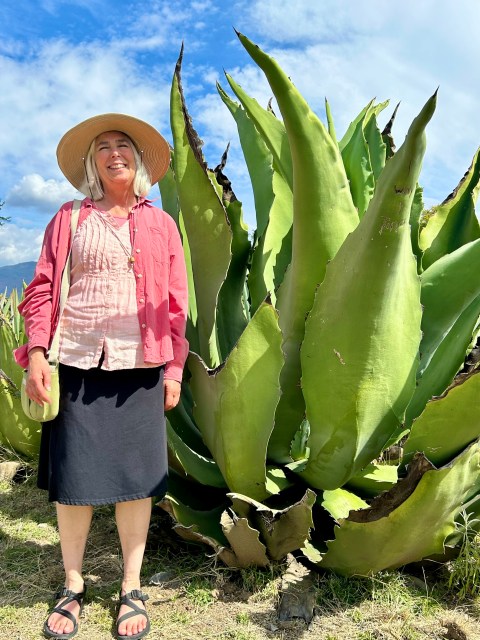
This giant is used in mezcal production. It is also a popular ornamental found around the world in Mediterranean gardens.

Maguey verde grande, Agave atrovirens

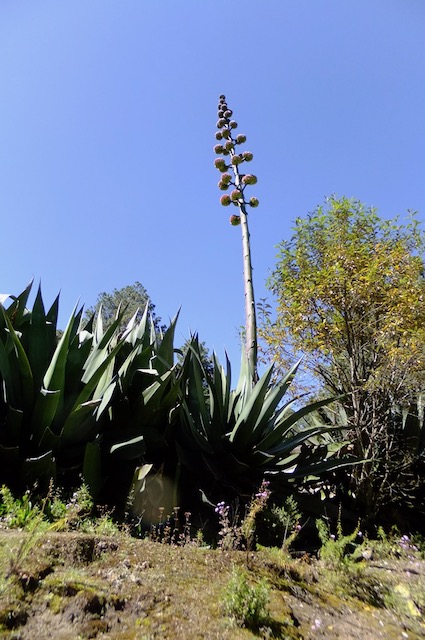
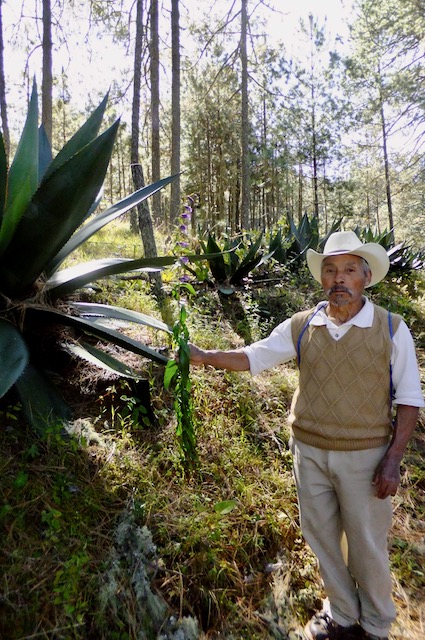
The agave at the top of the post is a photo I took while hiking between Llano Grande and Cuajimoloyas. Agave atrovirens, the largest of agaves, it can grow 6 to 8 feet tall. Maguey verde grande has a flowering spike or quiote that can grow to 15 ft. with reddish flower buds turning yellow upon opening. This species is native to Oaxaca, Puebla and Vera Cruz. I saw it while hiking in the Sierra Norte at 10,000 ft elevation. There was a row planted along the edge of a milpa of corn. When I asked Celestine, our hiking guide if this maguey was used for mezcal he said no, just pulque. But others do use it. Maguey verde grande produces hijuelos, or vegetative shoots at the base of mature plants.