
Some types of agave reproduce asexally, making cultivation easier and more uniform. Either small hijuelos (sons) form vegetatively at the base of a mature plant, or bulbils form instead of flowers and seeds. (This latter formation also occurs in many garden plants including garlic and chives.)
Other species are used in traditional mezcal production, but are difficult to grow. Traditionally they have been collected from the wild, but as the demand for mezcal keeps increasing, wild populations are shrinking, and growers are attempting to cultivate other species.

Tobalá Agave potatorum, is one I particularly enjoy. The flavor is full-bodied, a complex of notes hinting at floral and spicy. The Tobalá plant is much smaller than Espadín:, requiring up to to eight piñas to equal one of the latter. Combine that with the fact that Tobala rarely produces bublils or pups, so it must be grown from seed. Luis Mendez in Solga Vega Oaxaca is now cultivating the plants to preserve the wild population from over-harvest. A nursery in Santa Catarina Minas is also selling seedlings.
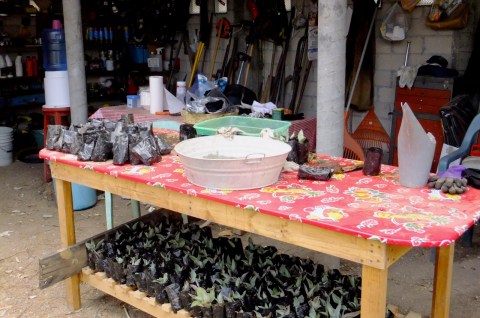
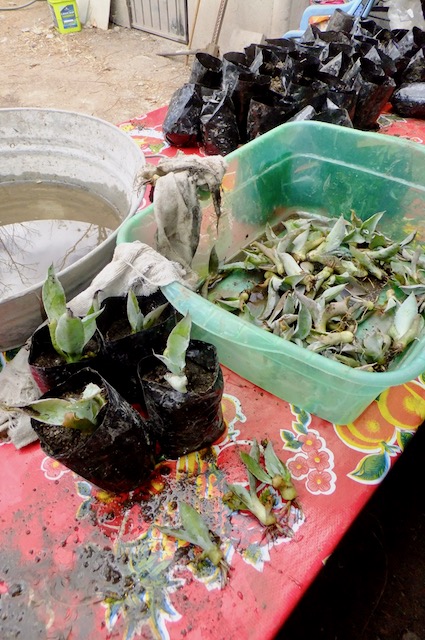
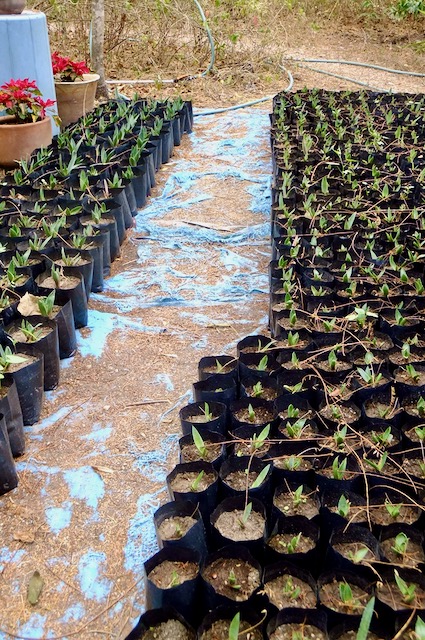
In January 2020 I helped pot up Tobalá plants for Tony Raab at Casa Raab, San Pablo Etla, Oaxaca.
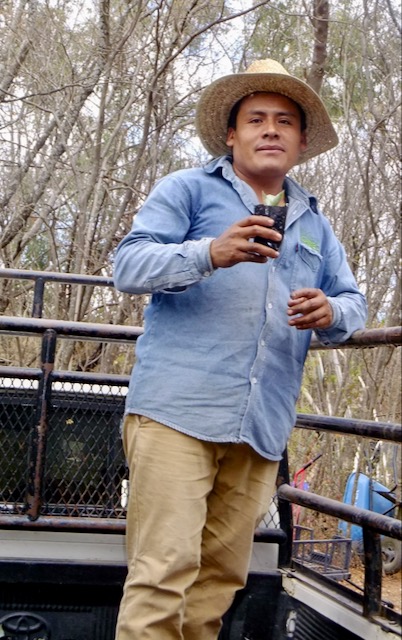
One of Tony’s workers, Rodregio.
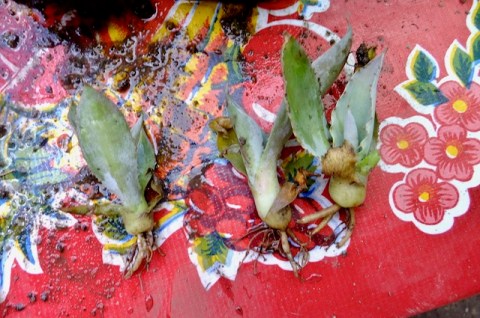
Tobala seedlings
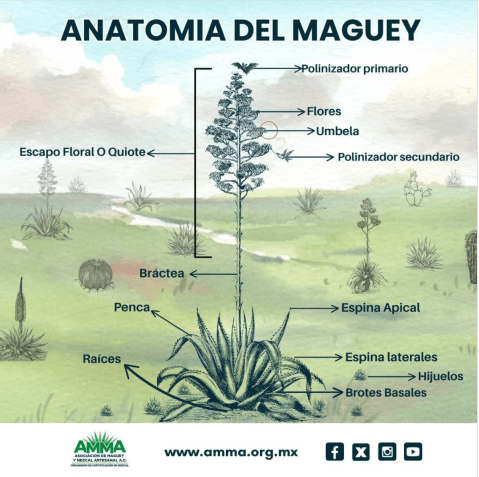
AMMA published this diagram of agave anatomy.
In my search for information on sustainable maguey preservation and cultivation, I came across this post Mescalistas: Can wild agave be successfully grown? In the future I hope to visit more maguey plantations.
 Sustainable Garden Design