
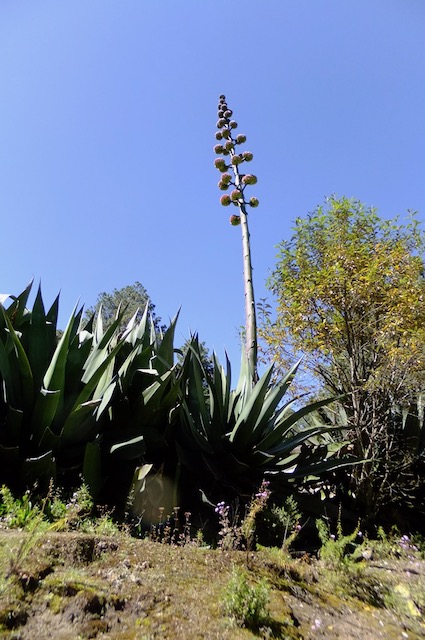
Mexico is rich in biodiversity, and Oaxaca is the state with the most diversity. Agaves are richly represented here with 200 species and often grow in tropical deciduous forests or deserts. Most agave plants only flower once and then they die. Archeological sites around the country show signs of agave for medicine, food, and textiles including ropes and nets.
Maguey is the name for any number of agave species that are used for making mezcal. Although I have a passing interest in the alcoholic beverage, I am fascinated by the ethnobotany of maguey.
Oaxaca is the epicenter of mezcal that draws travelers and connoisseurs from around the world. Forty-two kinds of maguey can be made into distilled alcohol, and proponents of sustainable mezcal production want to see more Mexican species planted and used. Two agave species dominate the market and grow as monocrops, A.tequiliana and A. angustifolia var.oaxacaencis. (Tequila, the distilled beverage of Agave tequilana can only bear that name if it comes from the northern region of the state of Jalisco, where it is commercially grown and produced on an industrial scale in the town of Tequila.) In Oaxaca the number one plant is Espadin, or Agave angustifolia, cultivated because it matures uniformly in about 6-8 years.
Espadin, Agave angustifolia var. oaxacensis
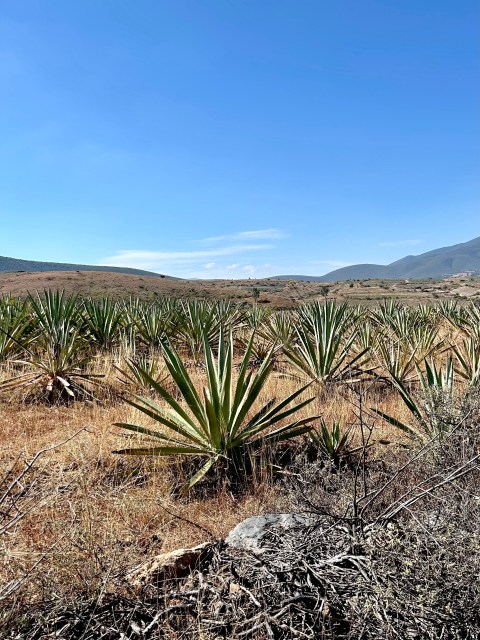
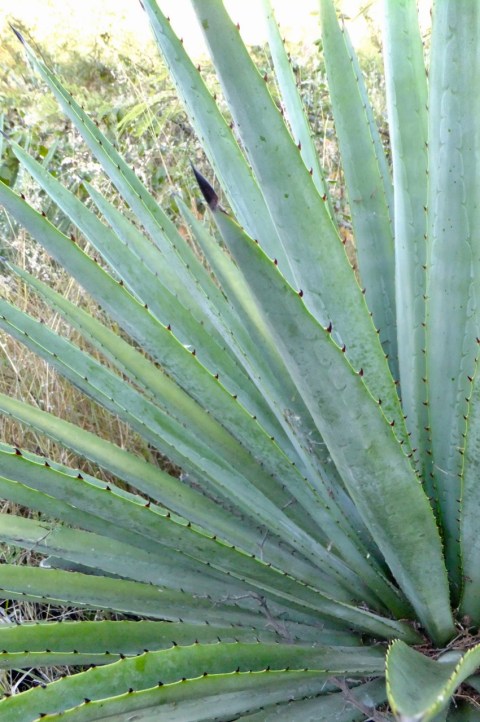
Drive along Hwy 190 through the Tlacolula Valley to see field after field of narrow-leaved Espadin. Milpas that once flourished with maiz and squash for local consumption are now monocrops of Espadin. Commercial brands like Mezcal Benevà produce mezcal on an industrial scale and require larger fields. It matures uniformly in about 6-8 years. There are many common names for espadin including: arroqueño, coyote, cenizo, and dua-bzog, a Zapoteco name. While the species Agave americana grows throughout Mexico and even as far north as Texas in the US (where it goes by the common name century plant.) The variety A. americana oaxacensis is endemic to Oaxaca and Puebla.
Maguey for Pulque
Other maguey used in mezcal include a couple of large, dramatic plants that are significant in making a traditional fermented drink called pulque. This historic fermented product is still drunk today and is considered healthy. It is an acquired taste, being both sour and viscous!
Tepextate, Tepestate, Agave marmorata

Photo from the gardens of Don Agave in Teotitlan del Valle.
Green agave, or pulque agave, Agave salmiana,
This giant is used in mezcal production. It is also a popular ornamental found around the world in Mediterranean gardens.
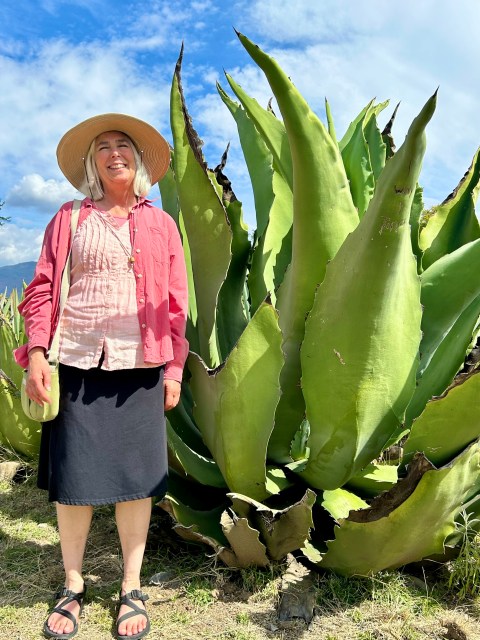
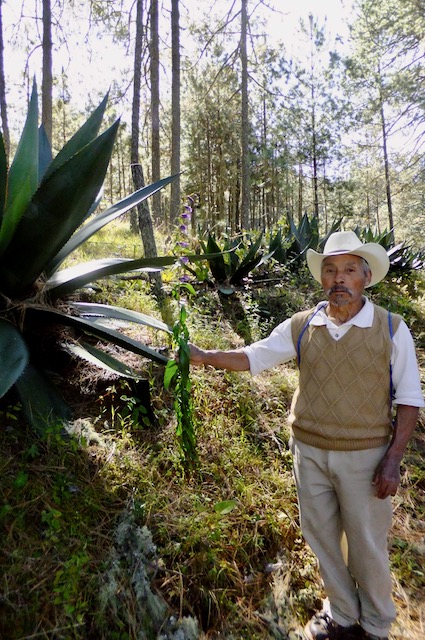
Maguey verde grande, Agave atrovirens
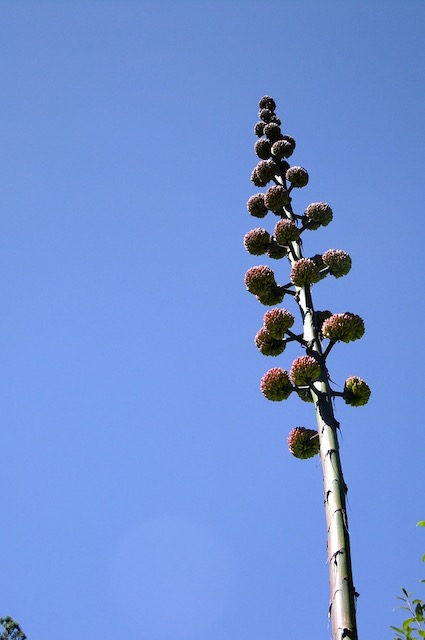
The agave at the top of the post is a photo I took while hiking between Llano Grande and Cuajimoloyas. Agave atrovirens, the largest of agaves, it can grow 6 to 8 feet tall. Maguey verde grande has a flowering spike or quiote that can grow to 15 ft. with reddish flower buds turning yellow upon opening. This species is native to Oaxaca, Puebla and Vera Cruz. I saw it while hiking in the Sierra Norte at 10,000 ft elevation. There was a row planted along the edge of a milpa of corn. When I asked Celestine, our hiking guide if this maguey was used for mezcal he said no, just pulque. But others do use it. Maguey verde grande produces hijuelos, or vegetative shoots at the base of mature plants.
 Sustainable Garden Design