
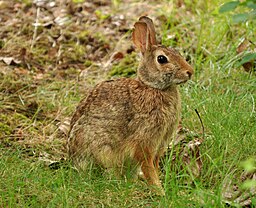
The Eastern cotton-tail rabbit was introduced to Washington in the 1930’s as a game animal for hunters. These introduced rabbits thrive in close proximity to people. As habitat generalists, they adapt to different available plant food and benefit from brushy coverage. Although the state’s mapping shows the introduced rabbits widespread in Kitsap County and Whidby Island, Jefferson county rabbit population is not on the map! The population has recently boomed in Seattle.
The bunnies never bothered my vegetables while I had Black Labs. These dogs have a great sense of smell and can easily track the cottontails. My property is fenced with hog wire with openings large enough for rabbits but not their common predators such as coyotes and bobcats. However, the common garter snake that are abundant on my property probably consume baby rabbits in the nest and barred owls might catch young ones.
I became acutely aware of rabbits when a neighbor’s domestic bunny started living at my place and even chewed through the plastic deer fencing to get in the vegetable garden. As cute as it was I wanted to keep it out. I felt like the mean farmer in the Beatrix Potter stories. The neighbor and his children came over several times and were successful catching the wayward pet.
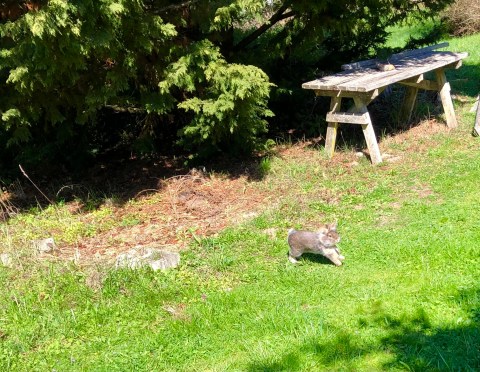
Rabbit damage is obvious, it looks like someone went through with garden clippers making sharp-angle cuts. The rabbits bite young stems, buds and flowers. By comparison, deer tear away stems, leaving a jagged edge because they don’t have upper front teeth.
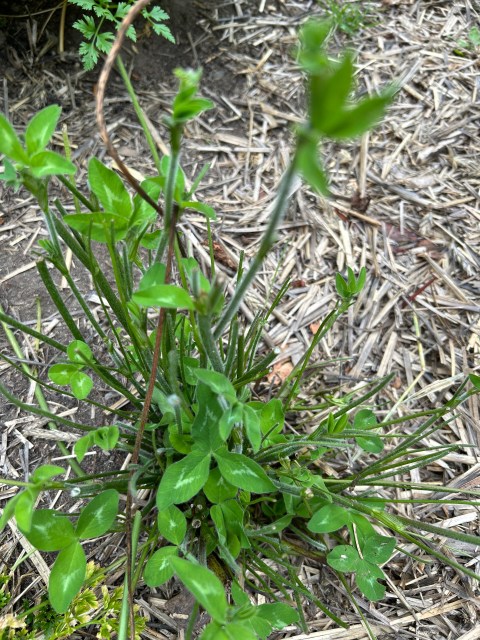

Cottontails are most active dawn and dusk. In spring I noticed vegetable seedlings neatly nipped off. Lucky for me I always have a couple of red clover volunteers on the edge of beds and in the paths. While the rabbits certainly prefer clover to vegetables, I share enough of my garden with the voles and the birds, that I was determined to prevent another creature from entering. I bought some rabbit repellent called Liquid Fence that was effective but requires monthly applications.
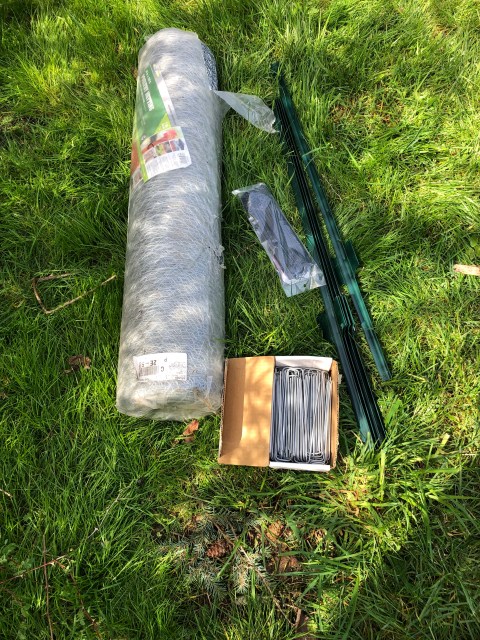
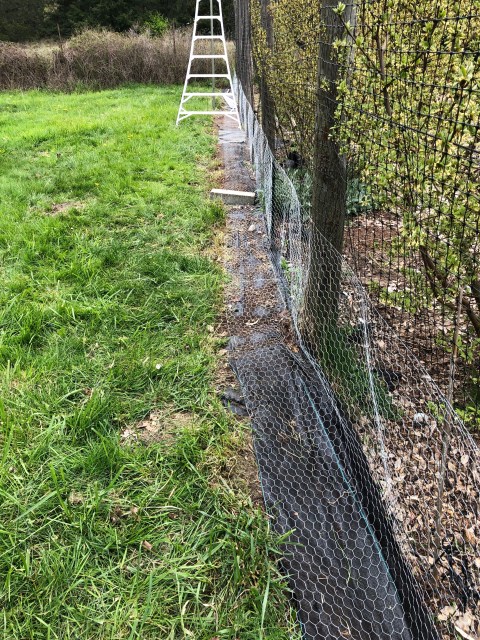
After watching several YouTube videos, I decided rabbit fencing would protect the lower two feet of the deer fencing. So I hired someone to work with me and we installed the fencing where the rabbits were entering from the west. I also had already placed landscape fabric there to prevent grass and weeds from growing underneath the deer fence. One foot of chickenwire on the ground will prevent rabbits from burrowing under the fence. That was effective for several months and now I have noticed a rabbit in the garden at dawn. On to fortifying the deer fence on the north and south sides! For more information on fencing and general cottontail behavior, see the state Fish and Wildlife site
 Sustainable Garden Design