
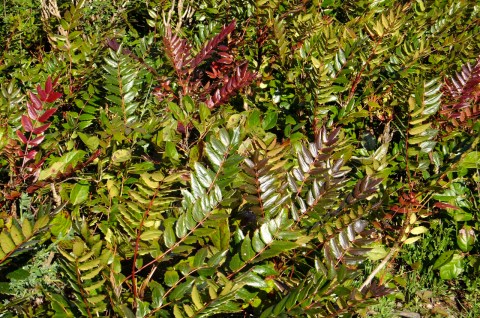
Sometimes called ‘living mulch’, there are many reasons to choose groundcovers, from covering challenging slopes; to reducing garden maintenance and water consumption; to simply knitting together the landscape. They offer excellent solutions to landscape challenges but groundcovers are not maintenance-free.
Woody Groundcovers
A popular native woody plant is Kinnikinnick, Arctostaphylos uva ursi. Another is Cascade mahonia, Mahonia nervosa. Other standard choices are Taiwan Bramble, Rubus calycinoides and Pt. Reyes Ceanothus, C. gloriosus.
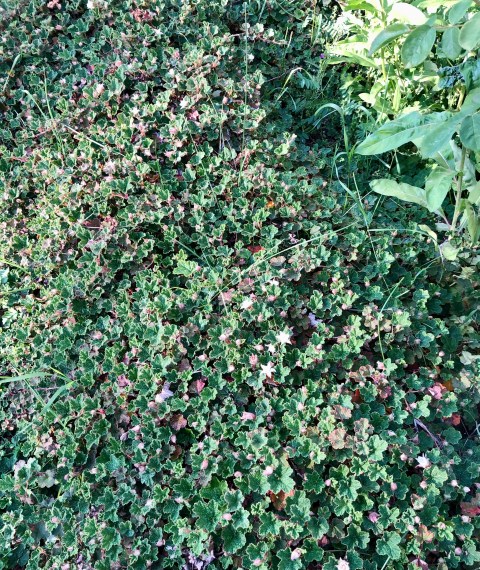
As these plants get established they need regular weeding, especially to prevent perennial weeds from getting a foothold. Fertilizing with compost or dry organic blends encourages the plants to grow. Mulching with woodchips or arborist chips reduces the need for watering. Cover bare ground with 2-3 inches of mulch, but don’t bury the crowns (where stem meets root) or go back after and brush mulch away from the crown. The very fastest groundcovers, especially those planted closer than the recommended spacing will not need much additional mulch. But slower groundcovers like Kinnikinnick or bearberry cotoneaster (C. dammeri ) will need more mulch in about three years.
For woody groundcovers to look their best, prune once or twice a year. Prune back leggy stems to make denser coverage. (The principle is the same as tip-pruning house plants or perennials. It works by removing the plant hormone or auxin in the stem’s tip that maintains apical dominance.) Also, if your goal is a carpet effect, prune out vertical branches.
Herbaceous Groundcovers

These plants are not as tough as woody plants. If the foliage forms dense mats often this shades the soil and prevents weed seeds from germinating.
The smaller the foliage the more work to keep out grass and tiny weeds. If your garden is on a city lot then tiny foliage can work, just plant smaller groupings. There was a time when many people planted chamomile or woolly thyme as small lawns, however they require regular weeding. If you plant lots of annual flowers that readily reseed themselves, herbaceous groundcovers with tiny foliage will take much more work to maintain because they will easily harbor germinating seedlings.
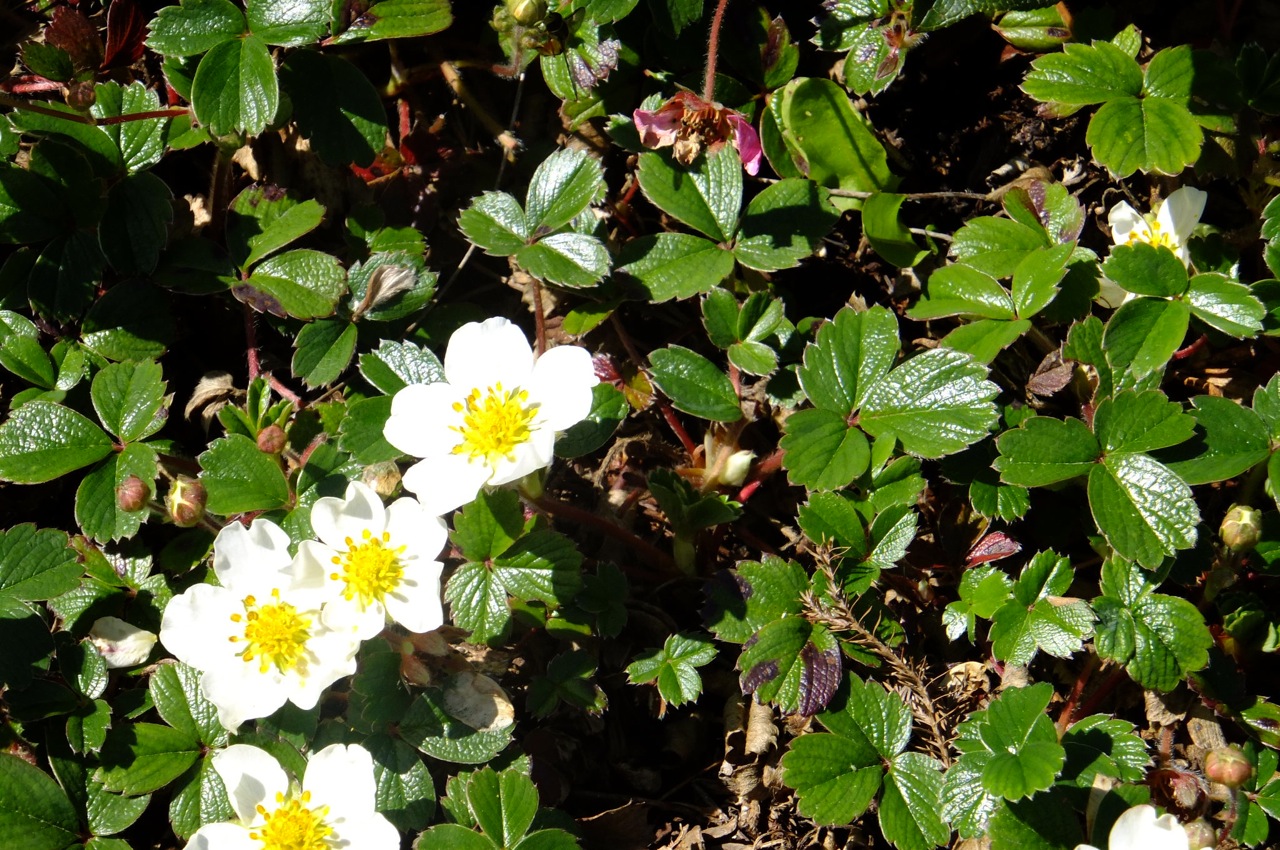
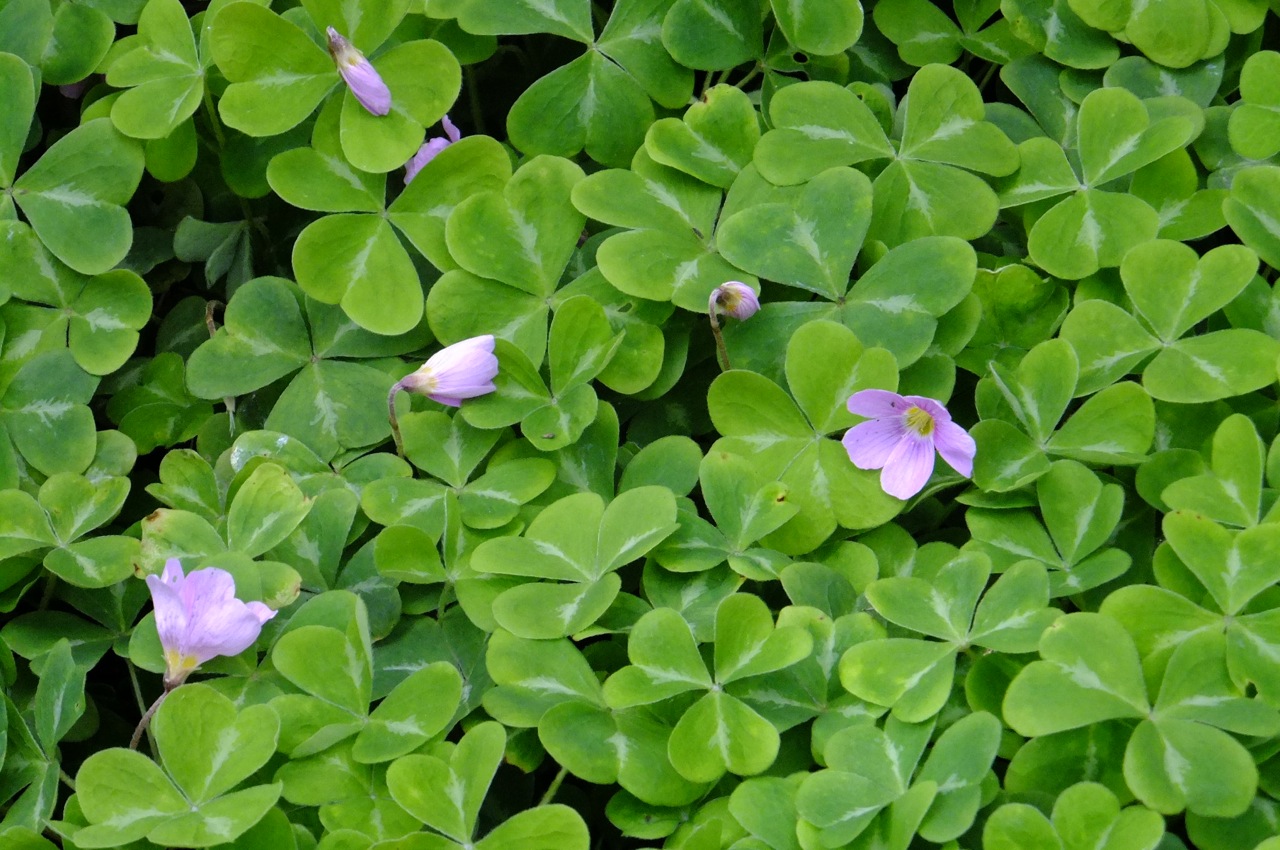
Natives include evergreen coastal strawberry Fargeria chiloensis, inside-out flower, Vancouveria hexandra and redwood sorrel, Oxalis oregana, and stonecrop, Sedum spathufolium. Non-native groundcovers include many Epimediums, and Geraniums. A low maintenance herbaceous groundcover for shade is hardy geranium or Geranium macrorrhizum, especially the magenta pink ‘Bevan’s Variety’ makes a dense mat of foliage that is deer-resistant. It does require a little water during dry summers.
Plants don’t have to form low carpets to be a groundcover. Distinctive foliage is a good reason to mass plants together. Under conifers the western sword fern is attractive. Larger perennials like Corsican Hellebore, Helleborus argutifolius make a bold statement. Pools of ornamental grasses offer ribbons of texture that can ripple in the wind.
 Sustainable Garden Design