
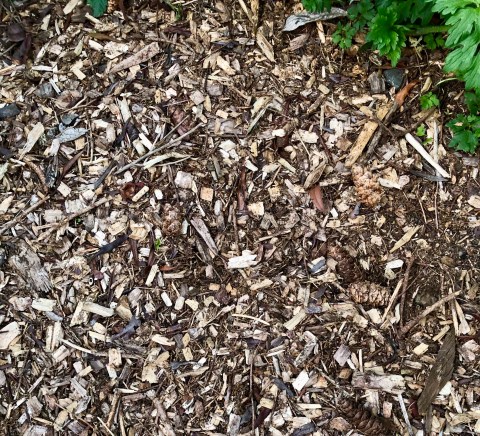
Mulch not only conserves soil moisture; it prevent weeds and soil erosion; improves the soil tilth; and protects it from temperature extremes.
Good mulch decomposes in a year or two and improves the soil. And needs to be reapplied. Examples are arborist’s chips, shredded leaves and compost Most bark mulch, like fir bark and beauty bark add a top layer that doesn’t break down to add organic matter, but instead sometimes creates a barrier to drip irrigation moisture reaching roots.
Different Mulches
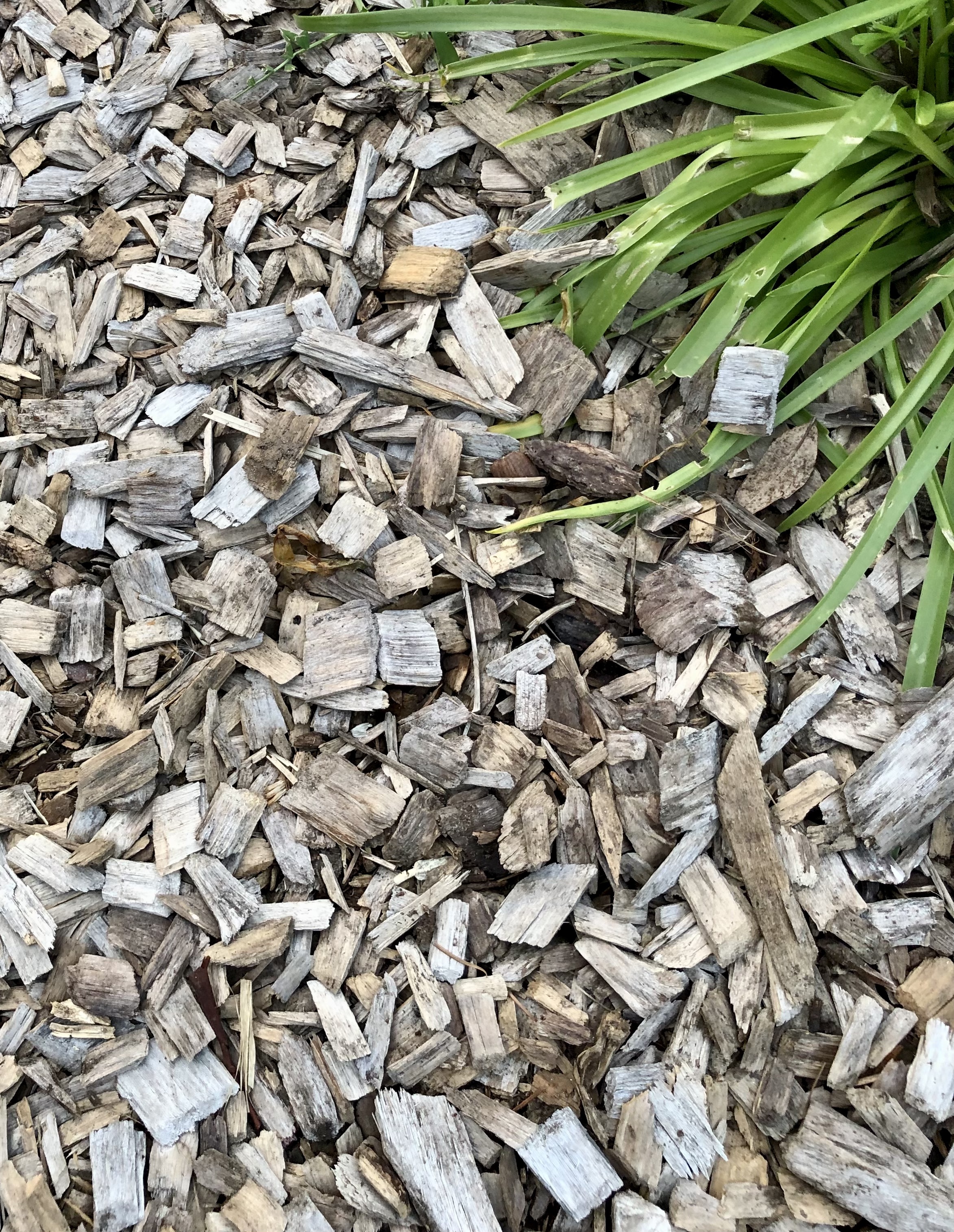
- Alder chips: Long lasting mulch with a uniform appearance . Wood eventually breaks down adding carbon.
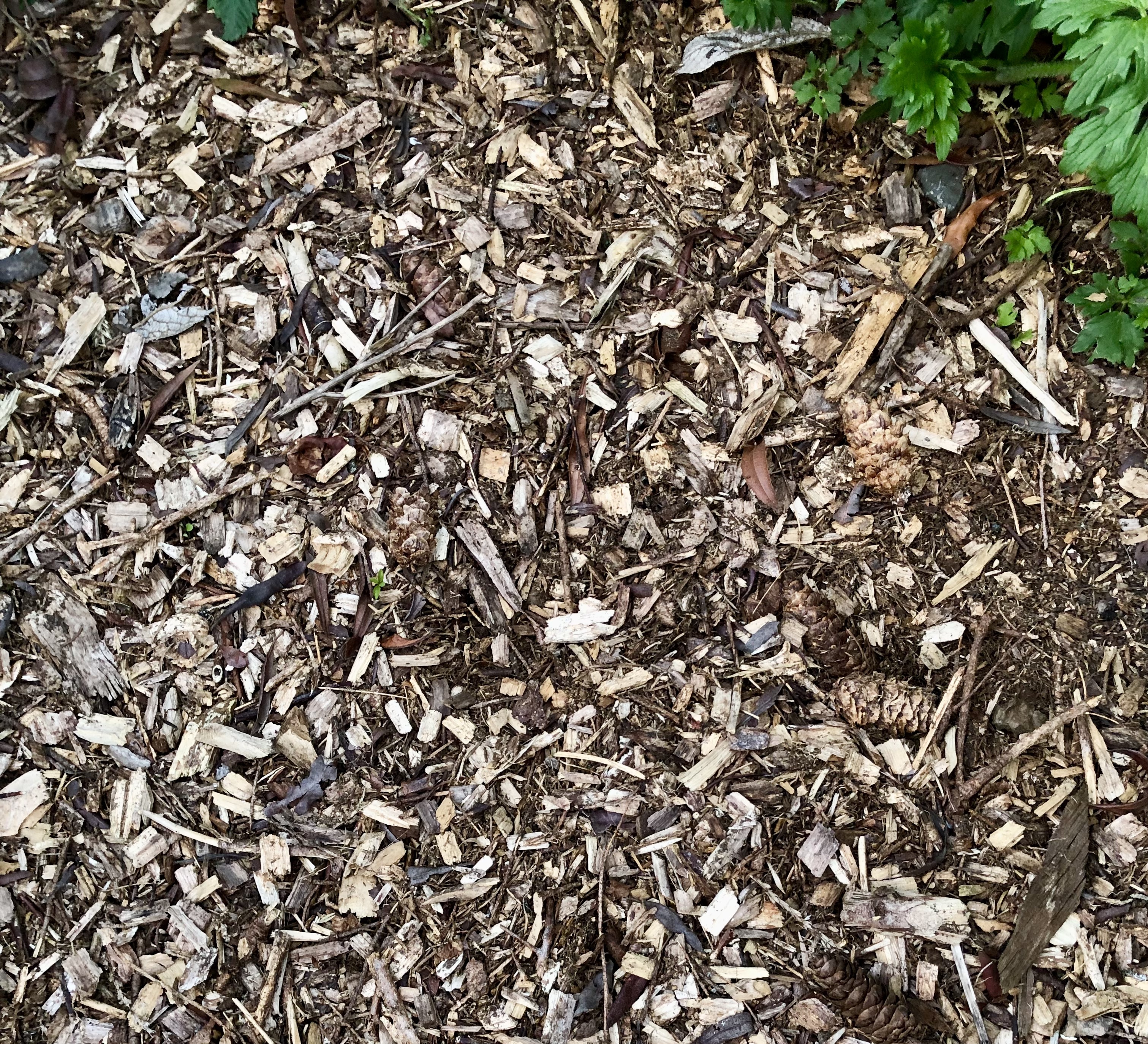
- Arborist chips: has small branches and leaves chipped by arborist and road crews. If you let it decay first it provides great organic matter. Adds both carbon and nitrogen. Rough appearance but great for improving the soil. Great in orchards and ornamentla shrubs and trees.
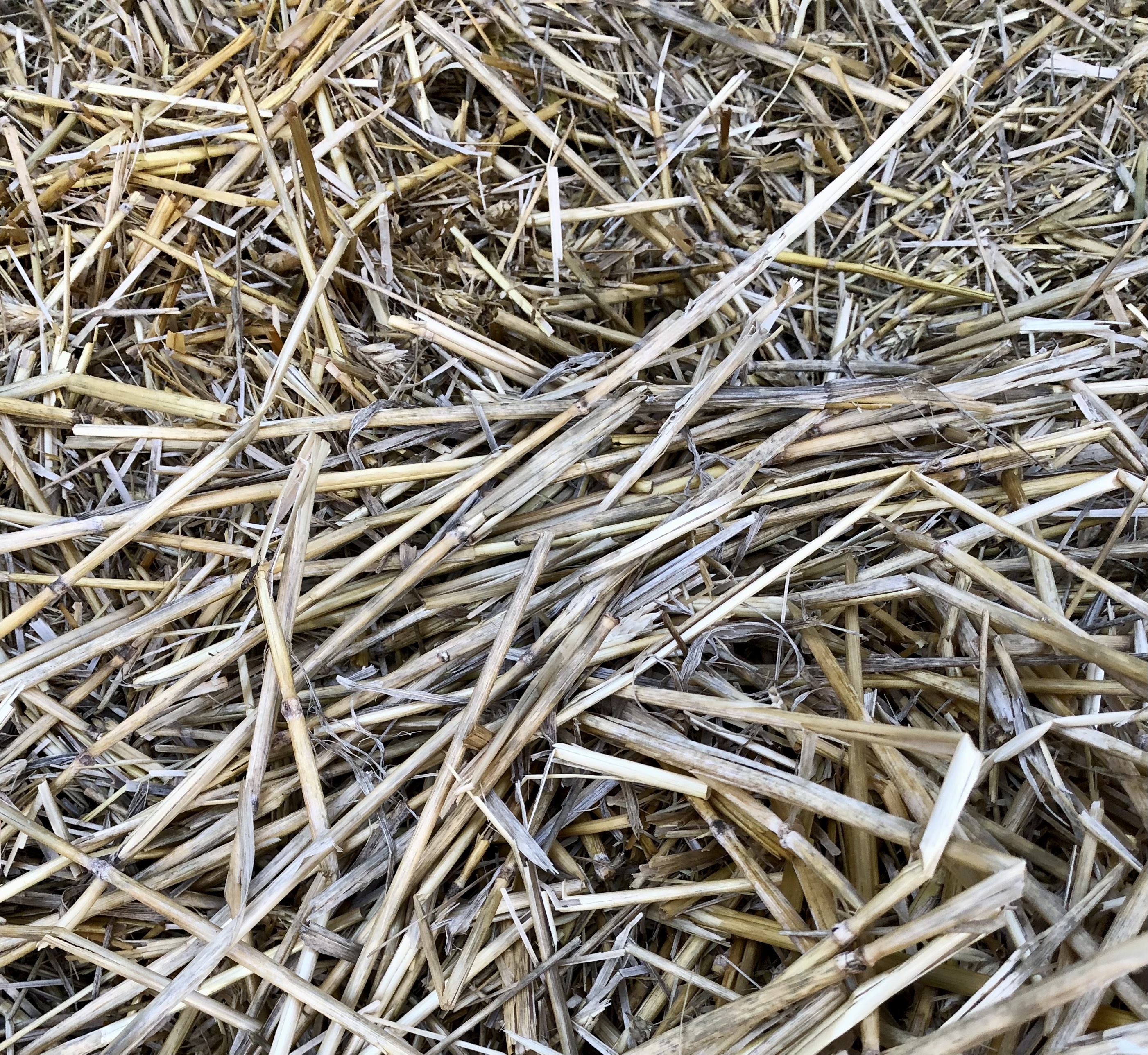
- Straw: use in vegetable gardens and be on the look out for slugs and snails.
- Sheet mulch: Layer about one foot of garden waste (no weeds that are going to seed). Dig a large hole for the vegetable transplants, add a quart of compost and plant.
- Rotted cow manure: is mostly free of weeds and has a uniform appearance. attractive as top-dressing for perennials and vegetables.
- Aged compost: excellent in vegetable garden and with flowers. May have weed seeds.
Spread mulch about 1 inch deep for vegetables; 2 to 3 inches for perennials; and 3 to 4 inches for shrubs and trees. Be sure to keep the mulch a couple of inches away from their trunks.
When adding powdered fertilizer to the beds of ornamentals and perennials add directly above the rotted cow or horse manure, or the rotted arborist chips. If you are using alder chips then pull away some of the chips to scratch the fertilizer directly into the soil.
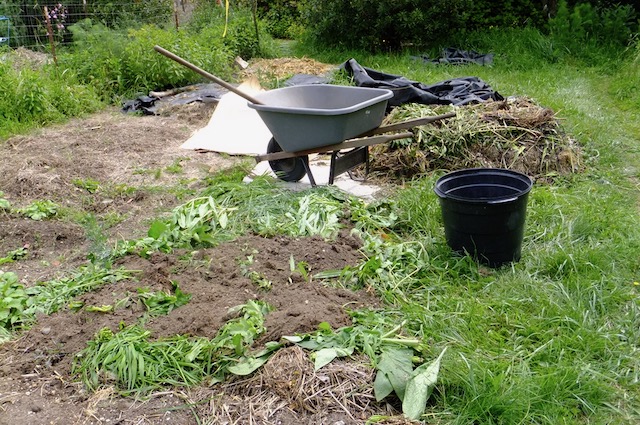
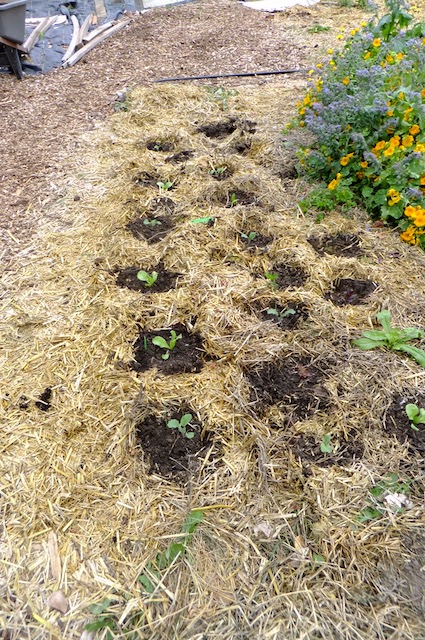
Sheet mulch bed with seedlings in compost
Drip Irrigation
Photos of the Quimper Grange Food Bank Garden drip-tape and porous tubing.
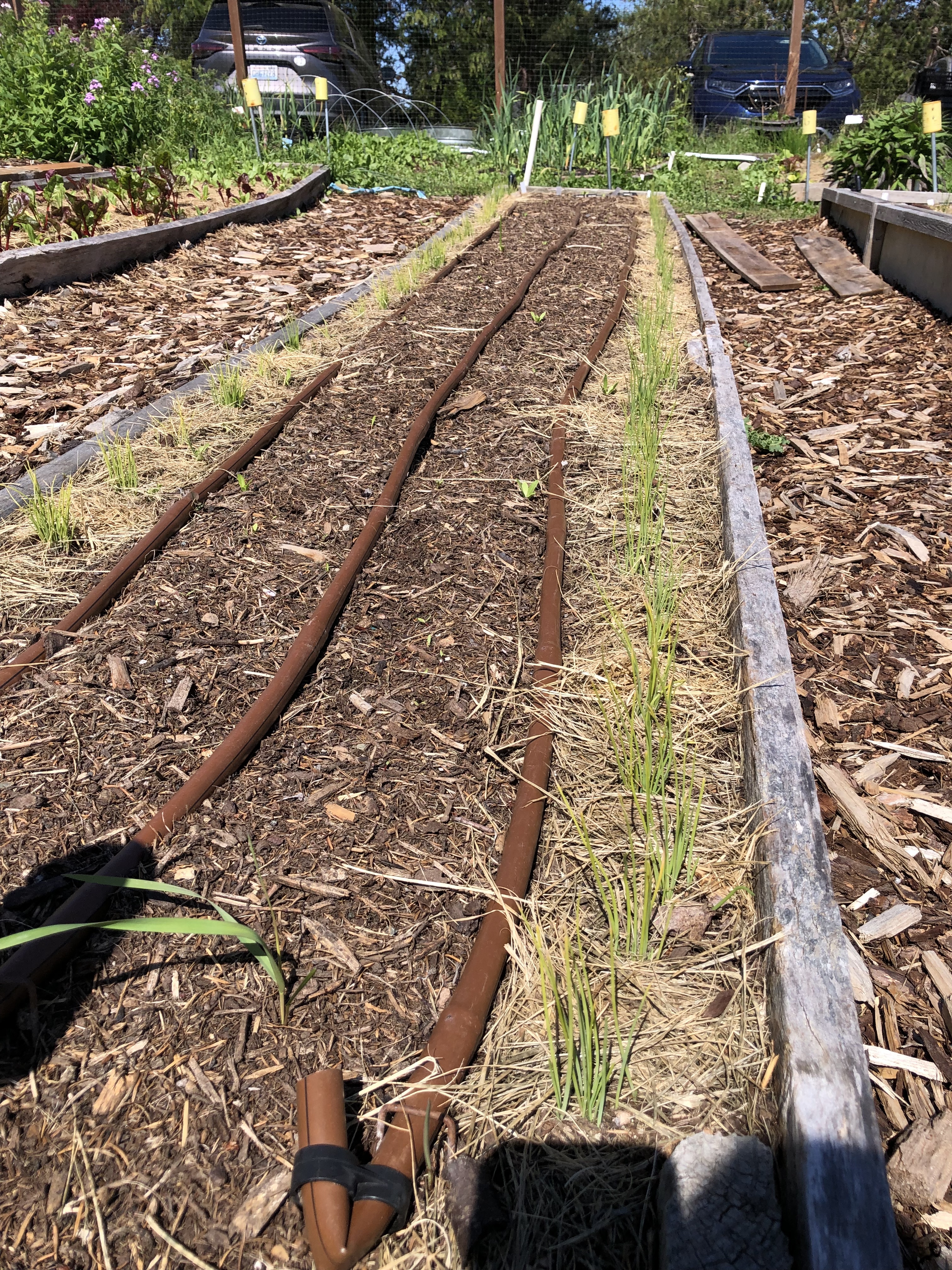

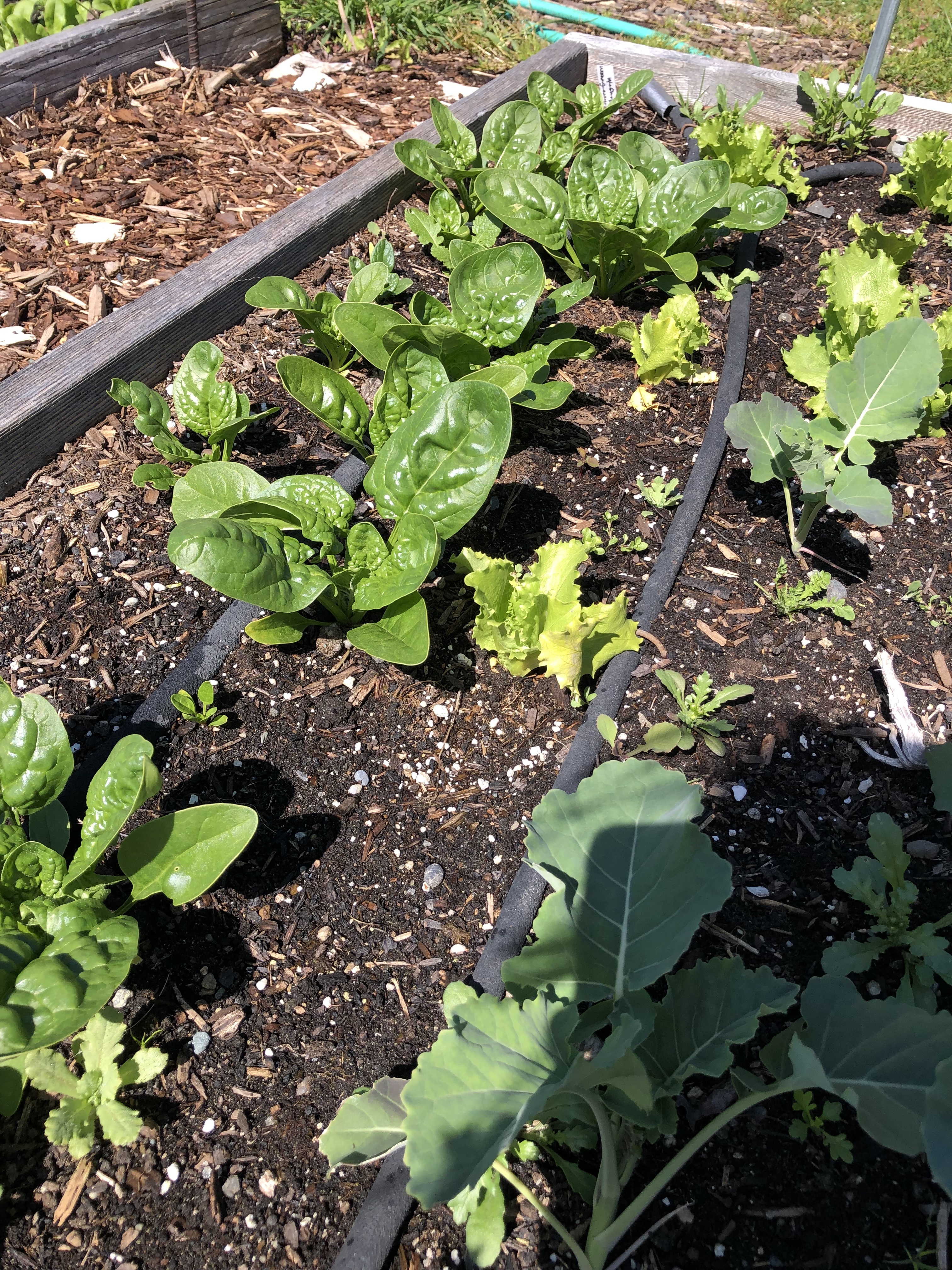
Besides helping the environment by using drip irrigation, you can substantially lower your water bill. It’s possible to make back the cost of purchasing a system in one or two seasons. A great educational resource with how-to videos is Dripworks
Personally, I have been resistant to using drip irrigation because of all the plastic and the need for repairing cut tubing. But I’m ready to make the switch.
In ornamental gardens, drip emitters are frequently used to water individual plants. Keeping the tubing above ground is one way not to damage it while planting and weeding. A landscape spike dripper can raise the emitter off the ground.
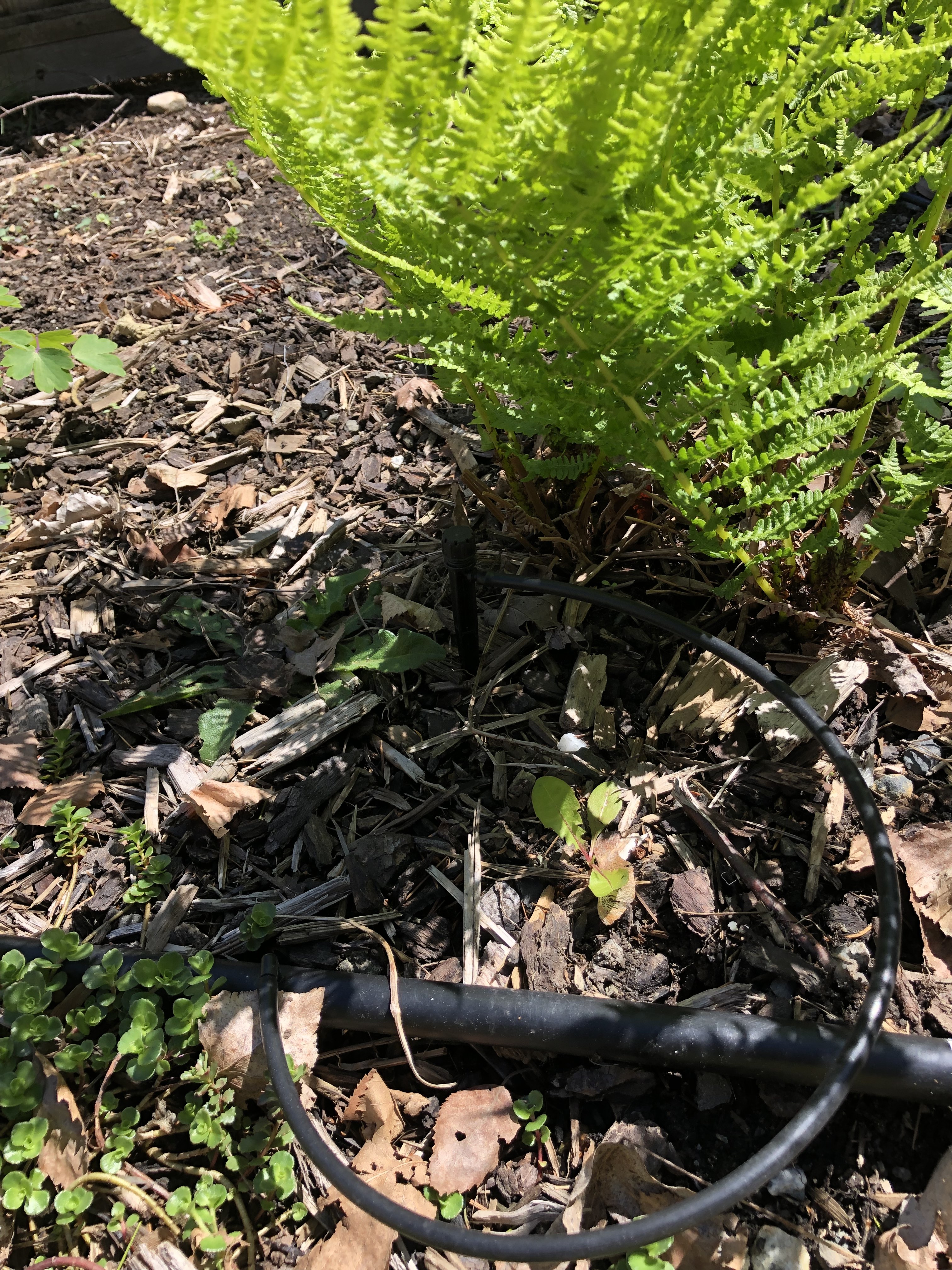
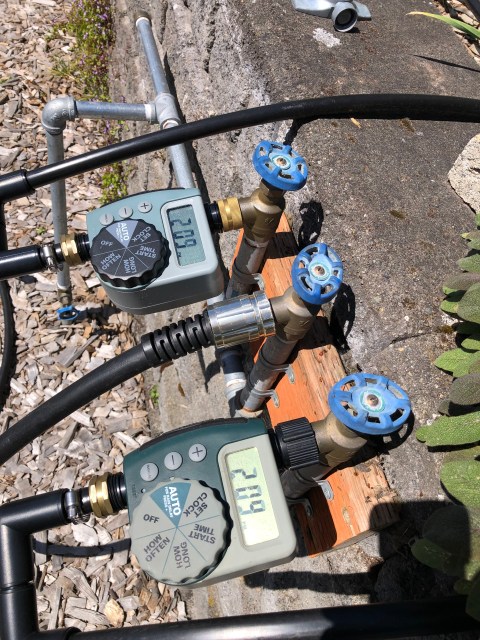
Micro jets put out more water than drippers. This is useful for fast-growing, thirsty plants and for sandy soil. Timers keep everything on schedule.
 Sustainable Garden Design